


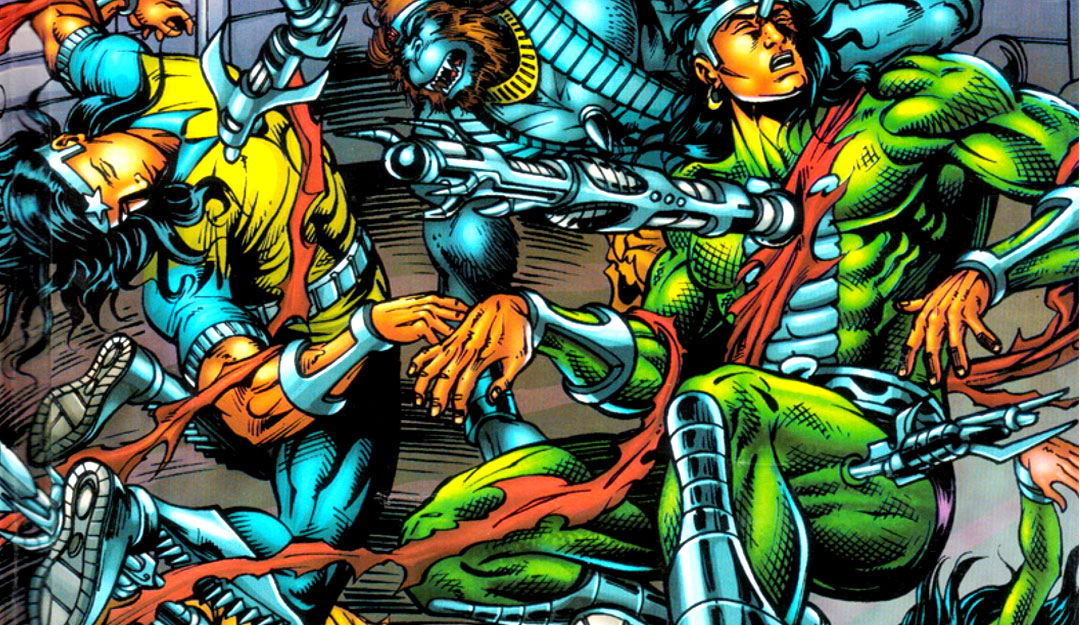
Raj Comics’ ‘Nagayan’ series was not just a story, but it was one of the biggest and most ambitious efforts in the history of the Indian comics industry. The journey that started with ‘Varan Kand’ in the year 2007 reached its emotional and memorable end with ‘Iti Kand’ in 2009. This 128-page grand comic, emblazoned with Sanjay Gupta’s vision and Anupam Sinha’s writing and brilliant illustrations, is considered the biggest milestone in the lives of Indian superheroes—Nagraj and Super Commando Dhruv—so far. The word ‘Iti’ may mean termination, but this end was actually also the beginning of a new future.
This review analyzes in great depth the last part of this Mahagatha, where the outcome of the war, the sacrifices of the characters, and the legacy left by this entire series are discussed in detail.
Detailed outline of the plot (The Epic Conclusion)

The story of ‘Iti Kand’ begins exactly where ‘Summer Kand’ ended—the martyrdom (sham death) of Dhruv and the deep lamentation of Nagraj. The entire story is divided into seven major chapters, which take the readers on a tremendous journey full of emotions and thrills.
Chapter 1: Mahabali (The Almighty)
The story begins with the terrible war taking place in Alandhya. Krurpasha (Nagpasha) is quite sure that he has killed Dhruv. On the other hand, Nagraj is burning in the fire of grief and anger. Meanwhile, a big secret comes to light—that Dhruv was not actually dead, but he had used a trick to deceive the cruel Pasha along with Vishank. This chapter clearly shows that Dhruv’s intelligence is as important as Nagraj’s strength.
Chapter 2: Death Early (The Rapid Death)
Frustrated by his defeat, Cruelpasha fields the entire army of black powers. Here, there is a fierce confrontation between the army of Nagraj and Dhruv—which includes Yeti and Naga warriors. The way Anupam Sinha has depicted this war in visuals is directly reminiscent of the Kurukshetra of the ‘Mahabharata’.
Chapter 3: Ambush–Retaliation (The Counter-Attack)
A different war is going on within the metropolis. ‘Mummy’ Shweta’s memories slowly start returning. The conflict between Grand Master Robbo and Natasha reaches its peak. Rishi, son of Dhruv, and Jalaj, the biological son of Nagraj, play key roles in war strategies despite their young age. Here, the battle between ‘Black Terminators’ and ‘Robo Forces’ offers a great example of modern technology.
Chapter 4: The Truth of Jingaloo and Yetiraj

Yetiraj Jingaloo, who has been a very important link throughout the series, now faces his past. He had lost his memory after falling into Halahal Kund, but Rani Yeti’s ‘Mrityunjay Sadhana’ makes him face the truth once again. This chapter makes it clear that the Yeti and Naga were never enemies of each other, but were forced by the black powers to fight among themselves.
Chapter 5: Pledges and Sacrifices
This is the most emotional and heart-touching part of the entire comic. Bharti, who was Nagraj’s first wife, sacrifices everything to save Nagraj in ‘Sakar-shape’ form. Bharti’s love for Nagraj was completely selfless. She knew that Nagraj’s heart was with Visarpi, yet she gave her life to protect her husband’s dharma and the world. Readers’ eyes automatically become moist after reading Bharti’s last words.
Chapter 6: Decisions (The Decision)
The inner conflict between the three forms of **Cruelpasha—Krurpasha, Bheerupasha, and Dormantpasha—**comes to the fore. Bheerupasha, which symbolizes fear, and Suptapasha, which symbolizes laziness, ultimately weaken the strength of Cruelpasha itself. This chapter conveys the message that evil often ends due to the flaws hidden within itself. Nagraj destroys the center of black powers with the help of his ‘Ghurnastra’ and ‘Paramshakti Astra’.
Chapter 7: Dimensions and Iti (The Final Dimension)

In the final chapter, Mahakal Chorha and Baba Gorakhnath face each other. This is where the major revelation comes that ‘Stranger’, who was helping Nagraj until now, was actually a trick of Mahakal Pore itself, so that it could capture both ‘Amrit’ and ‘Kali Shakti’. Ultimately, the combined power of the virtuous souls of Nagraj and Dhruv uproots this center of evil.
In-depth psychological analysis of the characters
Nagraj: The Height of Decorum
Nagraj is presented almost as a ‘Maryada Purushottam’ throughout the Nagayan series. In ‘Iti Kand’, we get to see a form of him where he performs his duties with complete honesty toward both his wives—Bharti and Visarpi. Bharti’s broken cry over her sacrifice clearly shows that Nagraj is not a stone-hearted warrior, but also a sensitive person full of emotions. His transformation from ‘Black Nagraj’ back to ‘White Nagraj’ symbolizes not just change, but the victory of light over darkness.
Super Commando Dhruv: Immortality of Intelligence
Dhruv proves throughout this series that even an ordinary person can change the direction of a war between gods and demons through intelligence, courage, and patience. Even after getting his sister Shweta back in a mummy state, Dhruv never wavers despite enduring the bitterness of his relationship with Natasha. He remains stable in every situation. That is why Dhruv is seen playing the role of the true strategist, i.e., ‘Krishna’, in this entire saga.
Bharti: A Great Sacrifice

Bharti is the saddest yet greatest heroine of Nagayan. She entered into a marriage that, although only legal, was completely true and selfless. Her merging in ‘corporeal form’ teaches that love is not just about gaining, but also about losing oneself when needed. If Bharti had not been there, this victory of Nagraj would never have been completed.
Visarpi: Strength and Patience
Visarpi played both the roles of a captive princess and a warrior queen equally well throughout the series. Her unwavering faith in Nagraj gives her the strength to endure the terrible tortures of Cruel Pasha. In the end, the reunion of Nagraj and Visarpi is definitely pleasant, but the memories of Bharti will always remain a pain in Visarpi’s heart.
Brutalpasha and Nagina: The Story of Fall
Nagpasha, i.e., Cruel Pasha, falls because of his own immense ambitions. Nagina being revealed as Visarpi’s mother, i.e., Vishpriya, is a tremendous ‘plot twist’ in the story. The clash of evil against evil here makes the entire series even stronger and more impressive.
Art and Illustration: Anupam Sinha’s Masterpiece

Anupam Sinha’s artwork is at its peak in ‘Iti Kand’. His imagination adds grandeur to the depiction of Alandhya through multiple dimensions, flying vehicles, and thousands of warriors. The page layouts break traditional boundaries, with panels blending into each other in a way that the pace and thrill of the story never slow down.
Especially in Bharti’s sacrificial scenes, the facial expressions of the characters are so vivid and emotional that they come alive before the eyes like a film scene. Along with this, the color combinations by Sunil Kumar Pandey and his team beautifully highlight the contrast between the ‘Dark World’ and ‘White Powers’, making the entire comic an unforgettable visual experience.
Mythical and Modern Confluence

The greatest strength of ‘Nagayan’ lies in its spectacular fusion of modern futuristic thinking (2025 AD) with the mythological elements of the ‘Ramayana’. It encourages forward-thinking while keeping readers connected to their roots.
The ‘Snake-Setu’ built by snakes to reach Alandhya, Vishank stepping forward like Angad in the court of Cruel Pasha, and the ‘Sanjeevani Lana’—created by Jingaloo in the form of Yeti-Vigyan when Dhruv is dying—are all directly inspired by the Ramayana.
Similarly, Bheerupasha helping Nagraj reflects the character of Vibhishana. Together, these elements make ‘Nagayan’ not just a comic, but a deep cultural and creative masterpiece.
Social and Philosophical Messages
‘Iti Kand’ presents profound life values. It teaches that no matter how powerful evil becomes, the path of truth never fails, and justice ultimately prevails.
The unbreakable friendship between Nagraj and Dhruv conveys that a true friend not only stands beside you in difficult times but also compensates for your weaknesses with strength.
The sacrifices of characters like Bharti remind us that achieving greater objectives often requires personal loss. The final scene of Rishi and Jalaj standing together symbolizes that even when heroes fade with time, the torch of heroism never goes out, and the next generation is always ready to carry it forward.
Conclusion and Final Rating

‘Nagayan: Iti Kand’ is not just a comic book, but a complete experience. It represents the pinnacle of Indian superhero storytelling. It fills readers with pride for heroes like Nagraj and Dhruv, and creators like Sanjay Gupta and Anupam Sinha.
The series teaches us that ‘Ram Rajya’—the era of peace and justice—is not merely a mythological fantasy, but a goal that can be achieved through intelligence, unity, and morality. ‘Iti Kand’ concludes the saga on a grand and emotionally powerful note.
Positive Side (Pros):
Incomparable suspense and revelations, excellent use of world-class artwork and colors, deep emotional character development, and a brilliant fusion of the Ramayana and modern science.
Downside (Cons):
The story may feel slightly complex for new readers due to the large number of characters, although this was almost inevitable in the final phase of the series.
Final Decision:
If you have not read ‘Nagayan’, you have missed a precious gem of Indian literature. It is an essential work for readers of all ages and proves that Raj Comics is not just for children, but for anyone seeking a strong, emotional, and meaningful story.
Final Rating: 5/5 (Masterpiece – Timeless Creation)
