


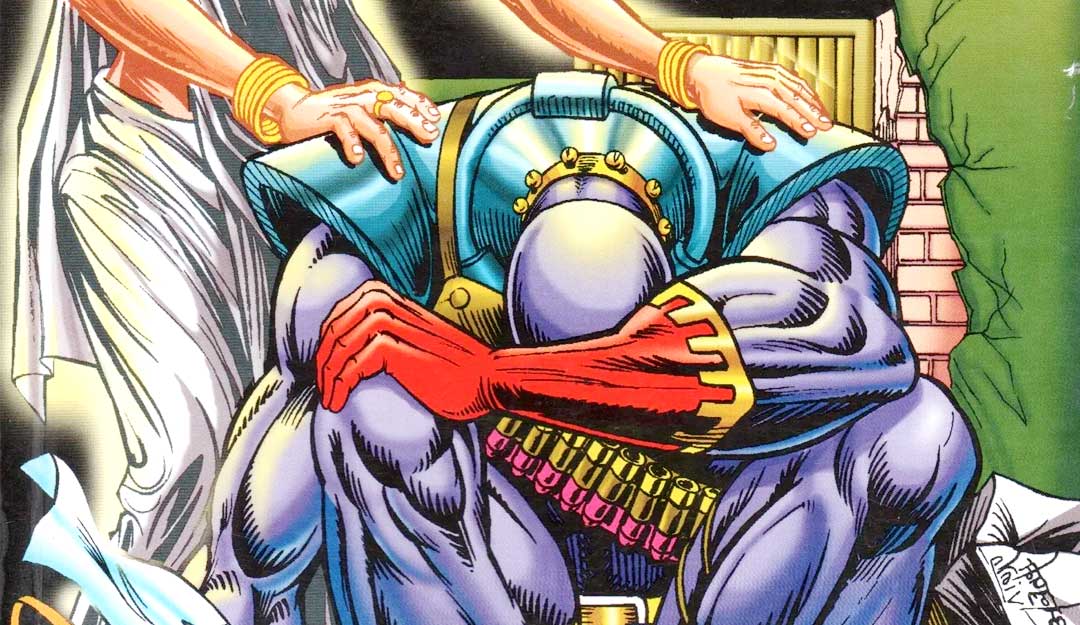
‘Doga’ is a name in the universe of Raj Comics which is known to go to any extent for justice. While superheroes like Atomic and Nagraj are based on divine powers or high-tech technology, Doga is a symbol of sheer human strength, tremendous fighting skills, and iron-like willpower. Vivek Mohan’s ideas and Tarun Kumar Wahi’s writings made Doga such a powerful ‘anti-hero’ who is on a mission to eradicate crime on the streets of Mumbai. “Why Thrown on the Garbage(Kyon Fenka Kude Per)” (Issue No. 307) is not just an action comic, but it re-scratches the old wound of Doga that had made him become Doga—his unclaimed past.
Plot expansion: A personal war

The story begins with an ongoing confrontation between Doga’s supporters and those who hate him. Doga may be a declared criminal in the eyes of the law, but the general public considers him their protector. The real conflict of the story begins when Mumbai underworld don ‘Dubai Rao’ and his goons go after an elderly man, Sharafat Ali. Sharafat Ali has such a dangerous file in which many big secrets of white-collar criminals and illegal auctions of the city are hidden.
The opening pages of the story show Doga cleaning up the mess (i.e., criminals) of Mumbai. “How difficult it is to clean the city of the filth of crime,” he says. Here the word ‘dirt’ has a double meaning—on the one hand the real garbage of the city and on the other hand those criminals who are considered the garbage of society. This dialogue sets the tone of the story.
Doga gets caught up in a dangerous and murderous fight while trying to save Sharafat Ali. The villains hang Sharafat Ali from the needles of a huge clock tower, where every passing second is bringing death closer. Doga jumps to save him, regardless of his life, but that’s where the story takes a tremendous emotional turn. Doga realizes that Sharafat Ali may have a deep and personal relationship with him.
Doga’s Existence Crisis: “Who Am I?”

The most heart-touching part of this comic is where Doga (Suraj) starts questioning his own existence. He was found in a garbage dump as a child. His four uncles—Ginger, Coriander, Turmeric, and Basil—nurtured him and made him a walking steel man. Yet in some corner of his heart, there was always the pain of why his own mother had thrown him in the garbage.
When Sharafat Ali’s blood group and DNA report start matching Doga, the ground slips beneath Doga’s feet. For the first time, he seems to be weakening from inside. He breaks into the hospital to find out the truth. Here the author has shown, very simply but deeply, the ongoing battle inside Doga—on the one hand he is a tough and ruthless protector, and on the other he is a lost child searching for his true identity.
Villain Dubai Rao and his tricks

Dubai Rao is a very clever and dangerous villain in this story. He doesn’t just fight with strength, but plays with Doga’s mind and emotions. His biggest trick is that he tries to convince Doga that he was born into a criminal family. He presents a mentally ill woman to Doga as his mother, who gets scared on seeing Doga and calls him ‘Satan’.
The scene where Doga opens a box containing his childhood clothes and a letter becomes one of the most emotional moments of the entire comic. Dubai Rao had planned the entire move very thoughtfully so that Doga would break from within and accept defeat, considering himself a ‘dog child’ or ‘the birth of a gutter’. This psychological attack deepens the story.
Climax: The Battle of Fire and Identity

The ending of the story creates a scary cremation-like atmosphere, where Dubai Rao has pre-prepared pyres for Doga and his associates. His aim is not just to kill Doga, but to break him completely mentally. But Doga, who has been strengthened by difficulties since childhood, shows his wisdom at the last moment.
He notes that the woman being described as his mother has a mark of wearing a ‘bichhiya’ on her feet, while she was shown as a widow (or the wife of a criminal). It is from here that Doga understands that the whole game is a well-planned conspiracy.
Doga throws all his strength into the final confrontation. Amidst the sound of bullets and explosions, he not only eliminates the criminals but also exposes the false ‘truth’ which Dubai Rao had cleverly hidden. In the end, the revelation makes the story more interesting: Inspector Surya and Doga have a deep relationship. Doga finally realizes that he is not an unclaimed mess, but that a great sacrifice and painful truth lie hidden behind his past.
Analysis of Characters

Doga (Suraj): The human aspect of Doga comes out openly in this issue. He does not just seem to be a warrior fighting while wearing a mask, but appears to be a human full of emotions. His restlessness, his anger, and his search for his identity—all these things bring him closer to the readers. In this story, as dangerous as Doga looks from outside, he looks equally broken and full of questions from inside.
Ginger Uncle: He is not only Doga’s guru but also a father-like guide. His explaining to Doga—”Don’t challenge natural actions, Suraj; there is a reason behind what happens”—adds a deep thought to the story. His presence balances Doga’s fiery nature and keeps him grounded.
Dubai Rao: A dangerous villain of typical Bollywood style, who is as cruel as he is clever. He has no dearth of strength and resources. But his real strength is that he hits Doga’s biggest weakness—his past. This is what makes him an effective antagonist in the story.
Sharafat Ali/Kiran: These characters play an important role in taking the story forward. They act like a ‘MacGuffin’ in a way, taking Doga closer to the truth of his past and keeping the mystery in the story.
Drawing and Dialogue

The artwork of Manu is one of the biggest strengths of this comic. The special style of 90’s Raj Comics—dark colors, detailed backgrounds, and heavy-duty frames—is seen here in full glory. Mumbai’s underworld atmosphere feels alive panel after panel. The feeling of movement is clearly visible in Doga’s action scenes, due to which the fight scenes look more powerful.
The use of sound effects like ‘Jang-Jang’, ‘Dhayam-Dhayam’, and ‘Kadaak’ makes the reading experience more fun. The dialogues contain the classic melodrama of that period, which used to be the hallmark of Indian comics of the nineties. Doga’s one-liners—like “Doga Karma Do! Police Shame!”—still look equally popular among fans.
Theme and Social Messages
“Why Thrown on the Garbage” is not just a personal story, but it directly attacks the thinking of society where abandoned children are often considered ‘dirt’ or potential criminals. Doga’s entire character proves this thinking wrong. This comic gives a clear message that where a person was born does not matter as much as what he creates of himself.
The story also sheds light on corruption, illegal auctions, and the limitations of police systems. Doga’s justice, delivered while staying outside the system, shows that when the law becomes weak, someone like Doga takes to the streets.
Review: Is it worth reading?
Absolutely. This is a great offering from the golden era of Raj Comics. If you are a fan of Doga, then this issue is almost like compulsory reading for you, because it reveals many layers of secrets related to his origin. The suspense in the story remains till the end, and the emotional connection stays strong.
On the positive side, the tremendous emotional hold, powerful action sequences, and nostalgic art of the nineties win hearts and shed deep light on Doga’s past. On the negative side, the story feels a little rushed at places. Also, Dubai Rao’s plan may seem somewhat filmy and predictable.
Conclusion
“Why Thrown on the Garbage(Kyon Fenka Kude Per)” is a comic that reminds us that behind every hero lies a painful story. The harder Doga’s mask looks, the more sensitive and wandering human Suraj is inside it, in search of the truth. This comic gives us a clear message that our identity is not formed by our birth or parents, but by our actions.
On the last pages, when Doga roars, “I am not an orphan! I am not the product of the gutter! I’m not a puppy!”—a strong sense of victory and relief is born within the reader. This is a memorable and timeless work of Raj Comics that every comic lover must read at least once.
