


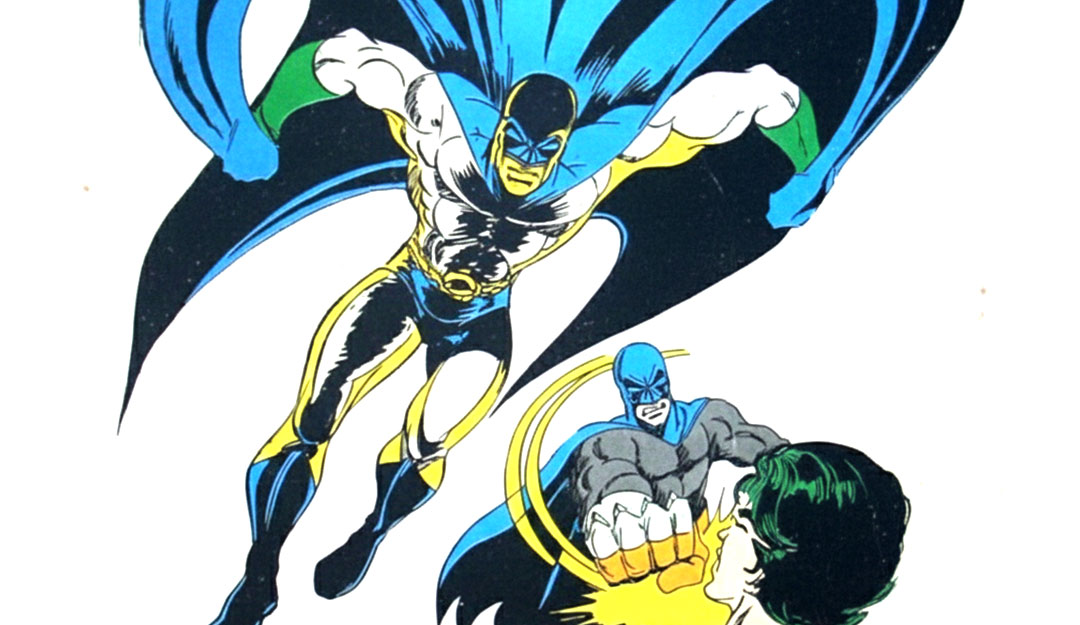
This detailed review on Tulsi Comics’ timeless work “Falcon and Falcon” (Baaz Aur Baaz) takes the story after the previous issue ‘Falcon Terror’ to a new and much bigger level. This comic does complete justice to its title and leads readers to a face-to-face confrontation where two characters with the same name and the same powers stand against each other.
Introduction: The Foundation Stone of the Great Battle
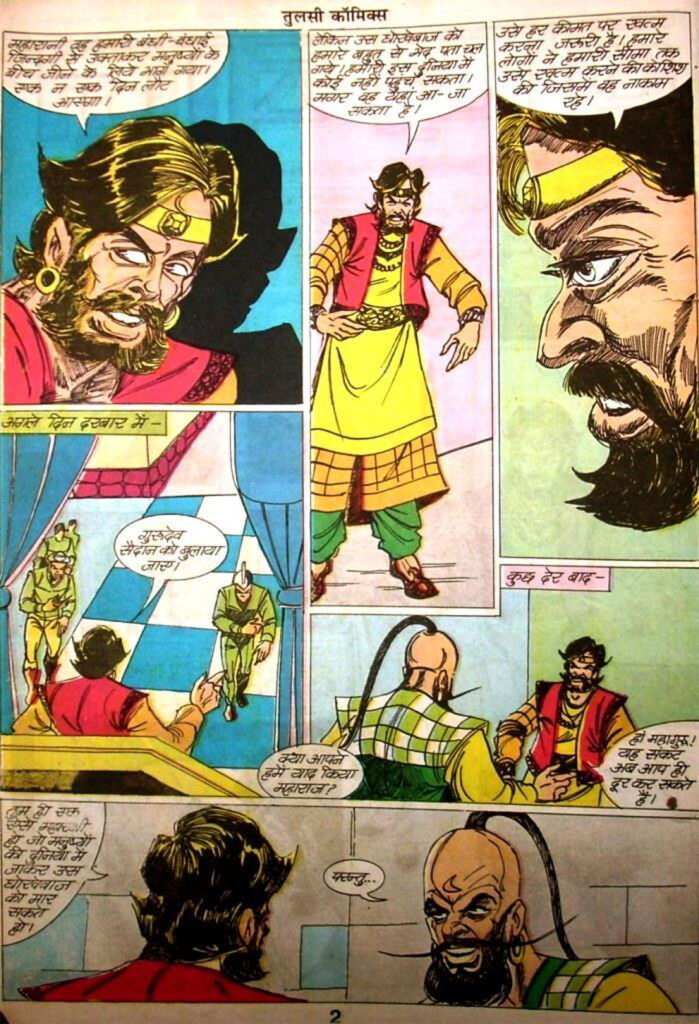
This is the second and most important episode of Tulsi Comics’ Baz series. In the last issue, we saw how a professional assassin, Dev, was given the powers of the ‘Falcon’ by being taken to the world of ghosts. In this issue (number 484), the story moves forward and gradually unveils a major mystery that leads to a confrontation between the hero and the real heir of that world, Prince Baz. Vikas–Pankaj’s strong portrayal and Parshuram Sharma’s balanced writing give this comic the form of a powerful thriller.
Detailed Analysis of the Plot
The story begins exactly where the previous issue ended. The Maharaj of the world of ghosts is extremely sad and distraught over the loss of his son, Prince Baz. He deeply regrets that an ordinary human being, Dev, took advantage of his son’s lookalike and escaped from their world with the magical costume and powers.
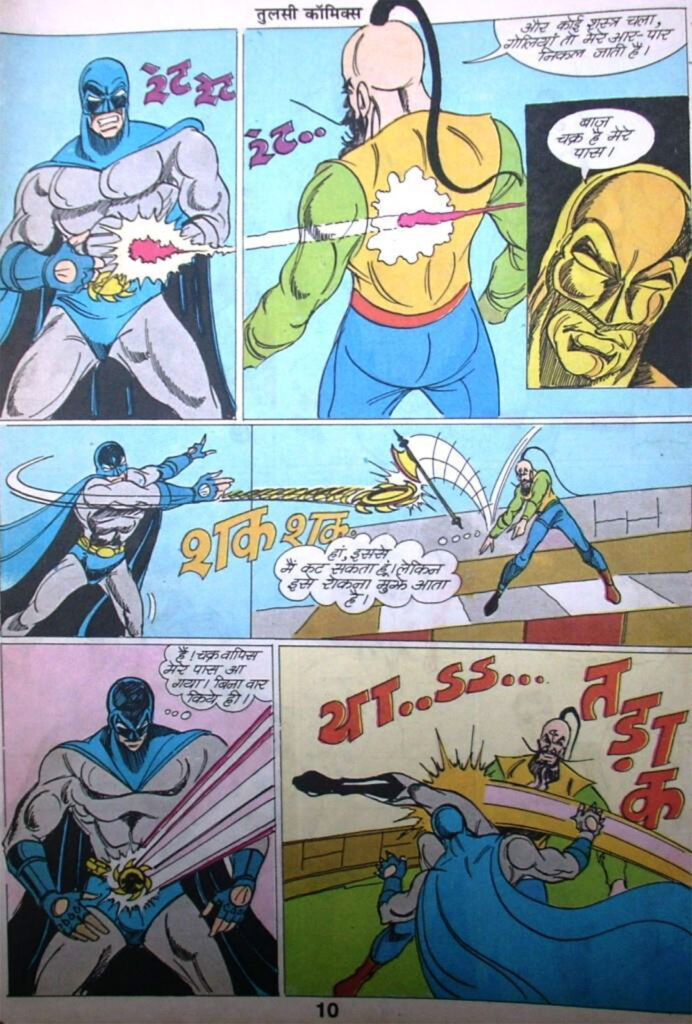
The Maharaj calls his most dangerous and skilled warrior, ‘Guru Devil’ (Master Satan). The character of Devil is quite impressive—long braid, cruelty on his face, and extraordinary powers. The Maharaj orders him to go to the human world, kill the deceitful hero, and bring back the magical attire. Here, Satan clearly states that as long as Dev has that costume, it is almost impossible to kill him, because the dress makes him completely invincible.
In the human world, Dev, i.e., Baz, takes the corpses of Khan Bahadur and Samra to the cemetery to dispose of them. He tries to bury them according to Christian customs so that no one suspects anything. Guru Shaitan enters the graveyard. This cemetery setting and the confrontation between the two become one of the most exciting parts of this comic. Satan uses his power of invisibility and the magical ‘Falcon Cycle’. For the first time, Dev fights an enemy who is also his guru.
During the battle, Dev realizes that he cannot completely defeat Satan. In such a situation, he uses his intelligence and makes a deal with him. Dev tells Satan that he knows where the real Prince Falcon is hiding. He provides information about the location of the ‘Eagle International Organization’—Eisen Fort. This temporary alliance between the hero and Satan gives a new direction to the story.
The biggest twist of the story comes when Dev meets the person whom he had come to kill, believing him to be his lookalike. That person turns out to be none other than the real Prince Falcon of the ghost world. At this point, an emotional flashback is revealed. Prince Baz was bored with his tightly planned and restricted life. He falls in love with a nymph/fairy named Koml, but his father strongly opposes the relationship. For his love, the prince leaves his world and comes to the human world, where he becomes Supremo. From here, he lays the foundation of an organization named Black Tiger.
Prince Falcon possesses a magical ring, with which he removes the Falcon costume from Dev’s body. Dev becomes completely helpless. The prince tells him that after coming to the human world, he realized that every human being was immersed in selfishness and greed, and therefore he accepted it as his destiny to rule the world of crime.
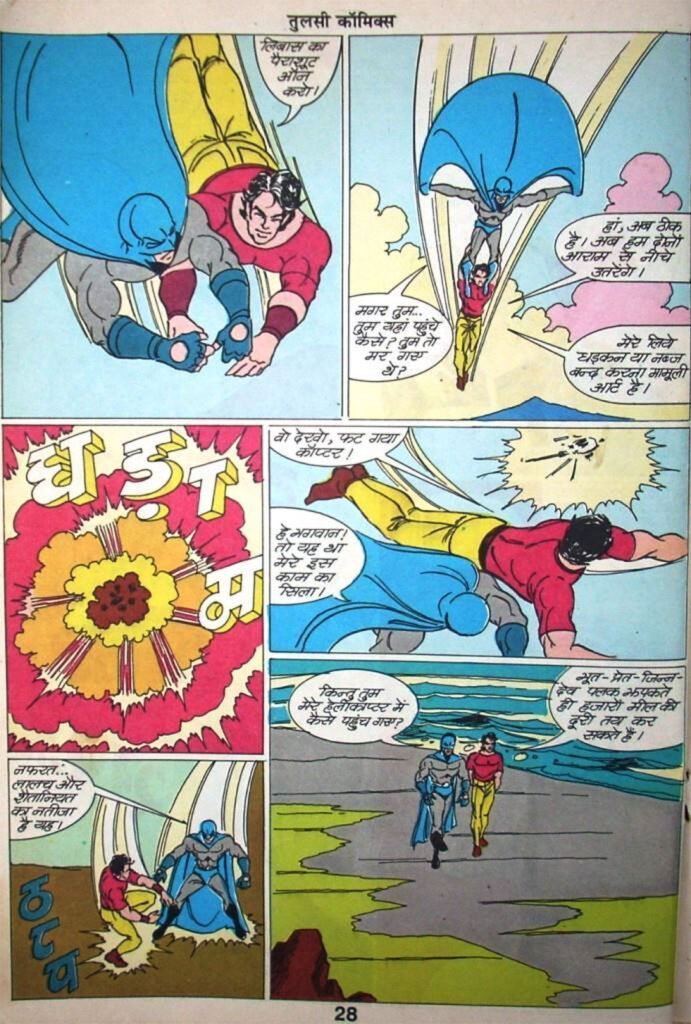
But Dev was not one to accept defeat. He makes a move with the help of Guru Satan. He uses a magical lore named ‘Musker’, which causes him to stop breathing and fake his death. The prince, believing him to be truly dead, gets him locked in a coffin. Dev regains consciousness as the coffin reaches Supremo’s main base. In the final scenes, there is a fierce battle between Dev and Rajkumar, i.e., Supremo, inside a helicopter flying high in the sky. Dev uses the ‘Falcon Chakr’ learned from his guru and finally puts an end to Prince Falcon, who has now taken the form of evil.
In-depth Analysis of the Characters
Dev (Baaz): Dev’s character appears more mature than ever in this issue. He does not rely only on his strength, but also makes full use of his intelligence and strategy. Compromising with Guru Satan shows that Dev thinks far ahead and never takes hasty decisions.
Guru Satan: He is a villain who is completely loyal to his king, yet extremely terrifying. His personality creates awe, and his fighting style—especially his use of the Chakra—makes him a memorable and influential character in the comic.
Prince Baz (Supremo): He is the ‘anti-hero’ (Anti-Hero) of this story. His love story creates sympathy for him within the reader, but the terror he spreads after coming into the human world establishes him as a ruthless criminal. His character symbolizes that when power falls into the wrong hands, even a good being can gradually turn into a demon.
Art and Portraiture
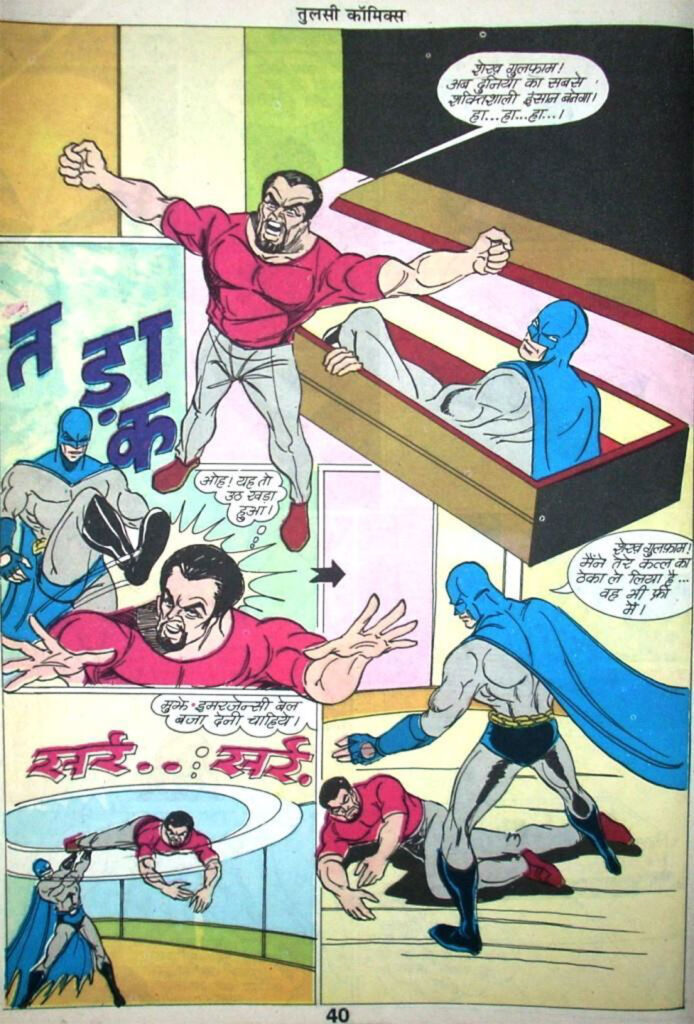
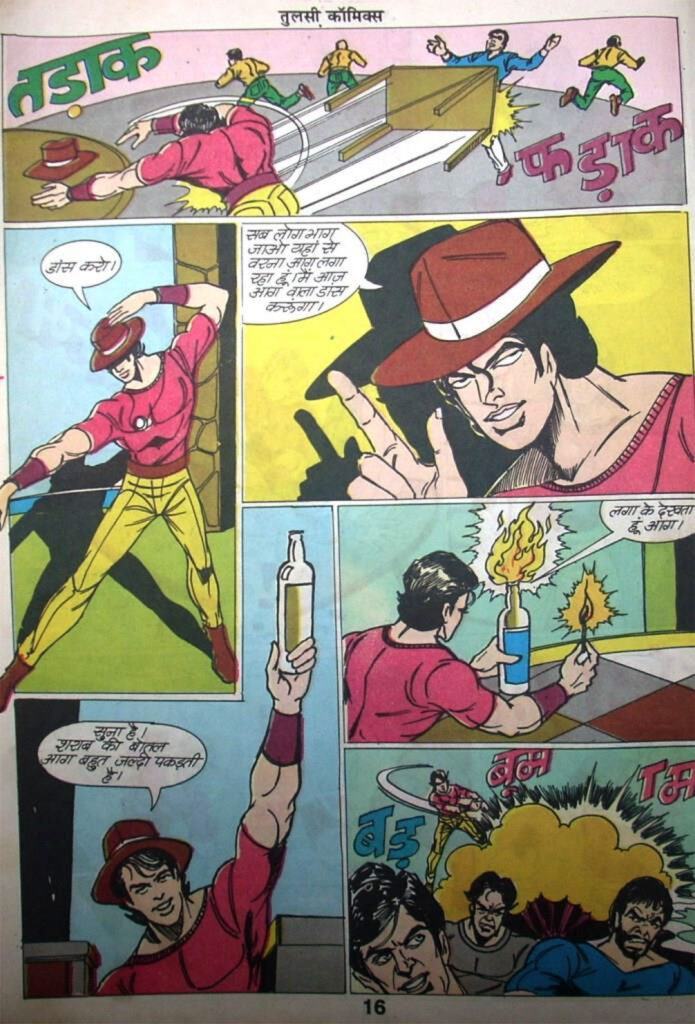
The Vikas–Pankaj duo displays the full strength of their art in this issue. The battle sequences taking place while hanging from a helicopter flying in the air, and the duel shown in the dim light of the cemetery, appear extremely lively. To add depth to the emotional aspects of the story, the helplessness on Dev’s face after his costume is removed and the arrogance reflected on Supremo’s face are highlighted in detail. The choice of colors is also very precise. The use of deep and mysterious tones for the ghost world, and distinct colors for the human world, not only enhances visual beauty but also clearly establishes the contrast and atmosphere of the two worlds.
Dialogue and Screenplay
The dialogues of the comic are powerful and effective. When Dev says, “It is a trivial thing for me to stop the beat or pulse,” it clearly reflects his magical training and depth of confidence. The screenplay moves at such a fast pace that the reader never feels bored. One mystery is barely resolved before another comes to light. Descriptions of locations like ‘Salam Islet’ and ‘Eisen Fort’ create an international spy-thriller-like atmosphere in the story.
Critical Comment: Strengths and Shortcomings
Strengths:
Many deep layers of storytelling are present in this creation of Vikas–Pankaj, which elevates it beyond a simple action comic and connects it with serious themes like love, rebellion, and identity crisis. The narrative focuses strongly on the background of the villain as well as the hero, making all characters appear balanced and well-developed, without the story leaning excessively toward one side. Elements such as the magical ring, the Chakra, and the lore of invisibility give new wings to the reader’s imagination and sustain the sense of adventure till the end.
Drawbacks:
In this comic, the character of Komala, who is Prince Baz’s beloved, is frequently mentioned and discussed, but her direct participation in the story remains limited. If her role had been more active, the emotional depth of the story could have become stronger. Additionally, some magical techniques, such as ‘Musker Lidia’, could have been explained more clearly, so that new readers could connect with the story and its complex concepts without confusion.
Conclusion
“Falcon and Falcon” stands as a highly memorable and glorious work in the history of Indian comics. This story teaches us that it is not power alone that makes a person great, but character and intent that define true identity. Dev’s transformation from a ‘hired killer’ to a ‘protector of justice’ is one of the most inspiring journeys presented in this comic.
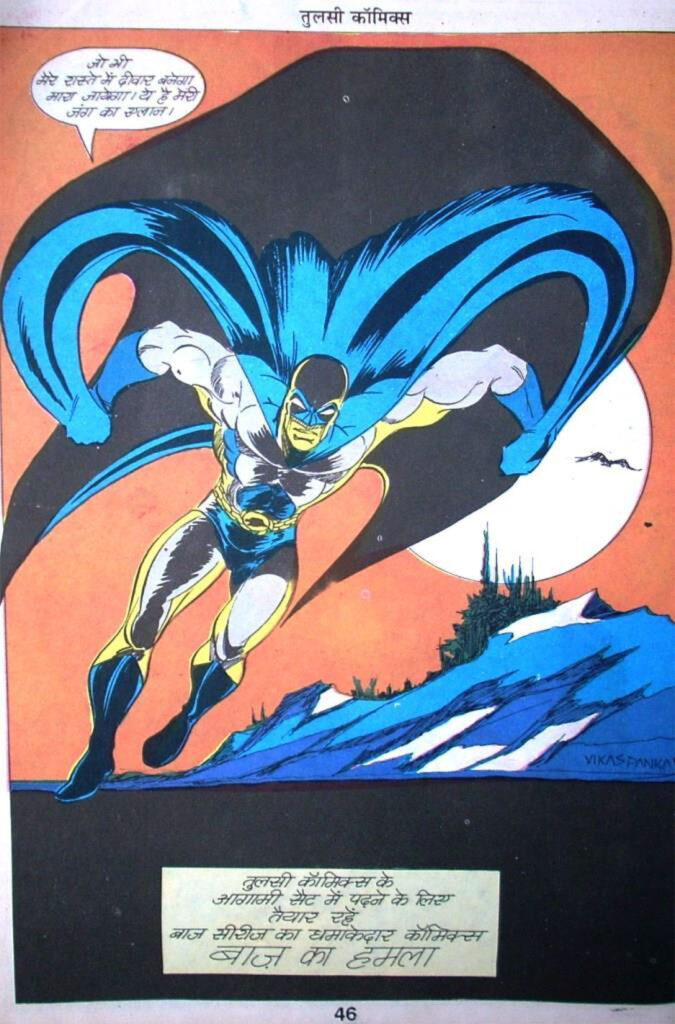
The comic strongly evokes memories of the golden era of the 1990s, when children lived more within these colorful pages than in front of television screens. If you enjoy suspense, superhero action, and magical adventures, “Falcon and Falcon” deserves a place in your collection. The ending leaves the reader eager for the next installment, “Falcon Attack,” thereby maintaining the continuity of the series.
Total Assessment: 4.8/5
