


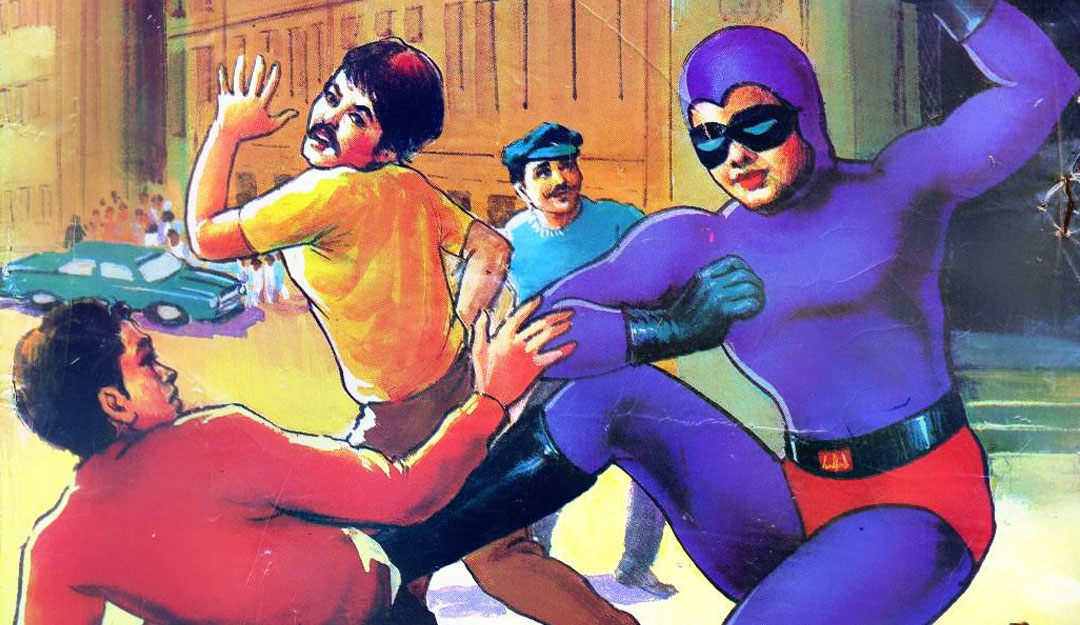
Manoj Comics was known for its unique blend of action with emotional stories, social issues and family dramas. In this series, “Kala Phantom and the Enemies of the Country” is a very important work. This comic not only tells the emergence (Origin Story) of the Black Apparition (Kala Pret), but also shows how an ordinary human being is forced to take up arms against social injustice. This jugalbandi of writer Bimal Chatterjee and artist Surendra Suman takes the readers on an emotional and exciting journey.
A detailed analysis
The story starts with a very interesting frame story. The uncrowned king of the jungle Mahabali Shera reaches the cave of Kala Phantom with his friend Chimpanzee (Chimpi) for a feast. Here readers get to see for the first time a friendly crossover of Shera and Kala Phantom, which was no less than an “Avengers moment” for the readers of that time. During the meal, Shera reveals his eagerness to learn about the past of the Kala Phantom. From here the story goes into flashback and we come to know the real history of Kala Phantom.
Azad’s struggle and failure of the system: The first part of the story is extremely poignant and tells the bitter truth of Indian society. In a flashback we find a young man named Azad. Azad is a brilliant student who has come “first class first” in his class. His widowed mother has taught him by washing utensils and working hard in other people’s homes. Azad feels that his degree will take away his and his mother’s sorrows.
But, this is where the trademark social drama of Manoj Comics begins. When Azad sets out to find a job, he faces corruption, recommendation and bribery everywhere. Some ask him for a bribe of 10 thousand rupees, some VIP recommendation. Azad’s honesty and ability have no value in this corrupt system.
Tragedy and the birth of the Black Phantom: The story takes a turn when Azad’s mother gets T.B. (tuberculosis). This scene is shocking to the reader. On one hand the mother is vomiting blood, and on the other hand Azad does not have money to buy medicine. The author has shown the insensitivity of chemists and doctors with great cruelty and truth. Azad’s mother dies due to lack of treatment because of not having money.
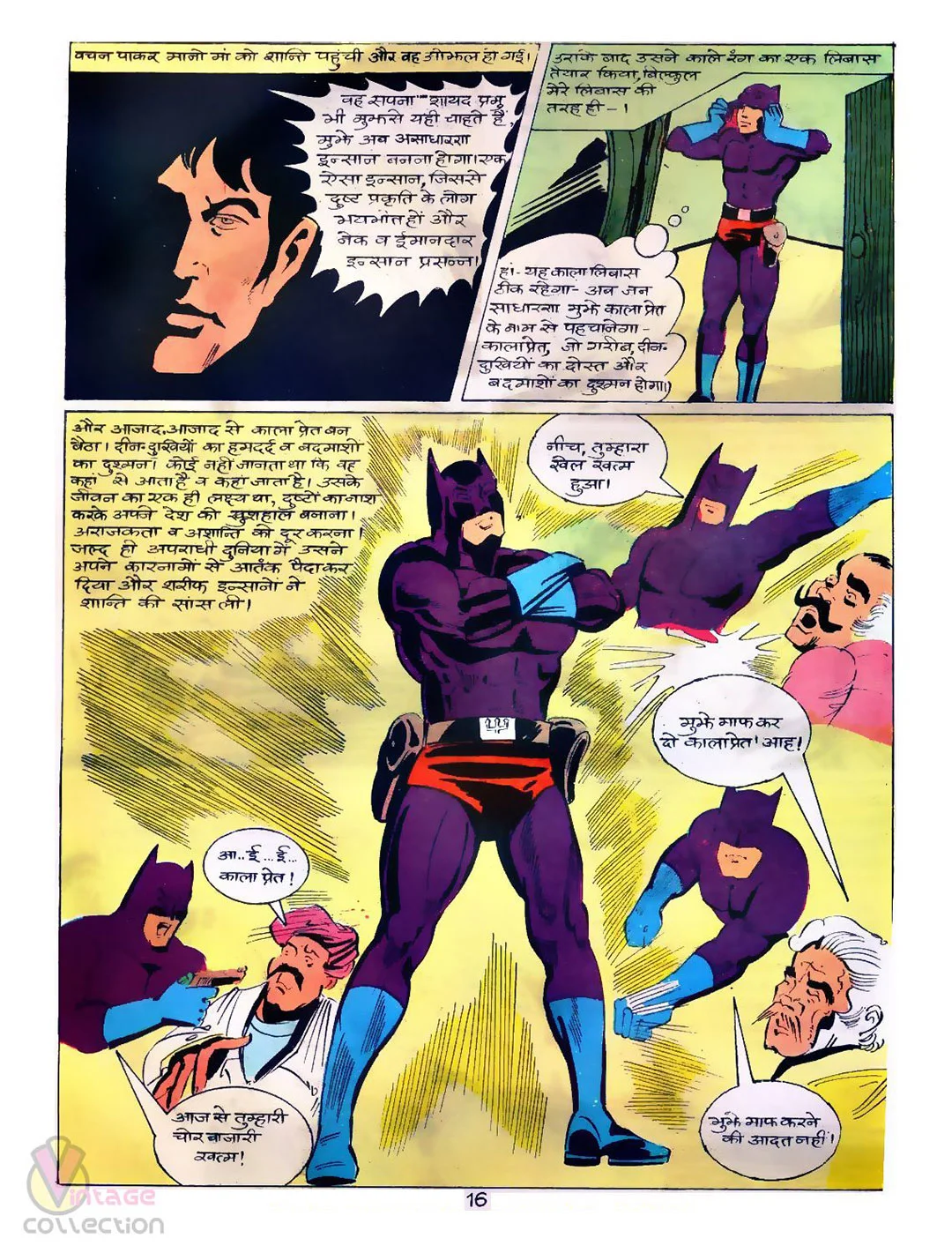
What Azad swears before the fire of his mother’s funeral pyre is the most powerful moment in this comic. He dies as an ordinary, simple person and is born as “Black Phantom”. It was not just wearing a costume, but a change of ideology. He swears that he will now become a friend of the good and a terror for the evil.
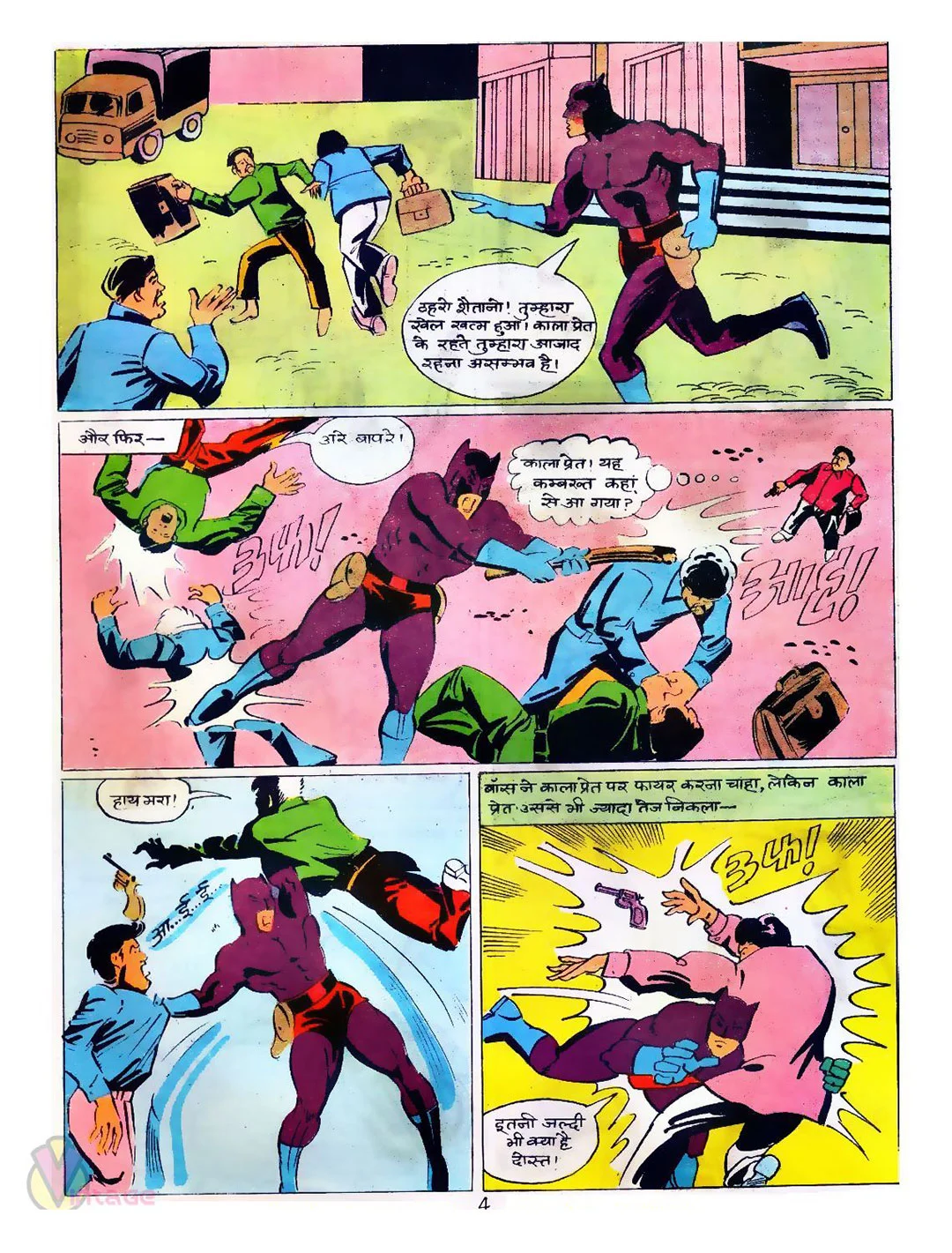
War against crime: After this the story turns into action. Azad (now Kala Phantom) targets hoarders, black marketeers and corrupt people. He helps the police, destroys gambling dens such as the Midnight Club, and wipes out the Smuggler Gangs. Here the author has shown how a person can clean the system if he is determined. The police consider him a mysterious human being but respect him.
Espionage and Sacrifice: The second dimension of the story opens when a wounded Secret Agent (Agent Zero) is found by the Black Phantom. While dying, he gives a microfilm to the Black Phantom which contains secrets related to the security of the country. An international terrorist organization called “Black Cross” enters here. Azad (Kala Phantom) risks his life and takes the film safely to Mr. Bhatnagar.
However, Azad is badly injured in this mission. After reaching his home, he dies in the lap of his wife Radha. This was a very shocking twist as comic heroes don’t usually die. But Azad, even while dying, takes a promise from Radha that their future child will continue this mission.
New Generation and Legacy (Legacy): The final part of the story follows the lines of “Phantom” (The Phantom), where generation after generation changes the protagonist. Radha nurtures her son Bharat like a warrior. Bharat is taught shooting, horse riding and martial arts since childhood. He proves himself by defeating a powerful boxer like Gomes in the national boxing competition. Finally, Radha takes him to his father’s cave and hands him the costumes of Kala Phantom. In this way, Azad’s son Bharat becomes the new Black Phantom, now ready to take revenge on his father’s killer Black Cross.
Character analysis
Azad (First Black Phantom): Azad’s character is that of a “tragic hero” (Tragic Hero). He is a common man killed by the system. His anger and his frustration connect readers with him. He is not a superhero, he has no magical powers; his power is his anger and resolution. His sacrifice gives him the status of a martyr.
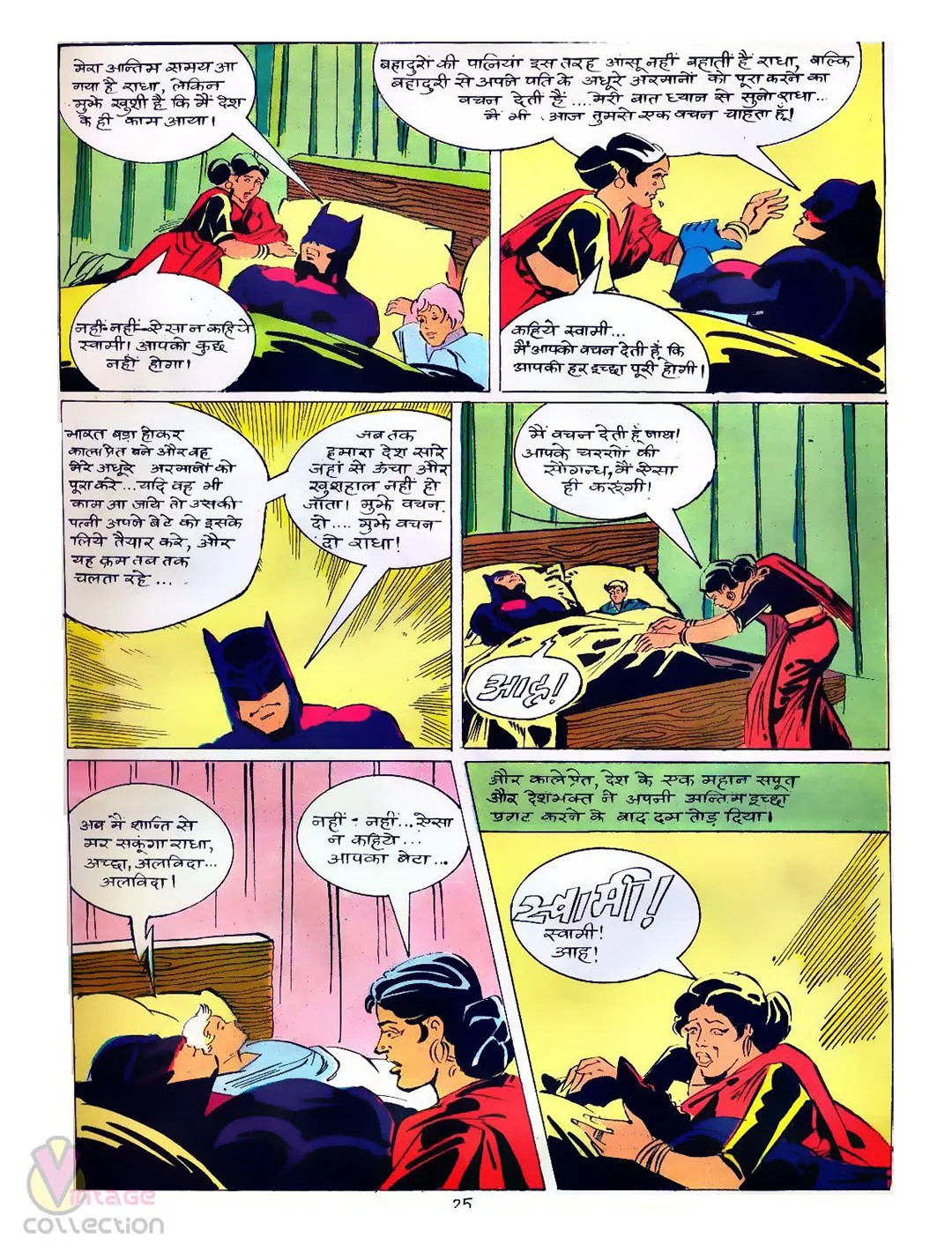
Radha: Radha’s character is very strong in this comic. She does not live a life of crying as a widow, but instead steels her son to fulfill her husband’s promise. She plays the role of a guru and guide, who symbolizes the power of Indian women.
Bharat (Second Black Phantom): While Azad was struck by circumstances, Bharat is a trained warrior. He was brought up for a mission. He appears more powerful and prepared than his father.
Mahabali Shera: Although Shera’s role is only that of a listener, his presence establishes that the Black Phantom is an important part of Manoj Comics’ universe.
Social concerns and subject matter (Themes)
This comic is not only a means of exciting entertainment, but it is also an important social document of 80’s and 90’s India. Azad (before becoming a Black Phantom), the protagonist of the story, wanders from door to door despite his higher education degree, which shows the despair of millions of educated unemployed youth of that period.
The story also reveals the bitter truth of the failure of the justice and health system: “The poor don’t have money for treatment.” Azad’s mother’s death was the result of this failure, which forced him to stand up to the system. The title of the comic “Enemies of the Country” links personal vendetta with service to the nation. Azad does not only avenge his mother’s death, but he also fights anti-national forces (Black Cross). This narrative reinforces the idea that when traditional law and order fails, society seeks a superhuman hero (such as a Black Phantom) who can ensure ultimate justice even by rising above the law.
Art and Dialogue (Art and Writing)
Painting (Art): Surendra Suman’s artwork is very impressive. The movement is clearly visible in the action scenes. In particular, the boxing match scenes and the scenes of goons being beaten by Kala Phantom are very vivid. He has carved the atmosphere of the 80’s — be it the interior of the house, the streets or the costumes — brilliantly. The purple colored Black Apparition costume gives him a mysterious aura.

Writing (Writing): There is magic in the pen of Bimal Chatterjee. The dialogues (Dialogues) are very filmy and effective. For example, the Black Phantom dialogue — “Sorry, it is my habit to enter the house and kill” — shows his fearlessness. Also, the dialogues between Maa and Azad are very emotional which can bring tears to the reader’s eyes. The pace of the story (Pacing) is very good; nowhere does the story seem boring.
Critical conclusion
Positive side:
Strong Origin Story (Origin Story): The foundation of any superhero is his Origin Story, and the story of the Black Phantom is very solid and emotional.
Balance of emotions: It has a great balance of action, emotion, suspense and patriotism.
Inspirational: Radha’s struggle and building Bharat is inspiring.
Weak side:

Some elements of the story seem to be clichés of old Hindi cinema, such as a sick mother, not having money for medicine, and swearing while dying. But this formula was the most successful in that period.
The character of the villain “Black Cross” could have been developed a little more.
Final decision:
“Kala Phantom and the Enemy of the Country” is one of the finest productions of Manoj Chitra Katha. This comic reminds us that real superheroes don’t need a superpower, but a strong will. Azad’s sacrifice and Bharat’s rise is a cycle that keeps readers engaged. If you are a fan of Hindi comics and want to reminisce, or want to know how developed the art of storytelling was in Indian comics, then this PDF/comic must be read.
It’s not just a comic, but a journey of an ordinary man becoming extraordinary. At 12 rupees (the value of the time) it was a precious treasure trove of entertainment and emotions.
Rating: 4.5/5
This review is proof that a good story crosses the boundaries of time. Even today, when we read Azad yearning for his mother and then breaking down like a storm on the enemies of the society, we get goosebumps.
