


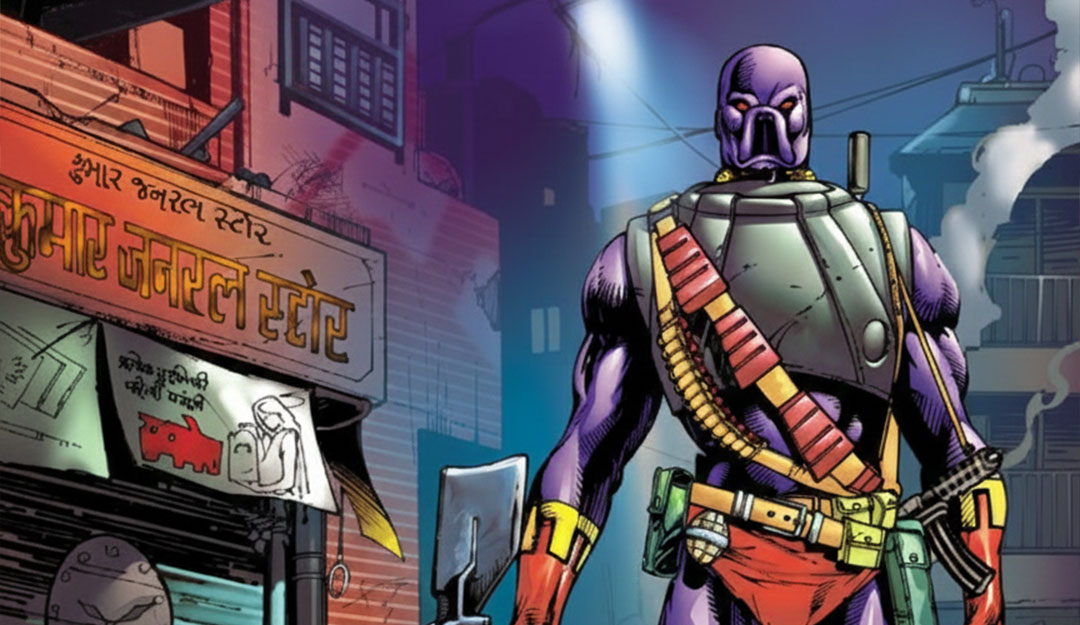
This comic is the fifth and last part of the ‘Doga Hindu Hai‘ series, which answers all the questions that have arisen in the last four issues, ‘Doga Hindu Hai‘, ‘Apna Bhai Doga‘, ‘Doga Hi-Hi‘, and ‘Ro Pada Doga‘. These questions were related to heroism, politics, and communalism.
Written by Sanjay Gupta and composed by Tarun Kumar Wahi, this issue is not just the story of a superhero’s victory, but it is also the story of the reawakening of the soul of Mumbai city. In previous issues, we saw villains like ‘Bloodman’ and ‘Cornell Jaddy’ conspiring to break Doga and give him a communal color. ‘Doga Ka Curfew’ witnesses the end of this helplessness and the rise of a new, tougher form of justice.
The issue came about when readers were quite curious about Doga’s character. Will Doga prove his innocence? Will the people of Mumbai trust their protector again? The answer to all these questions is in this comic.
Plot expansion: return of the Protector
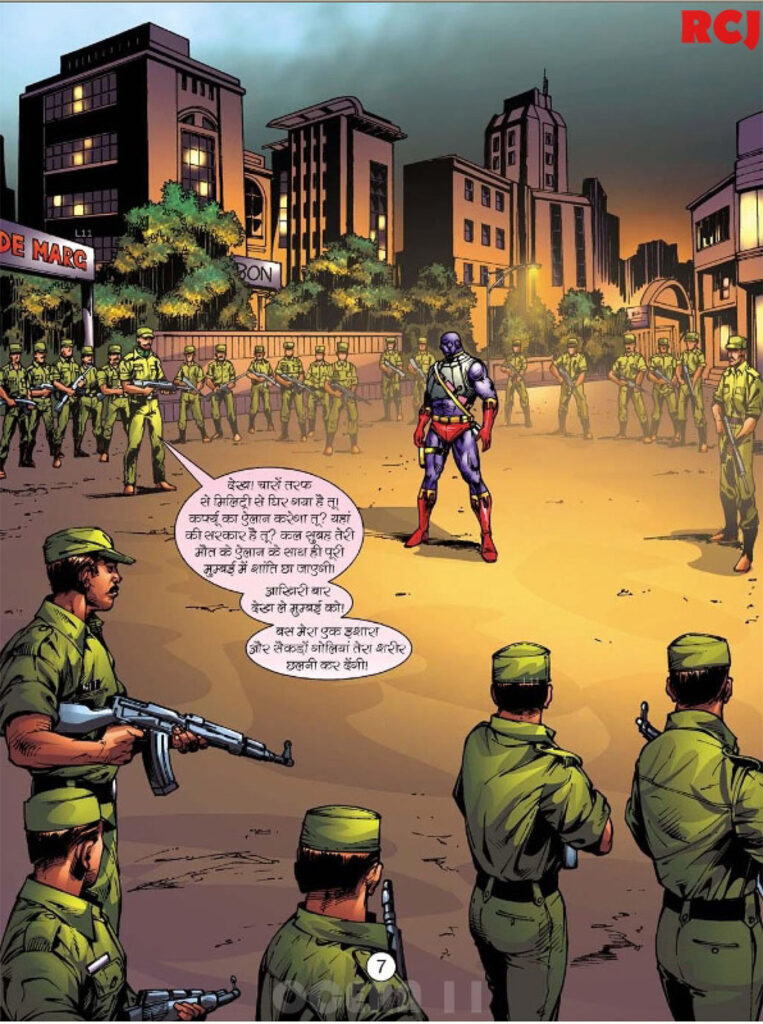
The story picks up where Suraj (Doga) recovers from his injuries and mental pain and puts on his uniform again. Mumbai is burning in the fire of communal riots. The curfew of the government and police has failed because rioters and criminals are not afraid of the law. Doga imposes a new curfew on his own terms—‘Doga’s curfew’.
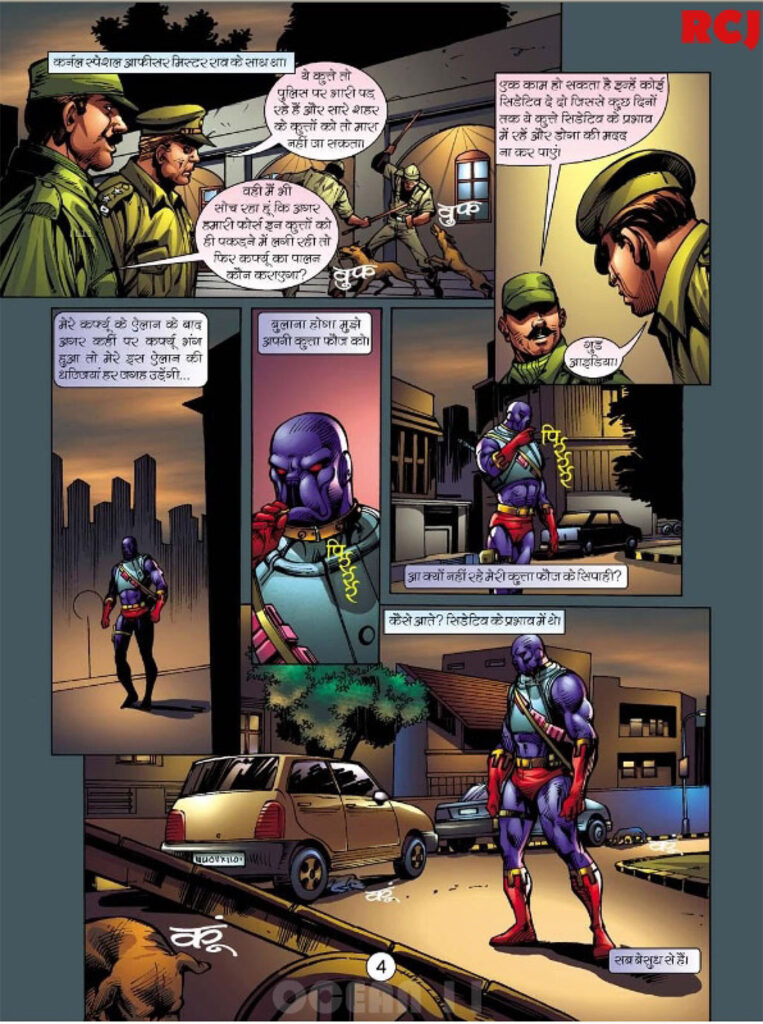
Doga’s clear message is— “Whoever goes out into the streets with a weapon will be a victim of Doga’s bullet.” He does not see religion, only prevents crime. There are several scenes in the story where he harshly punishes criminals from both Hindu and Muslim sides, showing that crime has no religion.
Villains Zadie and Bloodman tried to destroy Doga’s power, his ‘dog army’. In this issue, Doga rescues his loyal companions from the captivity of the enemies and sends them to keep the peace in the city.
Touching Scene: Protecting Humanity
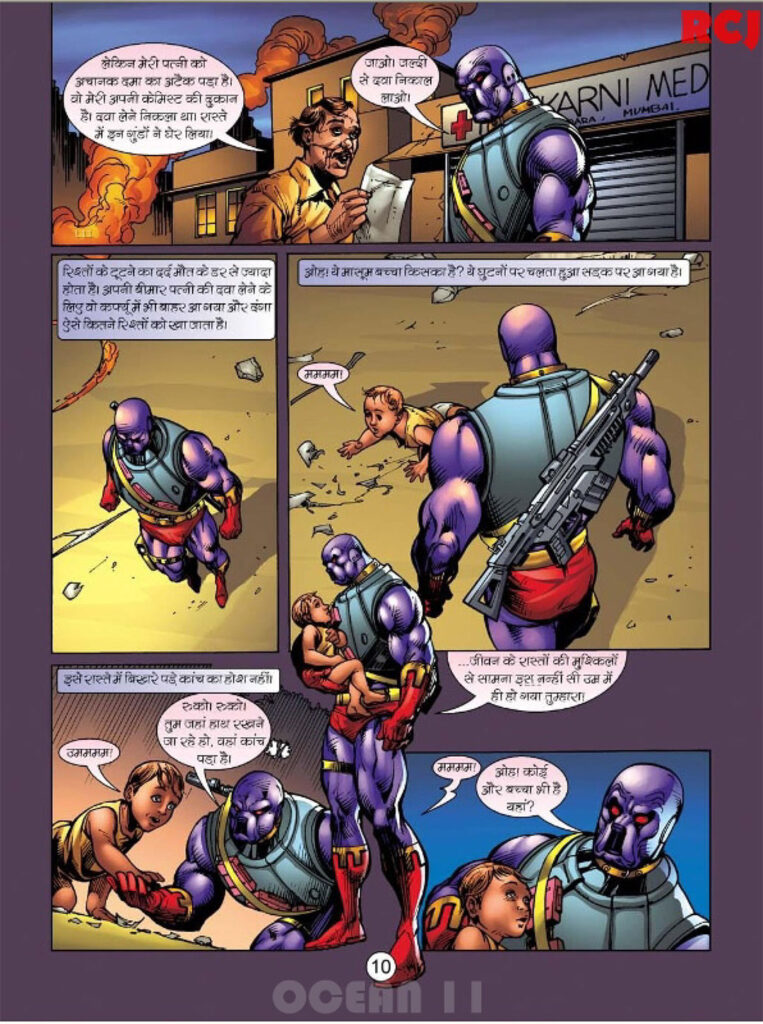
There are some scenes in the middle of the comic that touch the heart. In one scene, Doga saves an innocent child from the fire of riots amid the curfew. The child has become an orphan as his parents were killed in the riots. Doga delivers him to an orphanage. Here, the red color of Doga’s eyes reflects anger as well as compassion. The authors show that Doga’s anger is for criminals, but his heart beats for innocent people.
Conspiracy exposed: victory of police and truth
Inspectors Khonpar and Khudura, who were caught by the conspirators in the previous issue, play a key role in this issue. They show through a ‘slow-motion’ video that a woman had forcefully worn an ‘Om’ locket around Doga’s neck to make him appear as a Hindu fanatic.
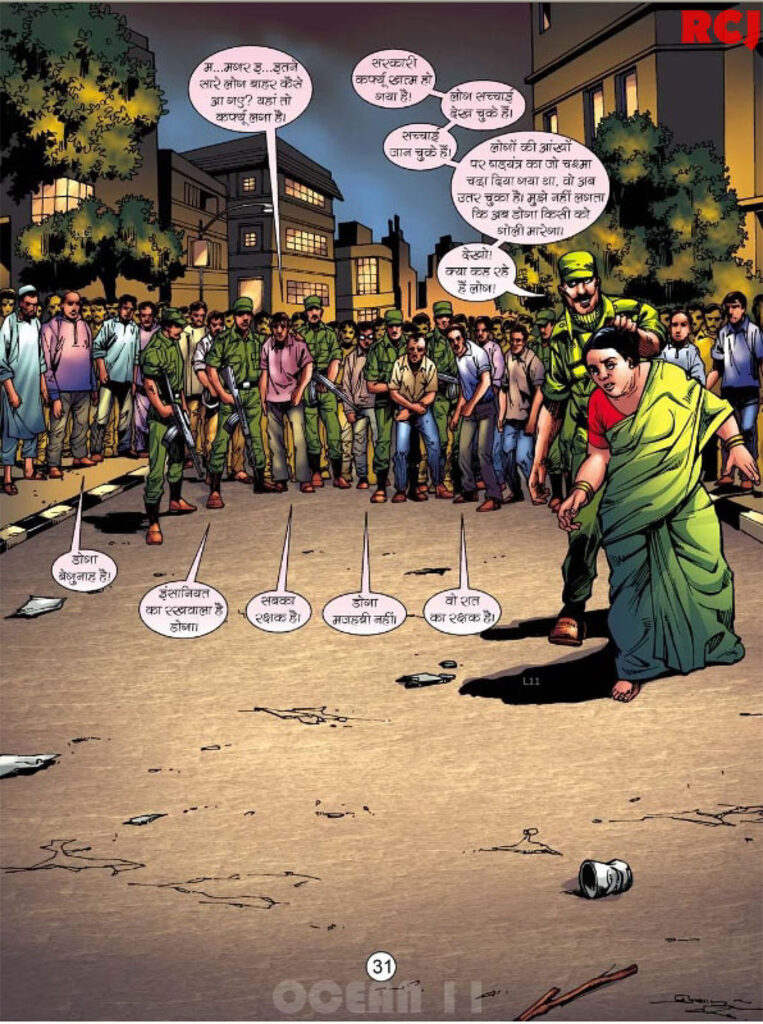
When this truth comes to the media, the veil of hatred is removed from the eyes of the people of Mumbai. This scene symbolizes the power of media and the victory of truth. People understand what a big mistake they made with their own hero.
Unique Way of Justice: ‘Blood Bank’ and Doga
The most different and effective part of this issue is where Doga catches those people who were running the ‘black market of blood’ by taking advantage of the riots. Bloodman’s entire work depended on people’s blood.
Doga takes the criminals to the hospital and forces them to ‘donate blood’ at gunpoint. He says— “Mumbai asked Doga for blood, Doga will give blood.” He extracts the blood of these goons and history-sheeters and delivers it to the hospitals where the riot-injured were hanging between life and death. This is a wonderful example of justice.
The villain’s ending: tit for tat
The end of Bloodman, who was a dealer in people’s blood, is also very symbolic. Doga does not kill him with bullets but punishes him for his ‘blood business’. He hurts him so much that his body slowly starts dying due to lack of blood. This scene strengthens Doga’s thinking of justice— “The law punishes the criminal, Doga eliminates him.”
Character analysis: a mature hero
Suraj/Doga: In this issue, Doga appears more mature and calm than before. He is no longer just a ‘bones-breaking’ hero, but a strategist who understands the problems of society. His ‘curfew’ is not to show strength, but to create peace.
Ginger uncle and Monica: Their company is a mental support for Suraj. Monica’s love and Ginger uncle’s guidance do not let him wander.
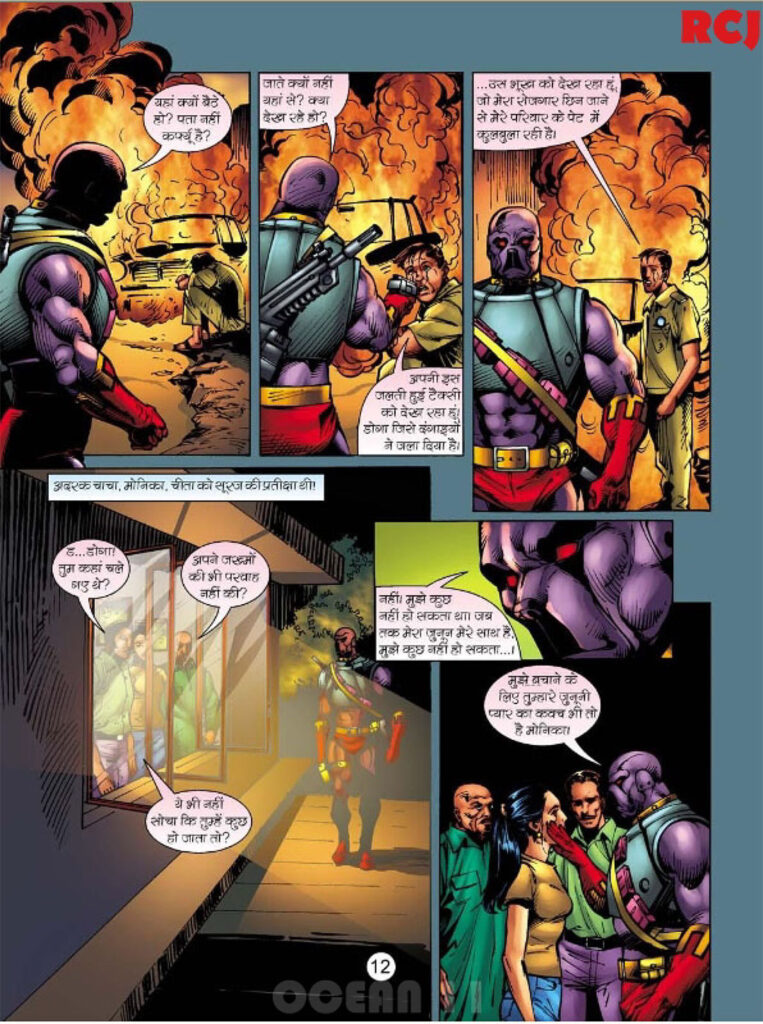
Fox (Loamdi): The fox has been Doga’s secret force throughout this series. His mysterious arrival and helping Doga maintain the adventure in the story.
Attacking communalism: A social mirror
This comic series directly attacks ‘communalism’, a very sensitive issue of Indian society. It shows how some selfish people (like Bloodman) use religion to make common people fight for their own benefit. Doga says, “Mumbai has no religion, Mumbai’s religion is only humanity,” which is equally accurate and important in today’s time.
Art and visual presentation
‘Studio Images’ and Jagadish Kumar’s portrayal make this issue look great.
Doga climbing a tank or going through flames, every panel looks like watching a movie.
The depiction of Doga’s eyes behind his mask perfectly shows his different emotions: anger, sadness, and resolution. The use of dark blue in night scenes and bright red in riot scenes increases the sense of tension and fear in the story.
Dialogue and script
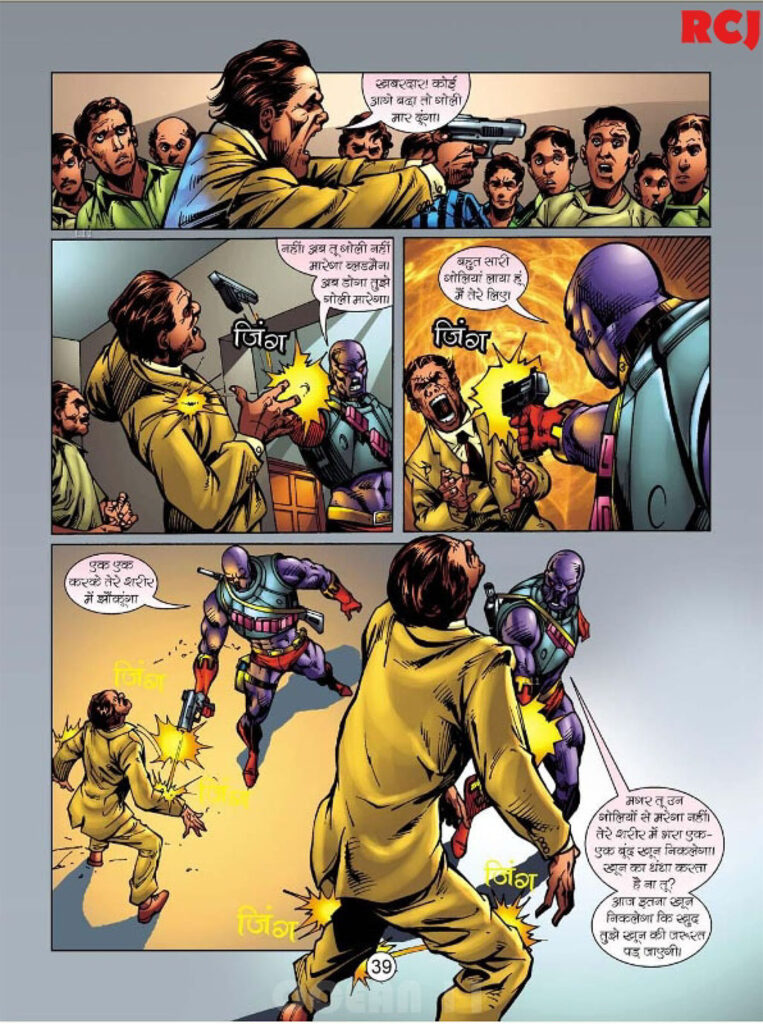
Tarun Kumar Wahi’s dialogues are the life of this issue. His dialogues are short but very effective. Especially the speech in which Doga appeals to the public to donate blood and warns the criminals—it shocks the readers. The pace of the story is very fast, and there is not even a moment of boredom while reading.
Series finale: Conclusion of ‘Doga is Hindu’
At the end of the series, it becomes clear that Doga is neither a Hindu nor a Muslim. He is just a ‘protector’. Sanjay Gupta has given a beautiful message via the green page (Green Page)— “The color of blood is red, and that red color is the same in every human being.” This series establishes Doga as the most special and lofty hero of Indian comics.
Review conclusion: Why read ‘Doga Ka Curfew’?
This comic is not just for action lovers, but also for those who want to understand the conflict between society, law, and morality. It teaches us that:
- Truth can be suppressed, but not erased.
- Even a single person can make a difference if his resolve is strong.
- The answer to hatred is not hatred, but justice and selfless service.
Final thoughts
‘Doga Ka Curfew’ is a great achievement of Raj Comics. Even after reading this story, it remains in the mind for a long time and forces one to think. Doga’s greatness lies in the fact that he forgets his insult and sets out to help the public again, which had hurt him earlier.
Rating: 5/5
