


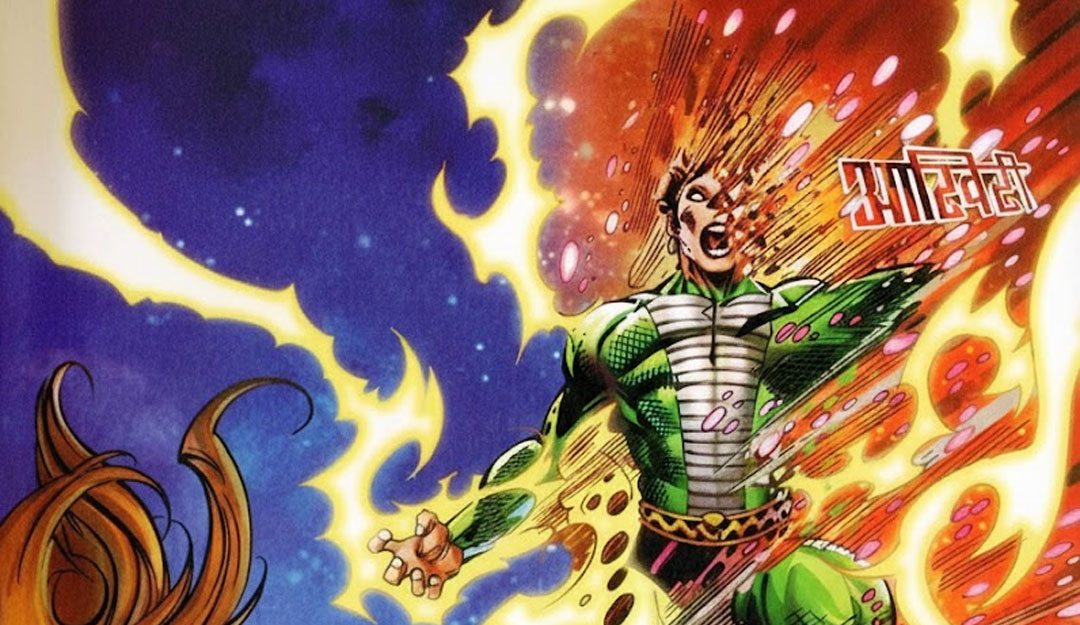
The ‘last’ series gets the same place in the history of Indian comics as Marvel’s ‘Avengers: Endgame’ has globally. This series is not limited to just the battle of superheroes, but it is a big and ambitious story that ties together the vast universe of Raj Comics. The fifth part of this series, ‘Invisible Conspiracy’, left the story at a point where the devastation had begun. The sixth part, ‘Universe Fragmentation’ (Brahmand Vikhandan), brings out in full depth the repercussions of the same catastrophe—the scattering of heroes and the dangerous play of cosmic forces.
Detailed analysis of the plot: The burden of memories and the crisis of the present
The story of this comic is like a complex maze, running on multiple timelines and multiple planets simultaneously. Author Nitin Mishra has created a ‘multi-linear’ story here, where new questions and new secrets come to light at every turn.
Fragmentation of Nagraj: Sacrifice of a Hero
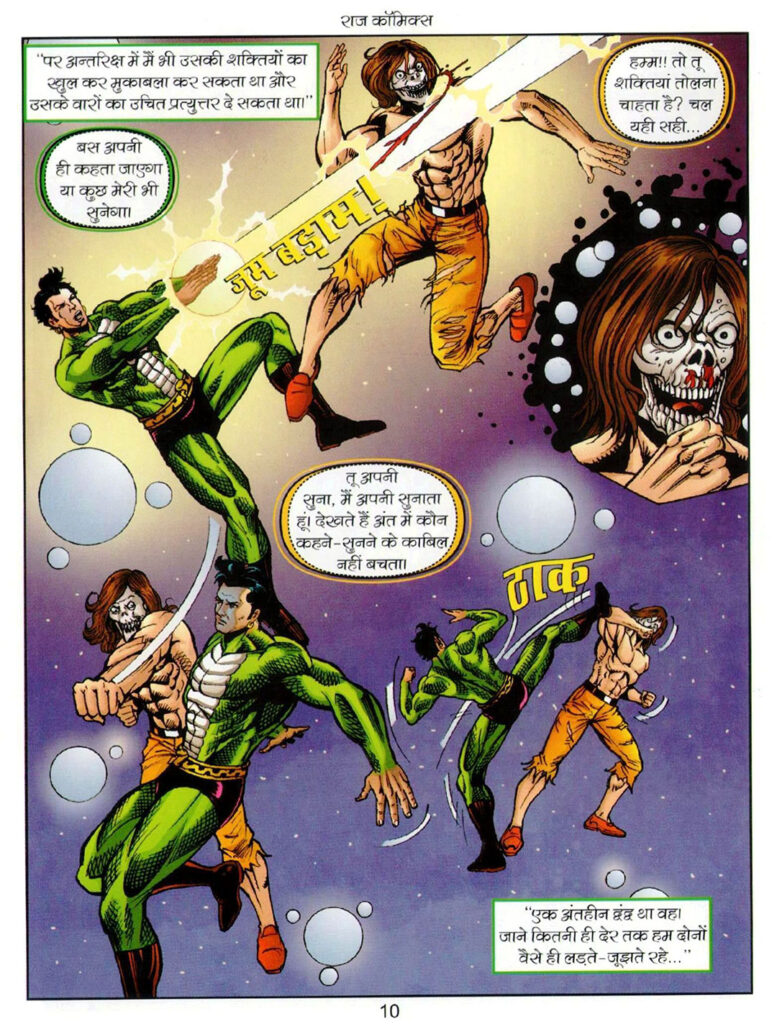
The opening pages of the story remind us of the horrific war that took place in the empty vacuum of space between Nagraj and ‘Mutilated’ (see-through/Professor Ibrit Vikaral). The pervert, who had gone mad with the infinite power of ‘Brahm-kan’ (Divine Particle), had become an almost invincible enemy to Nagraj.
This is where a very interesting scientific mystery comes to light. Nagraj tells that when the pervert gave him the final blow, ‘wishful particles’ of his body were scattered throughout the universe. Tadam Gyadu’s portraiture makes the scene simultaneously creepy and gorgeous. Nagraj’s particles spread to countless galaxies. But then a miracle happens—that ‘gravity’, which usually pulls everything towards itself, just pulled back the particles of Nagraj. Nagraj saying that “it was no ordinary gravity” creates a huge puzzle in the story.
Divine Council and the logic of the Pole
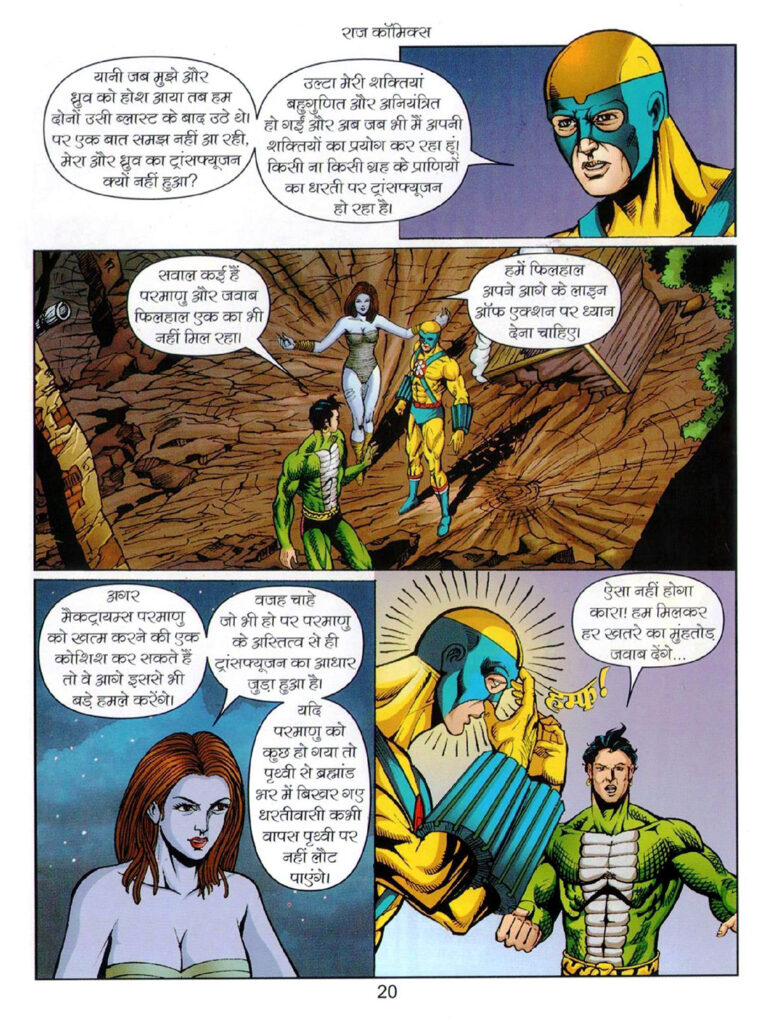
The second important part of the story is related to the appearance of the Super Commando Pole in front of the ‘Divine Council’. It is here that the story takes a deep philosophical turn. The Divine Council considers humans a threat to the entire universe. In this part, Dhruv’s sharp intelligence and logical thinking come out openly.
The Divine Council reveals a very old secret—the ‘story of asurons’. They tell that after Dwapara Yuga, the demons had come to an end, but the rebirth of their souls did not stop. Now those demons are being born in human form, like Professor Ibrit Vikaral. The same old habit of demons—longing to have infinite power—broke the ‘Code Key’ of the Brahm-particle. Dhruv strongly stands for humanity here, but the Council’s decision is extremely harsh. He believes that mankind has played a dangerous fiddle with the structure of the universe, that is, the Brahm-Tattva.
Tricolor and Shroud: The Struggle of the Planet Hejtro
Another very exciting aspect of this comic is the struggle of ‘Tricolor’ (Tiranga). On the planet Hejtro, which is millions of light-years away from Earth, Tricolor is single-handedly fighting thousands of alien soldiers. When his defeat seems almost certain, only then does the entry of ‘Shroud’ (Kaffan) take place.
This pairing of Tricolor and Shroud directly transports Raj Comics’ ‘street-level’ heroes to the ‘cosmic level’. The combination of Tricolor’s patriotism and Shroud’s devotion to justice seems very impressive here. The rulers of the planet Hejtro consider Earthlings to be mere ‘germs’ and want to completely wipe them out. During this time, the old enmity between the warriors of the planet ‘Vajr’ and Hejtro also comes to the fore.
‘Papa Ferry’ (Anthony) and Prince on Earth
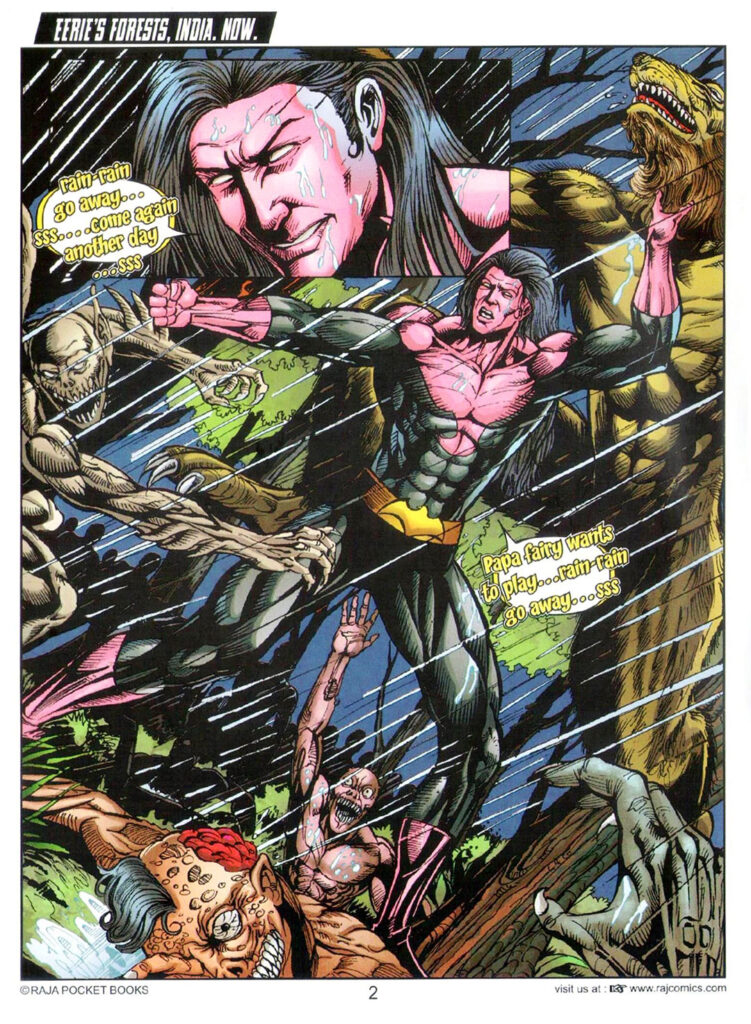
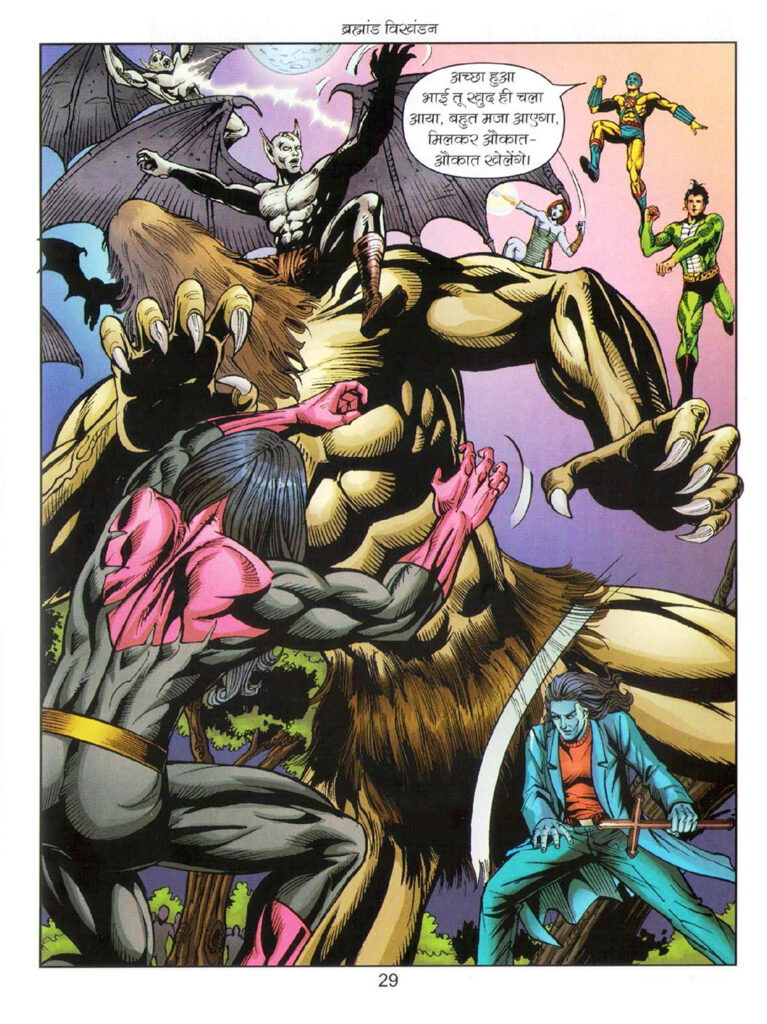
The Earth has now become a ruined graveyard, where zombies and bloodlusters (vampires) rule. Here, Anthony and Prince’s action adds a tremendous amount of horror to the story. Anthony is called “Papa Ferry” here—a creepy character who gives terrible punishments to sinners. The scene of Anthony stripping the soul of a bloodthirsty creature from its body and tormenting it in ‘cold fire’ gives goosebumps. This part clearly shows how terrible the condition of the Earth has become.
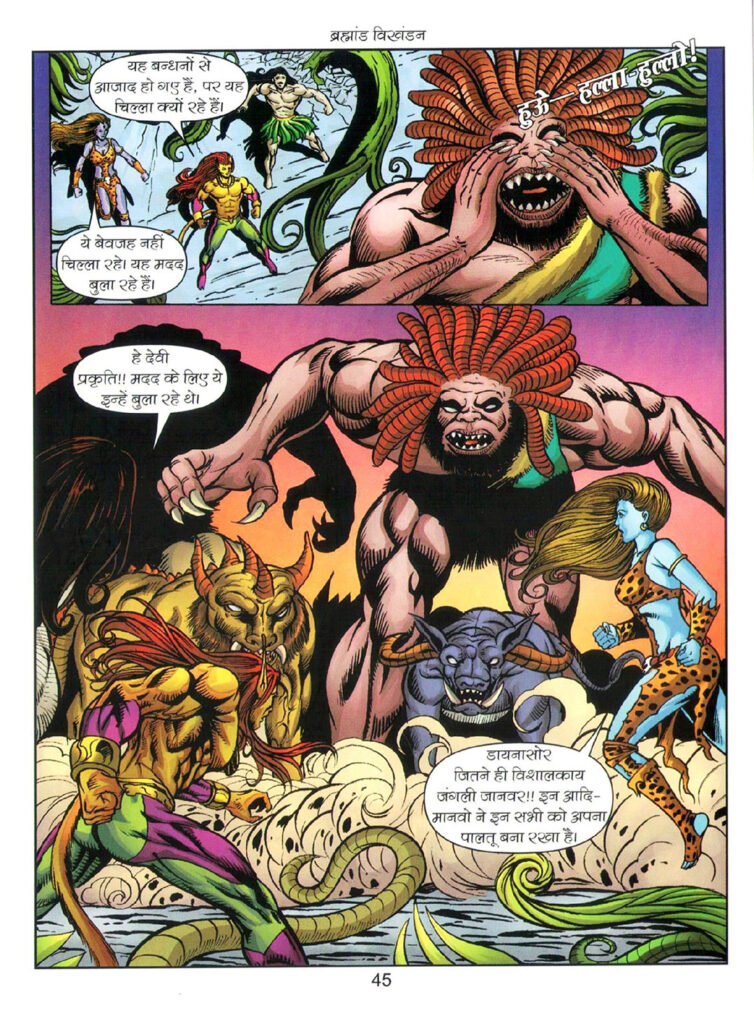
Bheriya, Shakti and Vanaputra: Planet of Primitive Humans
A parallel stream of the story takes us to a planet where Bheriya, Shakti and Vanaputra are struggling with primitive humans. This is where Dhruv arrives, possibly at the behest of the Divine Council. With his logical thinking, Dhruv quickly understands that these primitive humans are under the control of some ‘Black Shadow’.
Here the concept of ‘Over-Shadow’ comes up. This black shadow keeps the bodies of primitive humans under its control by making them ‘hosts’. Dhruv plans to convert the shadow into vapor using the heat of power. In this part, the bravery of characters like ‘Adig’ and ‘Gagan’ is also seen, who have now become warriors armed with god-powers and not ordinary humans.
Art and Portraiture
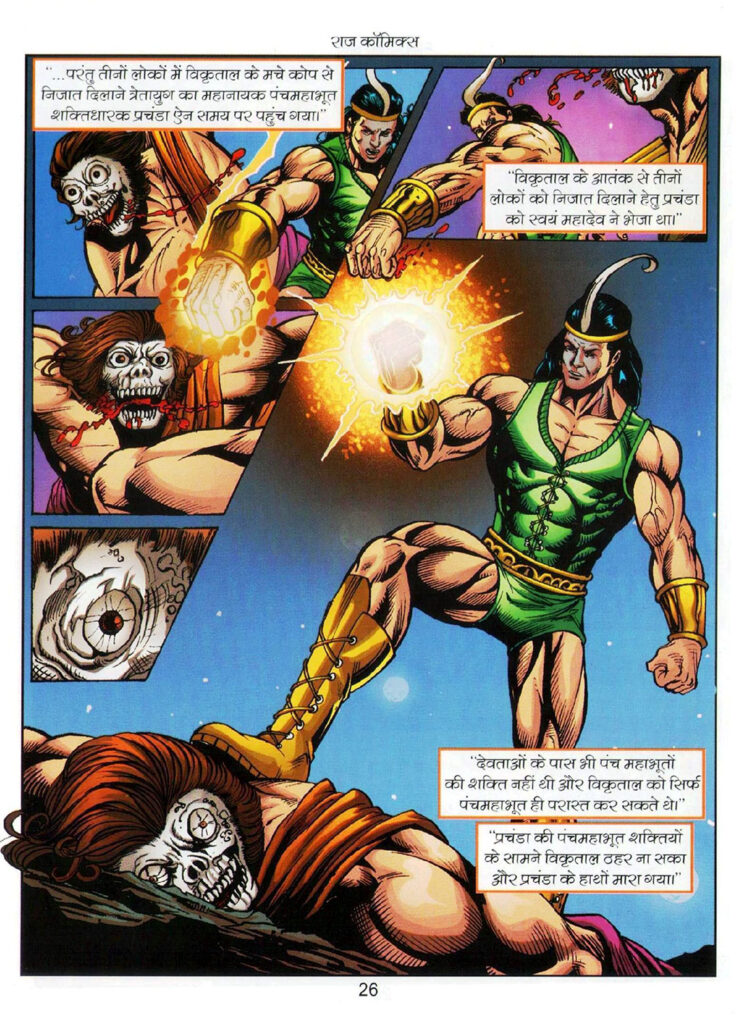
Tadam Gyadu’s drawings make this comic truly a ‘visual treat’. The scattering of Nagraj’s particles and their fragmentation are worth seeing. Anthony’s fearsome face, the bloody look of Tricolor, and the grand figures of the members of the Divine Council are beautifully crafted. The paneling during the action sequences is so dynamic that it feels like watching a movie while reading. Vinod Kumar’s inks and the colors by Basant Panda and Neeru further enhance the artwork. Especially the use of purple and black colors in space scenes brilliantly reflects the infinity and mystery of the universe.
Character Analysis: The New Definition of Heroism
Super Commando Dhruv:
In this part, the Pole appears more as a ‘diplomat’ than a warrior. He is not just fighting but standing up to cosmic forces and strongly presenting the side of humanity.
Nagraj:
The character of Nagraj is seen swinging between a ‘martyr’ and a ‘messiah’. His fragmentation and return to existence almost take him to a divine level.
Tricolor:
The struggle of Tricolor is the most inspiring aspect of this comic. His passion to fight till his last breath on an unknown planet, thousands of light-years away from Earth, makes him a true superhero.
Villains (Distorted/See-Through):
See-Thru’s neurotic form and his never-ending craving for power place him among Raj Comics’ scariest villains.
Writing and Dialogue
Nitin Mishra has handled a very complex plot in this issue. It wouldn’t have been easy to keep so many characters and different locations balanced in a single comic, but he has been quite successful at it. The dialogues are impressive and strengthen the story. Especially the dialogue between the Divine Council and the Pole—
“you humans have neither power nor authority”—
sets forth the arrogance and vanity of cosmic power in a very effective manner.
Critical Assessment: Merits and Limitations
Positive Side:
This comic takes the scale of Raj Comics to a completely new level. The mutual association of the ‘Brahm element’ and the ‘Asurons’ fills the story with new energy. Be it Earth, space, the planet Hejtro, or the world of primitive humans, the level of action on every front is extremely high and impressive.
Downside:
It can be a little difficult for new readers to remember the names of so many characters and planets. At the same time, the repeated movement of the story between the past and the present also feels like it breaks the flow at some places.
Conclusion: ‘Universe Fragmentation’ – A Turning Point
‘Universe Fragmentation’ is the critical focal point of the Last series, from which the story progresses directly to ‘Oblivion’ (Oblivision). This comic explains that when the foundation of the universe starts shaking, heroes can save it not just through their individual strength, but only through mutual unity.
The comic ends with a big bang—‘Cheet’, ‘Parashuram’, and many other warriors appearing together clearly indicate that the entire ‘Universe Protector’ army is now going to unite. The next part, ‘Universe Oblivion’ (Universal Oblivion), is going to prove to be the most massive and decisive chapter of this epic.
Final Rating: 4.9/5
