


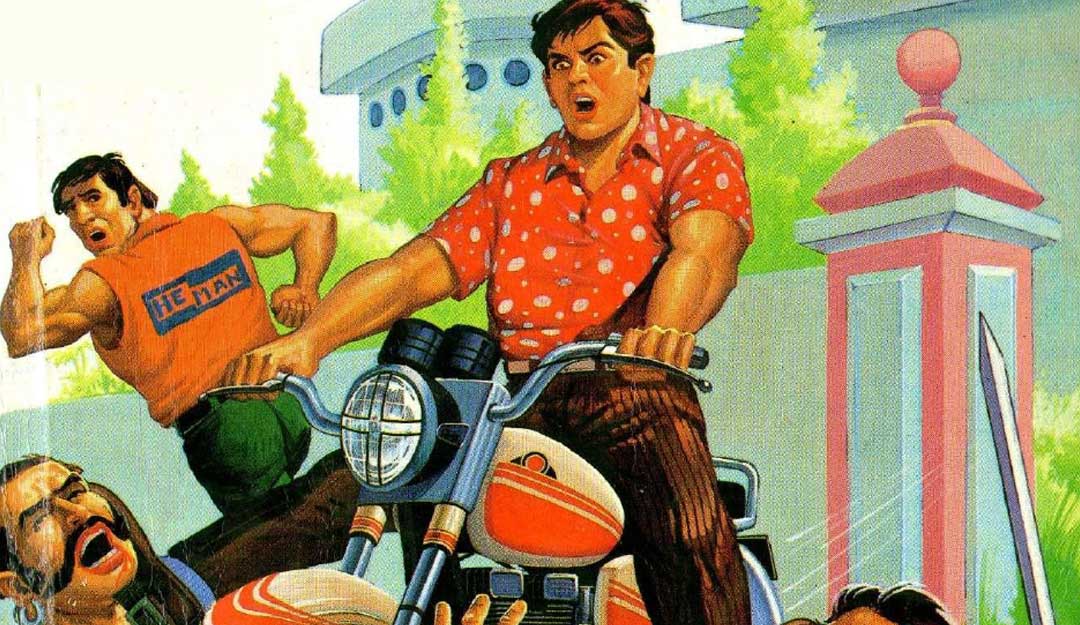
Manoj is a character in the world of comics, ‘Sikandar’, who created his own distinct and memorable identity in the 90s. ‘Sikandar Ki Jung’ (Special Issue No. 63) is not just an action comic, but it is a heart-touching and hair-raising story of the protagonist ‘Vikram’ becoming ‘Sikandar’. Reading this, the reader feels anger against injustice and a sense of sympathy for the hero. The story, written by Ansar Akhtar, and the vibrant illustrations by Hussain Jamin make it a classic work in Indian comics history.
Introduction: The End of a Quiet Life
The story begins with the silence of the city of Managar. At two o’clock in the night, Sikandar reaches a deserted house. This is the same place that was once his laughing house, but has now become a den of criminals.
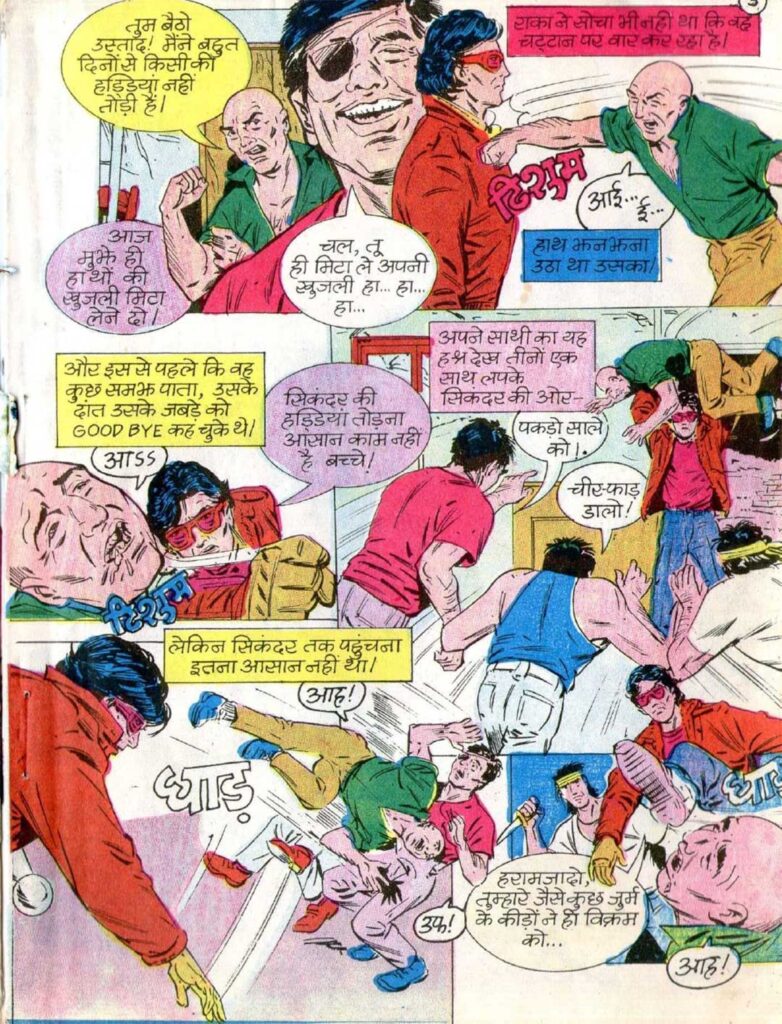
Sikandar comes here and brutally teaches those goons a lesson. From here, the story goes into a ‘flashback’, i.e., the past. At that time, Vikram was a common young man whose only two hobbies were riding motorbikes and roller skating.
He was living an idyllic life with his parents and younger sister Asha. Her father, Professor Diwakar, was a man of great principles and justice, who never succumbed to wrongdoing.
The Beginning of the Conflict: The Collision of Theory and Ego
The story takes a turn when Vikram sees the greedy shopkeeper of the locality, ‘Lala’, beating a poor servant. Vikram’s just nature does not allow him to remain silent.
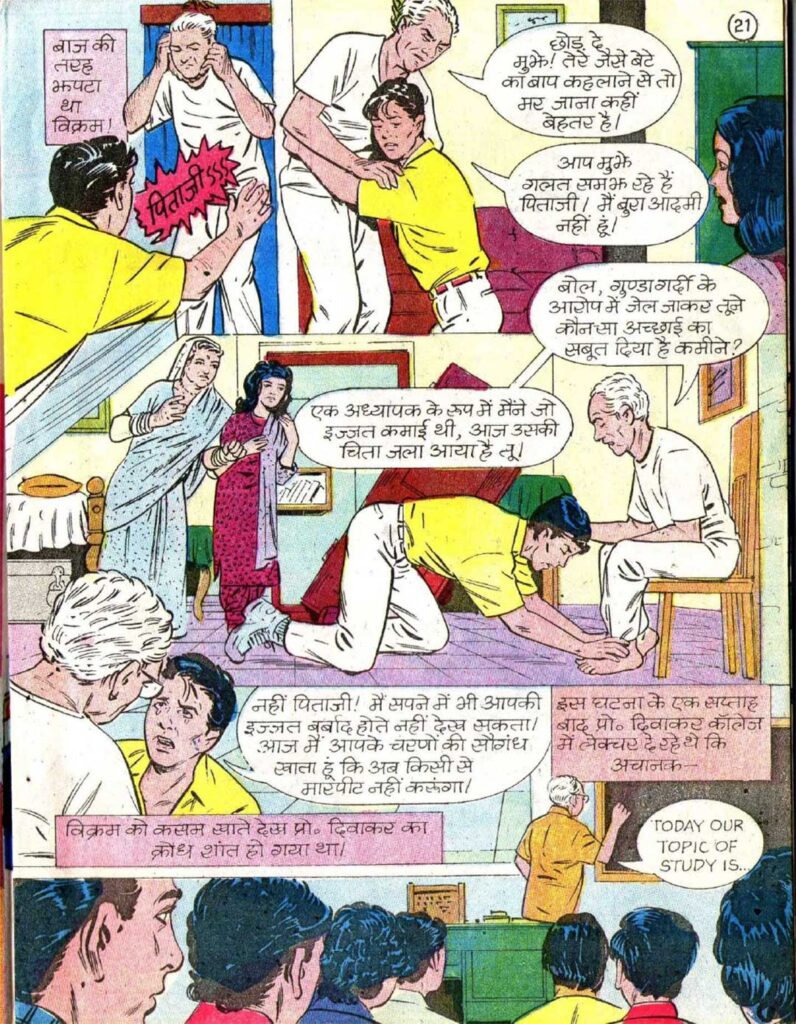
He enters Lala’s shop and beats him severely. This is where the series of problems in Vikram’s life begins. Professor Diwakar is saddened by his son’s violent behavior, as he feels that violence is not the solution to any problem.
But Vikram believes that “breaking the teeth of sinners is not weakness.” This thinking creates a deep gap between father and son.
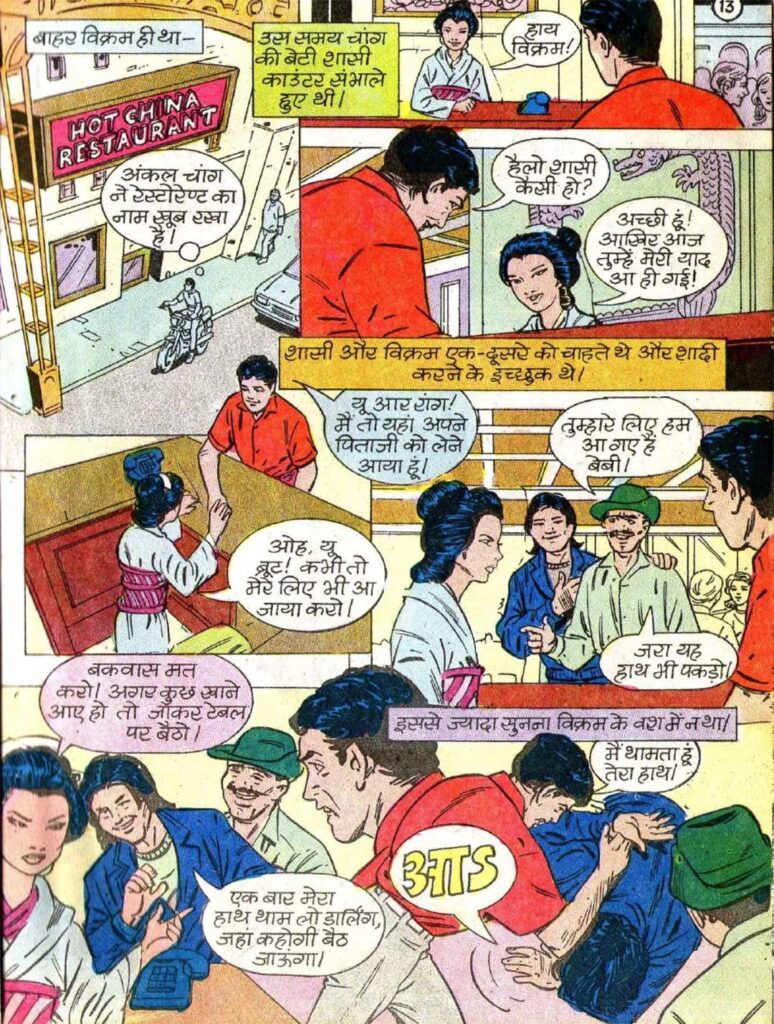
Meanwhile, Vikram meets his father’s old friend, ‘Uncle Chang’, who runs a Chinese restaurant. Chang’s daughter, ‘Shashi’, and Vikram fall in love with each other.
Here, a human and tender side is added to the story, which deepens the tragedy that lies ahead.
The Orgy of Tragedy: When the Hero Lost Everything
The saddest and most important part of the comic is when Ranjeet (in some places Ajit), son of the city’s mafia don Rajeshwar Singhal, is caught smuggling hashish in Professor Diwakar’s college.
Professor Diwakar hands him over to the police and expels him from the college. Ranjeet attacks Professor Diwakar along with his companions to avenge the insult.
When Vikram sees his father being beaten, he becomes Kaal and attacks the goons. He beats Ranjeet so badly that he is left dying.
But Ranjeet’s father, Rajeshwar Singhal, is a dangerous mafia don. He goes mad seeing his son’s condition and orders the entire Diwakar family to be exterminated.
Singhal’s goons surround Vikram’s house and set it on fire. Vikram’s father, mother, and sister are brutally killed before his eyes.
The most horrific scene is when Ranjeet cuts off Vikram’s hand, with which he had killed him. The criminals run away from there, leaving Vikram half dead.
Kayakalp: The Journey from Vikram to Sikandar
Uncle Chang is the one who retrieves Vikram alive from the wreckage. When Vikram opens his eyes in the hospital, he has neither his family nor one hand left.
He is completely broken, but the flame of vengeance is burning inside him, which does not let him die. Uncle Chang not only supports him, but also gives him martial arts, kung-fu, and hard training in how to operate various weapons.
Vikram transforms his physical weakness into his strength. He learns to use special tools and weapons (such as ‘sai’ and ‘chain’) despite his severed hand.
He also incorporates roller skates into his art of war, which gives him lightning-like speed.
It is from here that ‘Sikandar’ is born—a warrior who dedicates his name, identity, and life to only one goal: the end of Singhal’s empire.
Character Analysis
Vikram’s development is incredible in this story. The journey from being a carefree skating boy to becoming a serious and dreaded ‘Vigilante’ is beautifully shown.
His disability makes him a strong-willed hero, not just a superpowered one. He moves forward, fighting his limitations.
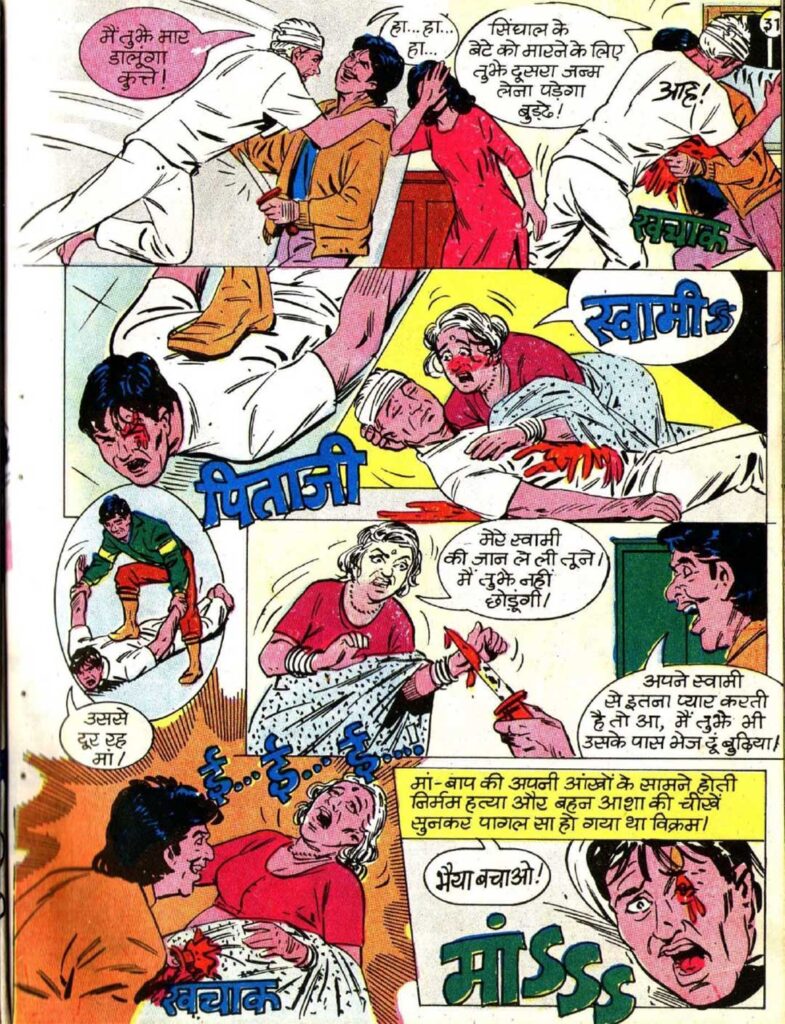
Professor Diwakar stands out as a pillar of morality. His martyrdom teaches Vikram the important lesson that to fight evil one sometimes has to take up arms, but that fight should always be with principles.
Arrogant and cruel villains like Rajeshwar Singhal and Ranjeet are immersed in the intoxication of their power, and this cruelty ultimately leads to the birth of the hero.
The roles of Uncle Chang and Shashi are important as the emotional basis of the story. Chang is like a guiding guru, while Shashi’s selfless love keeps Vikram connected to humanity even in his difficult circumstances.
Painting and Art
Hussain Jamin’s painting is the life of this comic. His way of showing ‘action scenes’ in the ’90s was amazing.
When Sikandar fights on skates with sound effects like ‘Joon’, ‘Thak’, ‘Dhaad’, it feels as if an action film is unfolding.
The fire scenes, the pain of Vikram’s severed hand, and Singhal’s cruelty are shown very vividly. The characters’ gestures and body structure double the story’s impact.
Theme and Message
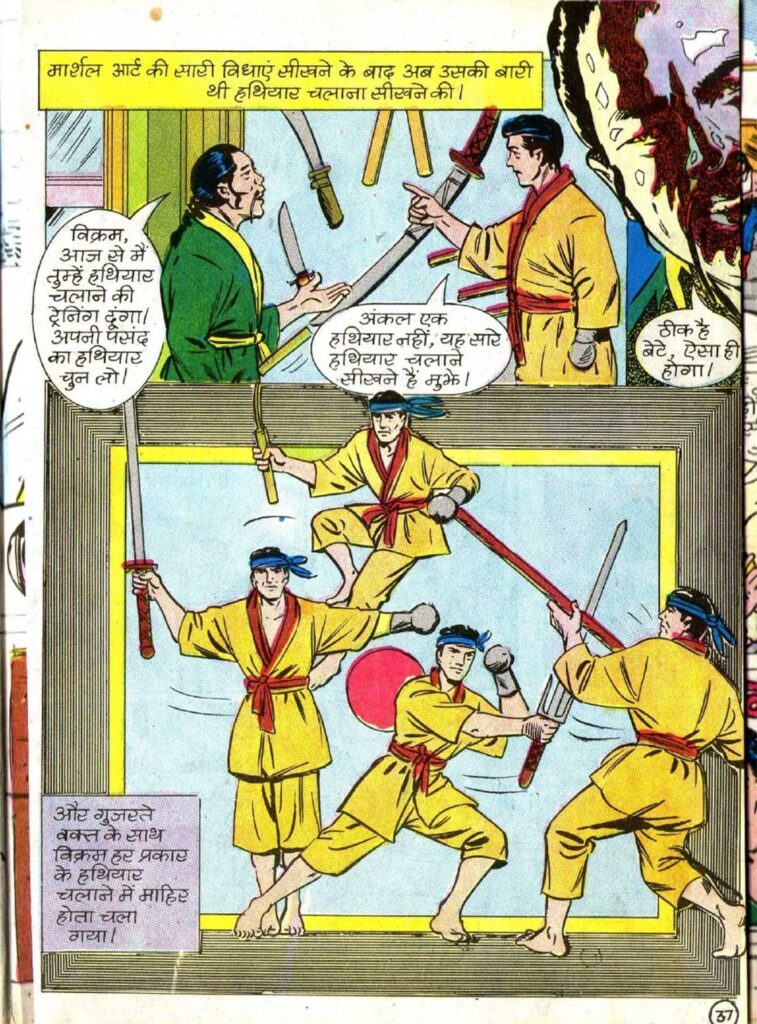
‘Sikandar Ki Jung’ is not just a story of revenge; it is a story of confidence and reconstruction. Defeat does not happen until a person accepts it wholeheartedly.
Vikram not giving up even after losing an arm and making himself an unbeatable warrior is a great inspiration for readers.
The comic questions the concept of justice, showing that when the law becomes a puppet in the hands of criminals, society needs ‘Sikandar’.
Review Findings
Manoj Comics presented a powerful character in the form of Sikandar, who stands on par with legends like Nagraj or Dhruv of Raj Comics.
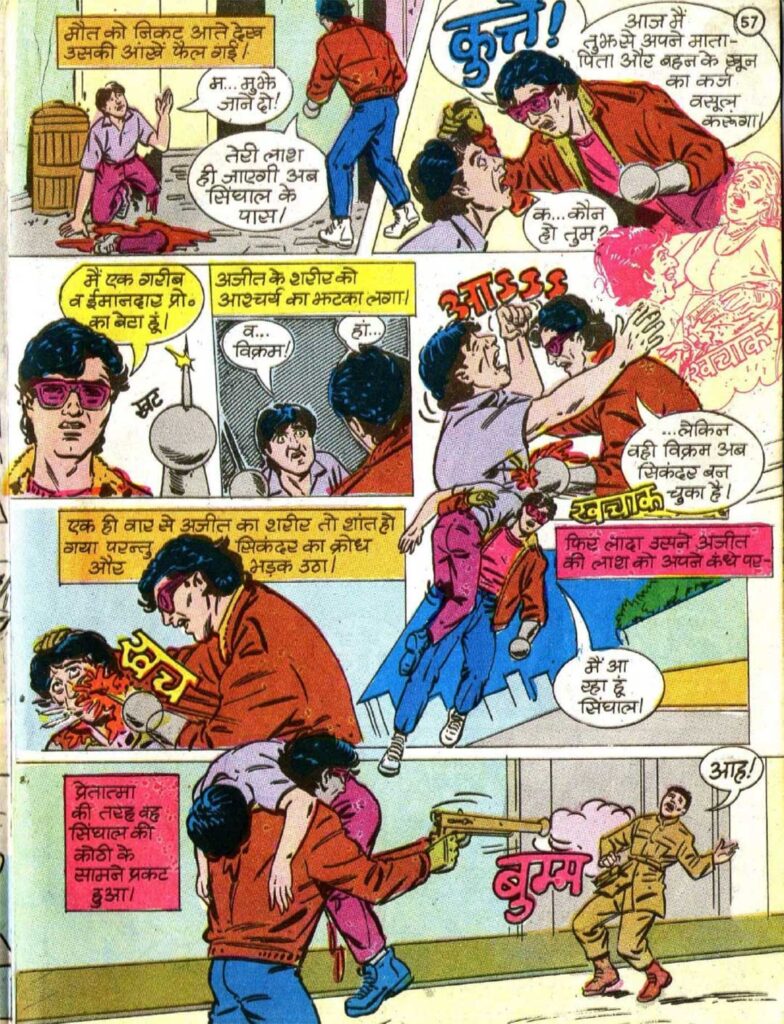
‘Sikandar Ki Jung’ is the most important foundation stone of this entire series. The ending of the story is extremely impressive. After killing Ranjeet Singhal, Sikandar gives a message to the Police Commissioner through a tape recorder, stating that he is not a criminal but a ‘destroyer of crime’. (Read also: Kaan Law Review – Manoj Comics’ Gritty Action, Crime & 90s Nostalgia)
The most positive aspect of this comic is its strong and emotional story, which features disability as a major strength rather than a weakness.
Hussain Jamin’s excellent drawing, fast-paced action, and suspense keep the reader completely engaged.
On the downside, the path to reach a powerful villain like Singhal has been shown to be a little easier, and some dialogues seem slightly more filmy. However, considering the comics writing of that period, they are completely appropriate.
Final Opinion
‘Sikandar Ki Jung’ is a ‘collector’s item’ for Indian comics lovers. This story reminds us that a hero is not made of superpowers, but of sacrifice and unwavering willpower.
If you read Manoj Comics in your childhood, this issue will take you on the same exciting journey again. This war not only rages outside the hero but also within him.
In today’s era, when superheroes have become only magical powers, Sikandar reminds us that real conflict is down to earth.
This comic not only entertains but also shakes the heart.
