


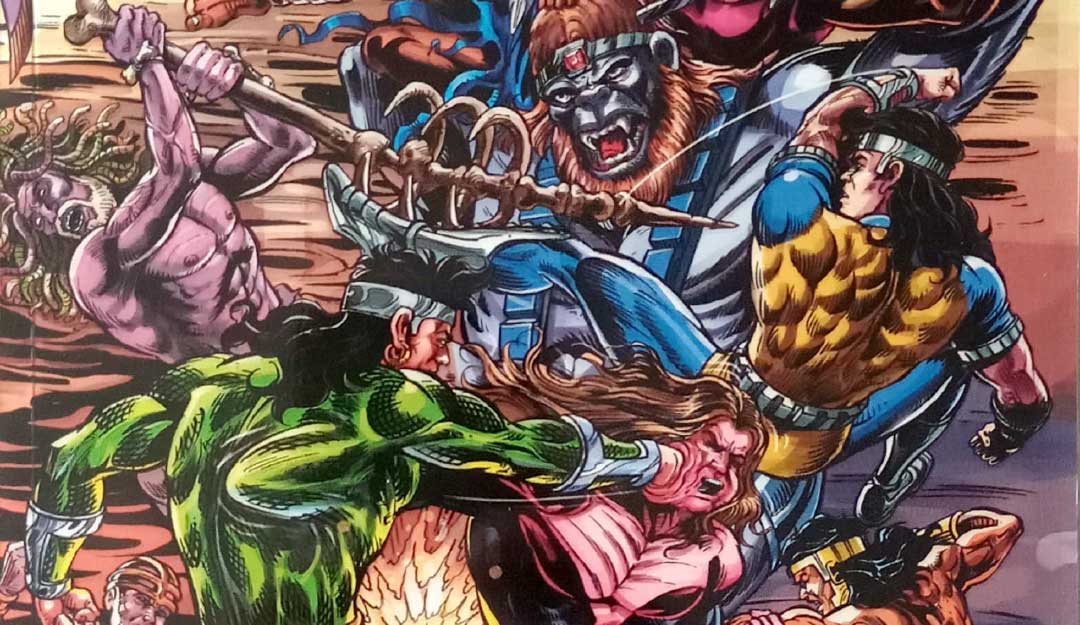
This is a mega-review of ‘Mahanarayan: Avataran Parv’ (The Chapter of Incarnation)—the first chapter of ‘Mahanarayan,’ the largest and most ambitious series in the history of Raj Comics. It is not merely a comic book but a grand confluence within the Indian superhero multiverse, blending the grandeur of epic sagas like the ‘Ramayana’ and ‘Mahabharata’ with modern-day superheroes.
Reading this 100-page masterpiece—crafted through the writing and artwork of Anupam Sinha—could forever change your perspective on superhero stories.
Prologue: The Greatest ‘Suspense’ in Superhero History
Silence hangs over the streets of Rajnagar, yet an unfamiliar dread permeates the air. In the timeless Raj Comics saga ‘Nagayan,’ we witnessed a colossal war that shook the entire world; many heroes were martyred, and numerous cities were devastated. But was that truly the end?

‘Mahanarayan: Avataran Parv’ picks up right where our emotions were left suspended. The very first glimpse of the story is spine-chilling—heroes’ bodies plummeting from the sky, tormented souls, and a ‘Purification Zone’ where the boundary between life and death has blurred.
Are these heroes returning? Or is this a trap laid by a demonic force seeking to turn the entire cosmos into hell by using the bodies of these ‘virtuous souls’? This marks the beginning of the ‘Mahanarayan’ journey—one that transports you simultaneously 5,000 years into the past and the misty unknown of the future.
Plot: A Shared Nightmare and the Rebirth of Guardians
At the heart of the story are Vishank, Shweta, and their friends. One night, they all share the same dream. In it, they see their parents (Nagraj, Dhruv, Doga, and Shakti) transformed into zombies, wreaking havoc across the globe. Upon waking, the children realize this was no mere nightmare but a telepathic message.

Meanwhile, a fierce battle rages in the spirit realm. Villains like Nagpasha and Kaalbhavna are plotting to capture the souls of heroes who perished in past wars. Their goal is to construct a system capable of housing the universe’s most brilliant minds.
The story takes a dramatic turn when the souls of Nagraj and Dhruv attempt to re-enter their mortal bodies. Anupam Sinha’s ethereal and nuanced depiction of these spiritual sequences offers readers a unique, transcendent experience. Yet, will the return to their bodies be so simple? Or will the web spun by ‘Kaal-Kanchuki’ lead them astray forever?
The ‘Mool Kshetra’ (Primal Realm) and a 5,000-Year-Old Secret
This is perhaps the most intriguing part of the review. The narrative transports us to ‘Takshak Nagar’—known today as Rajnagar. Here, it is revealed that Nagraj’s empire is not from the modern era but dates back eons.

A Shocking Twist: Nagpasha transcends the boundaries of time and travels back 5,000 years. His objective is to alter the history of Nagraj’s ancestors. He uncovers a secret capable of shaking the very foundations of Nagraj’s lineage.
This secret is linked to an ‘elder brother’ of Nagraj! Was there a chapter of history that was kept hidden from us? Is there a descendant of Nagraj even more ruthless than Nagpasha? This suspense keeps readers hooked, compelling them to keep turning the pages.
The Battlefield: A Cremation Ground and a Virtual Cemetery

The action sequences in this comic are thrilling even to imagine. It features a place called ‘Seemindri’ (Virtual Cemetery), a realm where a macabre dance of death unfolds. Here, ‘Tantra-crows’ and disembodied spirits launch attacks on the heroes.
Nagraj and Dhruv fight here not through physical strength, but by relying on their willpower and the power of their virtuous deeds. The scene where Dhruv alters the direction of the wind to turn the enemy’s own move against them is a brilliant display of his intellect. Meanwhile, Nagraj incinerates—with his ‘poison-fire’—spirits that refuse to perish even after death; this sequence is visually spectacular and impactful.
Anupam Sinha’s Artwork: A Visual Poem
Even if the words were removed from this comic, the illustrations alone could tell the entire story. Anupam Sinha has elevated his artistry to a new level with ‘Mahanarayan’.

• Character Detailing: Expressions of fatigue, determination, and anguish are clearly visible on the faces of every hero.
• Mythological Depiction: The architectural designs of the structures in 5,000-year-old India and Takshak Nagar are magnificent.
• Play of Colors: The use of magical blues and purples for the spirit realm, combined with blood-red hues for battle scenes, brings the story’s atmosphere vividly to life.
7 ‘Must-Read’ Reasons to Become Part of This Epic Saga!

1. The ‘Spiritual’ Side of Heroes:
We often see superheroes fighting with machines or magical weapons. Here, however, they battle in spirit form. The story conveys that while the body is mortal, a hero’s resolve and good deeds endure forever.
2.Indian Comics’ Own ‘Endgame’ (The Avengers: Endgame of Raj Comics):
If you are a fan of Marvel’s ‘Endgame’, you simply must read ‘Mahanarayan’. Here too, the entire universe hangs in the balance, and heroes are returning after conquering death. It feels like the ultimate blockbuster movie from the multi-starrer era of Raj Comics.
3.The Rise of Vishank and the New Generation:
Nagraj’s son, Vishank, and Dhruv’s sister, Shweta, are the true unsung heroes of this tale. Witnessing a young child fight the demons of time to save his father’s legacy is deeply moving.
4.A Unique Concept of Time Travel:
We have seen time-travel stories many times before, but only Raj Comics could blend them seamlessly with ‘Naga Tantra’. The connection between the 5,000-year-old Rajnagar and modern-day Rajnagar is the story’s greatest highlight.
5.That ‘Shocking Cliffhanger’ Ending:
The story concludes at a pivotal moment when Nagpasha obtains the key to the ‘Rakt Parv’ (Blood Festival). The glimpse of Nagraj’s elder brother in the final pages—accompanied by the message, “History will be rewritten”—propels readers’ curiosity to its peak.
6.A Confluence of Philosophy and Science:
The narrative blends scientific concepts like neurons, brain systems, and cells with philosophical themes such as devotion, virtue, and the soul. This unique mix makes it a thought-provoking comic.
7.Mahanarayan’s ‘Visual Treat’:
Elements like the ‘War-Crows,’ ‘four-armed robots,’ and Vishala’s Medusa-like form are sights rarely seen in Indian comics before. The intricate detail in every frame compels the reader to revisit the story again and again.
Critical Analysis

Writing and Script:
Sanjay Gupta and Anupam Sinha have crafted a story that is complex yet equally engaging. While new readers might find it challenging without understanding the context of ‘Nagayan,’ for long-time fans, it offers a fresh surprise on every page.
Dialogue:
The dialogue is highly impactful and written in Sanskrit-infused Hindi. When characters like Bhabhut Dev or Kaaldoot speak, their language carries the gravity and weight befitting such mythological figures. Nagraj’s rage and Dhruv’s composure are conveyed brilliantly through the dialogue.
Drawbacks:
Due to the sheer number of characters (over 20 superheroes), some figures—such as Tiranga and Parmanu—receive very limited screen time. Readers wanted to see more action from them as well, but it is possible that they will get a better opportunity in future installments.
Final Verdict: A Masterpiece or a Grand Masterpiece?

‘Mahanarayan: Avataran Parv’ is the Koh-i-Noor in the crown of Raj Comics—a gem that will shine brightly for a long time. This story reminds us that superheroes are not merely sources of entertainment; they are symbols of our culture, our values, and our indomitable willpower.
If you are looking for a story that shatters the boundaries of your imagination and plunges you into the depths of emotion and thrill, then ‘Mahanarayan’ is made for you. Reading it is a memorable experience for every comics enthusiast.
Warning: ‘Avataran Parv’ is just the beginning; the true epic war is set to unfold in ‘Rakt Parv’! Are you ready to face that blood-soaked future?
Special Tip for Blog Readers:
While reading this comic, keep the key events of the ‘Nagayan’ series in mind, as a major secret lies hidden behind every seemingly small detail. Do you think Nagraj’s ‘elder brother’ will be his friend or his enemy? Do share your theories in the comments!
