


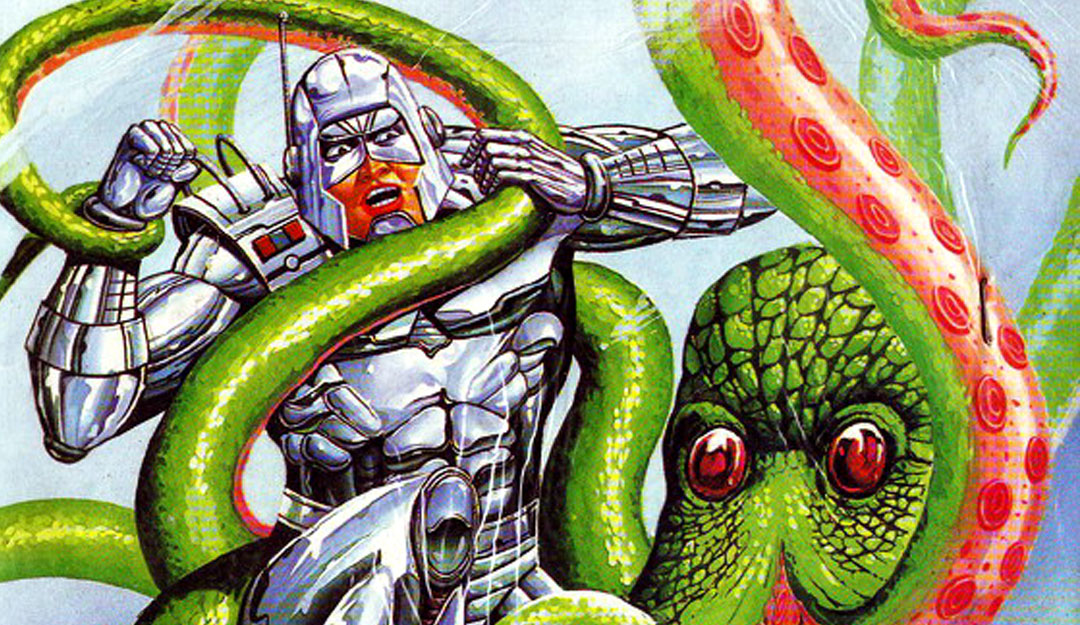
A superhero who looked completely like iron, but inside whom a heart still beat. This hero was—Inspector Steel. ‘Octopus’ is a tremendous and thrilling story of this very steely protector. This comic is not limited to just action, but also brings out the depth of Inspector Steel’s character, his old identity (Inspector Amar), and his honesty towards his duty. The pairing of writer Hanif Azhar and artist Naresh Kumar has presented a balanced and strong story in this issue, which captivates the reader from the very first page.
Plot
The story begins with the introduction of a very dangerous villain, ‘Octopus’. Octopus’s whereabouts are shown to be a high-tech lab, where he swears that Inspector Steel has dealt him a deep blow by arresting eight of his special commanders (Ashtangs). Octopus, burning in the fire of revenge, announces that he will die only after breaking the steel body into eight pieces. This initial scene clearly shows the seriousness of the coming danger and conflict.

The story then moves to the ‘Five Star Discotheque’, a noble area of the city. Here, the author also takes a slight dig at society, showing how crime is no longer limited to slums only, but is also comfortably taking shelter in rich areas. Outside the discotheque, a nervous woman bumps into Inspector Steel. Steel, who appears as a man with a huge machine body, still listens to her in a very calm and polite manner and tries to understand her problem.
When Steel starts to get inside the discotheque, the manager there stops him and asks him to show a ‘search warrant’. This scene reflects the high-tech qualities of Steel—he prints the search warrant on the spot through his internal computer system using the commissioner’s order and puts it directly on the manager’s mouth. The action that starts after this is completely worth the money. Steel breaks through the glass wall and beats the goons badly, bearing their bullets on his steely chest.

The real story picks up pace when the police commissioner hands Steel a new and much more tangled case. Large containers full of valuables are mysteriously disappearing from Rajnagar Port (Dockyard). Many efforts by the police have proved unsuccessful. Steel is not sent alone on this mission, as Sub-Inspector Salma is also deployed with him.
Character Analysis (Character Analysis)
Inspector Steel (Steely Guard)
In this comic, Steel is not just shown as a machine or robot, but is presented as a sensible, sensitive, and responsible police officer.
Duty: Even when goons open fire on him in the discotheque scene, Steel first shows the search warrant without getting angry and stays within the law. This clearly shows that even after being built as a machine, the honest policeman inside him is completely alive.
Strength and Technique: Bullets having no effect on him and throwing enemies into the air with his iron-like hands fills readers with thrill. Printing search warrants from his wrist system was wildly forward and futuristic thinking for the 90s.

Lighthearted: When a corrupt sergeant is caught taking a bribe outside the police station, Steel punishes him for his actions. On the other hand, when people ask him for an autograph, instead of using a pen, he removes his thumb shell and gives it as a fingerprint. This scene shows both Steel’s ‘celebrity image’ and his strange but interesting physical appearance together.
Sub-Inspector Salma (Suspicious and Quick-Witted)
Salma’s character is the real life of this story. She is definitely Steel’s partner, but her aim is not just to solve the case. She is trying to identify and find the ‘Inspector Amar’ hidden inside Steel.
Spy Mind: Salma pays attention to Steel’s small habits, like blowing into the revolver barrel after firing—a habit that Inspector Amar used to have earlier. A question arises in Salma’s mind whether this is just a coincidence or if there is some deep truth hidden behind it. This thinking adds an emotional layer to the story.
Bubblegum Scene: Salma’s bubblegum fluff on page 10, and then shocking Steel by popping it, shows the chemistry and inner tension between the two in a very smart way. Salma wants to see the human reaction hidden behind the machine-faced Steel, and that’s what makes their relationship more interesting.
Octopus (Villain)
Octopus is a classic comic book villain, as seen in 90s comics. His very name creates fear, and his costume—cranial mask and powerful, muscular body—makes him even more creepy. He is not committing crimes just for money or power, but is after Inspector Steel to avenge the arrest of his comrades, i.e., his eight commanders (Ashtangs). This is the reason why the conflict between him and Steel becomes completely personal. His haunt and the look of his henchmen are also designed around his name’s ‘aquatic’ or nautical theme, which fits perfectly for thefts involving the dockyard.
Art and Presentation
Naresh Kumar’s artwork is considered to be the identity of the golden age of Raj Comics.
Action Sequence: The glass-breaking scene in the discotheque (Chhanak!) and the goons jumping into the air feel extremely passionate and lively. Naresh ji is known for his detailed display of Steel’s machine parts, nuts, bolts, and hydraulics, and this is clearly visible in this comic. Steel’s close-up shots on pages 4 and 5, where his eye visor and facial texture are visible, are quite effective.
Color Combination: According to the printing technology of that era, the colors of the comic are quite bright and attractive. The contrast between the discotheque’s colourful lights and the later dulled, muddy colours of the dockyard makes the visuals feel cleaner and strengthens the atmosphere.
Paging and Paneling: The pace of the story remains fast. The author and illustrator have designed the panels in such a way that the story never feels slow or boring. The fight scenes, especially on pages 6 and 7, look just like movie scenes.
Writing and Dialogue
Hanif Azhar’s dialogues have the same old film-style touch, which was very much liked by the readers of that period. Inspector Steel’s dialogues carry both weight and authority. When he says, “your scream cannot tear through the walls and go out,” the reader feels both fear and the power of justice. The scene outside the police station, where Steel scares a corrupt cop and signs autographs at the same time, is quite funny. A girl saying after seeing the autograph—“Hey, is it giving an autograph or a fingerprint?”—is a great example of situational humor.

Salma’s monologue keeps the mystery alive in the story. Dialogues like “somewhere in this coincidence, there is definitely some secret hidden” make the reader constantly think about whether Salma will be able to reach the truth or not.
Themes and Social Commentary
Even though it is a superhero comic, Octopus also touches on many social issues of its time and connects them well with the story.
The story clearly shows how the image of the police department has fallen in the public eye, and now a ‘machine’ like Inspector Steel has to come forward to improve that image. The Commissioner’s statement that “the image of the police fallen in the public eye is also improving” presents a bitter but true situation.

Steel has tremendous power, yet he takes every action within the ambit of the law and does nothing without a warrant. This gives a clear message that the law is supreme, even if you have superpowers.
The biggest and most important topic of the entire Inspector Steel series is Amar vs. Steel—i.e., a human trapped inside a machine. Salma’s suspicions deepen about whether Steel is just a robot or whether Inspector Amar’s feelings and memories are still alive inside him.
The Latter Half of the Comic (The Latter Half – Visual Analysis)
Though the later pages of the comic (11 to 30) are blurred, the scenes that are clearly visible still lead to the understanding that the story escalates into a major confrontation and battle upon reaching the dockyard. High piles of containers and a deserted dockyard create a great atmosphere for dangerous and thrill-filled action.
Octopus’ henchmen, and possibly even Octopus himself (or his mechanized arms), try to control Steel. In response, Steel uses his steely strength to break through these mechanical arms and traps. The visuals indicate that heavy firing and explosions occur at the end. Steel not only stops the thieves and henchmen but also saves Salma’s life. This deepens Salma’s suspicions—or perhaps reduces them slightly, if Steel manages to hide his feelings. The capture or escape of the villainous Octopus brings the thrill of this part to its peak.
Critical Conclusion (Critical Verdict)
“Octopus” is a strong and memorable issue of the Inspector Steel series. It is not just an action comic, but also shows good coordination between detective elements and emotional depth.
Positive Side (Pros):
The story does not become loose at any point. Its pace remains consistent from the beginning till the climax. The relationship between Salma and Steel makes this comic special. This is not just a story of defeating a villain, but also of a lost identity and an attempt to find an old partner (Amar). Naresh Kumar’s artwork is as brilliant and impressive as ever.
Downside (Cons):
The villain Octopus’s revenge motive may seem a bit trite, but considering the comic genre, it does not hurt much. The ending of the story, which is not completely clear due to the blurred pages, probably sticks more to straightforward action and takes a slight toll on the earlier detective and mystery aspects.
Final Decision (Rating)
If you’re a fan of 90s Indian comics, “Octopus” is a must-read for you. It presents Inspector Steel in his finest form—a fearless keeper of the law, made of iron on the outside but humanity on the inside, i.e., ‘gold’. The pairing of Salma and Steel makes it stand out and feel stronger than most solo comics.
Rating: ⭐⭐⭐⭐ (4/5)
This comic reminds us why Inspector Steel is called Rajnagar’s ‘iron protector’. Both his respect for the law and the fear he instills in the hearts of criminals emerge strongly in this story.
