


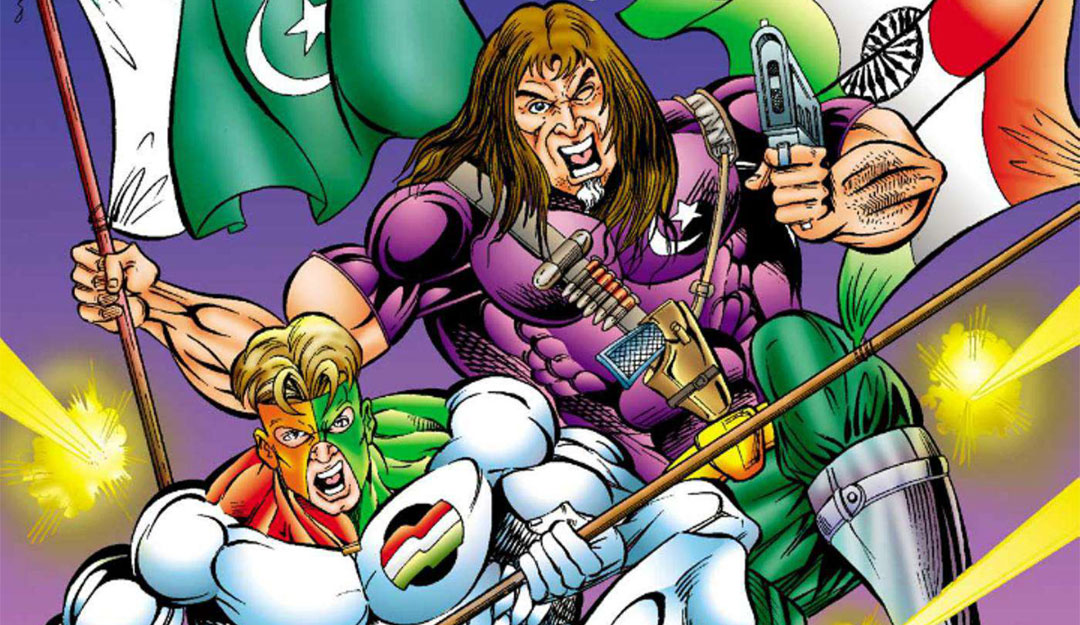
‘Tiranga’ is a superhero in the Indian comics world who has no supernatural powers (superpowers), but his intelligence, detective skills, and strong patriotism make him a real ‘super’. “Jhanda Uncha Rahe Hamara” is one of the most famous and brilliant comics of Tiranga. The comic is not just an action thriller, but it also combines the theme of the much-loved ‘reincarnation’ of the 90’s and the complexities of India-Pakistan relations in a great way. The strong story by Tarun Kumar Wahi and the lively art of Dilip Choubey make it a classic.
The story can be mainly divided into three parts: the mysterious phone call, Pakistan’s mission, and Delhi’s climax.
Mysterious beginnings and the mystery of the ‘code plate’
The story starts in Islamabad, the capital of Pakistan. Here, terrorist ‘Kurban Zaidi’ gets a phone call. The caller is his brother ‘Mustafa Zaidi’, who has been missing for 10 years. Mustafa explains that he is currently working in Delhi and that the ‘seed’ he sowed 10 years ago is now time for him to harvest. He tells Kurban about the key to a locker of ‘Islamabad Bank’, but the locker number is hidden in the code.
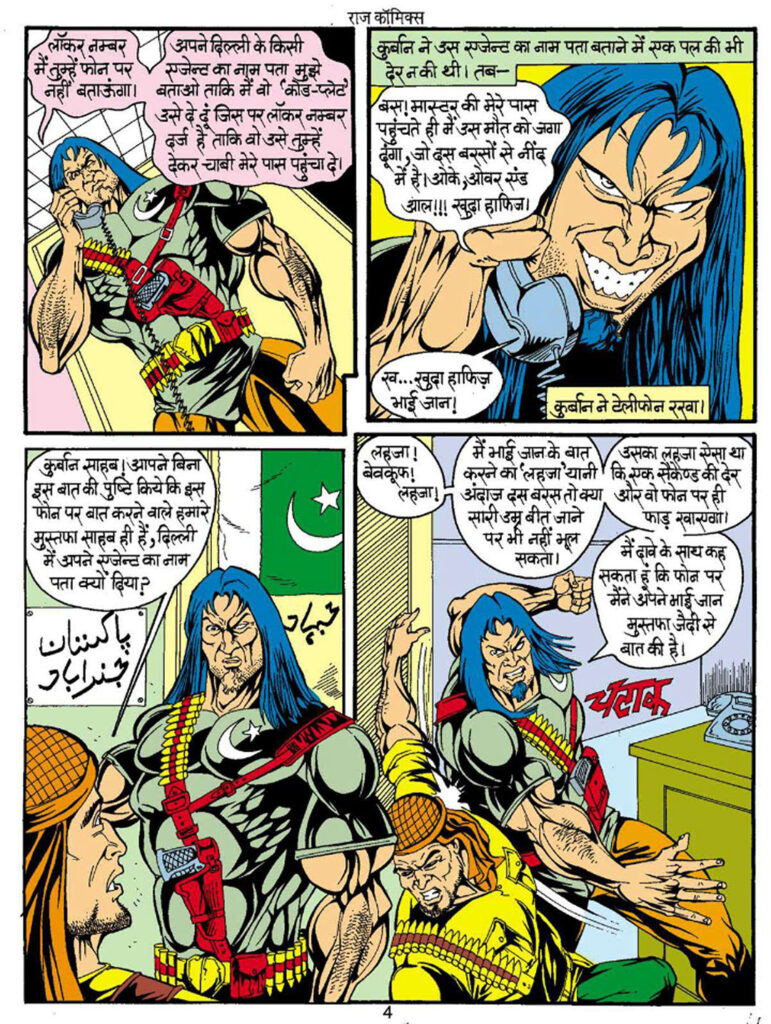
The twist comes when it is revealed that Mustafa made this call from the police commissioner’s house in Delhi. This becomes a big problem for both the police and Tiranga himself. Only his trusted servant Rahim and his younger grandson ‘Raja’ live in the commissioner’s house.
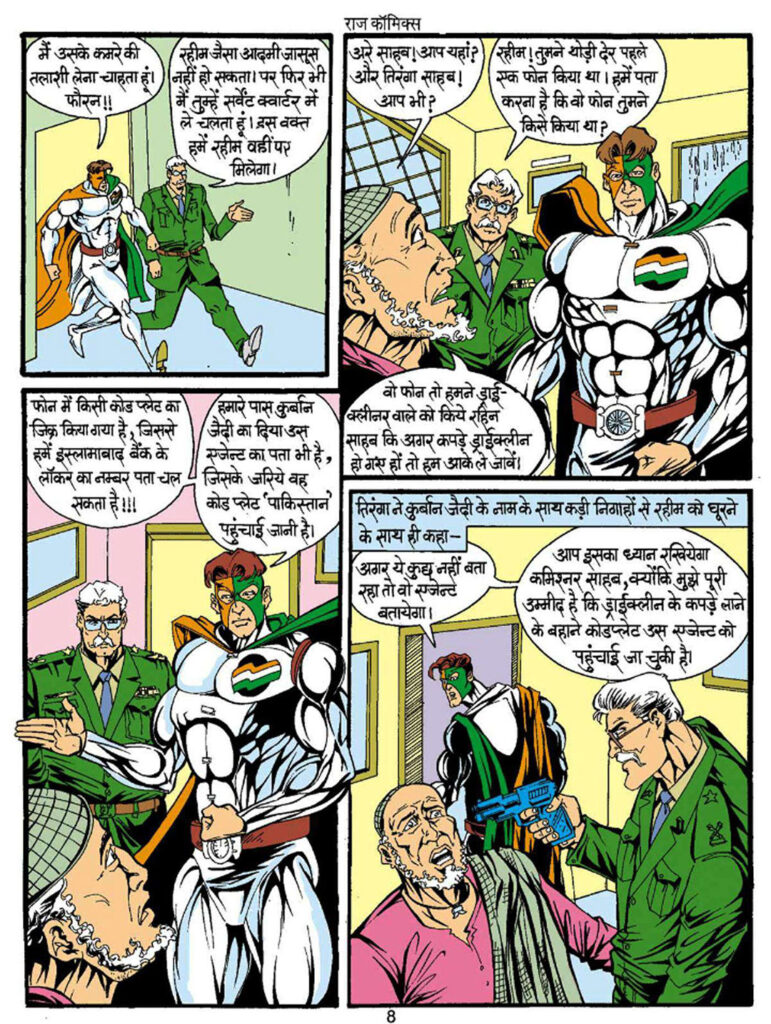
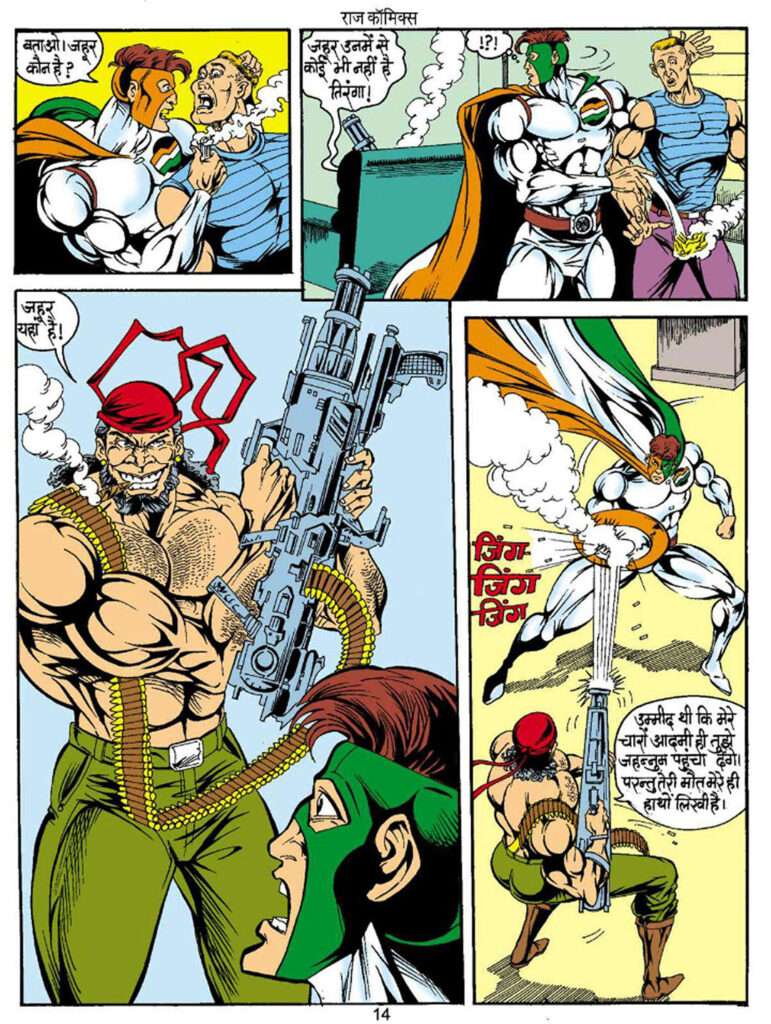
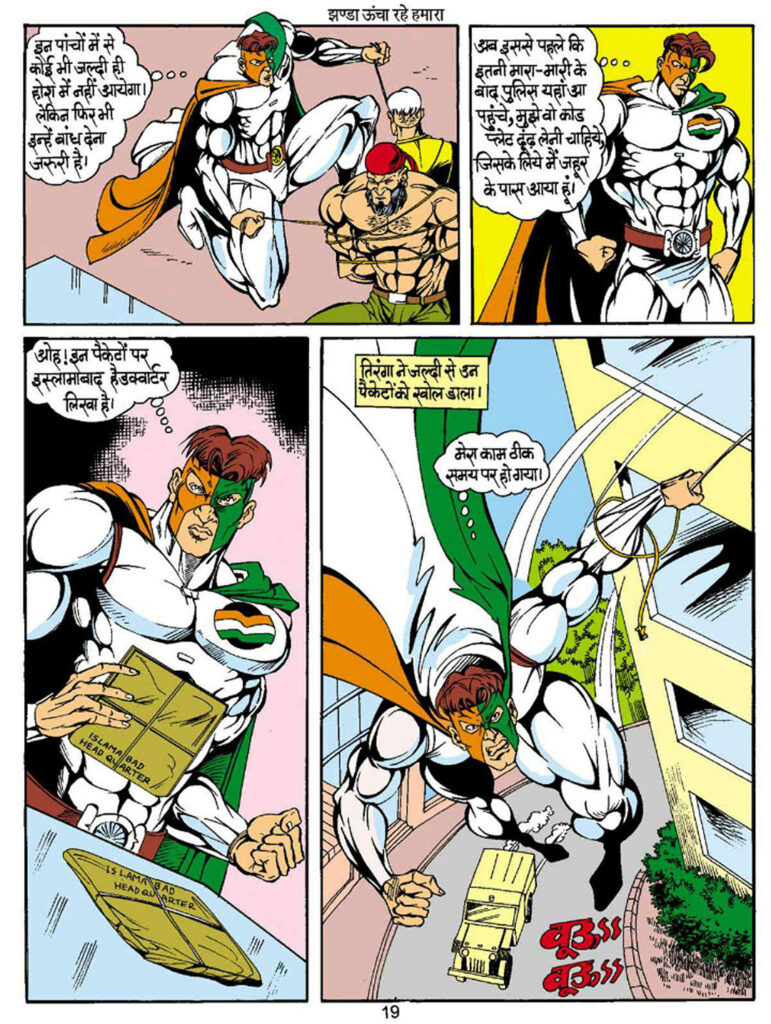
Tiranga starts his investigation and the first suspicion falls on Rahim. But when Tiranga investigates Rahim and confronts the goons (Jahoor’s men) present there, he finds a ‘code plate’ and some important clues.
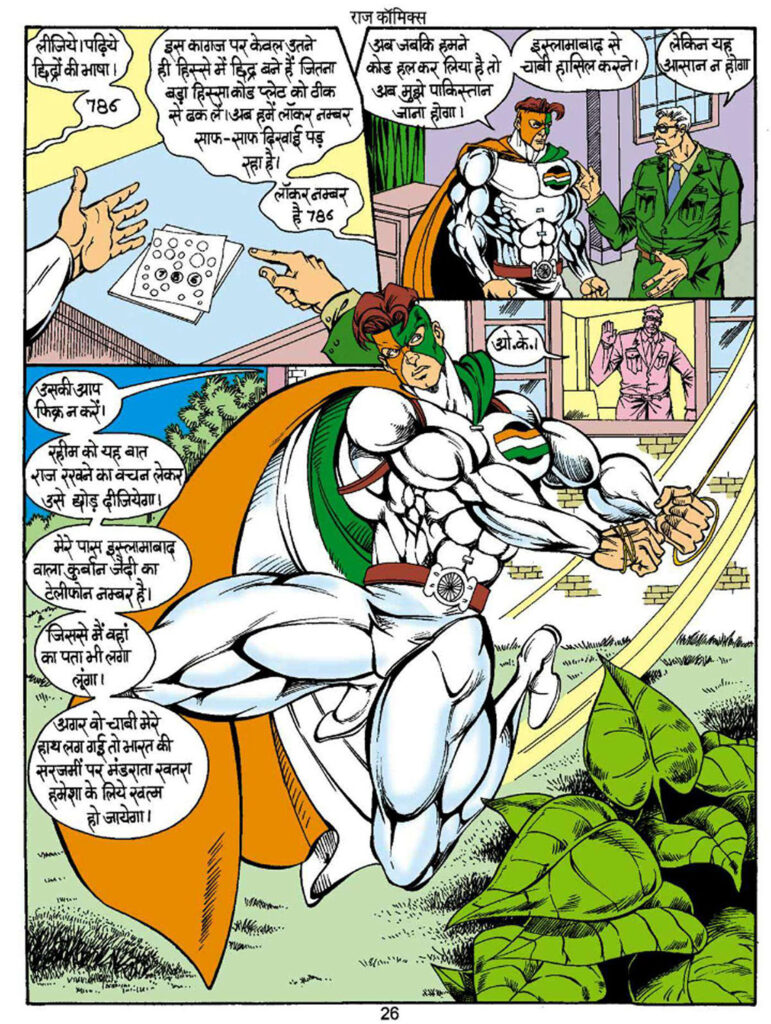
‘Puzzle’ has been used very well here. Tiranga gets a paper with some numbers written on it and a metal plate (code plate) with holes in it. Tiranga solves that code — when placing the plate on the paper with numbers, the numbers ‘786’ emerge. This is the locker number.
Pakistan Mission of Tiranga: Crossing the border with ‘Samjhauta Express’
This part of the story is the most exciting. When Tiranga learns that the real key to the mayhem is in Bank Locker 786 in Islamabad, he decides to go to Pakistan immediately. He reaches Pakistan in disguise through the ‘Samjhauta Express’.
On the other hand, Kurban Zaidi also reaches the bank to open locker 786. But Tiranga is present in the bank even before that (or reaches at that very moment). There is a fierce fight between the two inside the bank. Here, the author has shown the real qualities of Tiranga.
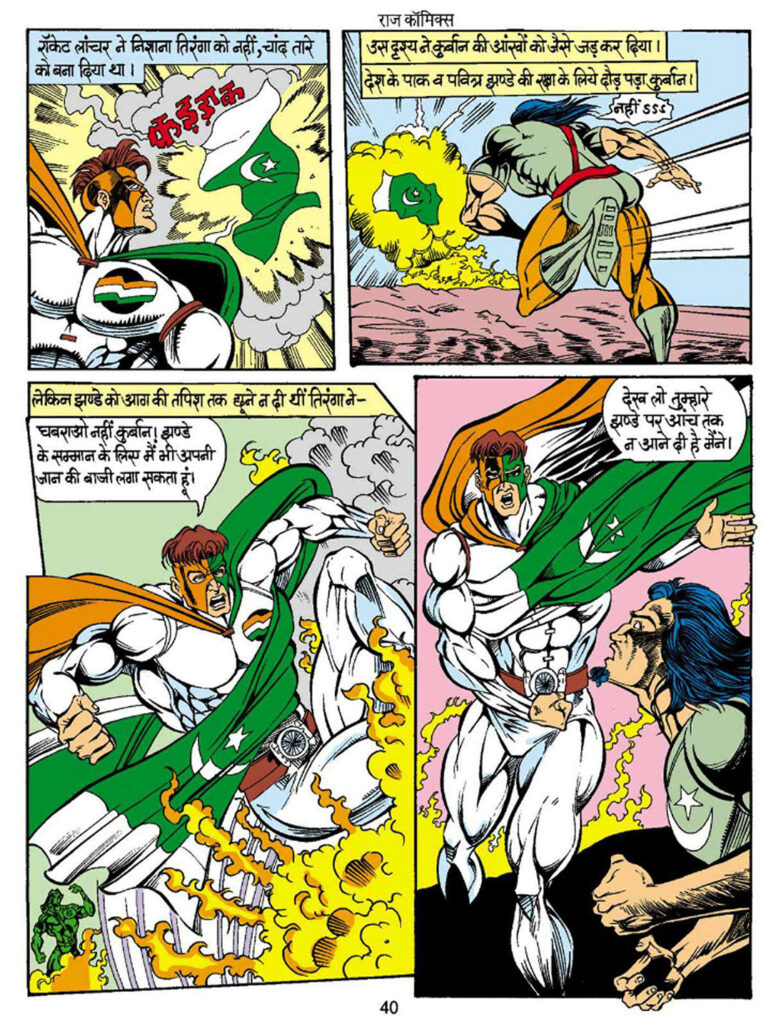
When bullets are fired during the fight, the flag of Pakistan starts falling. Tiranga, regardless of his life, protects that flag from falling and keeps it standing by protecting it from bullets.
Qurban is surprised and asks why he risked his life to save the flag of an enemy country. The answer is heartbreaking:
“Whether the flag is from one’s own country or from any other country, it is a matter of respect. Only if you learn to respect it will you become a real patriot.”
This dialogue is the heart of this comic. This shows that Tiranga is not just the protector of India, but a symbol of the highest values of humanity and patriotism.
After this fight, Tiranga manages to leave with the key. He bangs into the bank wall, exits through the gutter, and proceeds on his mission.
Reincarnation and the mystery of Mohan Nagar
Tiranga returns to India with the key. Now the biggest question is, which lock does this key open? Meanwhile, Mustafa Zaidi calls again (from the Commissioner’s house) and says that the items of destruction (missiles and nuclear bombs) are hidden in ‘Mohan Nagar’ near Delhi.
Both the Commissioner and Tiranga are surprised as to who is sending all the information from inside their own house. In the end, a tremendous revelation comes. The spy is not an outsider or servant Rahim, but the Commissioner’s younger grandson ‘Raja’.
This is where the twist of ‘reincarnation’ comes in the story. Mustafa Zaidi died 10 years ago, but he is reborn as Raja. Mustafa’s soul and his memories have reawakened inside Raja. Despite being a child, he is thinking like a dangerous terrorist.
In the climax, Raja (Mustafa) reaches a bunker built under a farmhouse in Mohan Nagar. There are 10-year-old missile systems installed, which are targeted at Delhi, Meerut, and Hapur. Raja presses the button to launch the missile. At this moment, the reader’s breathing really stops.
But… instead of the missile launching, a song starts playing on the radio — “two hearts meeting, but secretly.”
Tiranga proves his intelligence once again. He has already reached there, changed the circuit, and connected the missile system to the radio. In this way, Delhi is saved, and Raja is captured and taken away so that the terrorist hidden inside him can be eliminated with psychological treatment.
Character AnalysisTricolor (Bharat Deshwa):
In this comic, Tiranga is not shown as just a fighter but as a very intelligent spy (Detective). Solving the code plate, going to Pakistan in disguise, and finally changing the circuit are all proof of his sharp mind. His greatest quality is his moral character. The humanity and respect he showed by saving the flag of the enemy country make him stand apart from other superheroes.
Qurban Zaidi:
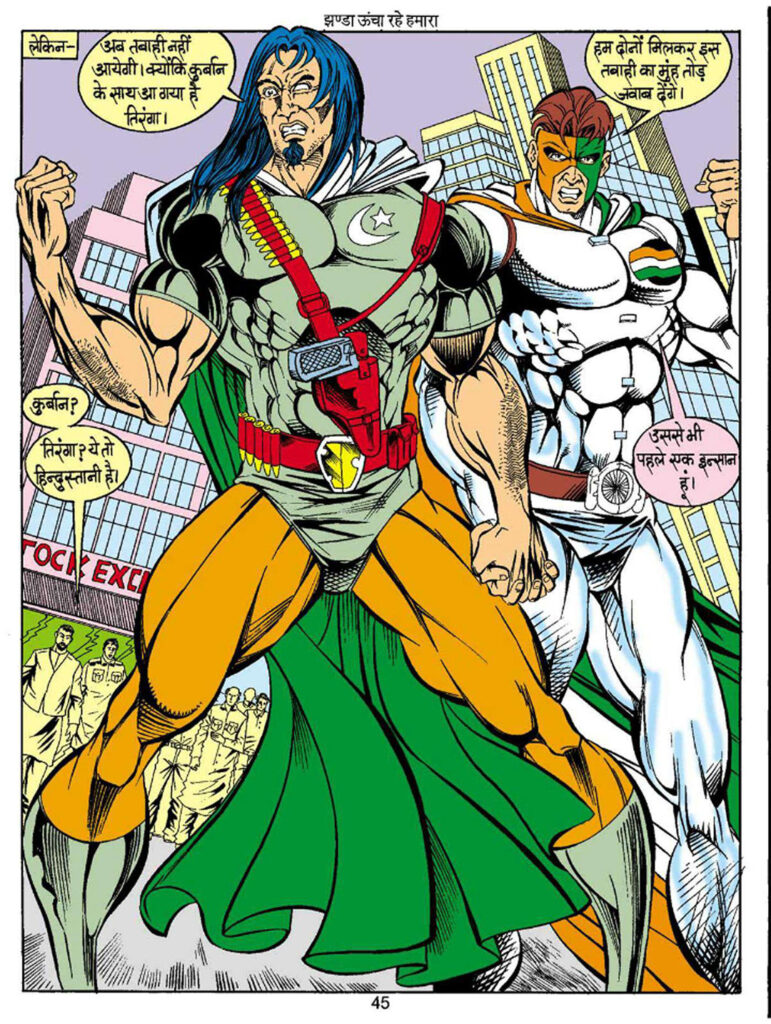
Qurban is a terrorist, an opponent of India, but also a warrior with principles. When he sees Tiranga saving the flag of his country (Pakistan), he develops respect for Tiranga. Finally, he lets Tiranga go and says — “Go, you opened my eyes.” This character suggests that even the enemy can have people with good principles.
Raja (reincarnation of Mustafa Zaidi):
Making a small child the main villain (Main Villain) was a huge risk in itself. Raja has the appearance of an innocent child, but his lines and gestures are like those of a ruthless terrorist. The devilishness shown by Dilip Choubey on his face is amazing. It’s a scary combination of ‘innocent face + dangerous thinking’.
Police Commissioner:
The Commissioner’s character is trapped between being a helpless Nana and a strict police officer. When he comes to know that his own grandson has become a threat to the country, his suffering can be clearly felt.
Illustration and art side
Dilip Choubey’s artwork is a hallmark of the golden age of Raj Comics.
The fight inside the bank and Tiranga jumping from the helicopter are very ‘dynamic’. Real movement is felt in the pictures. The cruelty shown on the face of Raja (child) is very impressive. When he presses the button, his laughter creates true fear.
Dark and bright colors bring life to the entire comic. The Tiranga dress (white, saffron, green) shines clearly in every frame. The use of green tones in Pakistani scenes helps a lot in creating an atmosphere. The page layout may be classic, but it handles the pace of the story very well. The scene with the code plate has been made in such a way that the reader immediately enters the story.
Dialogue and Writing
Tarun Kumar Wahi has written the story in a very captivating manner. There is a little heaviness in the dialogues and ‘filmy’ style, which was the special identity of the comics of that period.
This dialogue of Tiranga: “Whether blood flows here or there, it flows only of humanity. Your shed, my shed… If we don’t stop this from happening, it will always flow.” — directly affects the heart and speaks clearly about peace and humanity.
Suspense: Until the last moment, the secret of who the real spy is persists very well. First the suspicion on Rahim, then on Raja, and finally the reincarnation twist — all of this keeps the reader engaged from beginning to end.
Critical conclusion
Positive side (Pros):
The story skillfully redefines patriotism by showcasing a sensible and mature respect, even for the enemy’s flag, moving past typical jingoism. Its narrative is highly engaging due to a strong puzzle element, centered on deciphering the code plate and locker number 786, and relentless action and pace, highlighted by the exciting race from Islamabad to Mohan Nagar. This momentum culminates in a clever climax twist, where the anticipated missile launch is replaced by a ringing radio, providing a perfect moment of comic relief and a smart resolution to the plot.
Downside (Cons):
The core narrative of the story is driven by the logic of reincarnation, where the memories of a deceased individual, Mustafa Zaidi, are transferred to the protagonist, Raja, a concept simply attributed to the ‘kamaal of nature’ rather than any scientific explanation, distinguishing it significantly from science-based superhero universes. This supernatural premise is coupled with several points of apparent security and technical weakness: the unbelievable security lapse involves a child-spy maintaining constant contact with an old terrorist directly from the Commissioner’s house without detection; moreover, the plot relies on a major technical flaw where 10-year-old missiles are depicted as being in perfect running condition and readily usable despite an assumed decade of zero maintenance.
Conclusion:
“Jhanda Uncha Rahe Hamara” is a complete entertainment package. There’s mystery, thrill, emotions, and a lot of action. This comic not only shows the courage of Tiranga, but also shows that terrorism has neither any age nor any religion (this is further clarified by the character of Raja).
If you are a fan of 90’s Indian comics, it is a ‘must read’ (Must Read). Dilip Choubey’s brilliant art and Tarun Kumar Wahi’s powerful story together make it memorable. Tiranga emerges here as a hero who responds to hatred not with hatred, but with respect, humanity, and courage.
Rating: 4.5/5
