


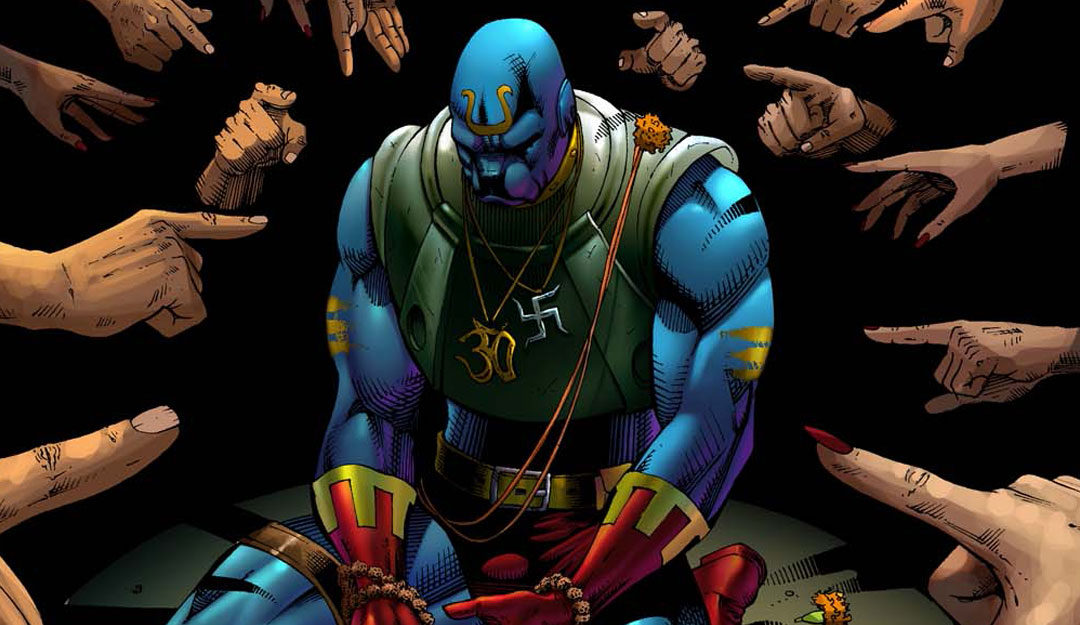
In the universe of Raj Comics, Doga is an anti-hero who does not depend on any superpower, but on his physical strength, weapon cache, and his unwavering principles. He is the protector of the dirty streets of Mumbai, who delivers justice beyond the limits of the law. ‘Doga is Hindu’ is a special issue that not only deeply explores the character of Doga but also touches a very sensitive pulse of Indian society — communalism. This story shows how selfish elements poison society using religion and how a true protector rises above religion and serves humanity.
The Politics of Blood and the Call of Humanity
The story begins with a very common but impactful scene. A school van meets with an accident, injuring several innocent children. They are in dire need of blood. It is from here that the main villain of the story, Bloodman, makes his entry. Bloodman is a criminal who black-markets blood. Taking advantage of people’s helplessness, he sells blood at high prices.
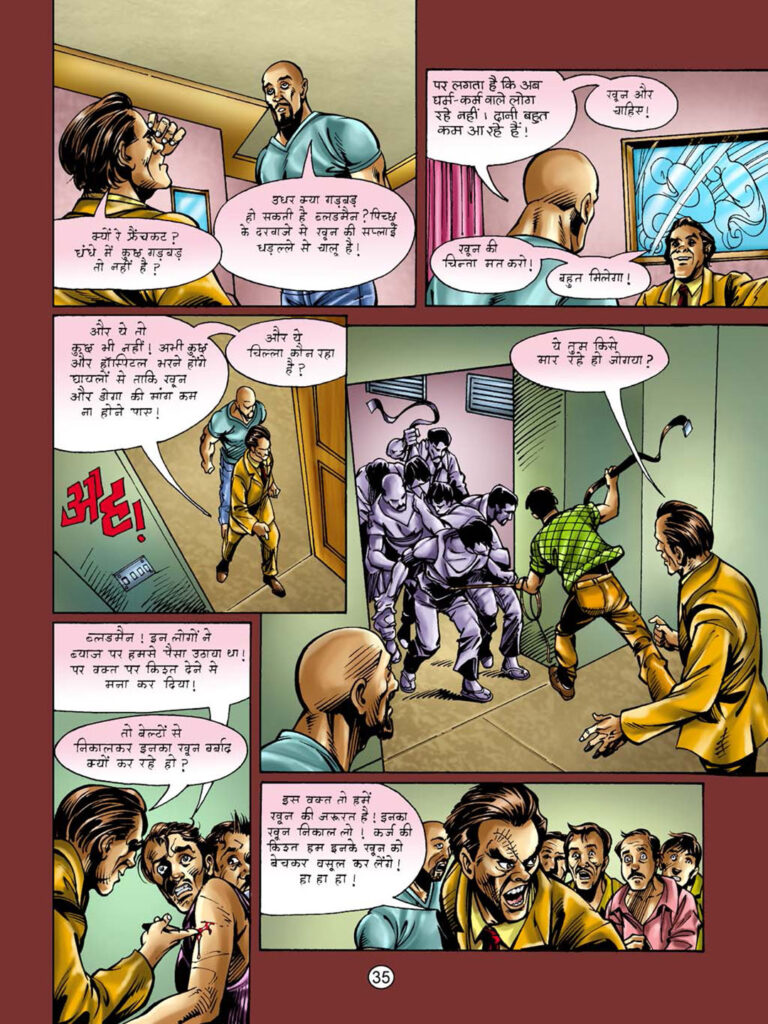
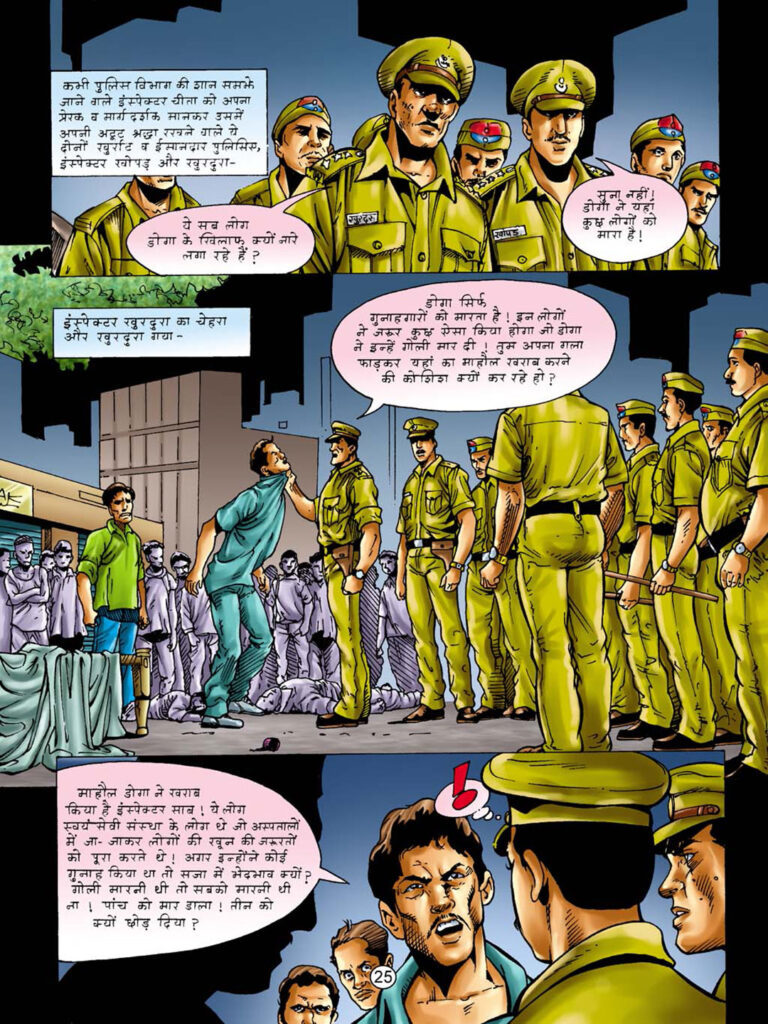
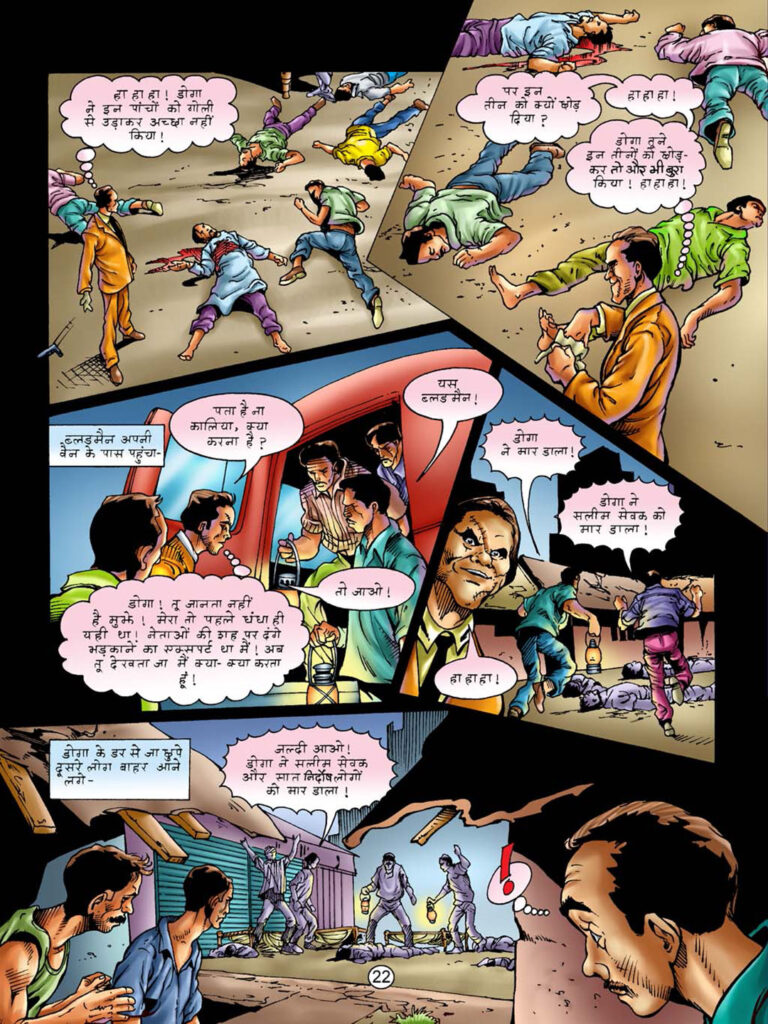
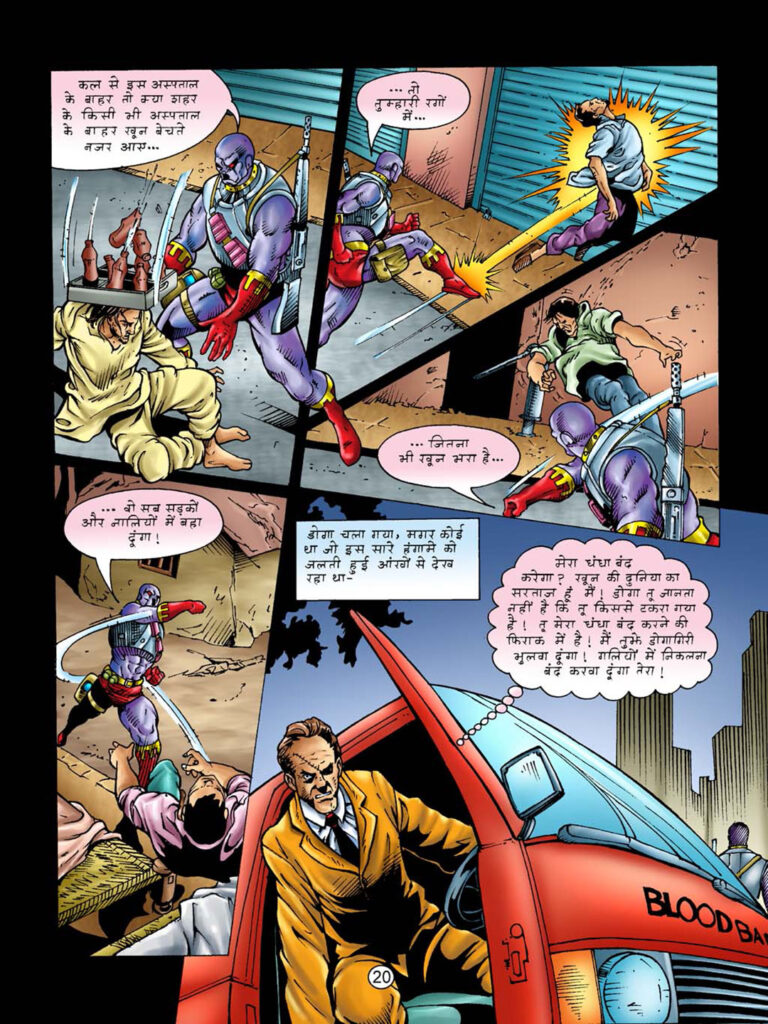
The story takes a real turn when Bloodman and his henchmen try to give this human tragedy a communal color. When Doga stops Bloodman’s goons and kills them, it so happens that those goons belong to a particular community (Hindu). Bloodman takes advantage of this and spreads rumors that “Doga is anti-Hindu” and has “killed Hindus.”
This rumor spreads like wildfire, and riots start breaking out in the city. People turn against Doga. The police also come under pressure. Doga, who has always fought evil, suddenly finds himself facing an enemy who is fighting with lies and hatred, not bullets.
For Doga, this fight becomes more mental than physical. He not only has to eliminate Bloodman’s gang but also fight the dark side of society that goes blind in the name of religion. Doga tries to convince people in his different forms (Sun) that blood has no religion. The hospital scenes show how people of every religion are donating blood to save injured children, which is the main message of the author.
The climax of the story takes place at Bloodman’s base. Doga arrives and destroys Bloodman’s entire empire. He proves that criminals have neither religion nor justice. Doga’s dialogue, “I’m Hindu, I’m Muslim, I’m Sikh, I’m Christian… I am every person who believes in humanity,” is the essence of this comic.
Character Analysis
DOGA (Sooraj):
The character of Doga is at his peak in this comic, elevating him from a mere ‘hangman’ punishing criminals to a social defender. His inner conflict is clear: the calm and introverted Suraj, who wants to live a normal life with Monica, is forced to become Doga again and again due to the evils of society. Doga emerges as a symbol of secularism, where, when accused by the mob of being a ‘Hindu,’ he responds through his deeds rather than words that crime has no religion, and therefore the one who punishes the criminal also has no religion. He cannot have a religion; his only religion is ‘justice.’ The contrast of cruelty and compassion in his personality is what makes him great. His concern for the children at the scene of the bus accident shows his compassion, while his way of beating corrupt blood bank employees explains his cruelty.
Bloodman (The Villain):
Bloodman is a truly disgusting villain. He is not very physically strong, but his mentality is poisonous. He recognizes the cracks in society and uses them for his own benefit. His character symbolizes those who seek opportunity in disaster and run their black businesses under the guise of religion.
Ginger Uncle and other associates:
Ginger Uncle and Suraj’s gym companions play an important role in this story. They represent the conscience of society. When the entire crowd goes hysterical, these characters speak of reason and peace. Ginger Chacha’s dialogue, “The color of blood is red; it does not have the stamp of religion,” makes readers think.
Police Force:
The police are shown here as helpless spectators caught between the anger of the mob and political pressure. This portrayal feels very close to reality. However, some honest cops tacitly support Doga because they know that Doga can do what they cannot, as the law’s hands are tied.
Social Message and Relevance
This story of Doga, titled “Doga is Hindu,” is not just a means of entertainment but an important document of today’s society. The author has beautifully established that the color of blood is above religion—In a poignant scene, Hindus, Muslims, Sikhs, and Christians all stand in a line and donate blood without any discrimination. This comic is even more relevant in today’s social media era, as it shows how easily unconfirmed rumors (fake news) can spread violence in society. Ultimately, Doga’s character is a symbol of India’s secularism; he favors no single religion, but only justice, making the title “Doga is Hindu” both interrogative and satirical, raising the question of whether a symbol of justice like Doga can be tied to any religious identity.
Drawing and Art
The comic features amazing artwork by Jan Manu, presented with dynamic action scenes and effective panel layouts that maintain the pace of the story. Doga’s fighting style is extremely raw and violent, where bullets are fired, but more than gunfire, the use of his hands is prominent. The sounds of bones breaking (CRACK, KHAD) and blood splatter feel extremely effective within the panels. The depiction of the accident and the subsequent chaos on the go-karting track is particularly dynamic, while expressions such as the anger of the crowd, the pain of the injured, and the crookedness of Bloodman are beautifully highlighted through the visuals.
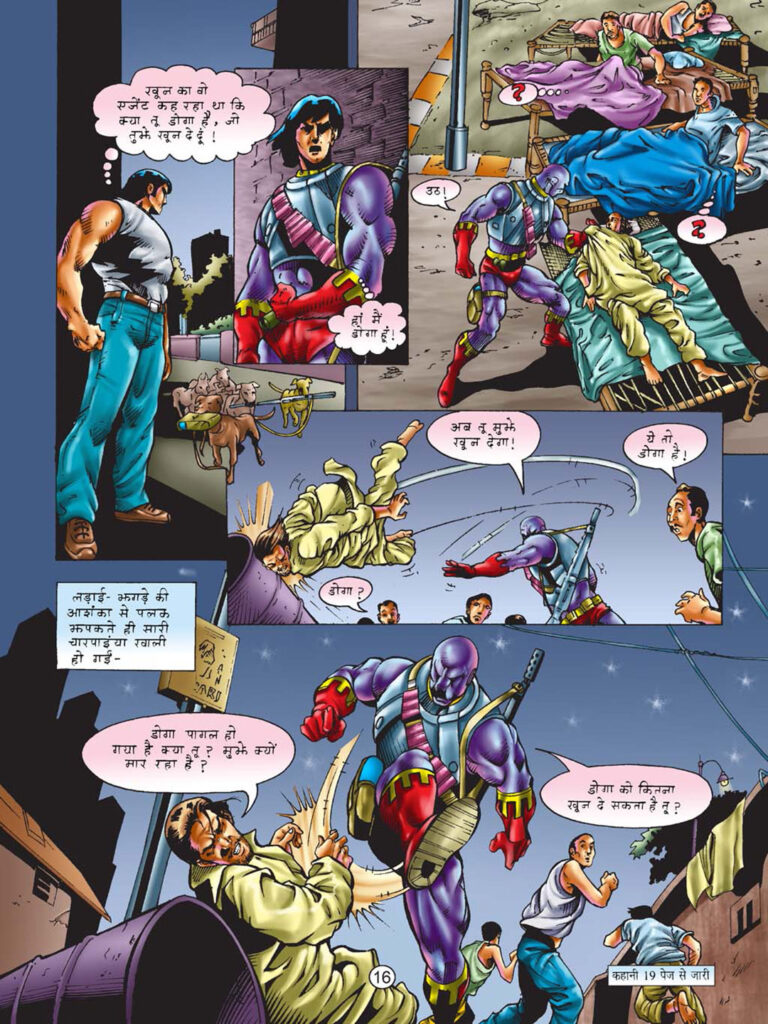
The color combination used by Sunil Pandey sets the mood of the story, where red and orange colors symbolize fire and blood in riot scenes, while dark blue and black tones create mystery and fear in night sequences. The use of these dark and serious colors perfectly suits the intense tone of the story. In facial expressions, the eyes behind Doga’s mask convey a lot, and the facial tension during the confrontation at Suraj’s blood bank is clearly visible, making Vivek Mohan and Studio Image’s work truly admirable.
Writing and Dialogue
There is a sharp edge in the writing of Tarun Kumar Wahi. The dialogues are short but effective.
“Doga judges; religion doesn’t matter.”
“Evil has no religion.”
Such dialogues convey the message without making the story didactic. The pacing of the story is very good, keeping the reader engaged from beginning to end.
Critical Conclusion
Positive Side (Pros):
A sensitive issue like communalism has been addressed with great maturity. Doga is portrayed as a thinker, not just a hunter. The visuals multiply the impact of the story.
Downside (Cons):
“Doga is Hindu” is a milestone in the history of Raj Comics, making readers think rather than merely entertaining them. This story clearly establishes that Doga is neither Hindu nor Muslim, but simply ‘Doga’—the punisher of evil and the protector of a system that sometimes fails to protect itself.
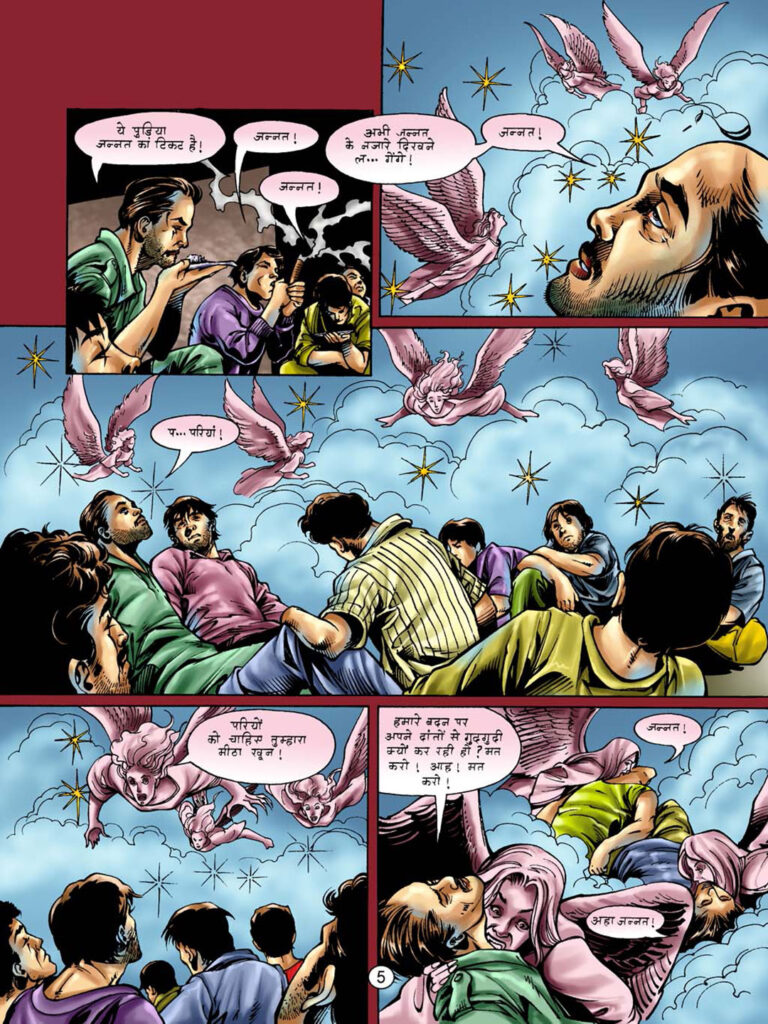
This comic must be read because its social relevance is extremely high in today’s era, as it teaches unity instead of division in the name of religion. It is one of the best examples for understanding Doga’s character in terms of his ideology, anger, and sense of justice, and its artwork is reminiscent of the golden age of Indian comics. Finally, the team of Vivek Mohan and Sanjay Gupta has successfully woven a sensitive social issue into an action-packed drama.
“Doga is Hindu” is a question that gets answered after reading: Doga belongs to everyone, and it is a must-read not only for Doga fans but for every reader interested in Indian literature and society.
Rating: 4.5/5
This comic is proof that the medium of comics can be used not only for entertainment but also to hold up a mirror to society. This version of Doga will always live on in the hearts of readers.
