


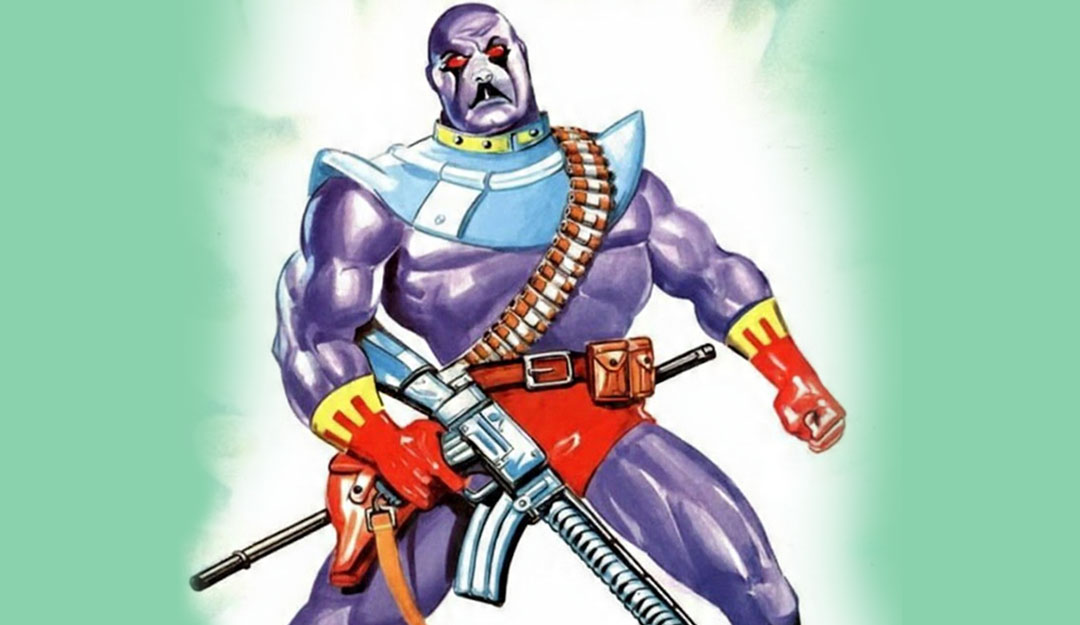
This review is based on a very important and exciting issue, ‘Curfew’, of the most cruel and realistic superhero of comics, ‘Doga’. The comic is written by Sanjay Gupta and illustrated by Tarun Kumar Wahi. This comic is counted among those special issues in Indian comics history which are not limited to entertainment only, but also directly and strongly attack the deep evils of society, corruption, and the deteriorating system of justice.
Doga’s dialogue clearly defines his entire character.
“These eyes have seen the gruesome form of man and humanity! Orgy of hatred and cruelty! Human bodies are plucked like dogs! And now, by breaking the law, I will protect the law!”
This dialogue clearly shows that Doga does not believe in a justice system where criminals roam around in courts for years. Doga believes in rooting out crime, not in half-hearted solutions.
Story premise: From the trenches of Chambal to the streets of Mumbai
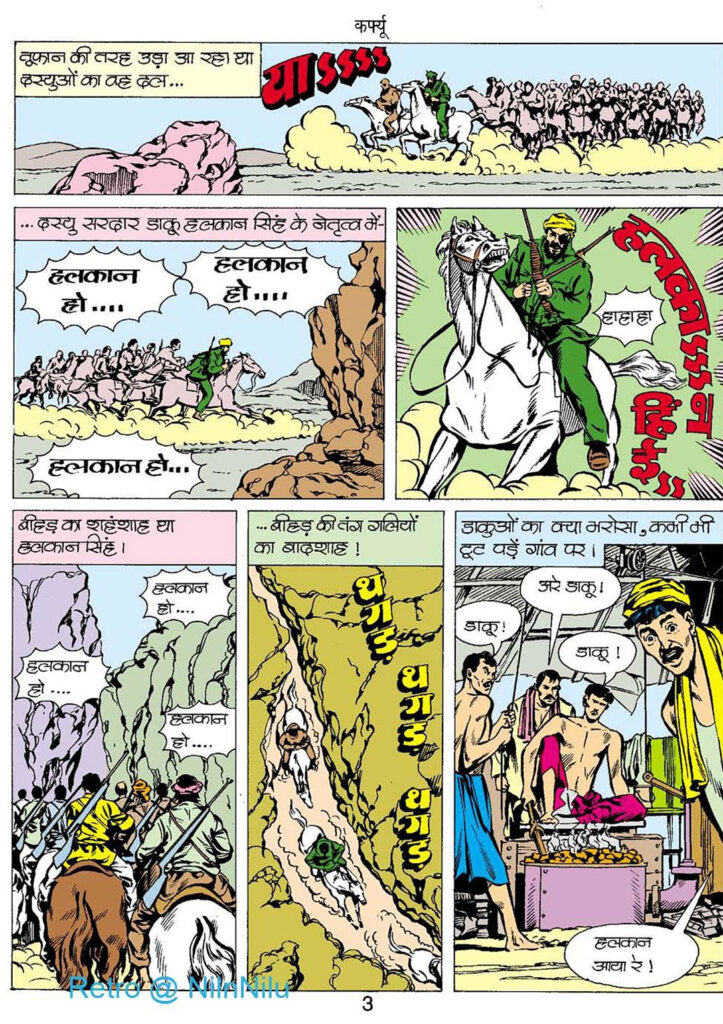
The story begins in the ravines of Chambal, where the fear of dacoit Halkan Singh is spread everywhere. This part brings out the old, bitter, and blood-stained relationship between the hero and the villain.
Halkan Singh’s cruelty and the ‘garbage pit’ child:
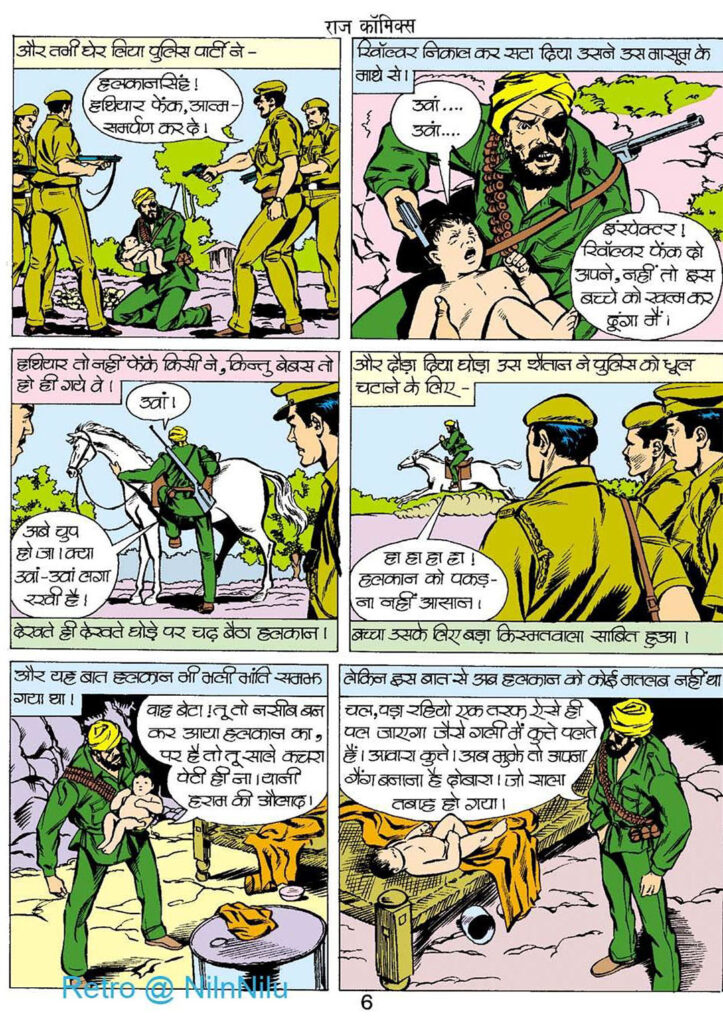
When the police surround Halkan Singh, he finds an abandoned child lying in a garbage dump. He does not raise the child out of pity or humanity, but makes him his shield so that the police cannot open fire. He calls that innocent child a “child of the garbage box.” This child later becomes Doga. From here it becomes clear that Doga’s childhood was not spent in affection and love, but amidst abuses, fear, and the smell of gunpowder.
Genocide and the birth of hatred:
Halkan Singh and his gang, which includes Jagira and others, brutally kill unarmed passengers. They not only kill but also rob dead bodies, take out a ring by cutting off a dead woman’s finger, and break the gold teeth of a dead body with a stone. These scenes fill the minds of readers with deep hatred for Halkan Singh and justify Doga’s upcoming revenge. The little child was seeing all this with his own eyes, and at that very moment, the fire of hatred and anger burned inside him.
‘Paan-bad’: a new conspiracy against society

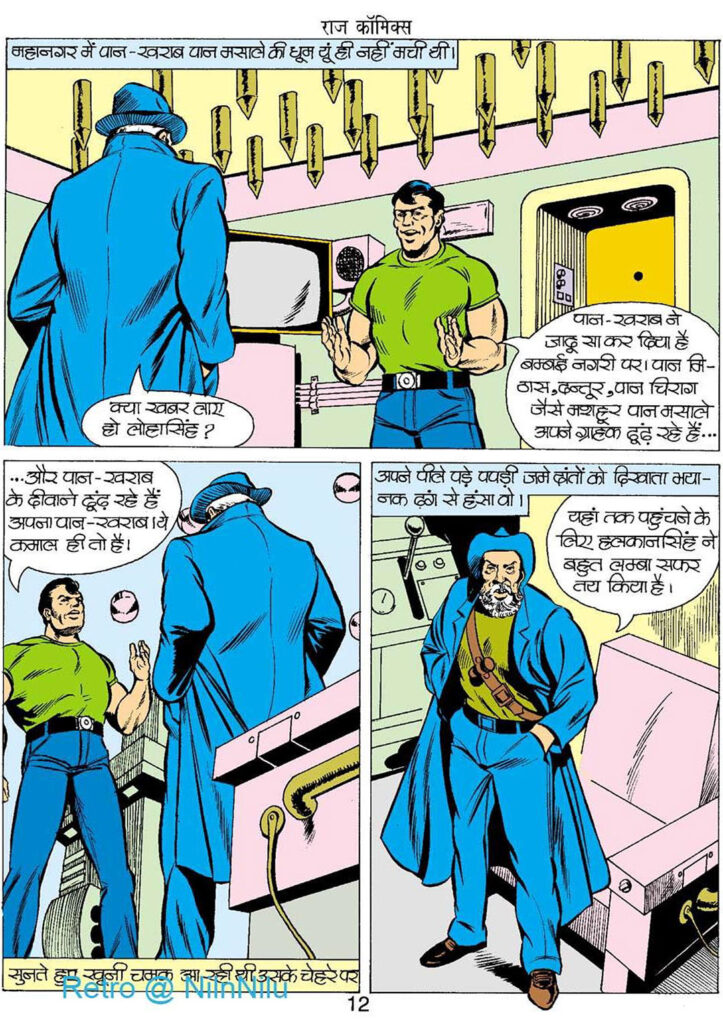
After many years, the story reaches metropolitan Mumbai (then Bombay). Now Halkan Singh has become not a dacoit of the ravines, but a powerful man and a minister. He is vigorously promoting a pan-masala named ‘paan-badrab’.
This is not just a business. ‘Paan-bad’ has been mixed with such intoxication that makes people addicted to it and mentally weak. The author has clearly shown the dangerous impact of tobacco and drugs on society here. When children also start falling prey to it, it clearly indicates that the future of society is at stake. Halkan Singh’s aim is not just to earn money, but to push the entire city into the dark streets of drugs.
‘Curfew’ and the orgy of Doga
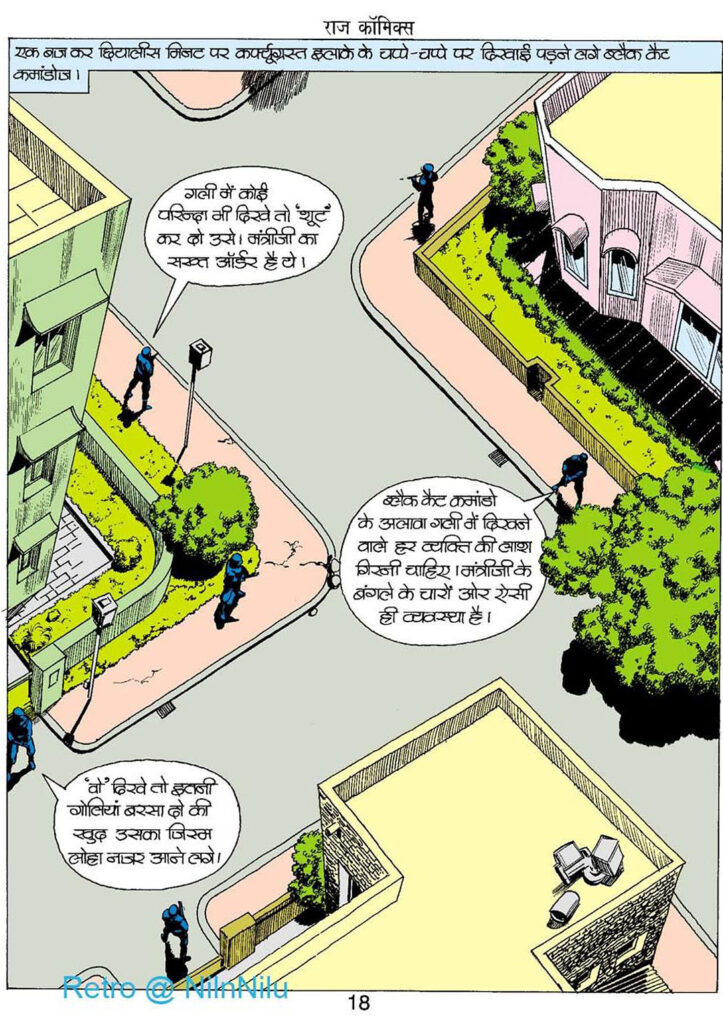
The real twist of the story comes when Doga puts posters on the walls of Mumbai and announces that he will kill Halkan Singh. Police Commissioner Tripathi gets upset with this open challenge. For the safety of Halkan Singh, a curfew is imposed in an area of five miles around the minister’s bungalow.
Black Cat Commandos vs Lonely Warrior:
The minister’s security is manned by Black Cat Commandos, and they have clear orders to shoot anyone on sight. Doga’s entry in such an environment is really surprising. He jumps straight down from the 25th floor—a mysterious person, with a body as if filled with steel and gunpowder running in his veins instead of blood.
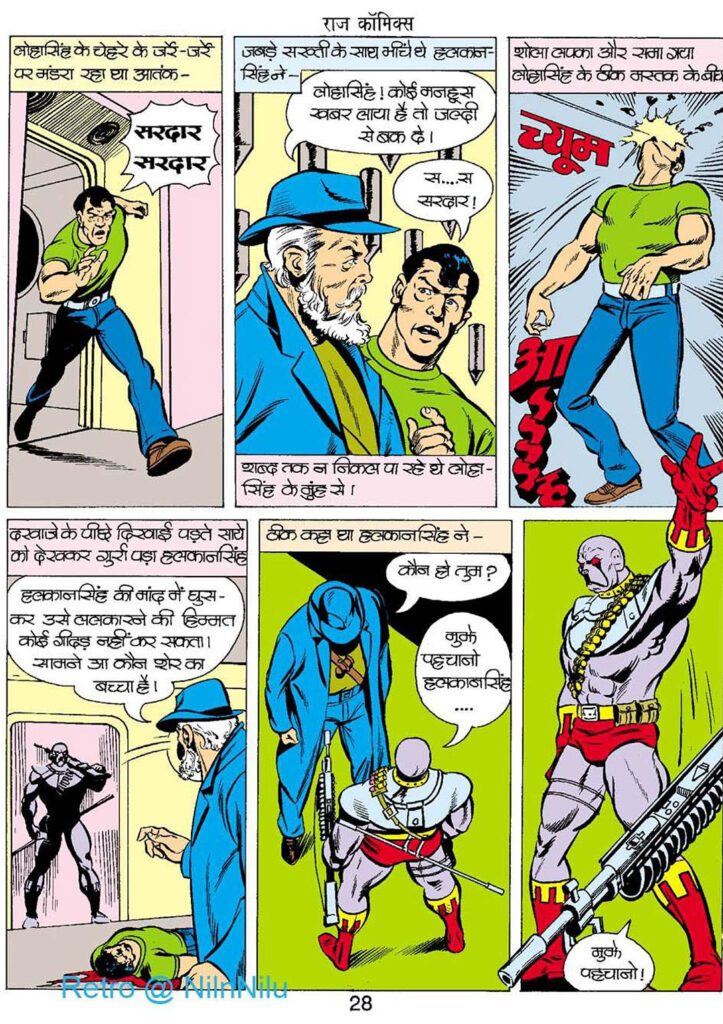
The action portrayal here (art by Manu) becomes very spectacular. Doga, with his heavy machine gun and whip of justice, defeats the commandos who are protecting a rotten and corrupt system. This part also raises a deep moral question—Is Doga right in killing policemen and commandos who are just performing their duties? But from the story’s point of view, they are saving a criminal and murderer (Halkan Singh), so in Doga’s eyes, they also become entitled to punishment.
Extremes (Climax): accounted for
The ending of the comic is extremely emotional and tremendously dramatic. Eventually, Doga comes face to face with Halkan Singh. This is where a big and shocking revelation occurs—that Halkan Singh is the same person who once picked him up from the garbage box.
Repayment of debt and justice:
Halkan Singh fires a special golden bullet hidden in his belt into Doga’s chest, but Doga does not die. After this, he strangles Halkan Singh to death. Doga’s dialogue clearly shows the depth of his character:
“The favor he did me by giving me life is paid… he equalized the score by shedding my blood, I equalized the score of the law by shedding his blood.”

Doga deliberately risks his life so that Halkan Singh can shoot him and he can be free from the debt of ‘life donation’ given to him. This scene does not allow Doga to remain just a violent character, but makes him a true ‘anti-hero’ with high moral principles.
Character Portrayal and Psychology
Doga: His character is a balance between hatred and justice. He is like a stray dog—one who is rejected by society, but who never wavers in his loyalty, that is, to justice. His mask and heavy weapons symbolize his strength and his fearsome appearance.
Halkan Singh: He is a very effective and successful villain. Chambal’s journey from becoming a dacoit to a corrupt minister shows that evil does not end in society; it just changes its form. He wants to control people through power and drugs.
Adrak Chacha: In the end, Ginger Chacha’s entry gives a new direction to the story. He is the guardian of Doga and wants to tell the world that even in the chest of this ferocious warrior, an innocent and sensitive heart beats.
Art, Dialogue and Editing
Drawing (Illustration):
Manu’s artwork is the biggest strength of this comic. The genre that became the hallmark of 90s Raj Comics is fully visible here. The choice of colors, especially Doga’s purple and red suit, looks very effective. The scenes of bloodshed and gunfire are so finely drawn that the reader feels himself standing amid that tension and violence.

Screenplay and Dialogues (Screenplay & Dialogues):
Tarun Kumar Wahi has chosen words in the dialogues very thoughtfully. Sentences like “Human bodies scratched like dogs” make the dark mood of the story even darker. The pace of the script is fast, and the story does not loosen anywhere. The right balance of action and suspense remains on every page.
Social Relevance and Message
‘Curfew’ is not just a story of a fictional superhero, but it brings out bitter social truths, where criminals, with the help of corrupt politics, reach positions of power and roam around as protectors of society. The spreading drug trade is hollowing out the coming generations from within. This story also shows the failure of our justice system, where the law itself becomes a shield for criminals. In such circumstances, it is almost certain that characters like ‘Doga’ will be born.
Most importantly, the story shows in depth the impact of childhood—the future of the child found on the garbage heap was decided by his environment. If he had found love instead of hatred, perhaps his life would have been different, but that very absence made him a dreadful ‘killer’.
Conclusion: An Immortal Masterpiece
‘Curfew’ is such a masterpiece from Raj Comics that makes the reader think about how blurry the line between right and wrong can be. This issue is a special collector’s item for Doga fans because it explores his origin and principles in depth.
The greatest strength of this comic is its ending, which leaves the reader with a heavy heart and deep emotions. It shows how great the price of becoming a protector can be. ‘Curfew’ is a gem of the golden age of Indian comics, which must be read by readers of every generation.
This story is not just a victory for ‘Doga’, but a complete tale of revenge for the innocent child who, years ago, saw humanity dying in the ravines of Chambal. Salute to Raj Comics for giving us such a courageous and realistic character.
Rating: 5/5
Recommendation: Must Read — for everyone who loves action, thrillers, and deeply emotional stories.
