


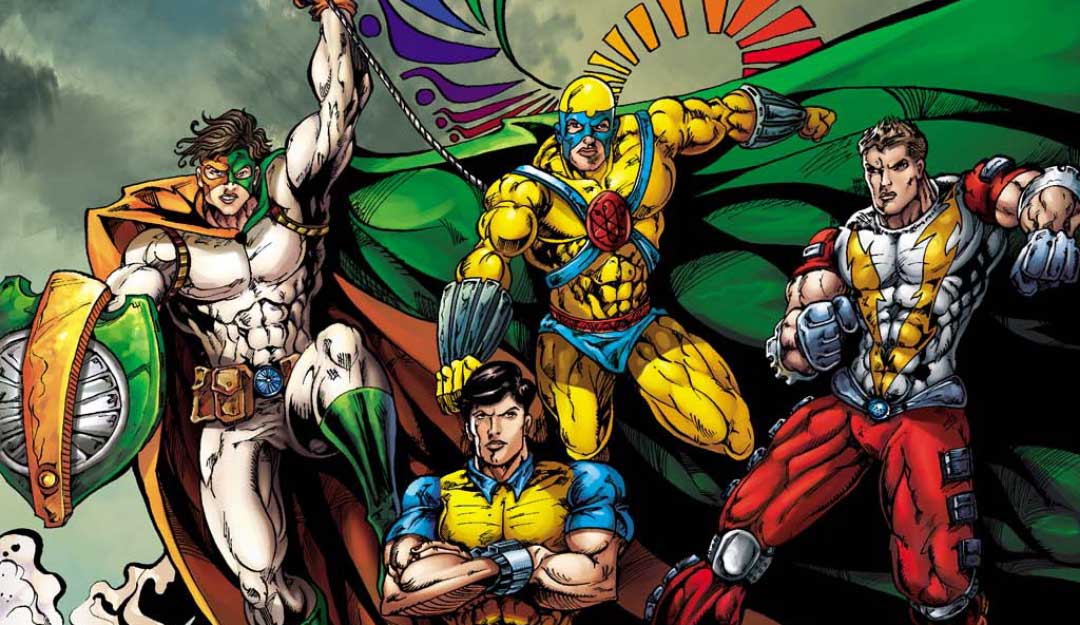
The name of Raj Comics is like a strong pillar in the world of Indian comics. It not only gave children a flight of imagination, but also made serious issues related to society a part of its stories from time to time. “Hum Honge Kamyab” (number 2453) is not just a multistarrer action comic, but also a document recording the truths of its time. This comic exposes the corruption, mismanagement, and stains on the country’s image that came to light during the Commonwealth Games (Commonwealth Games – CWG) held in Delhi in the year 2010. Sanjay Gupta’s presentation and Nitin Mishra’s writing together have made it a great combination of detective thriller and social satire.
Historical and social background

To understand the story properly, it is important to remember India of that period. In the year 2010, Delhi was being presented to the world as a ‘global city’. But as the inauguration approached, layers of corruption were revealed. News of poor construction, misappropriation of money, and gross negligence in security embarrassed the entire country. “We Will Succeed” appeared in this atmosphere of turmoil. The author wisely gave the responsibility of cleaning this rotten system by bringing together four big superheroes—Super Commando Dhruv, Tiranga, Parmanu, and Vakr.
Plot expansion and structure
The story begins with an emotional scene—8 February 2004, the desert of Jaisalmer. A little child in torn clothes is playing football. The passion inside him makes it clear that the game is not bigger than any player; courage and passion make the game bigger. This role reminds us that there is no dearth of talent in India; what is lacking is only the right system, which sometimes suppresses this talent even before it emerges.
First part: The web of mysteries
The main story begins on September 26, 2010. A car accident occurs near Delhi, in which a criminal named ‘Discus Thrower’ tries to kill the organizing committee treasurer, Amrit Lal. This is where Tiranga enters. Before dying, Amrit gives a ‘key’ to Tiranga, which later becomes the lifeline of the entire story. On the other hand, Super Commando Dhruv is investigating a five-year-old case in which weightlifting coach Pawan Khanna was accused of giving steroids to players, and his car fell into the river. Dhruv is confident that Pawan Khanna is not dead.

Second part: Crisis on security
In this part, Parmanu enters, taking the story forward from the angle of technology and security. He is given the responsibility of protecting the stadium and soon learns that terrorist organizations such as the ‘Para Bombers’ and the ‘Death Striker Team’ are active. Meanwhile, Vakr, himself a sports superhero, is engaged in the security of foreign guests at Delhi Airport. From here, the story becomes a race against time, where every second is precious.
Microscopic analysis of characters
Super Commando Dhruv: Brain and patience
In this comic, Dhruv is seen at the peak of his detective skills. He doesn’t just rely on strength, but builds the bigger picture by connecting small clues. His suspicion that “Pawan Khanna’s death was a conspiracy” gives depth to the story. Here, Dhruv comes across as a guide who does not care about his own life to reach the roots of corruption.
Tiranga: Sentinel of justice
Tiranga has always been shown in Raj Comics as the protector of the country and the guardian of the Constitution. In this story, he starts an open war against corrupt officers. The keys and pen drives in his hands become a means of accessing those files that can expose big leaders and officers. Tiranga’s shield here not only protects from weapons, but also becomes a symbol of protecting the honor of the country.

Parmanu: Science and vigilance
Vinay, i.e., Parmanu, brings out the weaknesses of the security system in this story. When he sees water dripping from the roof of the stadium and realizes that substandard materials are being used, it directly raises questions about the system. Parmanu’s final mission—to destroy a bomb flying in the air over the stadium—is one of the most exciting and memorable moments of the comic.
Vakr: New vigor and speed
The character of Vakr adds a sports flavor to the story. Being a brilliant player himself, he gets angrier at those people who are tarnishing the sanctity of sports. His action sequence at Delhi Airport speeds up the story and keeps readers engaged till the very end.

Villains: Enemies hidden within the system
The biggest strength of this comic is that its real villains are not just foreign terrorists, but people sitting inside our own system. The character of ‘K.L. Mani’ reminds us of corrupt real-life officers who mistook the budget of the Games for their pocket money. ‘Balbir Singh’ (nephew of coach Pawan Khanna) is a character who, blinded by personal greed and revenge, descends into the world of crime. The ‘Death Striker Team’ and ‘Para Bombers’ are just pawns; the real game is played by those powerful people sitting in air-conditioned rooms, running everything behind the scenes.
Art, portraiture, and visual language
Hemant and his team have shown Delhi not just as a city, but as a living character in this comic. The IGI Airport’s new terminal (T3), Jawaharlal Nehru Stadium, and the streets of Delhi are so accurately depicted that the reader feels present in the same environment while reading. The collision between Parmanu and ‘Shuttler’, Vakr’s action at the airport, and the coordination of Dhruv and Tiranga in the climax have been portrayed very impressively. The dark tone used in the rain scenes perfectly matches the story’s serious themes of corruption and murder. Harish Sharma’s calligraphy creates a distinct flavor, especially in the heavy dialogues between Tiranga and Dhruv.
Social messages and moral questions
“Hum Honge Kamyab” is not just entertainment, but a story that mirrors society. Writer Nitin Mishra raises the question of where public money is going by highlighting issues like expenditure of ₹70 thousand crores and malnutrition. The example of coach Pawan Khanna clearly shows how players’ careers are ruined by trapping honest people and leveling allegations like doping against them. At the end of the story, Dhruv explains very simply and effectively that the real meaning of ‘Commonwealth’ is ‘public welfare’, not personal benefit for a few individuals.

Depth of dialogue and script
The dialogues in this comic directly touch the heart. For example, when Tiranga tells Amrit Lal—“to return to Delhi after being away for so many years,” and Amrit Lal replies—“This is a betrayal of every honest taxpayer in the country,” it becomes clear that the purpose of the story is not just action, but also to make people think.
Dhruv’s final speech on page 48 is the essence of the entire comic. He speaks directly to the readers, i.e., the general public, and says that the decision lies in our hands—whether we will be proud of corruption and show it off, or stand with our heads held high before the world by solving our real problems.

Adventure and climax
The climax of the story is full of intense suspense. When it is revealed that Pawan Khanna is alive and that he had activated the superheroes by sending an email to the commissioner, the story takes a new turn. Balbir Singh’s defeat at the hands of Vakr and the destruction of the stadium by Parmanu conclude the issue with a spectacular finale. The coming together of all four superheroes against the ‘Death Striker Team’ gives readers a feeling similar to an ‘Avengers’ moment.
Critical view
Despite such a strong story, some minor shortcomings are also visible. Due to the presence of four heroes and multiple villains, the story moves a little too fast in the initial pages, which requires the common reader to read carefully to connect all the links.

Pawan Khanna’s instructions to the superheroes while staying underground may feel slightly filmy, but this is easily acceptable within the world of Raj Comics, as it helps maintain the thrill.
Place in Raj Comics’ legacy
This comic is included among the most memorable stories of Raj Comics, alongside titles like ‘Parmanu: Kalyug’ and ‘Dhruv: Last Bet’. It was not written solely for entertainment; the courage to hold a mirror up to the government and the system of that time is clearly visible. This multi-starrer special remains relevant even today, as corruption and political interference in sports continue to be bitter truths.
Conclusion: An immortal creation
Summing up the review of “Hum Honge Kamyab,” it can be said that this comic is a priceless heritage of Indian superhero literature. It teaches that true patriotism is not limited to waving the flag, but lies in mustering the courage to clean the filth within the country.
Nitin Mishra’s writing, Sanjay Gupta’s vision, and the brilliant chemistry of the four heroes have made this story unforgettable. The final message—“One day, we will succeed”—is not just a song, but a resolution for every conscious Indian.
If you want to read comics that make you think along with delivering thrills, you will hardly find a better option than “Hum Honge Kamyab.” This comic stands as clear proof of the maturity and courage of Raj Comics.
