


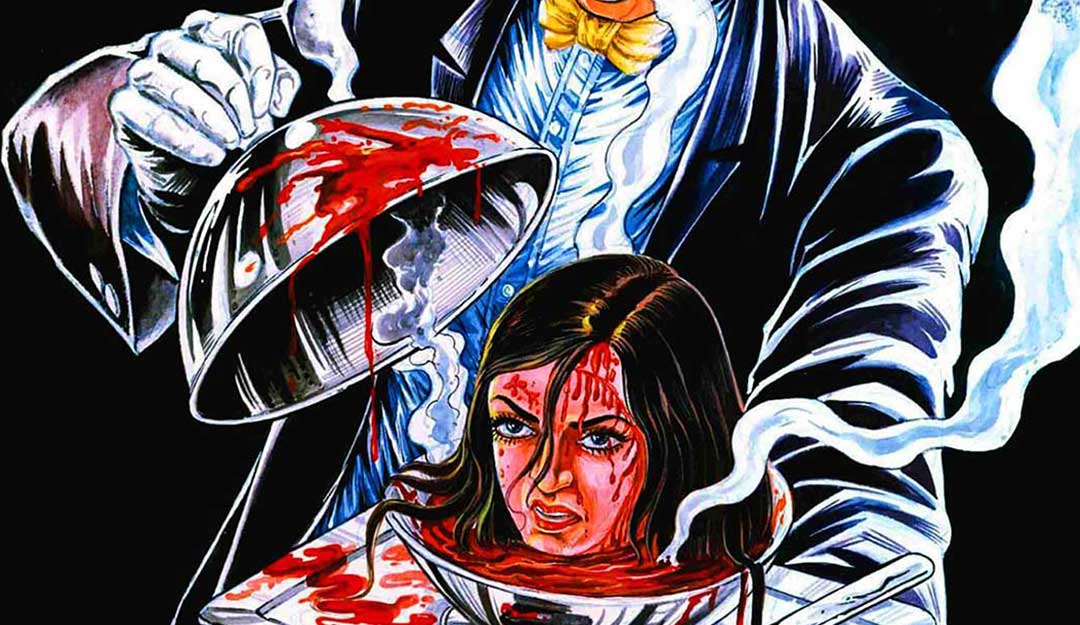
Sanjay Gupta is a name in the Indian comics world who has ruled the hearts of readers for decades with his creativity and amazing imagination. His new venture ‘Alpha Comics’ has, in recent times, introduced stories that are not only original but also take a deep hit on Indian social anomalies. In this episode, one of his most dark, gruesome and influential characters is ‘Bawarchi’. The Chef’s hero ‘Narayan’ is not an ordinary superhero who has divine powers, but a vengeful character forged in the furnace of cruelty, poverty and injustice of society, whose strength is his cooking art and his unlimited anger. Alpha Comics, through this character, has brought Indian comics into the ‘mature’ category where stories not only entertain but also shake the soul. Narayan becoming a Chef is not just a choice of profession, but a symbol of the boil of an exploited class that consumes everything when it explodes.
Alpha Comics’ new offering Chef’s analysis: Why Narayan is the scariest hero

Alpha Comics has introduced a hero as a chef who would probably be less likely to be called an ‘anti-hero’. Narayan’s story follows an ordinary boy who lives with his parents in a small vegetarian dhaba. His father is disabled and Narayan wants to support his family with his hard work. His dream is to become a ‘super chef’, but luck takes him down a path where taste is replaced by blood and revenge. The character of Narayan is very finely crafted; in the beginning, he is a soft-hearted, religious and cultured young man who considers it a sin to kill even an ant. But when the rich and powerful section of society crushes his self-respect and causes his father’s death, the same Narayan turns into a dangerous ‘Bawarchi’ whose food dissolves poison and hatred instead of spices. This change in him shocks the readers mentally because it shows the anger hidden within us which we often suppress.
The Bitter Truth of Hell City: The Disgusting Face of Social Discrimination in Chef Comics

The story of this comic is set in a fictional city named ‘Nark City’, which actually shows the deep gap between the slums and big bungalows of today’s cities. Here the oppression of the rich and the helplessness of the poor are at their peak. Narayan’s father’s leg is rotting and the doctor asks for Rs 3 lakh for treatment. Narayan goes to Seth Hira Lal for help, in whose bungalow he first works. Here the author has shown the indifference of the rich class in a very effective manner. Hira Lal not only refuses to give the money, but also slaps Narayan and even asks him to wait for his father’s death. This social discrimination and pride of the rich forces innocent youth like Narayan to break. Hell City is not just a place, but it symbolizes a rotting system where humanity has vanished and hunger and money are everything. Chef is a result of this rot.
Becoming an Innocent Monster: Narayan’s Vengeance Journey and the Effect of Father’s Death

Narayan’s entire world revolves around his father. His father teaches him that ‘patience’ is the greatest virtue, but when the same father dies without treatment, Narayan’s patience also breaks. The scene of his father’s death is very painful, where Narayan has to leave his father’s dead body and fry ‘French fries’ for the party at Heera Lal’s house. This contradiction completely changes Narayan’s mind. He starts feeling that values and ideals have no meaning in this world. From here, the ‘Bawarchi’ within him awakens. He tells himself that he will no longer serve taste, but death. He burns the values his father had given him in the fire of his poverty and pain. This change in Narayan is not just the change of a person, but it is the defeat of the thinking which believed that life can be lived honestly.
Hell’s Kitchen and Vile Cuisine: The Secret to Chef’s Creepy Culinary Skills

The most disturbing part of the comic is where Narayan starts his new ‘kitchen’. This kitchen is not in a five-star hotel, but between dirty gutters and sewers. Narayan now catches and cooks animals like rats, scorpions, snakes and bats instead of vegetables. Here the author and painter have resorted to ‘gore’ visual violence, which is not for the faint of heart. The way Narayan cleans and cooks these animals shows the mental deformity within him. He prepares to cook these poisonous creatures and feed them to those who hurt him. The process of making the dish is shown so closely that the reader feels both disgust and awe. Narayan’s belief that ‘poison cuts poison’ takes him on a path from which it is almost impossible to return.
Last feast at Hira Lal’s bungalow: the height of the chef’s vengeance

The climax of the story is in the dinner party held at Heera Lal’s bungalow, where Narayan arrives posing as a masked chef. Hira Lal and his family fall for the scent and decoration of Narayan’s dishes without knowing what is being served in front of them. When they start eating, they find human organs in the dishes—noses, ears, and fingers. Narayan had prepared this food from the organs of Hira Lal after killing his old loyal chef. This scene is one of the most gruesome scenes in the history of Indian comics. Narayan’s statement that ‘animals drink blood and scratch flesh, I have created all that for you’ is the biggest slap on Heera Lal’s ego. Finally, Narayan decapitates Hira Lal’s entire family and places them on silver plates as decoration. This scene shows the extent of vengeance where justice is replaced by destruction.
Vinod Kumar’s Artistic Skills: A Visual Review of Chef’s Dark Universe

Painter Vinod Kumar has left no stone unturned in putting Sanjay Gupta’s vision on paper. The art style of this comic is very raw and dark. Wrinkles, sweat, and fear hidden in the eyes are clearly visible on the faces of the characters. Especially the part of Narayan’s face which has been burnt by fire further increases the harshness of his character. The scenes of animals biting and splashing blood are so vivid that the reader feels himself in the same atmosphere. Stress and discomfort have been increased by using small frames in the paneling. The difference between the streets of Hell City, the dirty sewers, and Heera Lal’s luxurious bungalow is shown in a very effective manner. The choice of colors is also in accordance with the mood of the story; where there is poverty there are blurred and muddy colors, and where there is retribution the dark red and black dominate.
Messiah of Sewer or Angel of Death: Narayan’s dual personality and social justice

At the end of the story Narayan is shown inside the sewer with people who have been thrown out of society—beggars, addicts, and criminals. Narayan becomes their ‘Annadata’ here. He kills the rich and feeds their meat to these poor people. Here a deep question arises: Is Narayan a criminal or the messiah of the poor? He calls himself ‘Sewer Chef’. He believes that this is the right punishment for those who insult food. He gives food to those who have nothing, but his manner is completely inhumane. This form of Narayan makes him a ‘dark messiah’. He considers the justice he has created above the law. This part forces one to think whether greater injustice is necessary to eliminate injustice?
Police Officer Arjun and the Law of Hell City: Challenges facing the Chef

The law is represented in the story by Special Investigating Agency (SIA) officer Arjun Malih. Arjun is an honest and brave cop who tries to maintain law and order in Hell City. He is assigned to solve the mysterious murders taking place in the city and the disappearance of the mayor’s son. When Arjun encounters the clues left by Narayan, he too is shocked. The conflict of ideas between Arjun and Narayan is going to be more interesting in the coming issues. In Arjun’s eyes, Narayan is a dangerous criminal, while in Narayan’s eyes, Arjun is part of the same corrupt system that forced him to lose everything. The discovery of decomposing corpses in the sewers during the investigation is proof that Narayan has built his own separate and fearsome empire beneath the city.
Hunger will definitely go away: The future of the chef and the new direction of Alpha Comics
The first issue of Chef is just the beginning. This introduces us to Narayan because of his past and his becoming a cook, but the real story is yet to come. The slogan ‘Bhukh Mitegi Zaroor’ at the end of the comic indicates that Narayan’s revenge is not over yet. Alpha Comics has shown through this issue that they are not afraid to take risks. Stories that show the dark part of society without hiding it are the need of the hour. The teaser for the next character like “The War Cook” has added to the curiosity. Chef is leading the new direction in Indian comics where the hero is not beautiful but scary, where the fight is not in the sky but in the sewers, and where justice tastes bitter and blood-like.
