



The character of ‘Bheriya’ always has a distinct identity in the vast world of Raj Comics. He is not just a mighty warrior, but a human being who is trapped between the ‘animal’ and the ‘human’ inside him all the time. This special issue specifically shows this internal fight between ‘Kobi’ and ‘Bheriya’. This comic is not just a superhero story, but a very emotional story of fate, regrets of past sins, and a battle with oneself.
This special issue of about 90 pages is the result of the powerful story by Tarun Kumar Wahi and the memorable artwork of Dheeraj Verma. In the 90s, the pairing of these two created a different stir in the world of Indian comics. This issue makes one feel the strength of that same period again. Let us understand this entire story a little more deeply, but in simple words.
Philosophical and Cosmic Beginnings: Phobos and Mobos
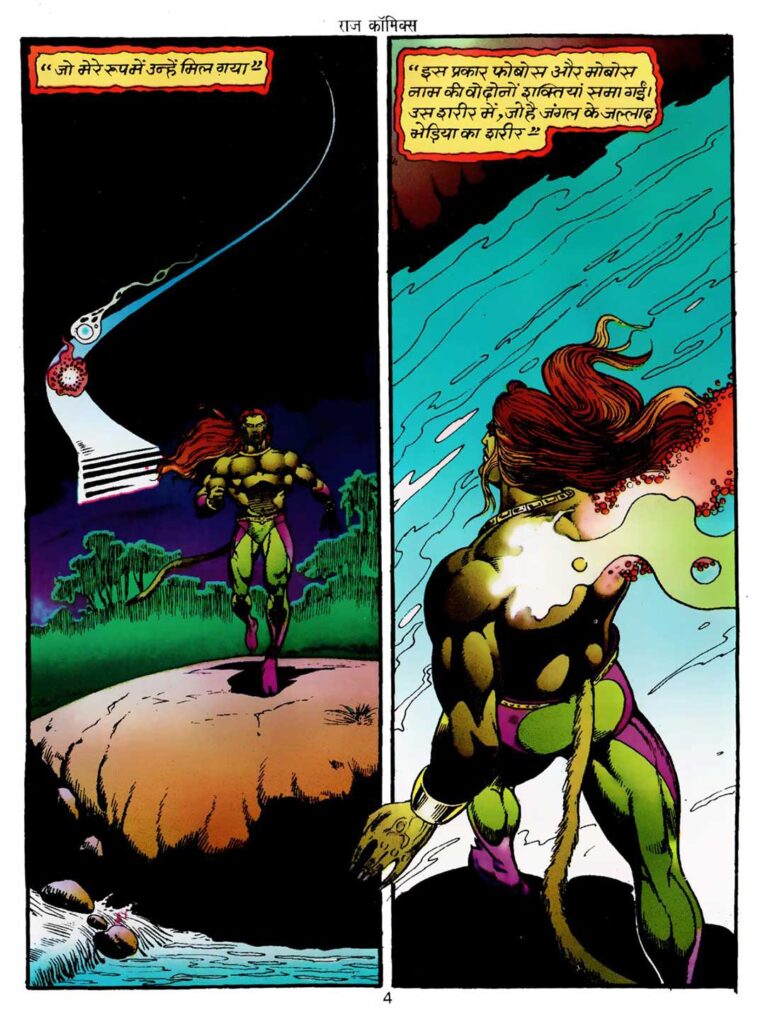
The story does not begin with a minor incident, but directly with the forces of the universe. In the very first pages, we are told about the infinite sky and mysterious forces. Here, reference is made to ‘Phobos’ and ‘Mobos’, named after the two satellites of Mars. According to the author, Phobos is the power of destruction and fear, while Mobos symbolizes the power of peace and creation.
Both these forces come to Earth in search of a body through which they can show their effect. They get that medium in ‘Bheriya’. This is where the real theme of the story begins—the battle within. The conflict that goes on all the time within Bheriya, the dreaded beast on one side and the kind human being on the other, is actually the effect of both these cosmic forces.
This beginning of the story makes it clear that whatever is going to happen next will not just be action. There will be things to think about, things to look into within oneself. The reader understands that he is embarking on a deep journey, not a simple story.
Swear of Non-Violence and the Compulsion of Bheriya
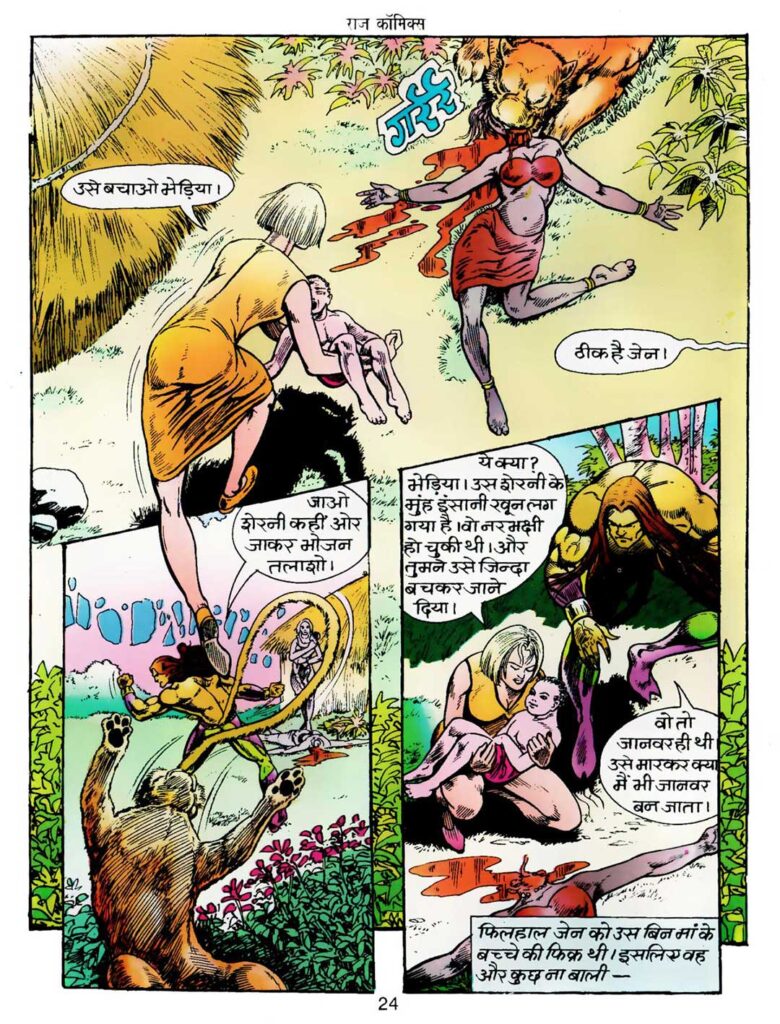
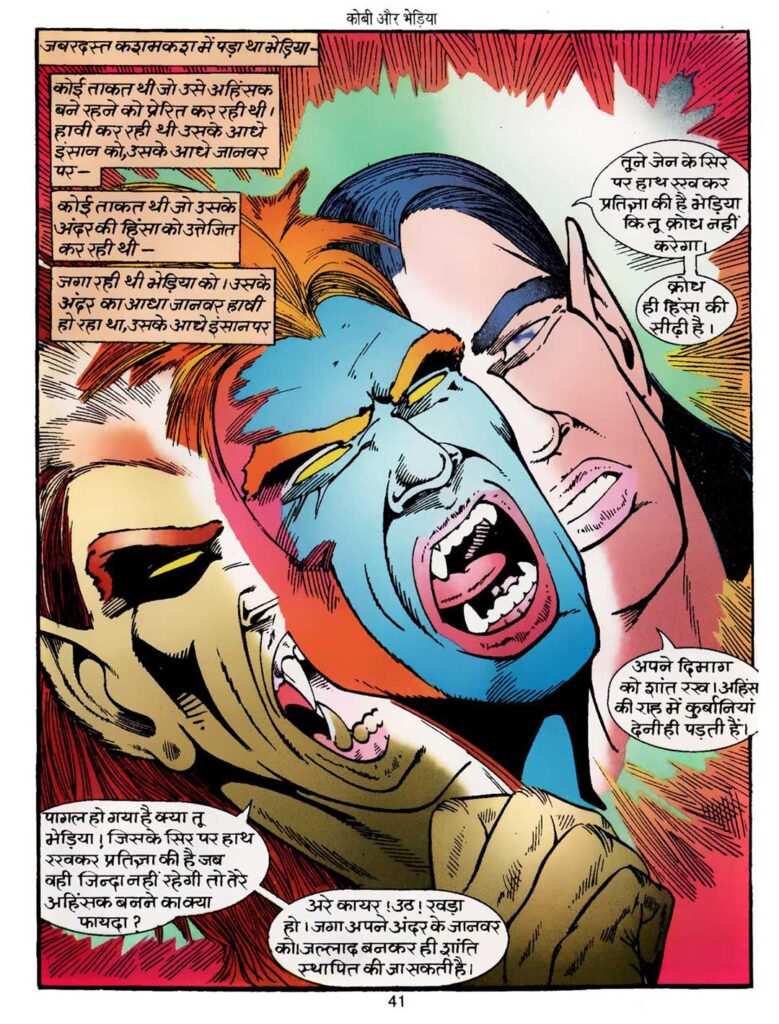
The mainstay of the story is connected to the previous part, ‘Animal’. Bheriya loves his beloved Jane very much. But Jane hates the ‘animal’ inside him. She doesn’t like violence and bloodshed. Bheriya makes a very difficult decision to become good and great in Jane’s eyes. He swears that he will never commit violence again and will control his anger.
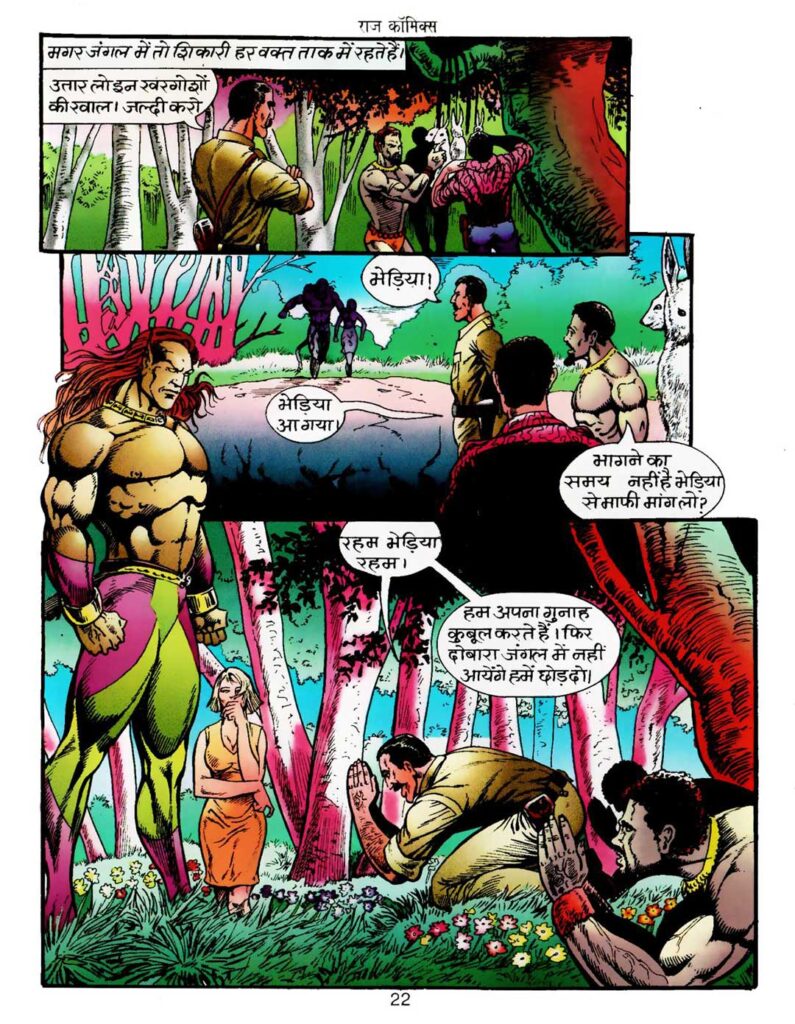
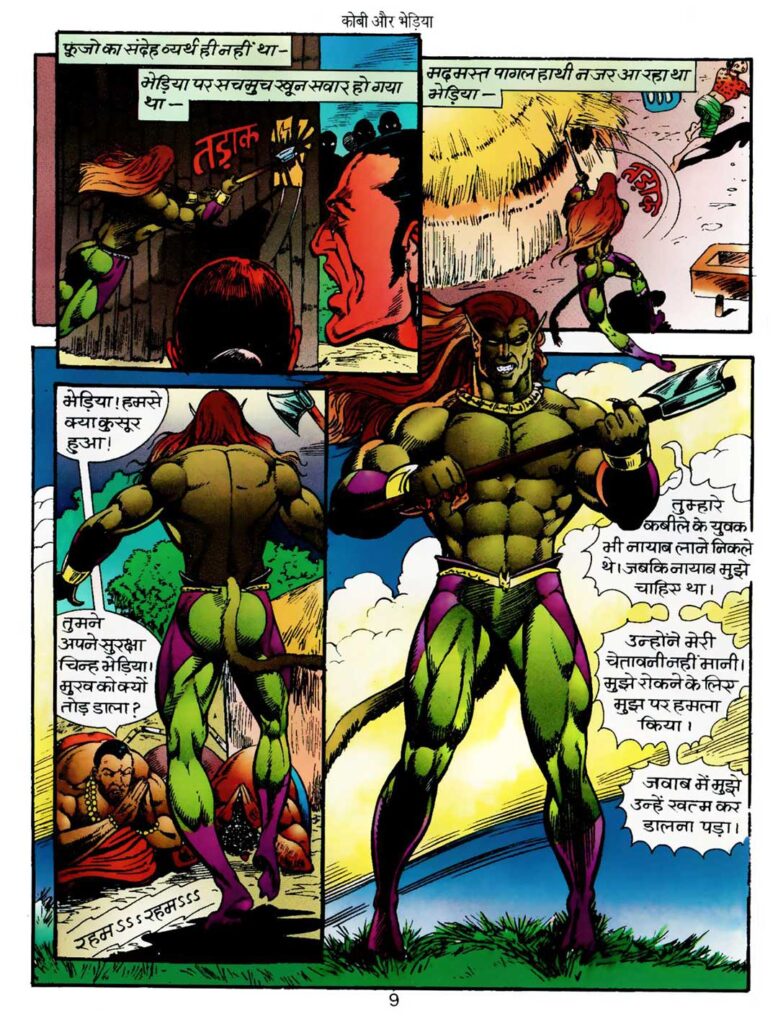
This is where the real tension in the story begins. Bheriya, who was earlier the protector of the forest, in whose name the hunters trembled, now starts weakening because of his oath. Even ordinary robbers start making fun of him. Dhurra and his companions abuse him and provoke him, but he does not break his oath.
This part is very effective because the inner pain of Bheriya is clearly visible here. On one side is his pledge; on the other side is the responsibility of protecting Jane and Fujo Baba. He knows that if he raises his hand, his oath will be broken, but if he does not, his own people may be in danger.
This question automatically comes to the reader’s mind: Is non-violence the right path in every situation? Isn’t it a kind of mistake to remain silent in the face of evil? The story does not give us a direct answer, but makes us think.
Shadows of the Past: Fazihat Singh and Dhurra
The story takes a big turn when Fujo Baba’s past comes to light. Till now, the person whom we have seen as calm, understanding, and kind turns out to have the real name ‘Fazihat Singh’. He was once a dangerous robber.
His old companion Dhurra suddenly returns to his life. Dhurra is looking for the gold treasure that Fazihat Singh had hidden somewhere years ago. This greed pulls him back to the forest.
Fujo Baba’s flashback becomes the most emotional part of the story. He explains that a terrible incident during a robbery changed his life. A pregnant woman and the son of a police inspector lost their lives in that accident. That was the moment when Fazihat Singh was heartbroken and his mind was filled with guilt.
The same regret made him ‘Fujo Baba’. He gave up weapons and devoted his life to serving the animals and people of the forest. This change was not just of name, but of soul. Here the story strongly shows the concept of ‘atonement’, i.e., repentance for sins.
On the other hand, Dhurra symbolizes greed, cruelty, and the reminder of old sins. He comes again to poison Fujo Baba’s peaceful life. For him, gold is everything, whereas for Fujo Baba, peace and service are the real wealth.
This is where the story becomes deeper. On one side, Bheriya is fighting with the animal inside him; on the other side, Fujo Baba is fighting with the shadow of his old sins. The battles between the two are different, but the pain is the same. This is what makes this special issue special—it is not just the story of external enemies, but also the story of internal enemies.
Maha-Divide: Birth of Kobi
The most tremendous and memorable moment of this special issue is when the violent form of Bheriya is separated from his body and becomes ‘Kobi’. When Bheriya sticks to his vow of non-violence and the problems outside increase beyond limits, the two forces inside him—Phobos and Mobos—clash with each other. This collision is so strong that Bheriya’s body gets divided into two parts.
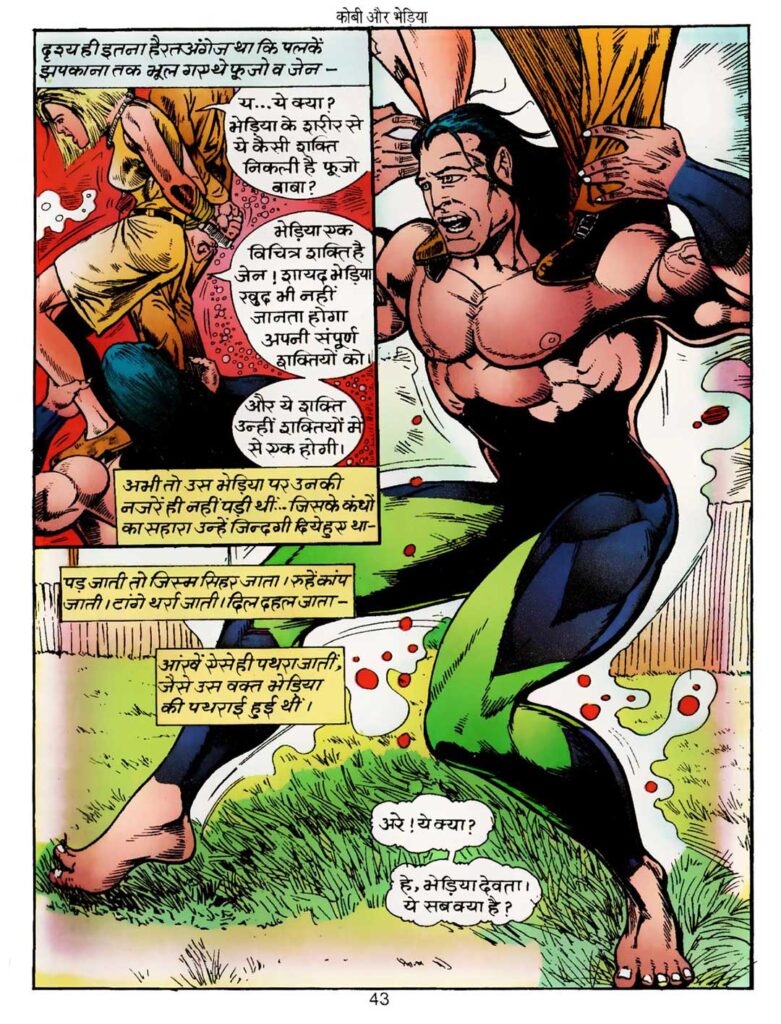
On one side is ‘Kobi’, who has the full strength of Bheriya, sharp nails, a tail, and that wild mindset that is not afraid of anyone. On the other side is the ‘Bheriya’, who now stands in the body of a common man, who has neither superpowers nor animal strength; he only has his promise, his morality, and his intention of non-violence.
Kobi’s appearance has been shown to be very scary and effective. He considers himself the real prince of the kingdom of Woolfano and does not accept anyone’s rule. He neither cares about Jane’s feelings nor about Bheriya’s oath. Kobi’s birth is a huge moment for Indian comics, as it is from here that a new anti-hero arrives. He is both a villain and a hero—his method is just different.
History of Magical Travel and Woolfano
Now that Kobi is free, he kidnaps Jane. His intention is clear—he wants to take Jane as his queen to his ancestral kingdom, ‘Woolfano’. From here, the story gets a touch of fantasy and adventure.
Bheriya, now reduced to an ordinary human being, sets out with Fujo Baba, i.e., Gururaj Bhatiki, on the mysterious path that leads to Woolfano. This journey is not easy. There is magic, mystery, and danger at every turn.
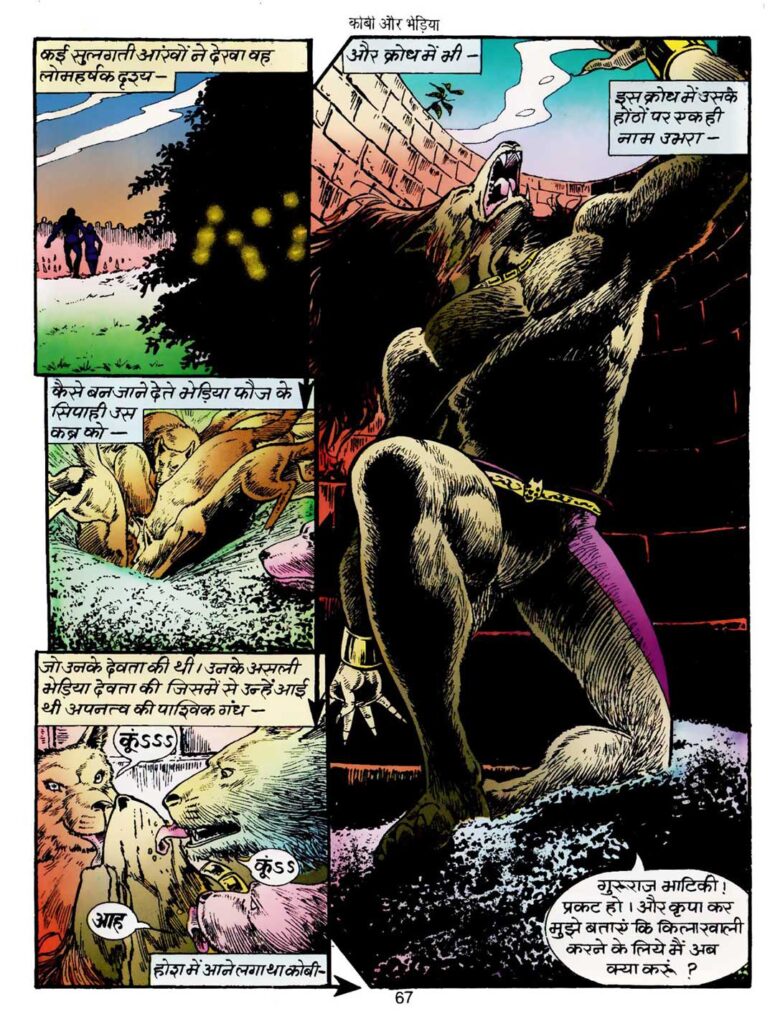
Woolfano’s history further strengthens Kobi’s character. The story of his father, Wolfa, and mother, Surya, feels like an ancient legend. Due to a curse, Kobi became a stone statue. He remained in that condition for thousands of years. Then, 50,000 years later, he came back to life through drops of blood from a virgin girl. Here, Jane symbolizes that prophecy.
This whole part does not let the story remain just an action comic, but also gives it a mythological and mysterious tone. The reader feels that he is reading a mix of a folktale and a superhero story.
Struggle and Encounter with Trivukka
On the way to reach Woolfano, a major danger appears—Trivukka. It is a strange and scary creature with three heads, which is the guardian of that magic.
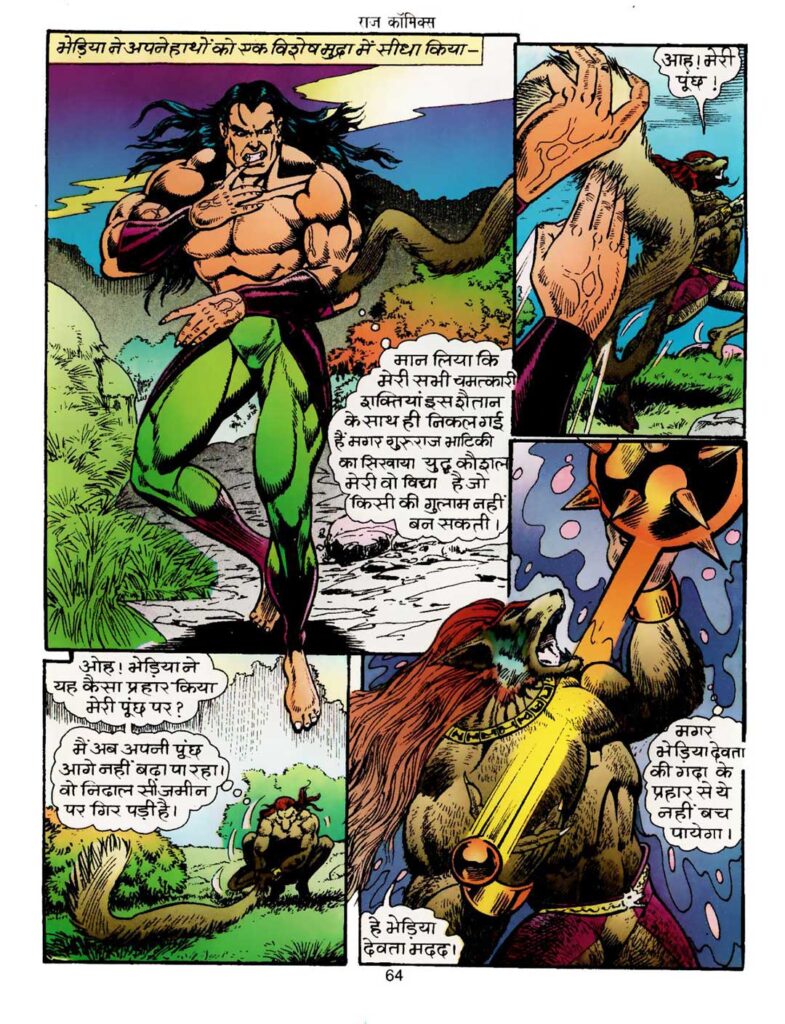
Now the most important thing is that Bheriya does not have any superpowers at this time. He is standing only on the basis of his training and mind. The art of warfare taught to him by Gururaj Bhatiki proves useful to him.
The fight with Trivukka is not just a test of strength; it is also a test of courage and understanding. Bheriya delivers every blow thoughtfully. He proves that strength alone is not enough to become a hero; intention and confidence are equally important.
In this fight, Bheriya seems more human than before. His weakness becomes his strength. The way Dheeraj Verma has portrayed this entire battle is worth seeing. Trivukka’s three heads, his huge body, and Bheriya’s agility—every frame is full of thrill.
Climax: Kobi vs. Bheriya
Eventually, the story reaches the big confrontation that was awaited from the beginning. On one side is Kobi, who wants to force Jane into marriage. On the other side is Bheriya, who has come to save her without caring for his life.
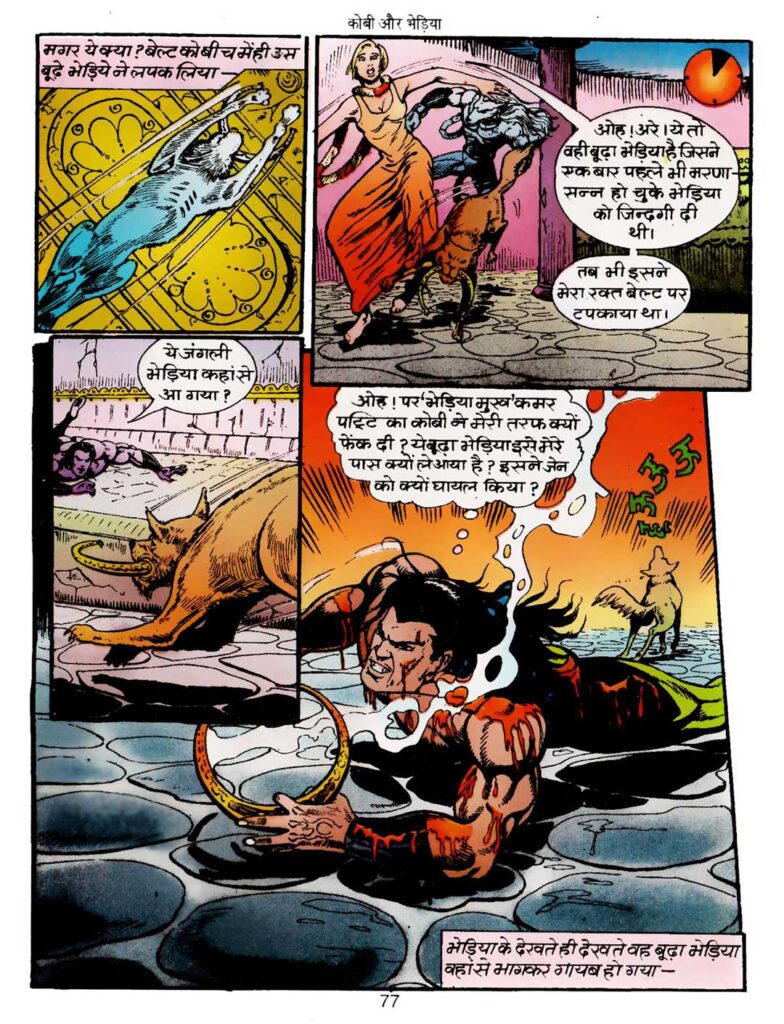
This fight is not just about two bodies; it is a fight of two mindsets. Kobi believes that strength is everything—that only the one who is powerful is right. Whereas Bheriya believes that power should be used for the right reason.
When Bheriya falls badly injured, Jane’s role becomes important. She makes him wear his face-waist plaque, which allows him to recover. The scene is very emotional because here Jane understands that both Kobi and Bheriya are parts of the same existence.
The biggest message of the story is that there is both good and evil within a human being. Kobi’s violence is necessary so that evil can be confronted, but Bheriya’s peace is necessary so that he remains human. The balance of both is the real victory.
History of Magical Travel and Woolfano
Now that Kobi is free, he kidnaps Jane. His intention is clear—he wants to take Jane as his queen to his ancestral kingdom, ‘Woolfano’. From here, the story gets a touch of fantasy and adventure.
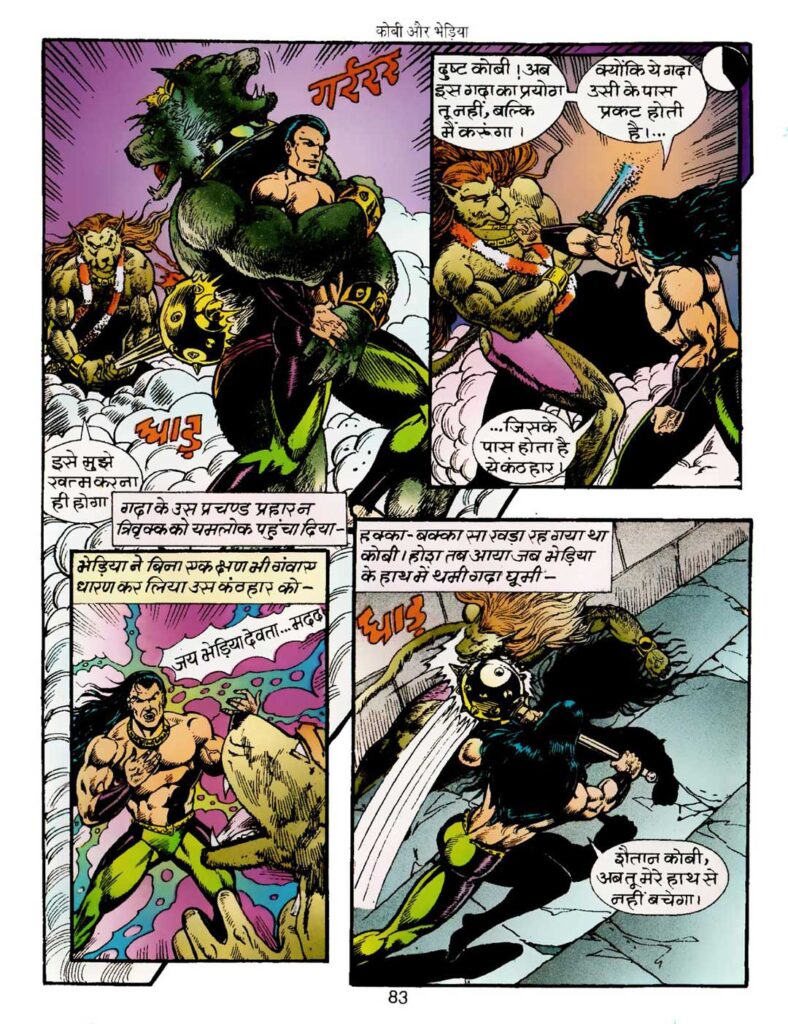
Bheriya, now reduced to an ordinary human being, sets out with Fujo Baba, i.e., Gururaj Bhatiki, on the mysterious path that leads to Woolfano. This journey is not easy. There is magic, mystery, and danger at every turn.
Woolfano’s history further strengthens Kobi’s character. The story of his father, Wolfa, and mother, Surya, seems like an old tale. Due to a curse, Kobi became a stone statue. He remained in the same condition for thousands of years. Then, 50,000 years later, he came back to life with drops of blood from a virgin girl. Here, Jane symbolizes that prophecy.
This whole part does not just let the story remain an action comic, but also gives it a mythological and mysterious tone. The reader feels that he is reading a mix of a folktale and a superhero story.
Struggle and Encounter with Trivukka
On the way to reach Woolfano, a major danger appears—Trivukka. It is a strange and scary creature with three heads, which is the protector of the path.
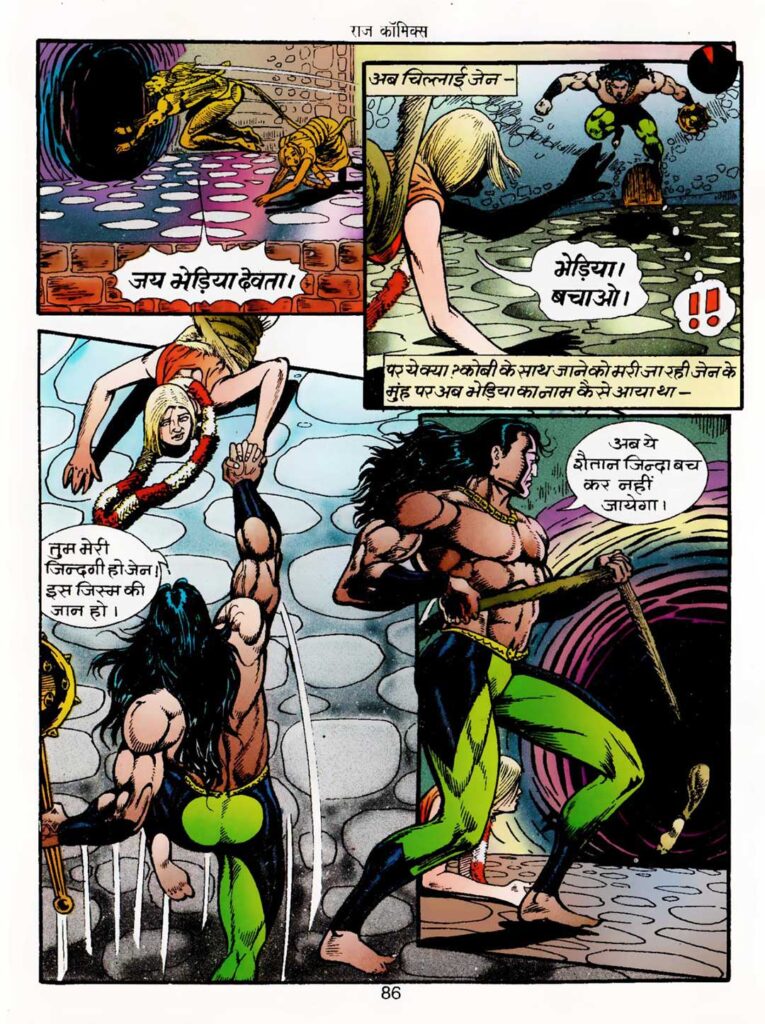
Now the most important thing is that Bheriya does not have any superpowers at this time. He is standing only on the basis of his training and mind. The art of warfare taught to him by Gururaj Bhatiki proves useful to him.
The fight with Trivukka is not just a test of strength; it is also a test of courage and understanding. Bheriya delivers every blow thoughtfully. He proves that strength alone is not enough to become a hero; intention and confidence are equally important.
In this fight, Bheriya seems more human than before. His weakness becomes his strength. The way Dheeraj Verma has portrayed this entire battle is worth seeing. Trivukka’s three heads, his huge body, and Bheriya’s agility—every frame is full of thrill.
Climax: Kobi vs. Bheriya
Eventually, the story reaches the big confrontation that was awaited from the beginning. On one side is Kobi, who wants to force Jane into marriage. On the other side is Bheriya, who has come to save her without caring for his life.
This fight is not just about two bodies. This is a fight of two mindsets. Kobi believes that strength is everything. Only the one who is powerful is right. Whereas Bheriya believes that power should be used for the right reason.
When Bheriya falls badly injured, Jane’s role becomes important. She makes him wear his face-waist plaque, which allows him to recover. The scene is very emotional because here Jane understands that both Kobi and Bheriya are parts of the same existence.
The biggest message of the story is that there is both good and evil within a human being. Kobi’s violence is necessary so that he can face evil, but Bheriya’s peace is necessary so that he remains human. The balance of both is the real victory.
