


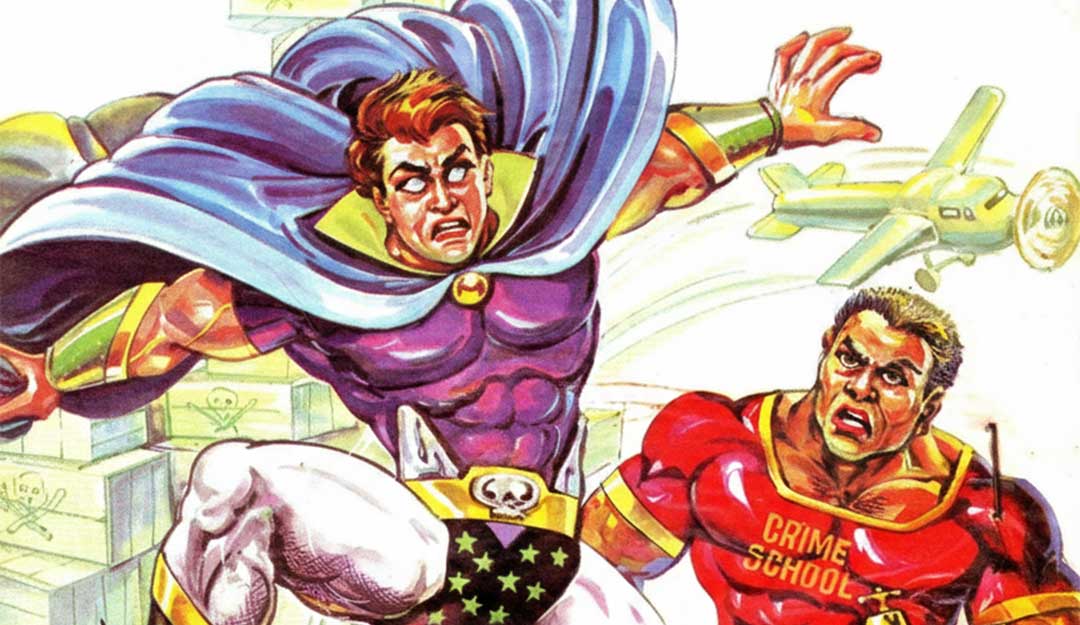
‘King Comics’ in the ’90s spawned some offbeat characters. One of these was ‘Blind Death’. As the name suggests, this is the story of a blind hero. The trio of editor Vivek Mohan, writer Najra Rawan, and artist Dilip Choubey gave Indian readers a superhero through these comics who is reminiscent of Hollywood’s ‘Daredevil’, but whose background and powers are completely Indian and original.
A Hair-Raising Defense
The comic begins with a very dramatic and emotional scene. A small child is flying a kite on the roof of an under-construction building. He is so lost in his activity that he does not realize his foot has landed on a loose brick. The child falls, but is lucky enough to get caught in a rope and hangs in the air.

This is where our hero enters. A blind man, walking down the street with a stick in his hand, senses danger using his ‘Bat Sense’ (bat-like nature). He judges the exact distance through wind speed, wind blockage, and the screams of the child. This scene immediately connects the reader to the story. The hero running up the stairs of the tall building without looking at it and then leaping through the window to catch the child mid-air feels like a powerful cinematic experience.
Science of Powers: Bat Sense and the Sense Organs

The author has beautifully defined the extraordinary abilities of the hero, who is called ‘Blind Death’ because of his unique powers. Although he is blind, his hearing, smell, and sense of touch are thousands of times stronger than those of normal humans. He creates an accurate mental map of his surroundings through sound waves using his ‘bat sense’ and also possesses the ability to smell like a dog and detect subtle sounds like a snake. It is made clear in the story that these powers are not the result of an accident, but the culmination of rigorous yoga and ancient Indian penance performed under the guidance of Professor Kailash Verma, enabling him to function like a hunter even in the densest darkness of night.
Terror of ‘Crime School’

The success of any superhero story depends on the depth of its villains, and the concept of a ‘Crime School’ in this comic is truly terrifying. It is a cruel institution that kidnaps innocent children and turns them into professional graduates of crime. The main villains of this story, ‘Jahaj’ and ‘Golilo’, are known for their unique and deadly fighting styles. While Jahaj uses toy airplanes as weapons, Golilo uses explosive shells tied around his belt to create havoc. The robbery they commit at the State Bank of Honolulu exposes their violent nature, as their objective is not just to steal money but also to demonstrate their cruelty by killing innocent civilians and police officers.
Emotional Depth: Professor Kailash Verma’s Past

The story is not limited to action alone. It takes a deeply emotional turn when Professor Verma takes Nayak to a mental hospital (Raj Nagar Mental Hospital). There, he introduces him to his wife, who has lost her sanity. The reason behind this tragedy is revealed to be the brutal murder of their two innocent children by Crime School criminals.
This revelation personalizes the hero’s mission. Now it is no longer just a fight for justice, but a burning sense of loyalty and vengeance for the mentor who gave him a new life.
Action and Climax: Attack on the Farm House

The final part of the comic moves at a very fast pace. The head of the Crime School learns that Professor Verma is still alive and has prepared a protector. ‘Jahaj’ and ‘Golilo’ are sent to attack the professor’s farmhouse.
The confrontation between ‘Blind Death’ and the criminals in the dark farmhouse is brilliantly depicted. Here, the hero demonstrates his full potential. He catches Golilo’s explosive shells mid-air and throws them back at him. By hearing the sound of Jahaj’s deadly toy airplanes, he constantly changes his position and ultimately defeats the criminals.
Mysterious Twist: The Arrival of the Masked Man

Another intriguing twist appears at the end of the story. While ‘Blind Death’ is overpowering the criminals, a mysterious masked man arrives. He is also a victim of the Crime School and speaks of supporting the hero. This ending leaves readers eager for the next comic, ‘Crime School’.
Drawing and Presentation
Dilip Choubey’s artwork is typical of the 90s comic style. Blind Death’s costume—his yellow cape, purple suit, and goggles—gives him a mysterious and striking appearance.
The use of motion lines in action sequences and sound effects like “boom” and “batter” bring the comic to life.
The backgrounds are detailed, especially in the depiction of mountains, farmhouses, and hospitals.
The design of the villains’ weapons, especially those used by ‘Jahaj’ and ‘Golilo’, is highly creative.
Critical Commentary
Strong Side:
This story not only delivers a positive social message by portraying a physically disabled individual as a powerful hero, but also emotionally engages the reader. The tragic destruction of Professor Verma’s family creates intense hatred for the criminals and deep sympathy for the hero. Additionally, the concept of an institution like ‘Crime School’ is futuristic from a world-building perspective and genuinely frightening. Overall, the story presents a highly impactful and inspiring narrative through its unique concepts and emotional struggle.
Weak Side:
The mix of locations like Honolulu and Raj Nagar feels slightly odd, making the geographical setting unclear.
Although the villains possess unique weapons, they are defeated rather quickly by the hero.
Conclusion
‘Blind Death’ is a memorable creation from King Comics. It teaches us that our senses can become our greatest strength if properly trained. This story is a powerful tale of vengeance, loyalty, and justice. Najra Rawan’s writing is well-balanced, and Dilip Choubey’s artwork breathes life into the narrative.
If you are a fan of Indian comics and want to read something that combines thought-provoking themes with thrilling action, then the first comic of the ‘Blind Death’ series definitely deserves a place in your collection.
