


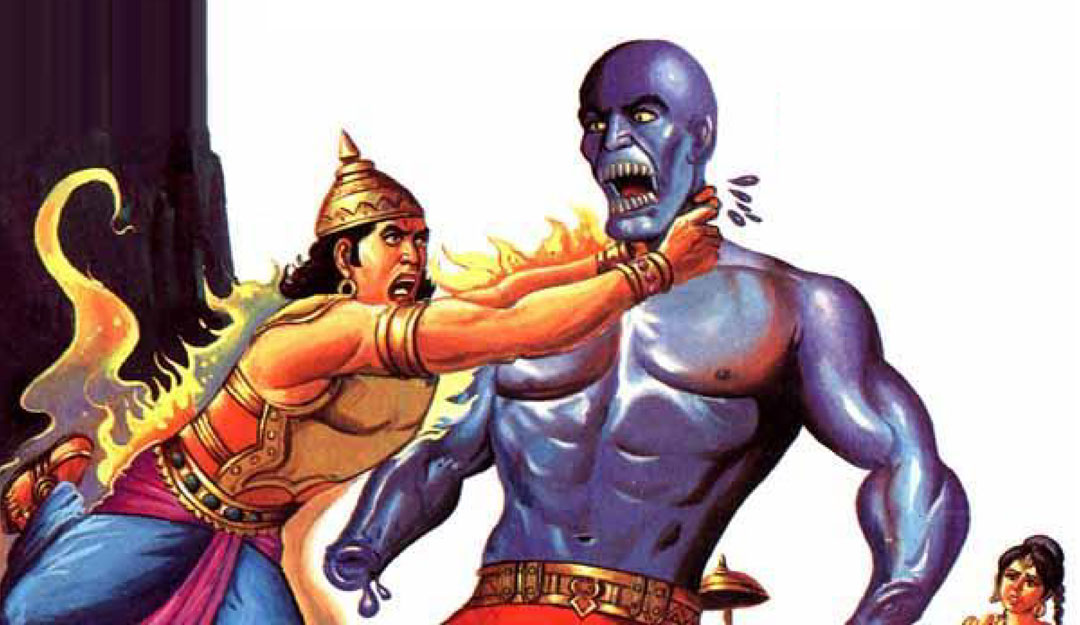
Raj Comics had brought out many mythological and magical stories (Mythological/Fantasy) in its debut, and “Twelve Horses Chariot” is one of those extremely brilliant stories. This comics takes us to the old kingdom of Khandavaprastha, where kings, princes, demons, gods and divine powers are seen together.
The stories of the Tilism Dev series usually revolve around the battle of good and evil, where divine heroes like Tilism Dev help people in trouble. In this comics, not only adventure but also a beautiful combination of devotion, love and sacrifice is visible. The drawing of Dilip Kadam and Jaiprakash Jagtap makes it very beautiful to look at.
Plot
What we are talking about today is the “Chariot of Twelve Horses”. This comics is not just an adventure story, but in it mythological characters, tricks of divine blessings and victory of good over evil—all together create a fantastic story. Tarun Kumar Wahi’s writing and Dilip Kadam and Jayaprakash Jagtap’s art bring this story completely alive.
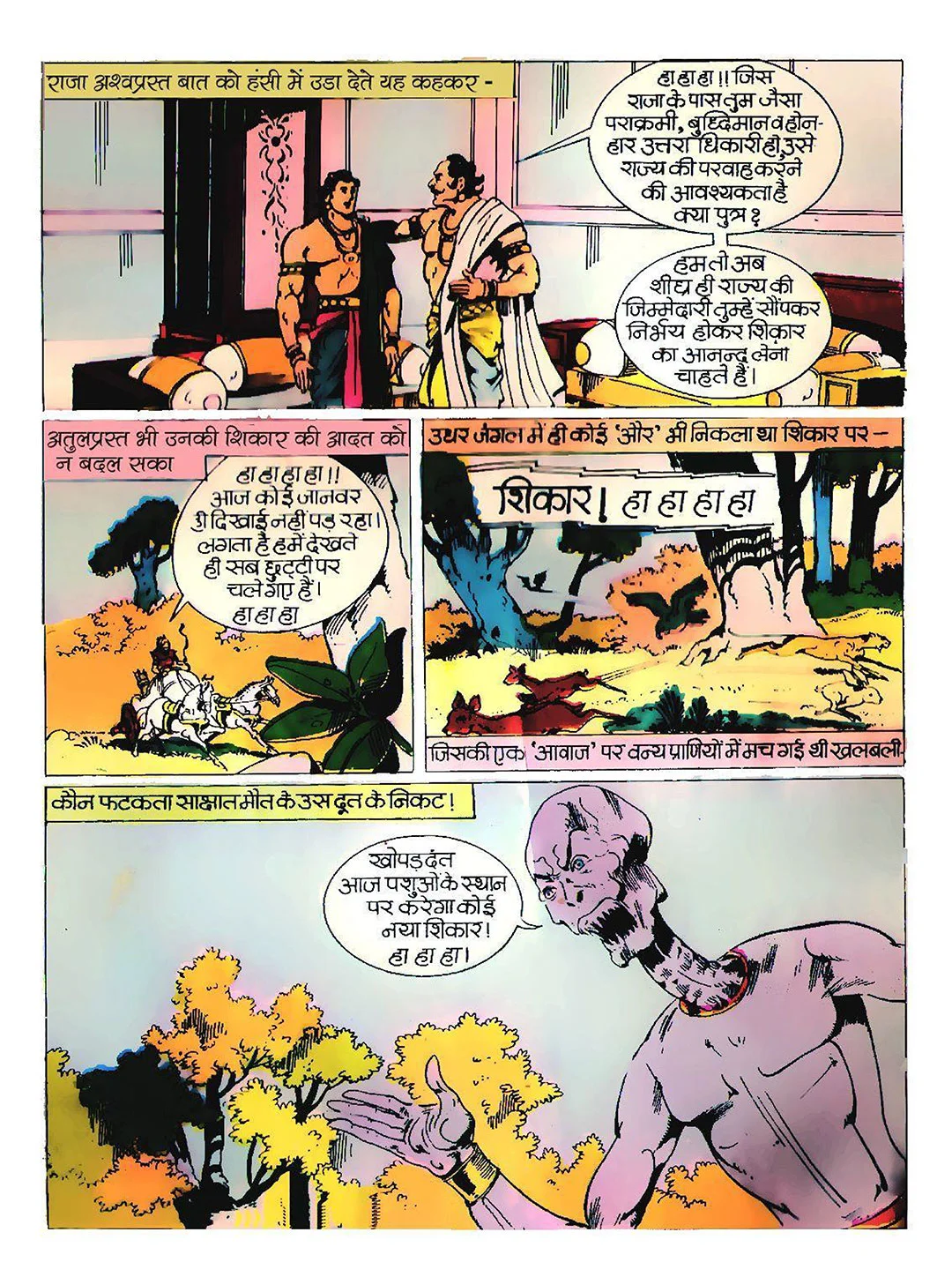
The story begins in the Khandavaprastha kingdom, where King Ashvaprasta is very fond of hunting. His hobby is so deep that he sometimes goes out into the forest alone. Another hunter is also roaming in this forest—but he kills humans, not animals. This is the dangerous monster Khopadant.
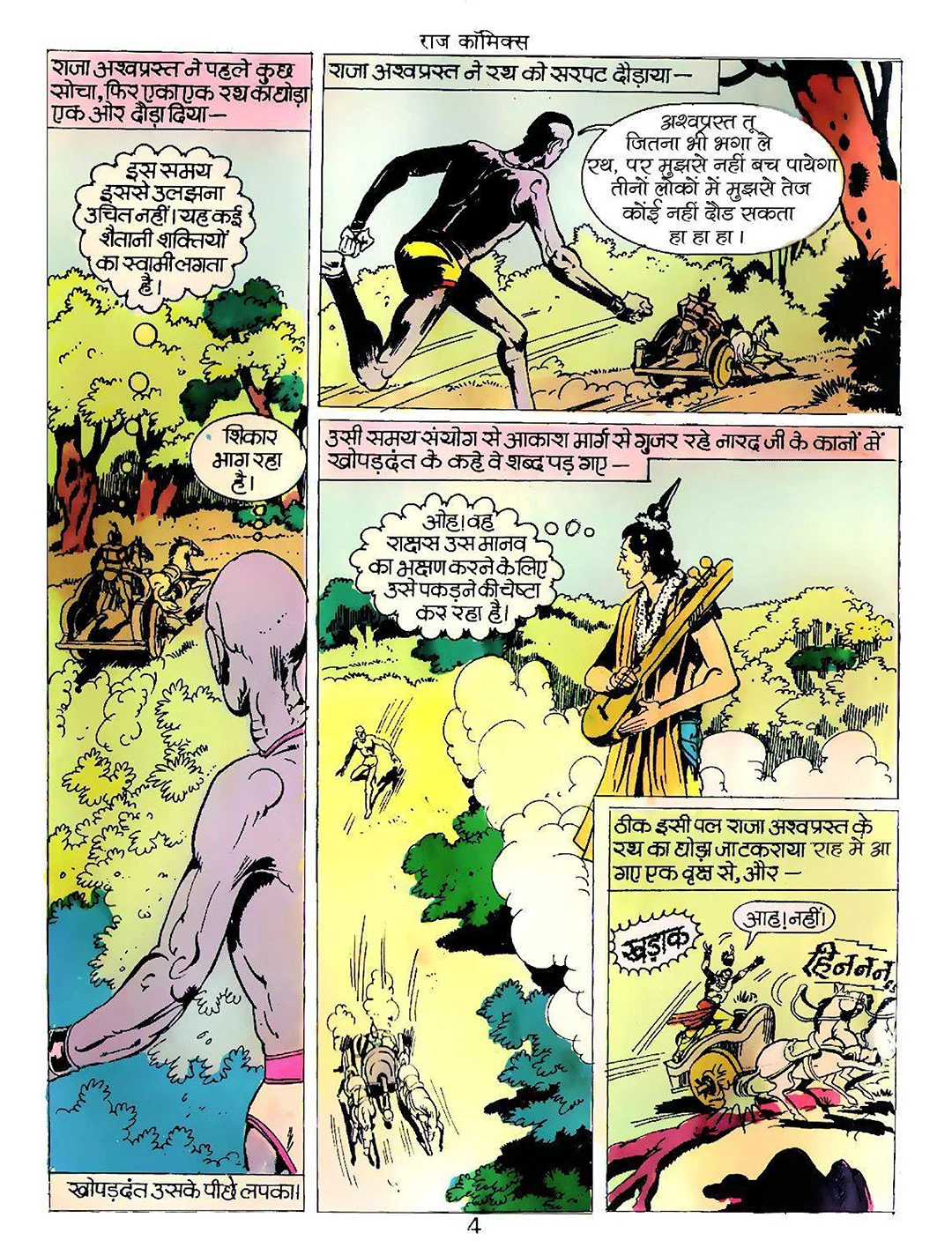
The real conflict of the story begins when the two hunters come face to face in this forest—on the one hand King Ashvaprasta, who boasts of his archery, and on the other hand Khopadant, who is shrouded in his demonic strength. Khopadant’s body is so strong that the king’s arrows do not affect him. Finally comes a sad turn—King Ashvaprasta is killed. This same incident sparks a fire of vengeance for his son and the hero of the story, Prince Atulaprasta.
But the story is not limited to just revenge. A big twist comes when Narada Muni unknowingly awakens a new desire in Khopadant’s mind. He explains that in the three worlds there is no one faster than Lord Surya’s “Chariot of Twelve Horses”. That’s where Khopadant’s goal changes—now he wants to get the chariot of the Sun, not just animals or humans.
Character analysis
All the characters of this comics are very clear, memorable and effective in their own way. Every character plays a special role in taking the story forward.
Rajkumar Atulaprasta: A perfect hero
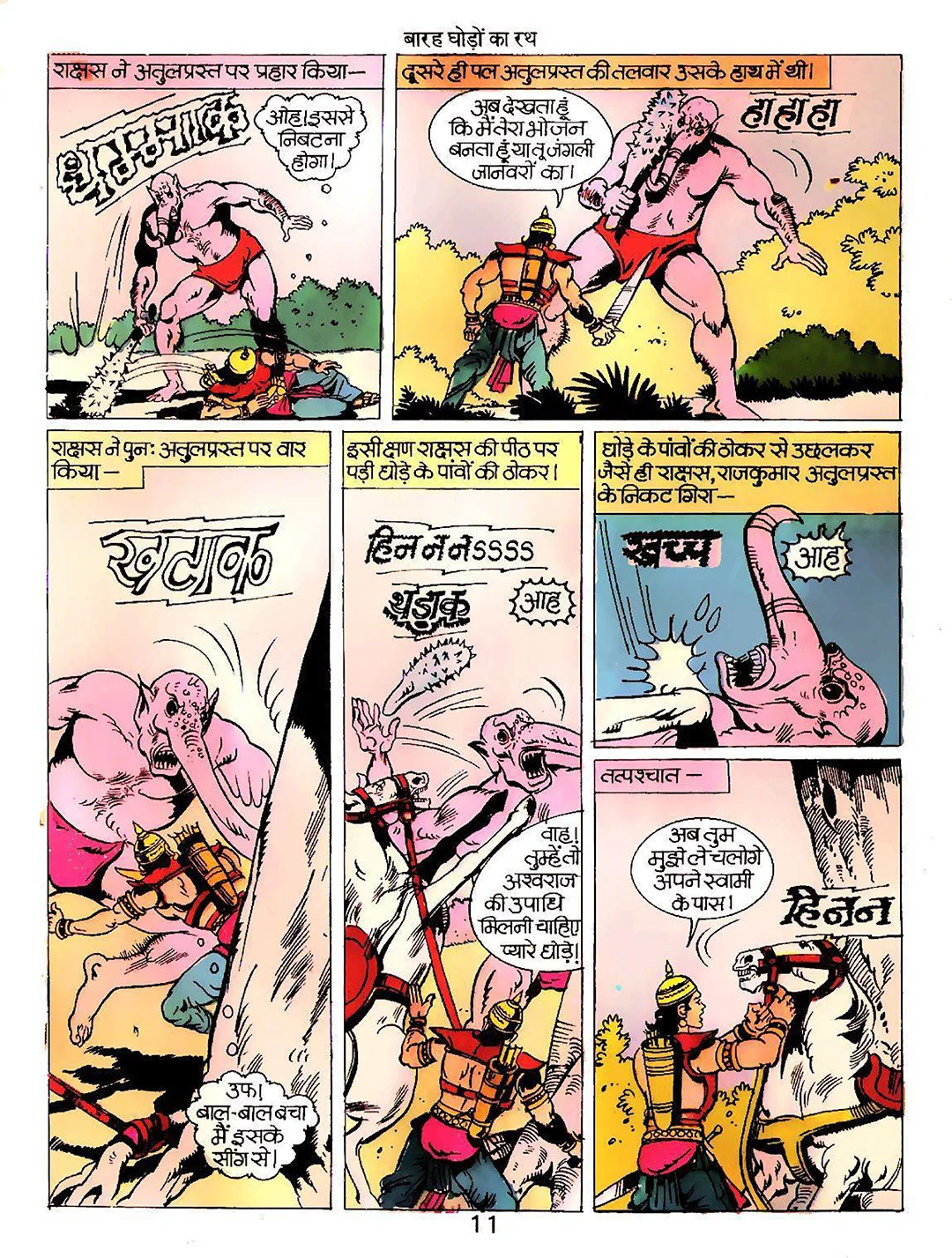
Atulaprasta is an obedient and responsible prince. He is worried about his father’s hunting habit from the beginning and also tries to convince him. When his father does not return from the forest, he sets out to look for him on his own instead of retreating.
Atulaprasta’s true development is visible when he transforms his father’s suffering into courage and determination. He is not afraid at all—when for the first time a huge monster like Khopadant appears, instead of running away, he takes out his sword and stands in front of him.
Khopadant: Ambitious and cruel villain
Khopadant is the most powerful part of this comics. He is not just shown as a violent demon, but is introduced as a cunning and ambitious villain. Initially he kills humans and animals just to fill his stomach, but his dream becomes bigger after listening to Narada Muni.
He performs severe penance to Lord Vishnu, which shows that he is not only powerful but also stubborn and determined towards his goal. The sharpness of his mind is visible when he asks for a boon from Lord Vishnu that will make him almost immortal:
“Let there be no death at the hands of any divine power”.
Narada Muni: Catalyst of the story
As always, in this story too Narada Muni is the same character who holds the thread of the entire story. His aim was not to increase the sins of Khopadant, but to give him the fruits of his deeds. When he sees Khopadant killing an innocent creature, he decides that it must now be taught a lesson.
With this thinking, he cleverly mentions Surya’s chariot, due to which Khopadant starts on a path where his destruction is certain. One small thing about him changes the course of the entire story.
Legendary Context and the Screw of Boon
The most beautiful feature of Indian comics is that mythological elements are mixed very beautifully in fantasy. The “Chariot of Twelve Horses” is also a great example of this.

Chariot of the Sun:
The main basis of the story is “The Chariot of the Sun”. The author has used an interesting fact—that on the night of the autumn full moon, the daughter of the Sun, Suryada, comes to Earth. This is the opportunity when Khopadant has a chance to snatch the chariot.
Vishnu’s boon:
Khopadant asks for such a boon from Lord Vishnu that no “divine power” can kill him. This boon later decides the climax of the story.
When Khopadant carries away the Sun, even the Lord Sun himself is unable to do anything to him because his destructive rays are also part of “divine power”.
The helplessness of the gods becomes the reason for the entry of Tilism Dev in the story.
This boon and its rules make the entire story very logical (according to the world of comics). Many times, to defeat evil, even the gods have to think outside their set rules; this comics shows the same thing.
Role of Tilism Dev
When both Lord Surya and Vishnu are bound by the boon of Khopadant, the solution emerges in the form of Tilism Dev.

Lord Vishnu explains that—
“Tilism Dev is the power that God is not.”
This line is very cleverly written. This is the reason why Atulaprasta, who is a human being, is given the powers of Tilism Dev.
Since Atulaprasta is not a deity and the powers of Tilism Dev are not classified as traditional “divine power”, the law of the boon does not apply to him.
Because of this, a way can be made to defeat Khopadant.
Atulaprasta gets fire-heating power, making Khopadant’s metal body meltable. This proves to be the key to his victory.
Drawing and presentation
The special visual style that the duo of Dilip Kadam and Jayaprakash Jagtap gave to Raj Comics in the 80–90s is seen in full force in this comics.
Action scenes are extremely lively and fast, especially in the battle of Atulaprasta vs Khopadant. The fire rising from Atulaprasta’s body, the scene where he catches the demon’s wrist, and the clash of forces between the two seem extremely impressive.
The design of the characters is also great—
The skull-like face and tall, heavy body of Khopadant make him very scary.
Suryada and Atulaprasta are shown as beautiful, traditional hero and heroine.
The use of colors also sets the mood of the story very well—
Green-yellow for the forest, blue-black for the night, and bright yellow-orange for scenes involving the Sun God; everything fits perfectly.
The paneling is also suited to the fast-paced story, especially the hit of the Sun God’s rays on pages 16–17 and the returning scene of that light—it’s awesome in terms of layout.
Dialogue and writing style
Tarun Kumar Wahi’s handwriting is dramatic, flowing, and effective as always. The dialogues are short, but leave an impact.

King Ashvaprasta’s dialogues reflect light humor and sarcasm—
Like this line of his:
“Looks like everyone has gone on vacation the moment they see us.”
It shows both his confidence and fun-loving nature.
Khopadant’s dialogues expose his pride, cruelty, and big thinking,
like his challenge:
“Fights a lion being a rat?”
Or his arrogant claim:
“Now even Lord Vishnu himself can’t harm me.”
The story also has an emotional impact, especially in Atulaprasta’s dialogues.
Seeing his father’s dead body, he said this:
“DadShri! Why did you not come up?”
It awakens deep emotions in the mind of the reader.
Critical approach
There is good drama and a good flow in the handwriting of Tarun Kumar Wahi. His dialogues are short, but effective. Like King Ashvaprasta’s funny-satirical dialogue—
“It seems everyone has gone on leave as soon as they see us.”
This shows his overconfidence and light-hearted thinking.
Whereas the taunts of the villain Khopadant:
“Fights a lion like a mouse?”
bring out his pride and cruel nature.
On the other hand, Atulaprasta’s emotional dialogue spoken in front of his father’s dead body touches the reader deeply and gives an emotional depth to the story.
The comics are amazing, but there are some critical points too. Like—
King Ashvaprasta dies very quickly. Perhaps the reason for this was to quickly bring the story into focus on Atulaprasta.
Narada Muni’s intervention seems to be a bit of a forced plot device, although it is common for this to happen in mythological stories.
The climax also seems to have been completed in a hurry. As soon as Atulaprasta gets powers, he overpowers Khopadant very soon—whereas this is the same Khopadant whom even Lord Vishnu could not stop due to the boon. If there was a little more struggle here, the fun would have increased further.
Also, the metal-like body of Khopadant and its defeat with the fire-filled hands of Atulaprasta may not fit from the point of view of science, but it seems absolutely acceptable in fantasy logic.
Message of the story
This comics gives good messages on many levels. The biggest message—fall of ego.
King Ashvaprasta’s pride in his hunting skills, and Khopadant’s pride in his immortality, both cause their destruction.
Atulaprasta’s love for his father, the pain of his death, and determination to get justice—are the backbone of the story. It shows the depth of the father-son relationship very beautifully.
On top of that, this comics carries the same eternal message—
No matter how powerful evil becomes… Good always finds a way.
Khopadant was saved from blessings and was also powerful, but ultimately the power of a human being (Atulaprasta) and Tilism Dev together destroys him.
Conclusion
The “Chariot of Twelve Horses” is a complete recreational package. It takes you straight to an era when stories were simple but had a lot of fun. There is action, magic, gods, and also a powerful demon.
Positive side:
There are several strong points of this comics— Dilip Kadam’s stunning artwork, which brings every scene to life. Khopadant’s scary and memorable villain design gives a boost to the story. The fine balance of mythological elements and fantasy makes the story more interesting. Interesting use of the powers of Tilism Dev reinforces both the unexpected twists in the story and the development of the hero.
Downside:
The role of King Ashvaprasta remains very small. The ending of the story seems a bit predictable.
If you are an old fan of Raj Comics or are interested in Hindi fantasy stories, then this comics must be in your library. It is not just a story, but a reminder of how even in just 30–40 pages you can be given an epic feel. The meeting of Atulaprasta and Suryada, and the ending of Khopadant—gives a satisfying and sweet ending to the story, bringing a smile to the face of the reader.
Final decision:
4/5 stars — a classic, which looks just as exciting today.
