



When ‘Pehla Khoon (The First Murder)’ came into the world of Raj Comics, it left many questions in the minds of readers. Will Super Indian (Aman) be able to control that ‘terrorist clone’ hidden inside him? Will he adopt Doga’s strict sense of justice? ‘Doosra Khoon (The Second Murder)’ is an exciting attempt to find answers to these questions. This comic is not just full of action, but it is also the story of a hero becoming mentally stronger.
Plot and depiction of the high-tech metro city: a modern crime saga
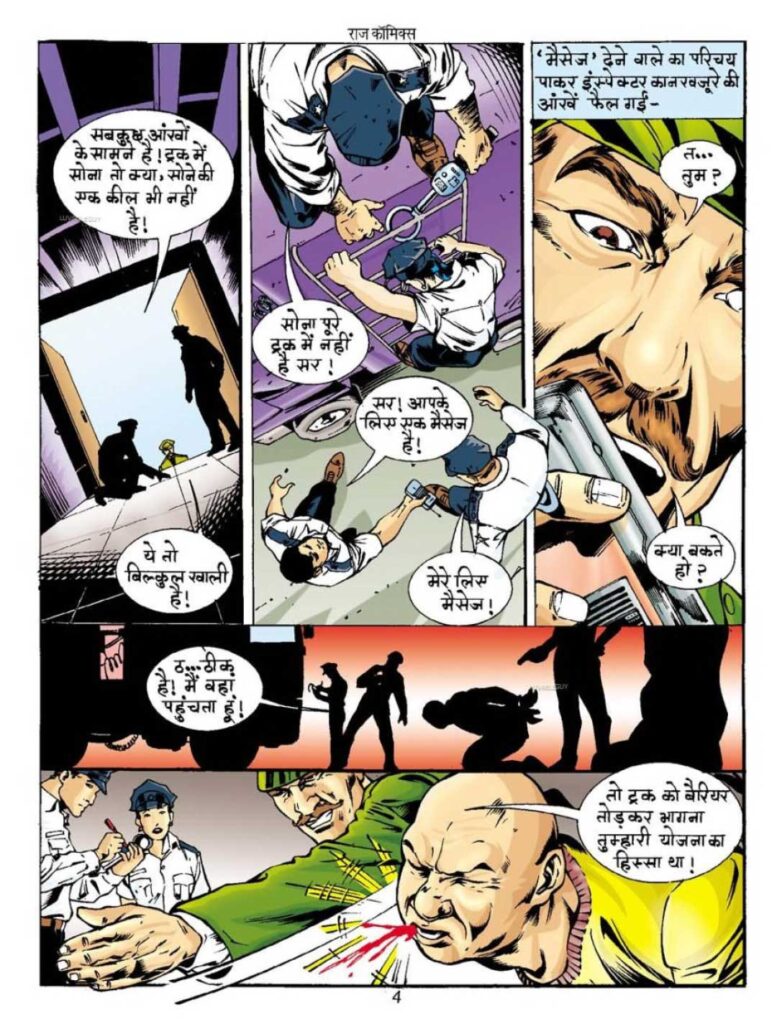
The story begins with a large gold robbery in Metro City. Author Tarun Kumar Wahi has shown the technology of the future and the changing methods of crime very well here. Gold worth Rs 100 crore is being transported in a truck, and criminals hack the city’s traffic signal system to dodge the police.
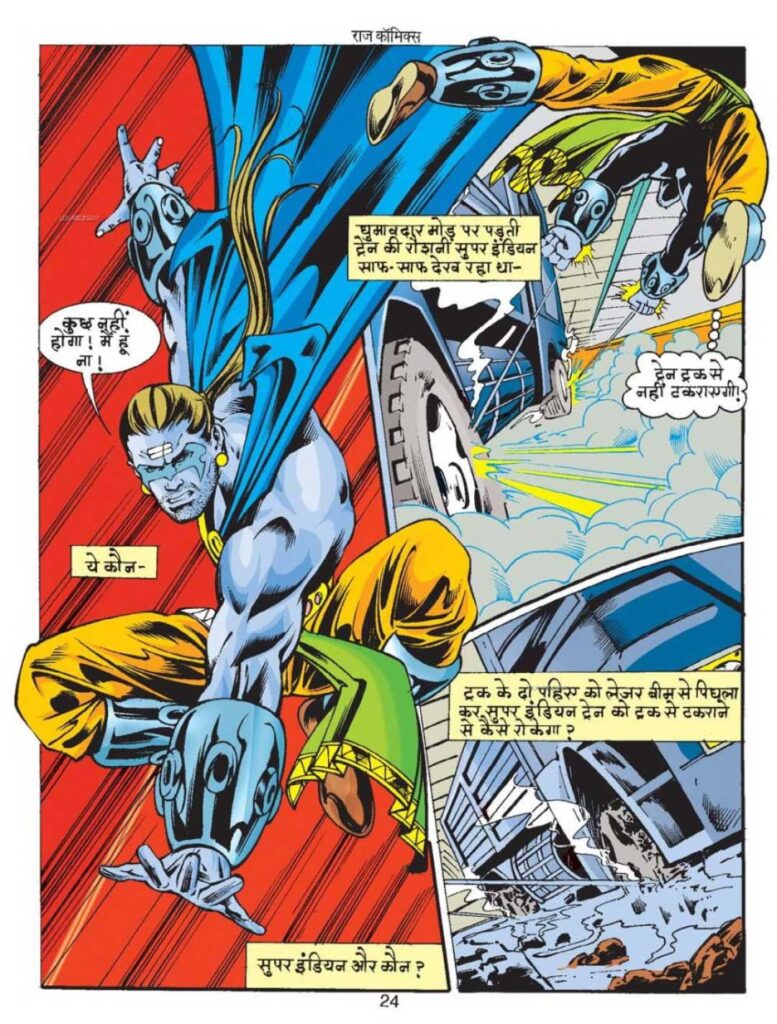
Metro City Police (MFP) consider themselves very capable, but they appear helpless in front of the ‘high-tech’ minds of criminals. Only then does Super Indian enter. He not only catches the criminals but also saves the city’s technological system from destruction. This part of the story keeps the reader engaged because the danger here is huge.
Super Indian vs Mechanic Uncle: Clash of Guru-Shishya Tradition and Morality
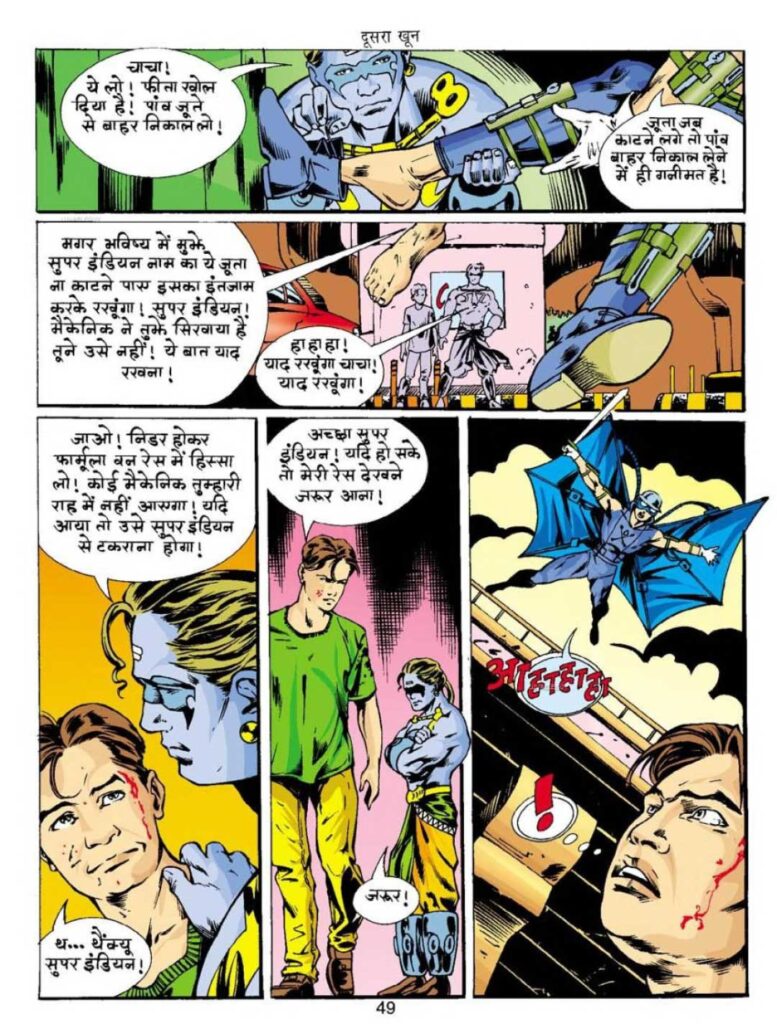
The strongest part of this comic is the arrival of ‘Mechanic Chacha’. ‘Mechanic Chacha’ was also one of the gurus who trained Aman (Super Indian) in his childhood. He is a master of technology and machines, but his intentions are wrong. He is a criminal who wants to end the career of a budding Formula-1 racer by cutting off his hand so that he can gain his own advantage.
When Aman encounters his old master, he is left in great confusion. On one side there is respect for the Guru, and on the other side there is the responsibility of saving the life of an innocent person. Here the reader gets to see the true strength of Aman’s character, which makes him different from other superheroes. “You may be my master, but your work is a crime,” he says clearly.
The inner dichotomy of Doga’s shadow and Aman: Is violence the only solution?
The influence of Doga (uncle) is clearly visible throughout the comic. In the previous part ‘Pehla Khoon’, Doga had taught Aman that there should be no leniency toward criminals. In ‘Doosra Khoon’, Aman repeatedly remembers the same things about Doga.
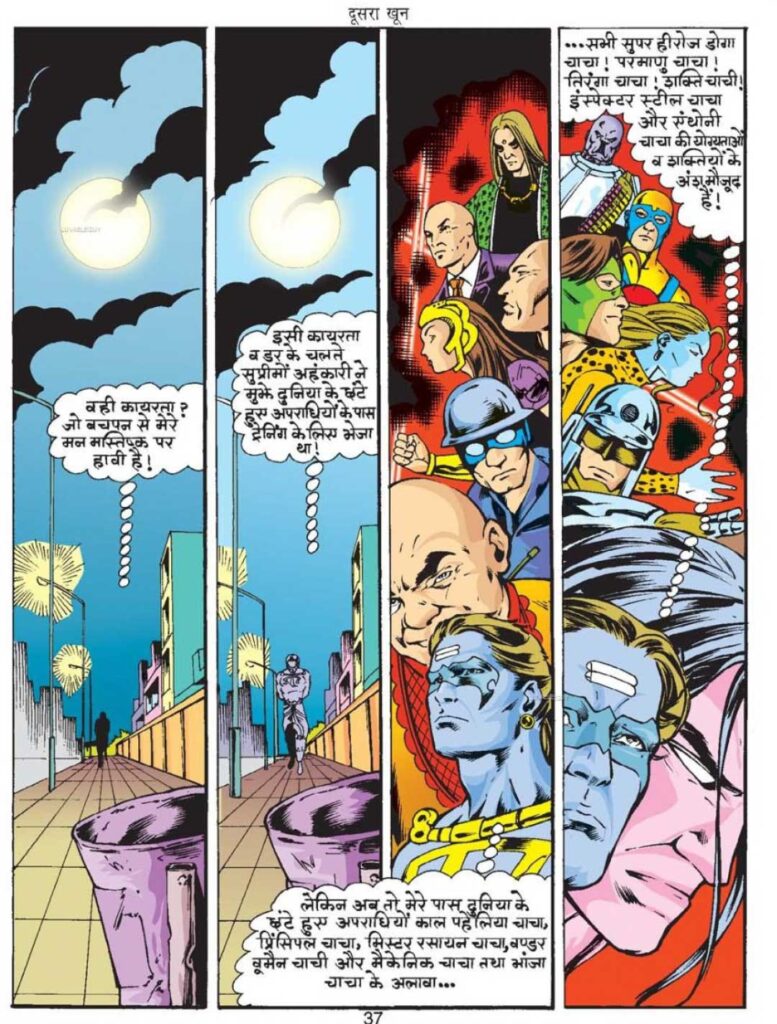
There is a constant fight going on in Aman’s mind. He asks himself if he should become ruthless like Doga. Should he kill his guru ‘Mechanic’? The comic’s flashback scenes (pages 34–37) are very impressive, where he is seen fighting his past and his ‘clone’ identity. He tries to convert his ‘weakness’ into ‘kindness’.
Second Blood: The Deep Meaning of the Title and the Rise of the Hero
The comic’s name ‘Doosra Khoon’ is quite symbolic. Readers generally think that Aman will kill another criminal, but in the end, the writers give a big twist. Aman does not kill any human being; rather, he destroys his ‘weak thinking’, which was forcing him to become like Doga.
He says that he has killed the thinking that wanted to make him cruel. This ‘second blood’ is actually the end of the influence of the ‘supremo egoist’ inside him (his father/origin clone source). It is the victory of a hero who defeats evil without losing himself.
Portrait and art side: Lalit Sharma’s magic brush
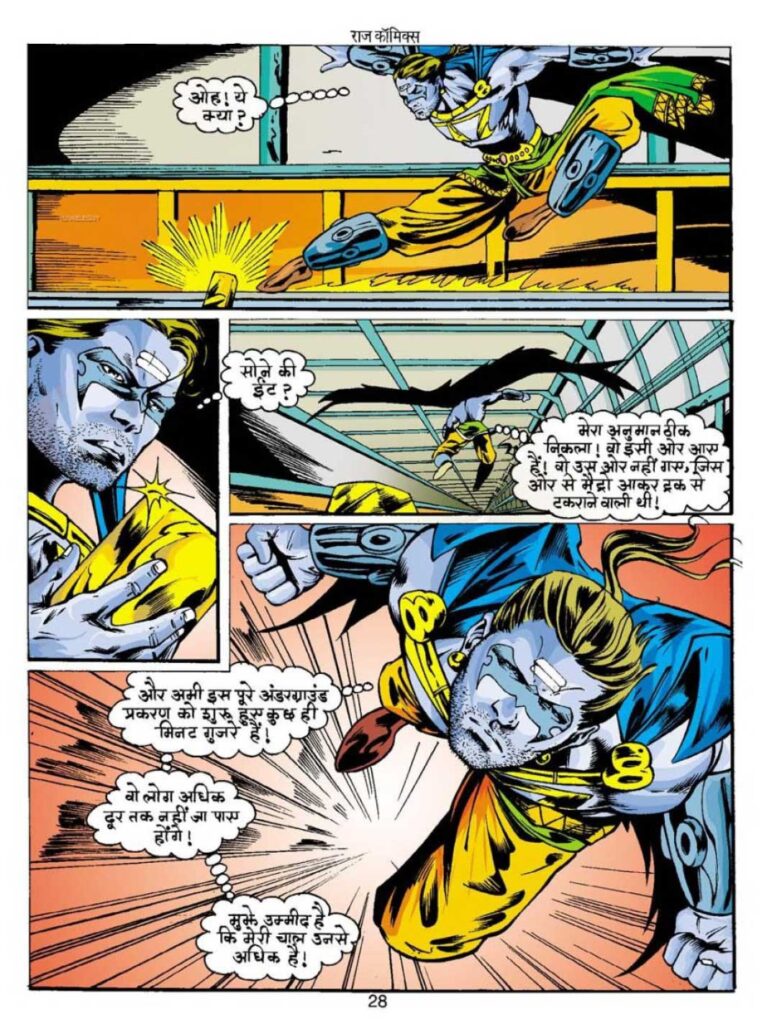
Lalit Sharma’s penciling and Sunil Pandey’s color combination give this comic an international graphic novel look. In this, the car chase scenes and the action scenes of the blasts inside the metro tunnel have been made in a very detailed and filmy style. Besides, the confusion seen in Aman’s eyes and the clever expressions on Mechanic Uncle’s face have also been shown brilliantly. Apart from this, the design of Metro City looks very modern, which gives a slightly different and new feel compared to the old style of Raj Comics.
Mechanic’s technical attack and Super Indian’s laser power: a tremendous competition
There is a lot of use of technology in this comic. Mechanic Uncle had taught Aman to find the weaknesses of machines. Now Aman uses the same lesson to defuse the mechanic’s pistol and his machines. He uses his ‘laser beam’ not just for destruction, but to ‘fix’ or ‘disable’ things. It shows how power is used wisely.
Mithi’s character: The emotional support of the hero
Meethi balances the emotional and human side of the story. She asks Aman if he is not afraid. Aman’s reply, where he describes society as a ‘farm’ and criminals as ‘weeds’, is quite emotional. The dialogues between Meethi and Aman slightly lighten the heavy atmosphere of the story and create an attachment to the protagonist.
Why is this a ‘must-read’ for Raj Comics fans?
‘Doosra Khoon’ is not just an action comic, but it is a lesson for those who believe that the answer to violence is only violence. The evolution of Super Indian in this comic shows him as a different and true hero, out of the shadow of Doga. Also, the story does not slow down anywhere, and the adventure lasts from beginning to end. Its social message is also very deep, which teaches us that our upbringing and our decisions decide what we become, not our DNA.
Conclusion: A great sequel and a new beginning
‘Doosra Khoon’ is one of the best stories of Raj Comics. It introduces us to a superhero who is not only strong, but also mentally strong. This ‘crossover’ of Doga and Super Indian (even though Doga is here only in memories and advice) gives readers a different kind of fun.
If you have read ‘Pehla Khoon (The First Murder)’, then ‘Doosra Khoon (The Second Murder)’ is important for you. And even if you are not a fan of Super Indian, this story will still make you crazy about him.
