


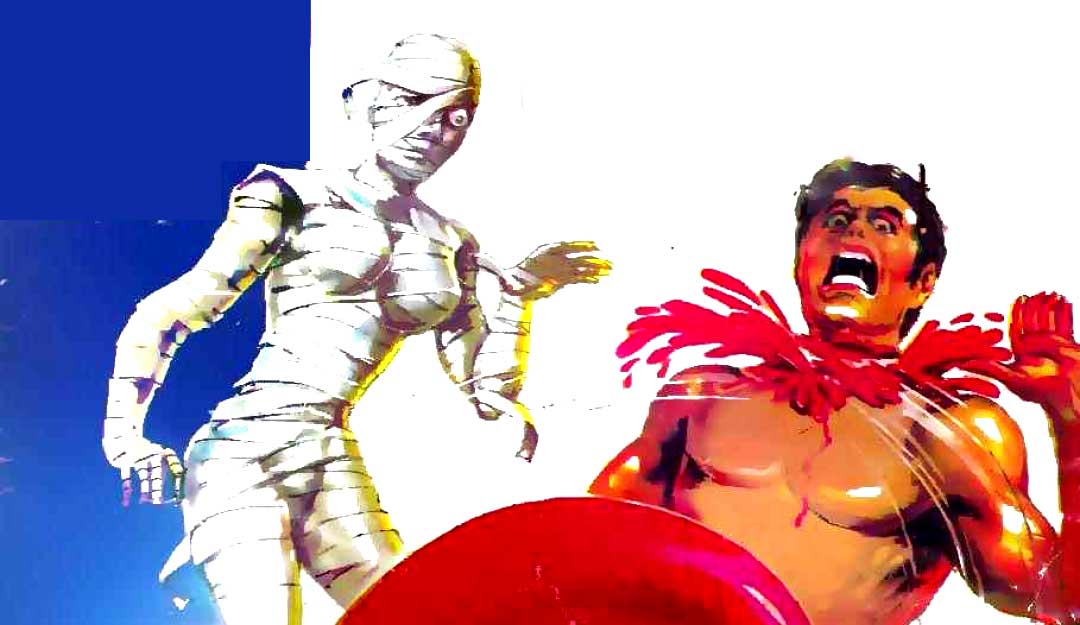
The comic we are reviewing today is called—“Homicide.” This comic is not just a simple murder mystery, but a deep and emotional story of greed, deception, and the revenge that comes after death. Written by Nazra Azhar and adorned with stunning illustrations by Adil Khan, this comic keeps readers engaged from beginning to end.
Introduction to the plot and the beginning of the betrayal:

The story begins at Alhabiba Cafe House, where four friends—Firefly, Ruby, Coca-Cola, and Billu—are talking about a dangerous plan. All four of them are young men and women walking on the wrong path, and they have only one dream: to become rich quickly. There is also a girl named Shalu present at the same place, who completely trusts all of them. Shalu is the daughter of Professor Amarjeet, who owns a large museum of antiques.
Jugnu, who is the most cunning and sharp-minded person in this gang, traps Shalu with his sweet talk. He explains to her that he needs an old skull from her father’s museum for a tantric act. In order to maintain a simple friendship, Shalu gets influenced by his words and gives him a fake copy of the museum key. Here, the author has shown very well how blind trust leads a person to destruction.
Museum night and the birth of crime:

The second part of the story begins in the darkness of night, when all four of them enter the museum. It is here that readers understand that the real purpose of Jugnu was not to steal the skull, but to steal precious remains worth crores kept in the museum. As soon as the theft starts, Shalu suddenly reaches there. She realizes her mistake and opposes it all.
This is where the story takes a dangerous turn. Firefly strangles Shalu, drenched in fear and greed of being caught stealing. An innocent girl’s life is taken just because she understood the difference between right and wrong. They lock her in a mummy’s coffin to hide her corpse. This scene gives goosebumps—a living girl has now become a mummy.
Mysterious murders and the shadow of fear:
After committing the crime, all four of them think that now they will be safe, but both the law and fate have different plans. When they visit smuggler Castro, it is revealed that he has already been caught by the police. Now even the stolen goods become a noose around their necks.

The story then turns into a true horror-thriller. One by one, all four of them start dying in strange and scary ways.
Billu’s death: Billu first sees a mummy-like figure in his room. She is none other than Shalu’s soul, who has returned in the form of a mummy. She brutally kills Billu with an old axe held in her hand.
Ruby’s end: Ruby runs away in a car to save her life, but the mummy suddenly appears in the back seat of her car. Out of fear, Ruby loses control of the car and dies tragically on the spot after hitting an electric transformer.
Investigating all these incidents is Inspector Aamir Khan, who is a sharp and intelligent police officer. He is puzzled as to why there seems to be some scary and supernatural connection behind every murder.
Climax and soul lamentation:

The last part of the story is extremely emotional and dramatic. Coca-Cola, the last member of the gang, understands that now his life is also in danger. The police have already arrested Jugnu. Inspector Khan suspects that Shalu’s father, Professor Amarjeet, is taking revenge by becoming the mummy. They try to catch him.
But the real truth is even scarier and more heartbreaking. This is not a human being, but Shalu’s wandering soul. Shalu’s soul appears in the last pages. She meets her father and tells Inspector Khan how her own friends betrayed and brutally killed her.
Shalu’s soul says to her father—
“Daddy, I’ve returned all your stuff. Now you take my dead body out from that mummy case and cremate me, so that I can have peace.”
This dialogue brings tears to the eyes of readers. A daughter worries about her father and his honor even after death. This is the biggest strength and emotional victory of this comic.
Psychological analysis of characters:

Shalu: Shalu is an example of innocence and trust. Her biggest mistake was that she accepted the wrong people as her friends. Even though her appearance becomes scary after death, her aim is only to get justice. She emerges more as a symbol of justice than revenge.
Firefly and the gang: All these characters represent that section of society which does not shy away from taking someone’s life for money and luxury. The author has very accurately highlighted Jugnu’s cunning, greed, and nervousness when the time comes, which clearly shows his true face.
Professor Amarjeet: He is a father who is completely broken from within. The pain of his daughter’s death and her lamentation touch the reader’s heart and give emotional depth to the story.
Inspector Aamir Khan: He is a police officer who completely believes in logic and evidence, but Shalu’s case makes him think that there can be some truth in this world beyond science and law.
Art and portraiture:

Adil Khan’s artwork is the biggest strength of this comic. King Comics’ hallmarks have always been their strong and memorable character designs, and this comic carries on the same tradition.
Portrait of the mummy: The soul of Shalu wrapped in bandages, whose eyes clearly show the fire of revenge, is very impressively created and builds an atmosphere of fear.
Murder scenes: Billu being attacked with an axe and Ruby’s car accident—the use of red color and shadow work in both these scenes further increases the thrill and fear of the story.
Museum environment: The suspense created among ancient sculptures, coffins, and dark corridors takes readers to a different mysterious world.
Writing and dialogue:
Nazra Azhar’s writing is tight and fast-paced. The story doesn’t feel cumbersome or slow at any point. A new mystery or a new fear awaits readers on every page. The dialogues are simple but effective. Especially Shalu’s last words and the mutual bickering between the gang members clearly reveal the characters.
Critical conclusion:
“Homicide” is not just a scary story, but it also delivers a deep moral lesson. It teaches that no matter how much a crime is hidden, it comes to light at some point, even if it is buried under the ancient coffins of Egypt. It shows the thin line between trust and deception, which people often ignore.
The biggest strength of this comic is its ending. Horror stories generally end in fear, but here the story ends with a sense of compassion and peace. Shalu’s peaceful soul and a father crying for his daughter leave a deep impression on the minds of readers.
If you are fond of classic Indian comics and are interested in mysteries related to mummies, then this presentation of King Comics will not disappoint you at all. In its time, it was a daring story that beautifully combined supernatural fear with human emotions.
