


Raj Comics’ ‘Yoddha’ series stands out in the world of Indian comics for its grandeur, depth, and mythological fantasy. The three previous issues of this series—’Beginning,’ ‘Suryansh,’ and ‘Srishti’—introduced readers to a universe where gods and demons are fighting for their existence and supremacy. The fourth part, ‘Heaven Characters’ (Swarg Patra), is the most important part of this story. Here, the story is not limited to just war, but it shows the psychological conflict of morality, justice, duty towards mother, and a superhero who chooses his destiny.
These comics, written by Tarun Kumar Wahi and featuring illustrations by Nitin Mishra, show that ‘Paradise’ is not just a place but a merit.
Retribution of Kalvritta and the Bravery of Shiromani:

The story begins where the previous part ended. After the death of Nabhiksha, his father, who is riding on a huge Kaalsarp, ‘Kalvritta,’ is burning in the fire of vengeance. He has the power to turn the earth into dust with his fierce blowing. When Devaraja Indra and other deities feel helpless, Shiromani shows his wisdom. He throws a large rock into Kalvritta’s mouth, blocking his path to blow. This shows that a true warrior wins not only by physical strength but also by wisdom.
Freedom vs. Slavery: An Ideological Battle:
The most effective part of this issue is where the demon children want to make ‘ghodakshas’ (demon horses) their slaves and ride on them. Shiromani stands in front of them and says—”Every living being on earth has the right to live an independent life. Power is not about enslaving anyone, but protecting them.”
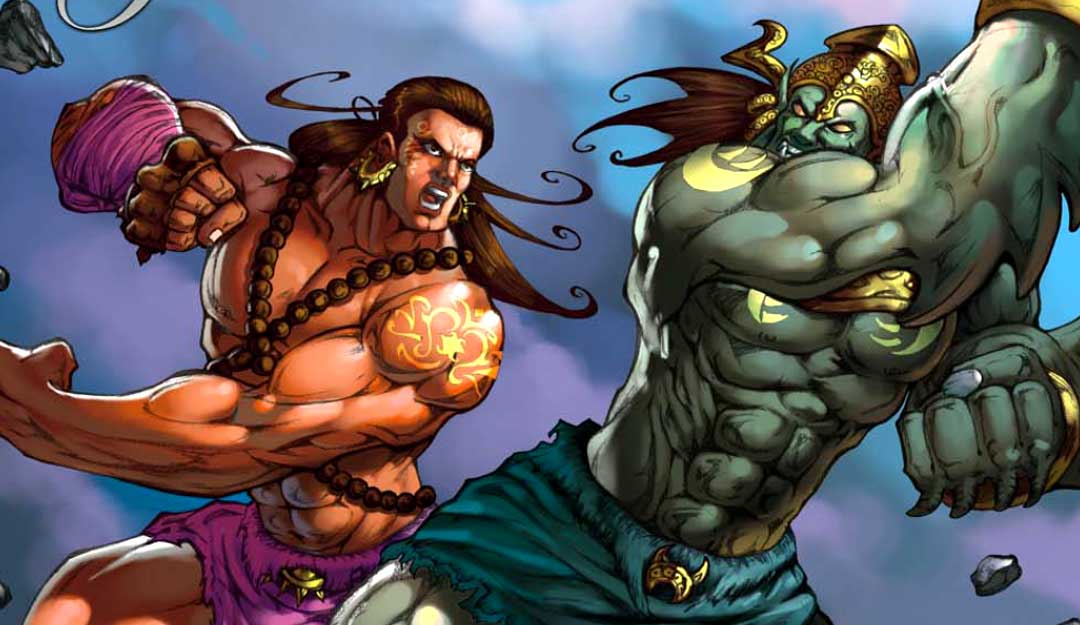
Demon child Brahmamushthi challenges him to fight. Shiromani defeats him with his ‘Malla Yudh’ art, but his aim is not to insult, but to ensure the victory of truth. He frees the horsemen, and in return, they are willing to become his rides themselves. This scene shows the difference between ‘force’ and ‘love’ in a very emotional way.
The Question of the Establishment and Merit of Heaven:

Brahma Ji calls Maharishi Kashyap and tells him the plan to create ‘heaven.’ The question arises: who will be the ruler of heaven? Brahma Ji’s argument is deep. He says that “those who are born in the morning have virtuous and helpful qualities, while those who are born at night have Tamasi and demonic tendencies.”
When Daityaguru Shukracharya questions this discrimination, Brahma Ji proposes a competition—’Competition for Heaven.’ This brings a big twist to the story, where merit is placed above caste or clan.
The Story of the Sunflower: A Unique Mythological Myth

In the comics, the secret of the birth of a ‘sunflower’ flower has been told through the story of a Yaksha and a Yakshini. A Yaksha who was engaged in the rigorous meditation of the Sun had to turn into ashes due to the curse of the Yakshini, and from those ashes, a sun-faced flower was born. This flower can withstand the speed of the sun. The first stage of the competition is to find this flower and control the ‘Agnabhiksha’ (a creature that swallows the sun) living at the center of the sun. This is a great example of the author’s imagination.
Mother Diti’s Words and Shiromani’s Religious Crisis:
The most emotional part of the story comes when Shiromani stands between his two mothers—Aditi and Diti. Diti, who is his birth mother, promises that she will participate in the competition on behalf of the demons.
Shiromani, who is a god full of virtues and who has all his brothers (Indra, Varuna, etc.) among the gods, is now forced to stand against his brothers. This dialogue of Diti—”You have repaid the debt of my womb; now you have to conquer the demons”—tears Shiromani’s heart apart. Here, the reader feels Shiromani’s pain, where his ‘duty’ is clashing with his ‘love’.
In-depth Characterization of Characters:

Shiromani (Warrior): In this issue, Shiromani emerges as a ‘just and thoughtful warrior’. He knows that the demons are wrong, but he cannot ignore his mother’s words either. His crying and helplessness make him a human hero. He reminds one of ‘Maryada Purushottam’, who himself wants to protect dharma even after suffering.
Indra and Dev Brothers: The love of the gods towards Shiromani is amazing. When they find out that Shiromani is not on their team, they are ready to even leave the reign of heaven. This brotherhood further strengthens the emotional side of the story.
Mata Diti: Diti’s character is very complex. She is not a villain, but a mother who wants to regain the glory of her clan through her son. There is some stubbornness and selfishness in her love, which forms the root of the main conflict of the story.
Brahma and Shukracharya: Brahma Ji is a symbol of ‘divine justice’, while Shukracharya is an example of ‘dedication to disciples’. Shukracharya’s belief that injustice has been done to his disciples makes him an adversary but a respectable guru.
Art, Portraiture, and Production:

Nitin Mishra’s pencil work and Sagar Thapa’s inking have made this issue a ‘visual treat’. Shiromani’s helplessness, Diti’s determination, and Brahma Ji’s calmness have been depicted in a very lively manner through expressions. The gates of heaven, the snowy peaks of the Himalayas, and the sunflower gardens take readers on a wonderful fantasy world tour. Shadab’s coloring has added depth to the visuals; especially, the use of orange and yellow in the sun’s brightness and flames looks impressive.
Philosophical and Moral Messages:
‘Heaven Characters’ shows the importance of freedom very deeply. Shiromani’s liberation of the Ghorakshas proves that it is unrighteous to bind a living being against its will. The story shows the struggle of ‘duty versus emotion’ through Shiromani’s conflict, teaching that the identity of a true warrior is to stick to his word even when the path of dharma is difficult. In the end, Brahma Ji’s competition shows that the right to ‘heaven’ and rule is given only to the worthy person who has the courage to selflessly sacrifice everything to protect others.
Critical Assessment:
This comic is the most emotional issue of this series, in which the heart-touching dialogue between mother and son and the unique mythological imagination of the sunflower and Firebhikshak make it special. Shiromani’s ‘Malla Yudh’ art and his thoughts establish him as a great hero. However, the high suspense in the story makes readers restless for the next part, and some long dialogues sometimes slow down the flow of action, which are among its weak aspects.
Conclusion:
Raj Comics’ ‘Swarga Patra’ is a classic comic. It is not just a superhero story, but a deep saga of values, words, and justice, which leaves an impact on the reader. Shiromani taking leave of his brothers and falling at the feet of Diti and crying—these are the most touching scenes of the comic.
The beginning of the ‘Competition for Heaven’ at the end of the issue and the departure of Shiromani towards the Sun alone point towards a grand and epic end. This comic teaches us that our ‘words’ can become our ‘shackles’ as well as our ‘identity’.
If you are a true lover of Indian comics and want to understand the nuances of the character of ‘Yoddha’, then ‘Paradise Characters’ is a must-have in your collection. This issue prepares us completely for the next part, ‘For Heaven’.
Final Rating: 5/5
