


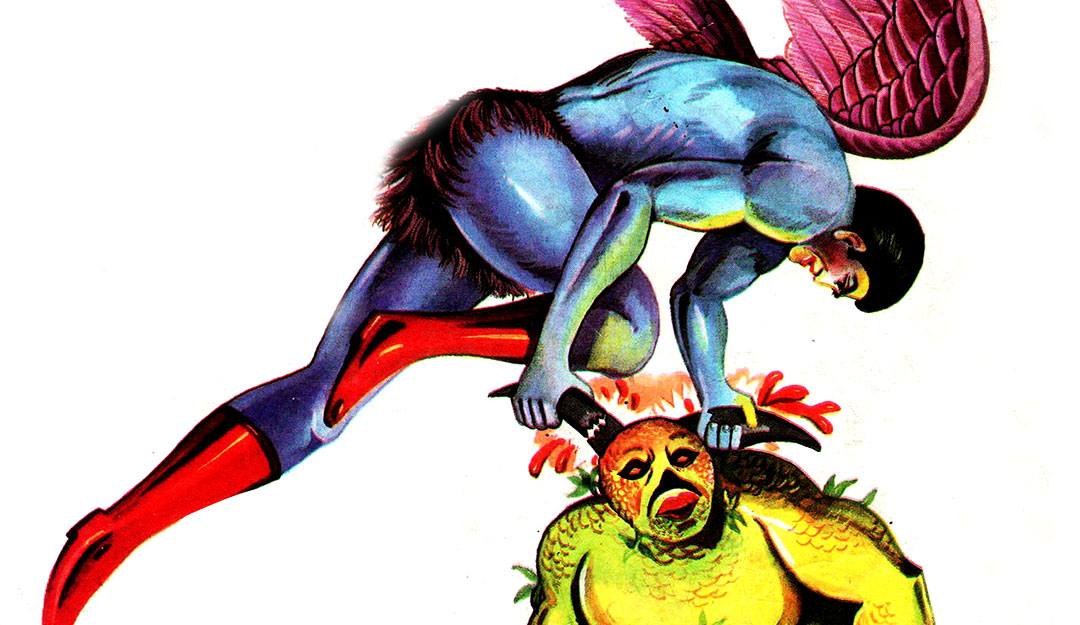
In the golden age of Indian comics, that is, in the 80s and 90s, when big names like Raj Comics, Diamond Comics, and Manoj Comics dominated the market, during the same period Meerut’s ‘Durga Pocket Books’ also created a distinct and slightly different identity for itself. Durga Comics created characters who were completely desi and had a strong combination of pulp fiction and mythological imagination. A very popular and different type of character from this stream was — ‘Mahabali Langura’.
In this article, we will review in detail the first issue of ‘Mahabali Langura’. This issue is not just the story of the birth of a superhero, but also brings out the thinking, style of writing, understanding of art, and preferences of the readers of the comics world of that time. In a way, it is a living document of that period, which refreshes old memories even today when read.
Plot and original background
The story begins with a tribal settlement named ‘Amer’. The author has presented this colony in a very lively and effective manner. Clan people are celebrating the night of the ‘autumn full moon’, a festival named ‘Un’. There is an atmosphere of dancing, singing, drums, and celebration all around, but at the same time, the tradition of animal sacrifice has also been shown to please the family deity. This is what sets the desi and slightly raw mood of the story right at the beginning.
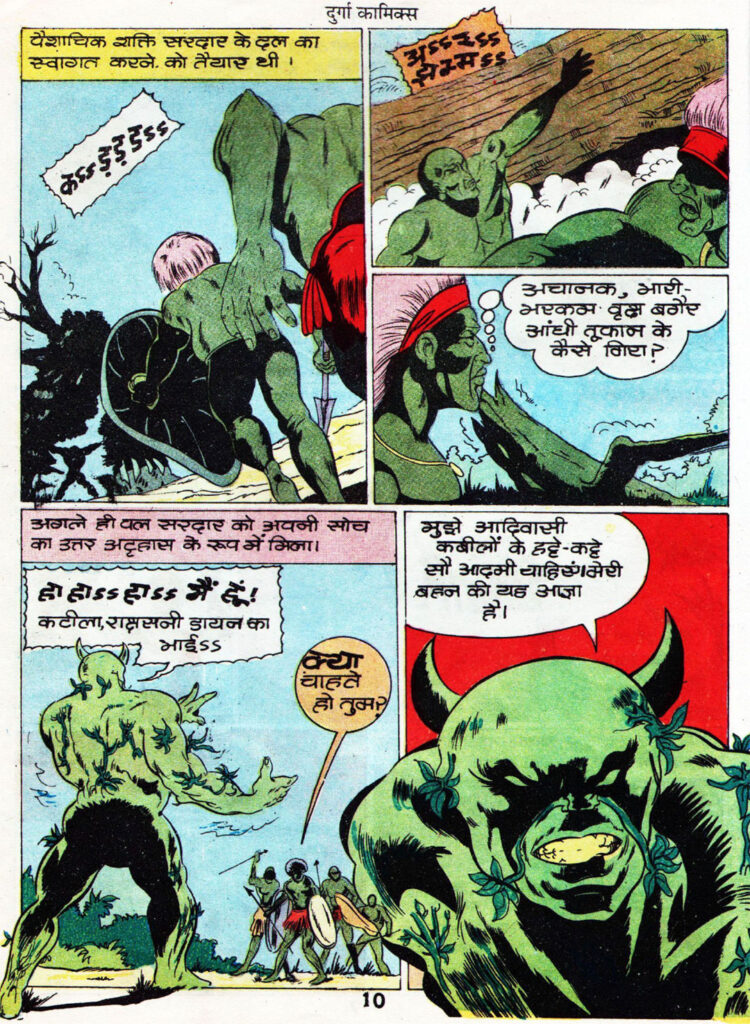
On the day after the festival, different types of competitions are held in the clan, in which archery and wrestling are especially highlighted. The strength and bravery of tribal warriors come to the fore through characters like ‘Luka’, ‘Dagu’, and ‘Ru’. But the real tension in the story arises when a warrior named ‘Dar’ does not return from the forest. Luca, Dagu, and Ru, who have gone to find him, also mysteriously disappear.
It is from here that the color of fear and mystery in the story starts deepening. The clan chieftain sets out with some of his companions to search the forest, where they encounter a giant monster named ‘Katila’. Katila, who is the brother of ‘demoness Dian’, is shown to be extremely ferocious and powerful. His purpose is to capture a hundred healthy men of the tribe at the behest of his sister, so that they can be sacrificed to awaken the ‘devil’.
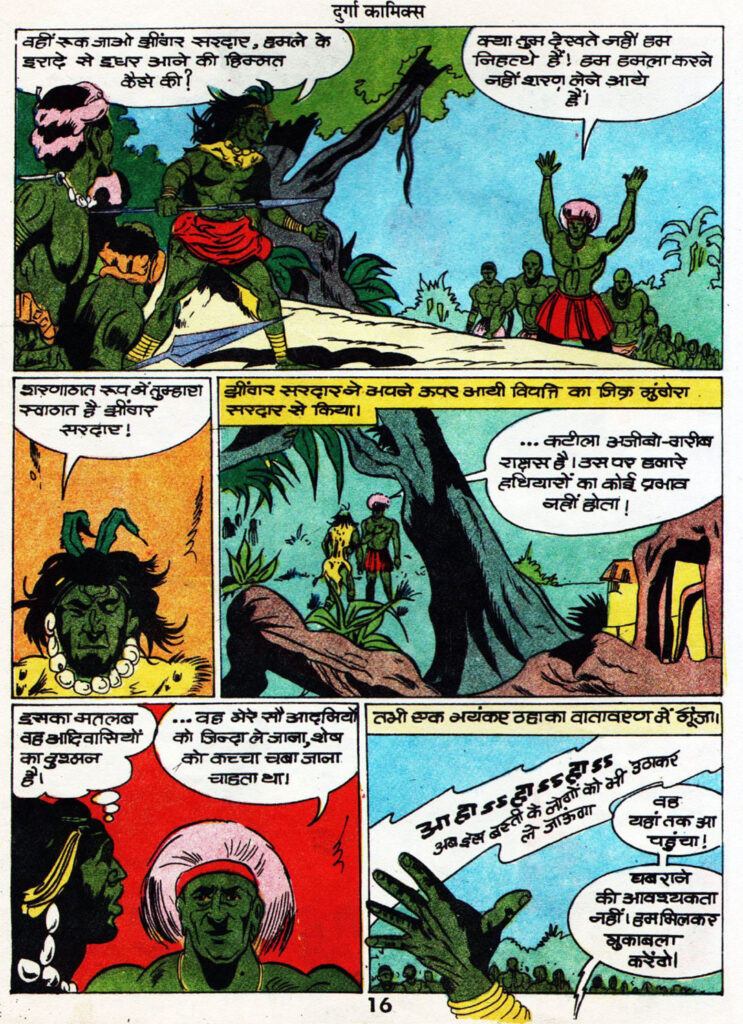
When the warriors of the tribe and even the chieftain himself fail to face Katila, they remember their last support — ‘Mahabali Langura’. They call him by playing drums in a special way. Mahabali Langura, who lives in the hills of Kandahar, hears this call with his yogic power and immediately flies to help the tribals.
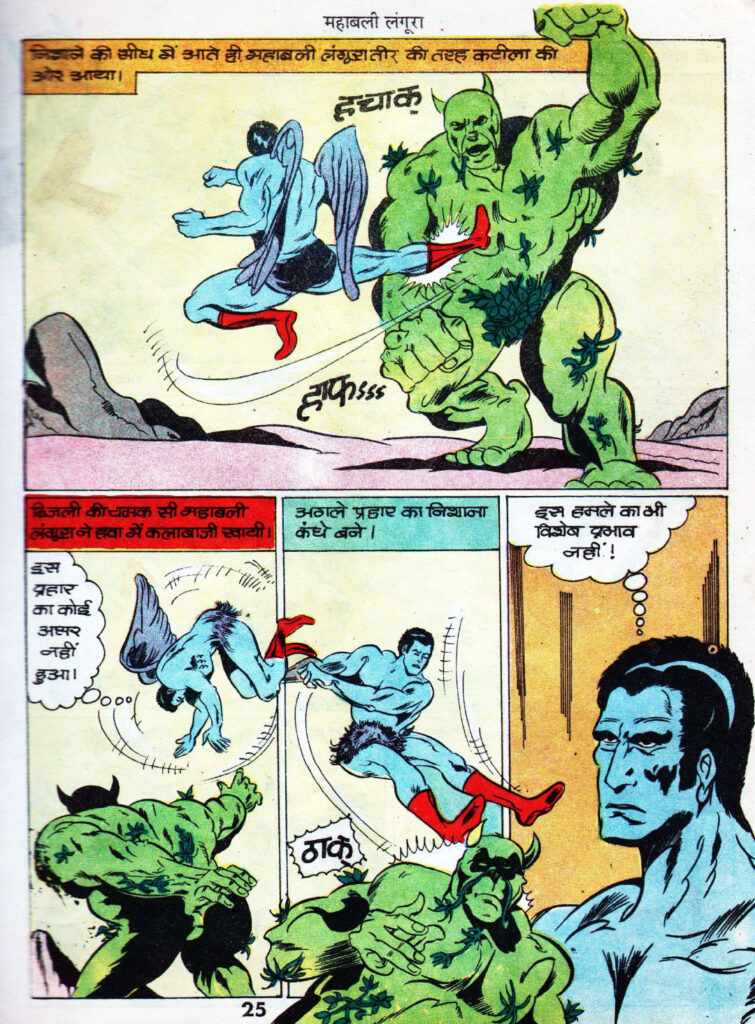
The second part of the story focuses on the fierce battle between Langura and Katila. While Katila relies on his animal-like raw strength, Langura fights with his agility, ability to fly, and intelligence. Eventually, Langura understands that Katila’s real strength lies in his horns. In a daring move, he dislocates the horns of Katila, killing the demon. The story does not end here, but stops at an exciting turn, where ‘vampire Dian’ vows to avenge her brother’s death, and the ground is prepared for the next issue, ‘Mahabali Langura and Vampire Dian’.
Characterization
Mahabali Langura (The Hero):
The character of Langura was a completely new and daring experiment in Indian comics. Blue skin, large wings on the back, and monkey-like agility make him stand out from the rest of the superheroes. He is not only powerful, but also possesses mental powers like telepathy, i.e., the power to read thoughts, and yogic powers. He is no less than a messiah for the tribals, and as soon as they call upon him, he reaches to help without any delay. He has a calm nature, but stands firm when needed.
Katila (The Brute):
Katila is the main villain of this issue. His green color, large horns, and huge body give him a classic monster look. He is extremely cruel and calls the tribals with words like ‘mosquito’ and ‘rat’, which clearly show his arrogance. The secret of his strength lies in his horns, a well-known fantasy element, which makes the story simple but effective.
Vampire witch and Poisonous:
Both of these villains are characters who play games behind the scenes. The witch is a symbol of black magic and tantra-mantra. In the same issue, her daughter ‘Poisonous’ is also introduced, who is going to become a big problem for Langura in the future.
Clan people:
The tribal chieftain and his companions may have limited resources, but they have been shown to be brave and self-respecting. They know that Katila is very powerful, yet they do not shy away from confronting him. This creates respect for them in the reader’s mind.
Portrayal and art side

The drawing of Harvindra Mankad in this issue of Mahabali Langura attracts special attention. A different kind of speed and energy is felt in his drawings. Talking about colors, primary colors have been used openly in the comic. The contrast between the blue body of Langura and the dark green color of Katila emerges very brilliantly on the pages.
The action scenes are very grand. Be it Langura’s acrobatics in the air or Katila’s uprooting of mountains, every frame shows strength. Sound effects like ‘dhishshoom’, ‘dhadam’, and ‘kadak’ were the hallmarks of comics of that era, and here too they make the action more fun. Panelling may be simple, but the flow of the story does not break anywhere. Especially on page 29, the scene of Langura pulling out the horns of Katila becomes very effective and graphic, and is remembered for a long time.
Language and Dialogue

The language of the comic is simple Hindi, in which Urdu words are also mixed very easily. There is a slight drama in the dialogues, which gives it a pulp fiction feel. “This was to be your end, wicked Katila!” — such dialogues highlight the heroic essence very well. Author D.D. Pokhriyal has put a different life into the story by using tribal words like ‘jamma h’, ‘harya h’, and ‘un’. These words not only make the atmosphere real, but also present the culture and faith of the tribals with respect.
Theme and social context
This comic places the battle of good and evil at its center, where ultimately good wins. The entire story takes place in the backdrop of forests and mountains, which strongly shows the relationship between man and nature. The message of collective unity is also clearly visible, because when the tribals are unable to do anything alone, everyone together calls out to their protector. Witches, demons, and magical elements are inspired by Indian folklore, which gives new flight to children’s imagination and makes the story more interesting.
Critical analysis

Pros:
The biggest strength of this comic is its unique hero. Langura was completely different from the common human superheroes of that period, so he immediately attracts attention. The pace of the story is fast, and one does not feel bored anywhere. Visual storytelling is so strong that one can understand a lot even without reading the dialogues.
Deficiencies:
A lack of logic is clearly visible in some places. For example, the death of Katila as soon as his horns are uprooted seems a bit sudden. No solid basis is given for his powers, although this was commonplace in fantasy comics of the time. Also, the tribals are shown in somewhat older stereotypes, although there is an attempt to balance this shortcoming by honoring them as warriors.
Conclusions and legacy
‘Mahabali Langura’ issue-1 is not just a comic, but a precedent of the creative freedom of the 90s, where publishers were not afraid to do new and risky experiments. Despite limited resources, Durga Comics created a character that colored children’s childhood.
In today’s digital era, when CGI and high graphics dominate everywhere, comics like Mahabali Langura create a special nostalgia due to their hand-drawn pictures and straightforward stories. This issue reminds us that for a good story, not just technology, but characters connected to imagination and heart are necessary.
If you want to understand the history of Indian comics, then you must read this first issue of ‘Mahabali Langura’. This combination of bravery, magic, and adventure is equally effective even today. This stormy character from Durga Comics is truly worth reading again and again.
