


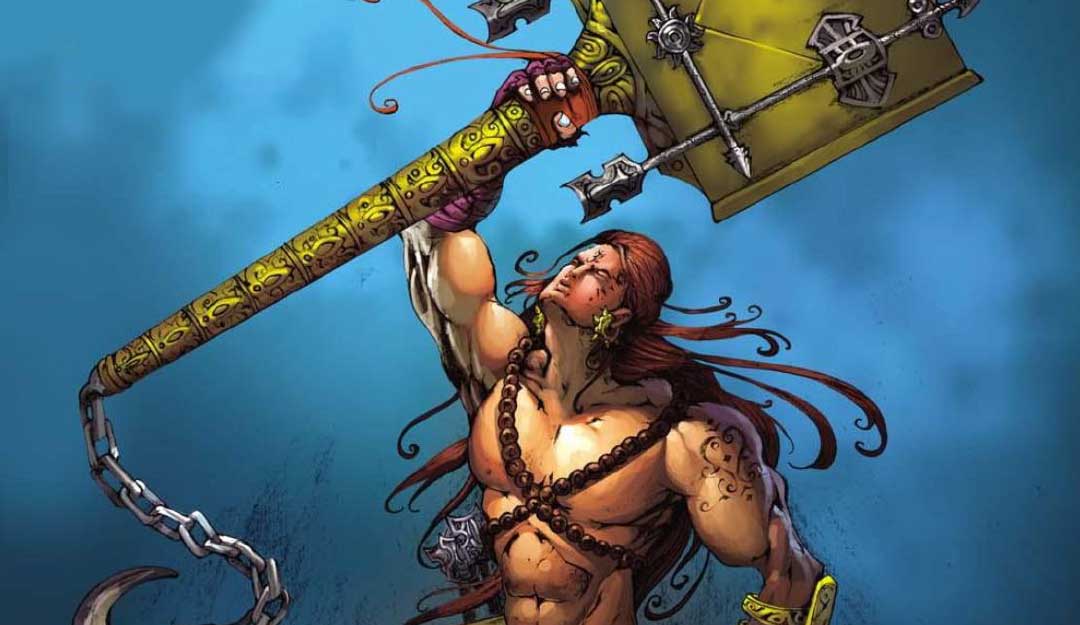
‘Warrior(Yoddha): Aarambh’ is not just a comic book, but a brilliant blend of Indian mythology and fantasy. This story takes us to a period when creation was in its very early stages, and heaven had not even been created for the gods. That means this story starts directly from the roots.
‘Warrior’ (Yoddha) is a character that is a unique blend of a mythical atmosphere and tremendous valor. The presented comic ‘Beginning’ (Aarambh) is the first part of the warrior’s origin story, i.e., his origin story. It is not just the story of one hero, but a big and serious epic showing the creation of the universe and the clash of divine laws and destiny.
Story summary and flow
The story begins at a time when even the heaven of the gods had not come into existence. Prajapati Brahma takes a pledge to create the universe, and with that resolve, this vast universe originates. Writer Tarun Kumar Wahi has started the story on a very grand scale, which makes one realize from the very beginning that something special is going to happen next.

In the opening pages, we see huge and dangerous creatures from the ‘Jurassic period’, where beings like dinosaurs are terrorizing the earth. To save his creation, God brings a holocaust and puts an end to these demonic creatures. After this, a new chapter of life begins. It is from here that the foundation of Maharishi Kashyap’s lineage is laid. Brahma ji reveals Daksh from his right thumb and his wife from his left womb. Daksha’s daughters — Diti and Aditi — marry Maharishi Kashyap.
Gods are born from Aditi’s womb, while demons are born from Diti’s womb. An important turning point in the story comes with the birth of the Sun. When the Sun is born, its brightness is so strong that the entire universe starts burning. On the prayers of Maharishi Kashyap, Lord Surya controls his radiance and moves towards Suryalok. After this begins the real conflict of the story — the increasing competition and confrontation between gods and demons.

Maharishi Kashyap becomes worried about the education and future of his sons. Under the guidance of Lord Vishnu, Devguru Brihaspati and Daityaguru Shukracharya are invited. From here comes the story of the ‘superior seed’ (The Divine Seed). Jupiter and Venus, with their combined powers, form a divine seed from which the most powerful warrior in the universe is about to be born. But due to the game of destiny and the tricks of Shukracharya and Diti, the seed which was meant for Aditi goes into Diti’s womb. From this womb is born ‘Shiromani’, who is later known as Yoddha or Suryansh.
Character illustration
Maharishi Kashyap is shown as a just and visionary father. He wants to treat both gods and demons equally, but the difference in their nature and thinking constantly bothers him. His duality as a father gives further depth to the story.

Aditi and Diti depict two completely different forms of motherhood. Aditi is calm, composed, and patient, while jealousy and insecurity are clearly visible within Diti. Diti’s passion to make her son superior at any cost becomes the root of the struggle of this entire story.
Guru Brihaspati and Shukracharya also emerge in a very interesting way. Jupiter is a symbol of policy, religion, and morality, while Shukracharya represents knowledge as well as deceit, ambition, and cunning. Shukracharya’s obstruction of the ritual through sneezing and changing the location of the seed clearly shows his cunning and devious nature.
Shiromani, i.e., Warrior, even though he appears as a child in this part, shows inner brilliance and a natural inclination towards justice that make him stand apart from other demon children. The circumstances of his birth establish him as a hero who feels like a complex and interesting anti-hero, not a complete hero or a villain.
Art and portraiture
Nitin Mishra’s artwork is one of the biggest strengths of this comic. Grandeur and detail are clearly visible in every panel. Especially the dinosaur scenes in the beginning, and the illustrations of gods and demons later, are very impressive. Sushil Ram Sharma’s inking has brought life to the drawings and made every scene stronger.

It is important to praise Amit Kadirya for his color combinations. In mythological stories, choosing the right colors is very important, and here the glow of the ‘divine seed’, the brightness of the Sun, and the use of colors in scenes like the Himalayas take the reader to that era. The handwriting of the dialogues, i.e., calligraphy, is also clean, easy to read, and effective, which further increases the impact of the story.
Major contexts and their importance
The most emotional and important theme of this comic is the test of bringing the ‘white lotus’. Guru Brihaspati orders the children to bring a white lotus from Brahma Sarovar to test their abilities and values. This test is not only of strength, but also of thinking and character.

The behavior of the demon children on the way comes out in a very negative form. They torture innocent animals, especially buffaloes, to remove obstacles along the way. Their cruelty clearly shows that ego and brutality have taken over their values. This scene also explains that having power alone is not enough.
On the contrary, the behavior of the deity children and Shiromani is completely based on sacrifice and restraint. When the protector of the lake demands a thumb in exchange for a white lotus, Shiromani cuts off his thumb without hesitation. This scene is reminiscent of Ekalavya from the Mahabharata, but here the sacrifice is not the result of any injustice, rather a just sacrifice chosen by oneself. This incident gives a clear message that real greatness lies not in strength, but in sacrifice and values.
Philosophical and ethical aspects

‘Beginning’ is not just an imaginative story, but also raises many deep philosophical questions. Is someone a god or a demon by birth? Are actions more important than birth? Shiromani is the biggest example of this, who despite being born from the womb of demon mother Diti, possesses the thinking, sharpness, and morality of the gods. This also connects the story with the debate of ‘nature vs nurture’.
The author has also shown through the character of Shukracharya how many times even ‘deceit’ is labeled as ‘policy’. The importance of education is also presented very clearly. On one hand, Brihaspati teaches scriptures, restraint, and dignity, while on the other hand, Shukracharya promotes weapons and an education that leads to the left path, i.e., darkness. This conflict forms the foundation of the story that follows.
Critical analysis
The biggest strength of this comic is its pacing, i.e., the speed of the story. The narrative never feels cumbersome or slow. In just 42 pages, the reader is given a complete journey from the creation of the universe to the childhood of a great hero, and nowhere does it feel stretched.
If we talk about shortcomings, some readers may find the number of characters slightly high. However, since this is an origin issue, creating a strong background was necessary. The dialogues are written in Sanskritised Hindi, perfectly in tune with the mythological atmosphere of the story. The ‘Raj Comics hai mera jaan’ spirit is clearly visible on every page, as the production quality feels no less than that of an international comic.
Conclusion
‘Beginning’ (Warrior – Part 1) is undoubtedly one of the finest offerings from Raj Comics. This story teaches us that greatness does not come only from high position or birth, but is shaped by decisions taken in difficult circumstances. Shiromani giving up his thumb, and then Diti taking it to Shukracharya, leaves the story at a very exciting turn.
The comic is equally impressive for adults, not just children, as it hides deep life values and complex human emotions within it. If you are fond of Indian mythology and superhero fantasy, then ‘Aarambh’ deserves a place in your library.
Rating: 4.5/5 ⭐⭐⭐⭐✨
