


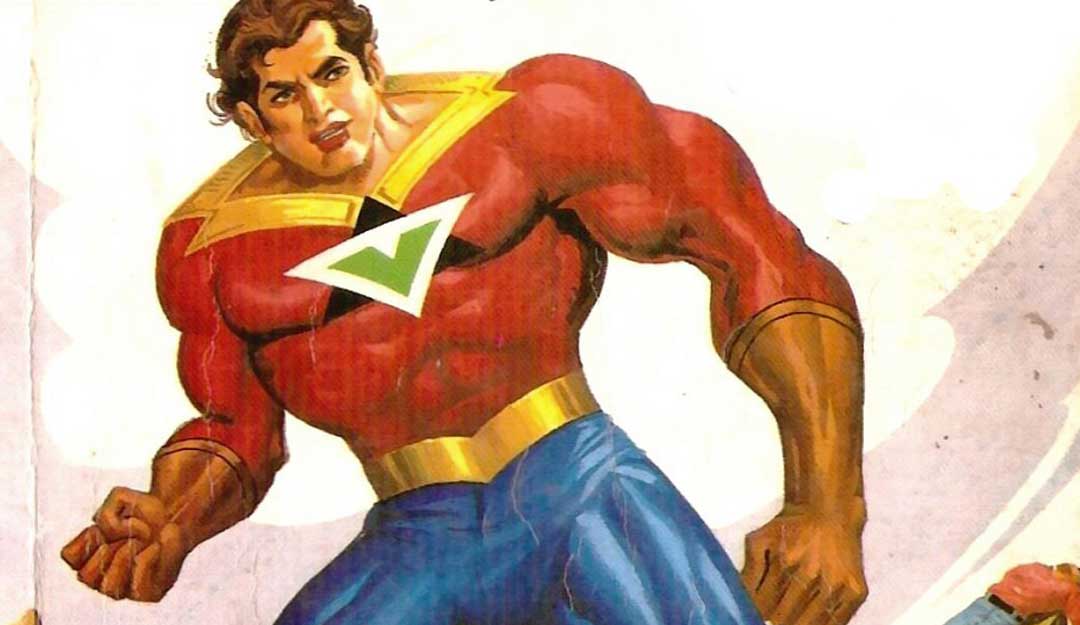
‘Vinash’ is a character published under the banner of Manoj Comics, which introduced readers to a new world of space mysteries and supernatural powers. Mahendra Jain’s story and Chandu Studio’s artwork made it even more interesting. This comic is the beginning of the “Alpha’s Son” series.
Detailed plot of the story
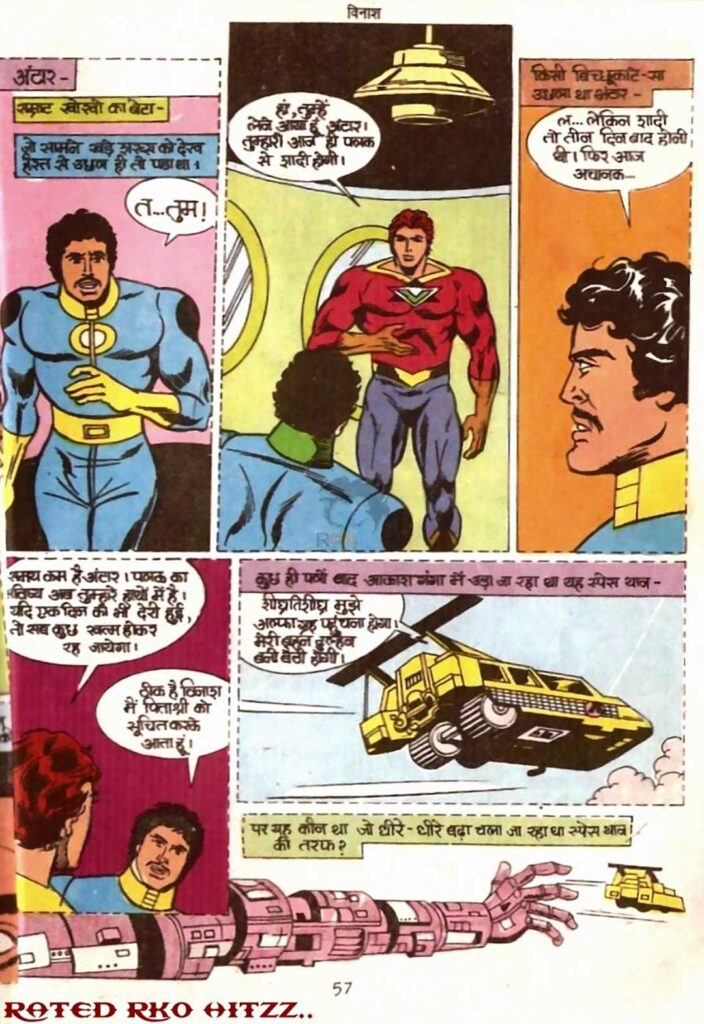
The story begins in two different places, which eventually meet at one point. On one side, there is a fierce conflict between the Alpha and Beta planets in distant space. Beta Planet’s cruel ruler ‘Beetaraj’ and his commander ‘Skyrobe’, a giant robotic warrior, destroy Alpha Planet with their ‘Danger Army’. ‘Guru Gamma’, the guide of Planet Alpha, sends his most trusted warrior ‘Electron’ on a special mission—to find the great protector who was sent to Earth years ago for protection.
On the other hand, the story of the ‘Killer House’ runs on Earth near Mumbai. Here, Mr. Anand, manager of the missile center, lives with his family—wife Neelam and son Vijay. International criminals ‘Sea-Horse’ and ‘Kirmer’ attack Anand’s family to learn the secrets of the missile.
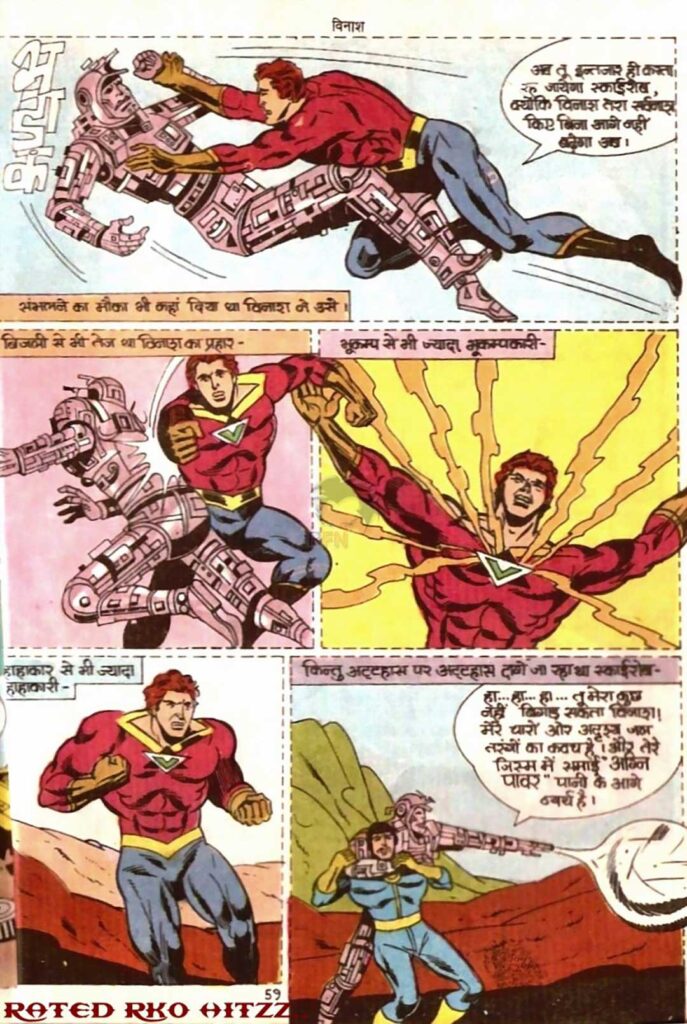
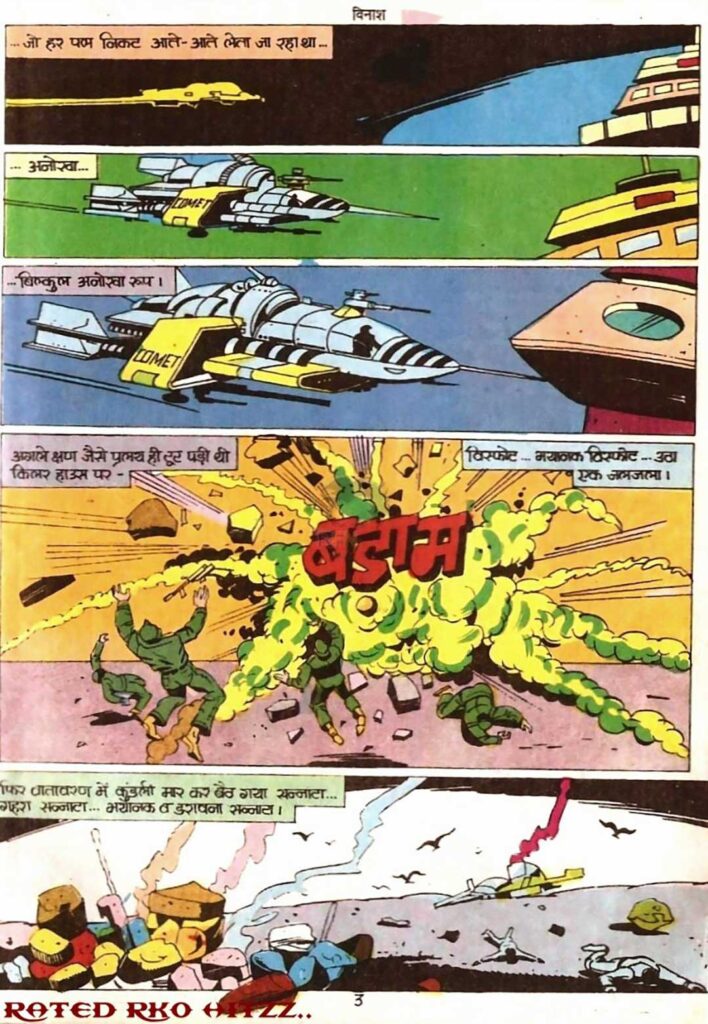
The biggest twist of the story comes when a terrible explosion occurs in the Killer House. Vijay, who was fascinated by fire since childhood, absorbs the energy of that explosion. He does not die, but is reborn as a powerful and giant superhero ‘Destruction’. At the same time, Electron crashes with his ‘comet’ vehicle. It is here that Vijay learns that he is not an ordinary human being, but the prince of Planet Alpha and the ‘Son of Alpha’.
Characterization of characters
The portrayal of the characters is also very interesting. The character of Destruction seems to develop—a small child who is saddened by his mother’s illness suddenly becomes the greatest power in the universe. His appearance is fierce, but his heart is kind. Fire gives him amazing power, which gives him the distinction of a ‘Human Torch’.
Guru Gamma is an experienced and philosophical guide whose influence resembles Obi-Wan Kenobi of Star Wars or Jor-El of Superman. Electron is a symbol of loyalty, who, though wounded, continues to struggle to bring Destruction to his destiny. Sea-Horse, among the villains, symbolizes human and ground-level brutality, while Skyrobe represents cold and calculating machine strength.
Art and portraiture
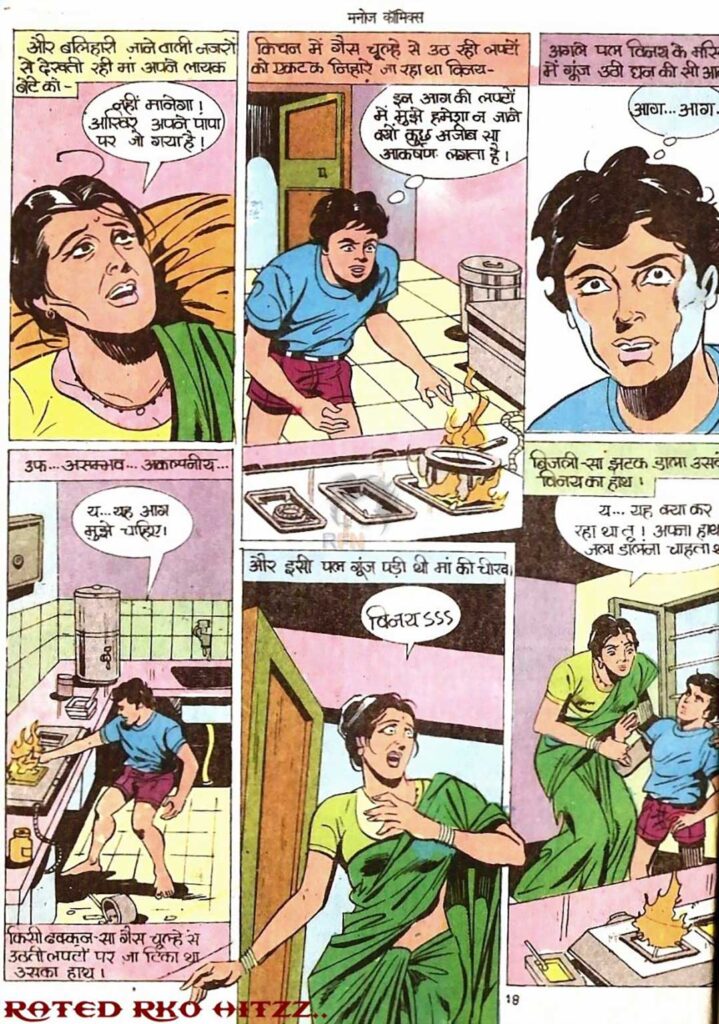
Talking about art and dialogue, the artwork of Chandu Studio is quite impressive for that time. Spacecraft, buildings of alien planets, and battle scenes are shown in great detail. Destruction’s design—red suit, blue leggings, and a ‘V’ symbol on the chest—gives a classic superhero look. The dialogues have more drama, which was the hallmark of Indian films and comics of that time. “Fear the havoc of the Creator, you bastard!” or dialogues like “Destruction has come to turn Lanka of sin into ashes” used to energize the readers.
Inspiration or imitation from foreign comics?
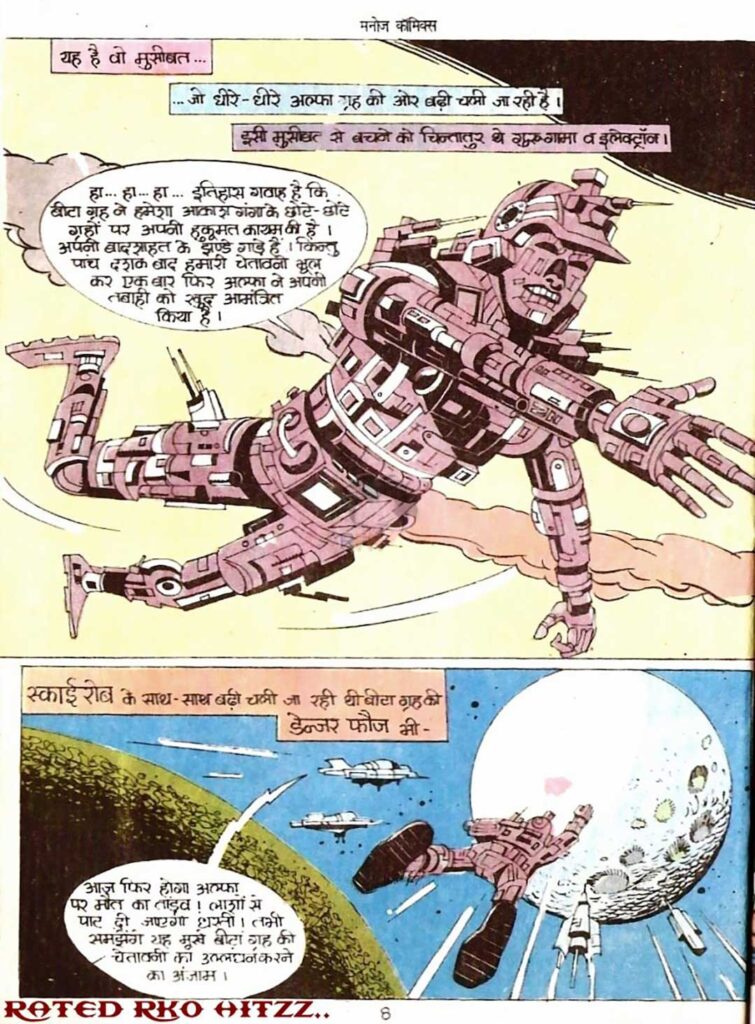
When we look carefully at ‘Destruction’, it shows some elements of Western comics like Marvel and DC. But it would be wrong to call it a direct imitation. Indian writers of that time definitely took inspiration from foreign characters.
The origin story of Destruction tells that he is the prince of an outer planet sent to Earth to be saved. This is reminiscent of DC’s Superman (Kal-El). Just as Jor-El sent Kal-El to Earth, similarly Guru Gamma sent Destruction.
The powers of Destruction are based on fire and heat. He becomes powerful by bathing in fire. This sounds a bit like inspiration from the Human Torch of Marvel’s Fantastic Four. But the persona of Destruction and his heavy body make him different.
The red-blue costume and heavy stature of Destruction sound similar to Shazam and Marvel’s ‘Quasar’. The symbol of ‘V’ on the chest sounds like Superman’s ‘S’, but in an Indian style.
Robotic villains like ‘Skyrobe’ seem to be inspired by Japanese mecha animations and Transformers of that time.
So, the conclusion is that ‘Destruction’ is not a complete imitation, but an ‘Indian transformation’. The author made it special for Indian readers by adding elements like Indian emotions, a mother’s love, a father’s sacrifice, and destiny to foreign concepts.
Conclusion of the review
Positive side:
The story of ‘Vinash’ is so exciting that readers find themselves immersed in a journey from the depths of space to the ‘Killer House’ on Earth. The most important thing is its emotional connect—Vijay’s selfless love for his mother and her sadness over the loss of her eyesight fill the story with human sensibilities. Also, the imagery of planets like Alpha, Beta, and Khokho created magical worlds for children, which still appeal to science-fiction lovers today.Downside:
90’s space-fantasy comics like ‘Destruction’ lacked scientific logic. Gaining unlimited power from fire or flying into space without oxygen or a space suit may seem strange to today’s logical readers. Also, the level of violence in the story is quite high. For example, Sea-Horse striking Vijay’s mother in the eye was brutal for child comics of the time and shows the dark tone of the story.Final opinion:
‘Vinash’ is one of the few stories that expanded the definition of Indian superheroes. If you want to feel the nostalgia of the 90’s and read a story that has both cosmic warfare and human emotions, it is a must-read ‘Destruction’. It is not just the story of a superhero’s origin, but the trumpet of a never-ending war against evil.
