


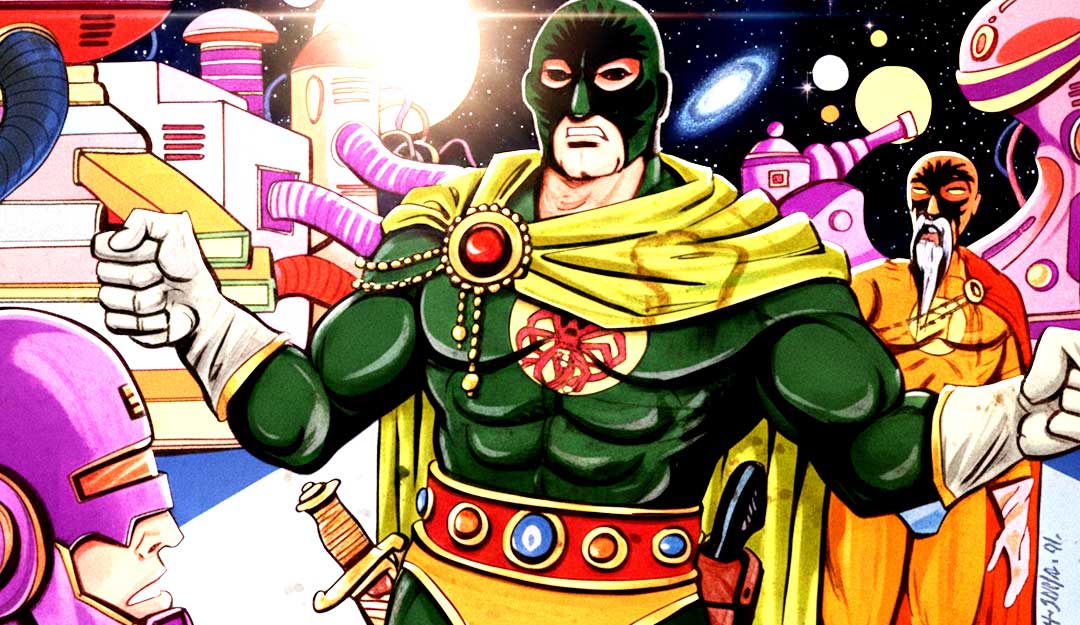
One of the most popular characters of Radha Comics, ‘Shakti Putra’ (Shaktiputra), is among the select heroes of Indian comics who bridged the gap between science fiction (Sci-Fi) and the superhero genre. “( Shaktiputra Ka Apharan ) The Abduction of the Son of Power” is not just an exciting story, but was like stepping into the world of space, aliens, and high-tech technology for readers of that time. Vatsala Kaushik’s writing and the art of Drona Features have made it even better than its first part, “Yantra Demon Ka Terror.”
Detailed analysis of the plot
Global crisis and mysterious kidnappings:
The story begins with a serious situation. Many famous scientists and intellectuals of the world suddenly start disappearing. The kidnapping of India’s renowned scientist Ashutosh Mukherjee brings the latest twist to the story. An emergency meeting takes place at police headquarters, where I.G. Rawat, S.P. officers like Rana, and Inspector Khan discuss the incident. The author has created ‘suspense’ in the story in a very smart way. Inspector Khan’s belief that a civilization from another planet may be behind the kidnappings leads the story from espionage (detective) to science fiction (Sci-Fi).

Hero’s entry and self-kidnapping:
Shakti Putra (Vikram), who is part of the Indian Intelligence Department, starts investigating the matter. He feels that this is not just the work of criminals. One evening, he is returning in his car when a mysterious ray (Vanishing Ray) falls on his car from the sky, and he disappears along with the car. This scene is the most exciting part of the comics, pulling readers straight to the center of the story.
Planet ‘Floisistan’ and Emperor Zedd:
When Shakti Putra regains consciousness, he finds himself on ‘Flozystin,’ the remote planet of the Andromeda Galaxy. Here he meets ‘Emperor Zad’ (Samrat Zaid). This part of the story takes a philosophical turn. Emperor Zaid explains that they are stealing the minds of intellectuals so that their civilization remains the most advanced in the universe. They do not call it ‘kidnapping’ but an ‘exchange of talents.’

Example of ideological warfare and silkworms:
In an interesting dialogue, Emperor Zaid explains to Shakti Putra that just as humans take silk from silkworms and honey from bees, they can use the human brain as advanced beings. Shakti Putra opposes this argument, which reflects the self-respect and authority of humanity.
Climax (The Climax) and ‘Cyborg’ revealed:
Shakti Putra is taken to the laboratory so that his brain can also be extracted. But here comes the big twist. The scientists of Flozystin and their supercomputer, Shakti, are unable to detect his brain. Shakti Putra reveals that he is not fully human, but a ‘semi-human, semi-robot’ (cyborg). His brain is not secured in his head but in a separate part of the body (the side). This technical twist shocks the enemies and leads the story to a triumphant ending.
Treaty and friendship:
Shakti Putra impresses Emperor Zad with his intelligence and strength. He threatens to destroy their weapons but ends up playing the role of a peace messenger. Emperor Zad, impressed by his heroism, not only sets him free but also promises to send all the kidnapped intellectuals and the disappeared American city of Edson City back to Earth.
Character illustration

Shakti Putra: He is the ideal hero. Along with power, he is also an expert in diplomacy. Being patient and calm in difficult situations makes him a great superhero. The green suit and black mask add to his charm.
Emperor Zad: He’s not a classic villain. He is loyal to his civilization but lacks morality. However, his ability to hear arguments and accept the truth makes him a ‘grey shade’ character.
Supporting characters: Characters like I.G. Rawat and Commissioner Deshpande give the story a basis in reality and increase reader engagement.
Art and portraiture

Drona Features takes the space-pulp genre to new heights in Indian comics through ‘Vinash.’ Planet Flozystin’s massive buildings, strange vehicles, and alien clothing brought space adventures home to the children of that time. The panel layout of the story is so intuitive that the reader travels from planet to planet without disorientation. Bright colors, especially for lasers and spacecraft, add to the fun of science fiction. Also, sound effects like ‘Badam’ and ‘Jajaj…’ turn action scenes into audio-visual experiences.
Theme and message

The story of ‘Shakti Putra’ is not just a superhero comic but also a philosophical saga. The message of “knowledge is power” suggests that real wealth is not material but the brain and conscience. From the conflict between powerful and weak civilizations, it raises questions of morality and authority. The peaceful resolution between Emperor Zad and Shakti Putra teaches that war only brings destruction, while dialogue is the way to a lasting solution.
Critical appraisal
Pros:
The ‘space opera’ style is very impressive. The revelation of him being a cyborg is a big surprise and shows a connection with the previous part. The villain’s change gives a positive ending to the story.
Deficiencies:
Some of the dialogue may seem a little long and expository. The sub-plot of the American city ‘Edson City’ feels a little abrupt in the main story.
Conclusion
“Shakti Putra Ka Kidnapping” is a classic work of Radha Comics. It reminds us of an era when comics were a medium to increase imagination, not just entertainment. Shakti Putra shows that bravery lies not just in muscles but in the ability to make the right decisions at the right time.
This comic is equally relevant today because it promotes curiosity about science and human values. If you want to experience the ‘Golden Age’ of Indian comics, then definitely read this story. This feat of Shakti Putra is not only exciting but also makes readers think about the infinite possibilities of the universe.
