


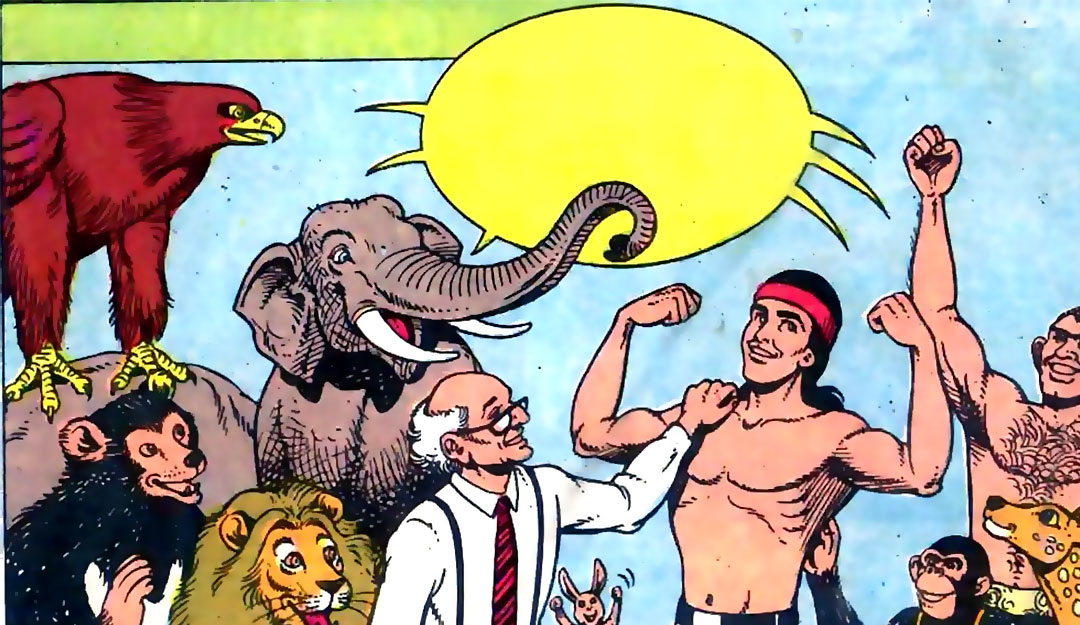
The 90’s were a golden time in Indian comics, when there was no stopping the flight of imagination. Basil Comics superhero ‘Angara’ was known for his unique physical appearance—gorilla’s body, lion’s heart, elephant-like strength, and fox-like cunning. Usually confronted by jungle hunters and criminals, this time the hero gets caught up in a big interplanetary war.
“Angara Return” is the last part of that trilogy, which started with “Angara Missing” and then moved to “Angara in Space”. In this story, Angara is trapped on the alien planet ‘Lura’ and has to fight a decisive and final battle to return to Earth. The powerful story by Parshuram Sharma and the vibrant portrayal by Pradeep Sathe make this comic a memorable experience.
The Story of Liberation and Victory
The story begins where the previous issue ended. Angara was cunningly brought to the planet Lura so that he could save the people there from the army of the tyrannical ruler of planet Moora, ‘King Bagol’. The king of Lura, ‘King Lura’, seeks Angara’s help, but he does it through coercion and deception.

Beginning of the Conflict:
The opening pages of the comic show that Angara has liberated ‘Pagan’, a settlement of Lura, from the soldiers of Moora, that is, the Bagolas (bird-human beings). But even after victory, Angara is not happy. He clearly tells King Lura that he is no one’s slave. He fights for justice, not on anyone’s orders. King Lura explains his compulsion: he cannot send Angara back to Earth until Moora’s army is completely destroyed and planet Lura becomes habitable again. This puts Angara in a big dilemma—to get his freedom, he has to end a war that is not actually his.
Strategy and War:
Moora has four major bases on planet Lura—Pagan, Chhagan, Lagaan, and Kaman. After conquering Pagan, Angara’s next objective is to destroy the remaining three bases.

Angara learns that Moora’s soldiers, the Bagolas, are extremely afraid of fire because their skin burns quickly. Here Angara shows his fox-like intelligence and makes fire his biggest weapon. He controls the Bagola soldiers in the Pagan jail by instilling fear of fire. This scene highlights Angara’s cunning and strategic thinking very well.
Chhagan Attack and Charlie’s Betrayal
Angara moves toward another base, ‘Chhagan’, in a plane snatched from the enemies, called ‘Shakura’. It is here that the important role of the villain dwarf Charlie comes to the forefront. Charlie, who has been responsible for getting Angara into trouble from the beginning, does not desist from his antics here either. He accompanies Angara in the plane, but as soon as he gets a chance, he enters Chhagan’s control room and joins hands with the enemies.
Charlie’s betrayal causes the plane to break down in mid-air, and Angara has to face tremendous attacks from Chhagan’s soldiers. Nevertheless, the strong-skinned Angara, like a rhinoceros, is not significantly affected by fire and lasers, and he also destroys Chhagan.
The Invisible Angara and Charlie’s Lesson:
After the plane crashes, Angara falls into a lake. Here the story takes a very funny turn. Angara becomes invisible by applying the juice of a particular plant to his body. He scares Charlie by claiming to be the ghost “of Angara.” Charlie, who is sharp-minded but very timid at heart, becomes extremely nervous. Angara takes advantage of this fear and forces him to accompany him on the next mission. This part brings a lot of laughter and highlights Angara’s cleverness.

Conquest of Lagaan – Victory of Animal Love:
At the third base, ‘Lagaan’, Angara encounters guard dogs. Angara possesses a bilingual instrument through which he can understand and speak the language of animals. Initially, the dogs attack him, but Angara defeats their leader using his strength. He then explains to them that they are supporting the wrong people—the forces of Moora. Angara does not consider animals as enemies, but as lost friends. This mindset turns the dogs to his side, and Lagaan is also conquered.
The Fall of Kaman and the Final Victory:
The last and strongest base, ‘Kaman’, is next. Here Angara, Charlie, and the dog army launch a fierce attack together. Charlie, now acting obediently due to fear of Angara’s ghost, sets the base on fire. Angara overpowers Moora’s soldiers with his tremendous strength. Eventually, Moora’s army surrenders, and planet Lura is completely liberated.
Homecoming and Charlie’s Punishment:
After winning the war, King Lura keeps his promise and prepares to send Angara back to Earth. Angara bids farewell like a true hero. But before leaving, he delivers another act of justice. He demands that King Lura imprison the dwarf Charlie on planet Lura forever and never allow him to return to Earth. The greatest punishment for Charlie is to live alone on an alien planet.
Finally, Angara reaches the South Pole of Earth via ‘matter transmission’, where he is welcomed by his friends, Whale Queen and Jatayu. From there, everyone happily returns to Angara Island.
Character Analysis
Angara:
In this comic, Angara is no longer just a fighter but emerges as a wise commander and diplomat. His leadership is evident when he single-handedly faces an entire army and uses enemy resources such as aircraft and weapons. The funniest example of his intelligence comes when he pretends to be a ghost to scare Charlie, showcasing his fox-like cleverness. His kindness aligns perfectly with his core nature. He befriends animals, especially dogs, instead of killing them, proving that he is truly a protector of wildlife.

Dwarf Charlie:
Charlie is the most interesting “grey” character in this story. He is not entirely evil, but circumstances force him to support Angara. His timid nature and selfish mindset add humor and suspense to the narrative. His final punishment gives readers a sense of true justice.
King Lura:
King Lura is a ruler trapped by circumstances. While he does get Angara kidnapped, his sole intention is to save his people. By the end of the story, he emerges as a respectable king who honors his promise and bids Angara farewell with dignity.
Moora Soldiers (Bagolas):
Pradeep Sathe gives these alien soldiers a unique and memorable design—bird-like heads with human bodies. Making their fear of fire a central weakness is a creative and effective storytelling decision.
Artwork & Visualization

Pradeep Sathe’s artwork is, as always, the greatest strength of this comic. His imagination shines in the depiction of the alien world. The barren mountains of planet Lura, strange architecture, and advanced technology like spaceships and laser guns create a distinct atmosphere. Action scenes are fast-paced and dynamic—whether Angara is fighting dogs, escaping burning bases, or jumping from a plane mid-air. The color usage is equally impressive, especially the vibrant yellows and reds in fire scenes, which suit the printing style of that era. Facial expressions are detailed and expressive—Angara’s determination, Charlie’s fear, and King Lura’s anxiety are clearly conveyed.
Writing & Dialogue

Parshuram Sharma’s writing is simple and clean, making the story easy to follow. His dialogues are short yet impactful. Angara’s line—“I am not fighting for anyone; I fight only for justice”—perfectly defines his character. Charlie’s panicked cries—“Hey! I’m dead! Angara’s ghost!”—add light humor. The pacing remains fast throughout, and the smooth transition between bases, combined with Charlie’s constant banter, keeps readers fully engaged.
Critical Analysis
Pros:
This comic delivers a complete and satisfying conclusion to Angara’s long journey. From “Angara Missing” to “Angara in Space,” all unanswered questions find resolution here. The fusion of science and nature stands out—advanced technology like lasers and spaceships contrasts beautifully with Angara’s natural strength and animal communication abilities. Charlie’s punishment is especially effective; instead of a quick death, he must live with the consequences of his actions.
Cons:
There are some technical flaws. Angara faces no breathing issues on the alien planet, gravity mirrors Earth’s, and aliens easily understand human language. From a scientific perspective, these elements are questionable, but such liberties were common in 90’s Indian comics. Additionally, Moora’s technologically advanced army being defeated so easily by fire and basic weapons slightly undermines their threat, emphasizing courage over technology.
Conclusion
“Return of Angara” is a classic masterpiece. It is not just for Angara fans but for anyone who enjoys adventure and science fiction. The comic teaches that courage, wisdom, and righteousness can overcome any obstacle—whether on Earth or across the universe. Angara’s journey forms a complete heroic cycle, from Earth to space and back again. Leaving Charlie behind on planet Lura also opens the door for future stories—perhaps Charlie may return someday.
Final Verdict:
If you enjoy old-school comics where magic and adventure mattered more than logic, this comic is a must-read. Pradeep Sathe’s artwork and Parshuram Sharma’s storytelling will not disappoint.
Rating: 4.5 / 5 (for excellent flow and a strong conclusion)
