


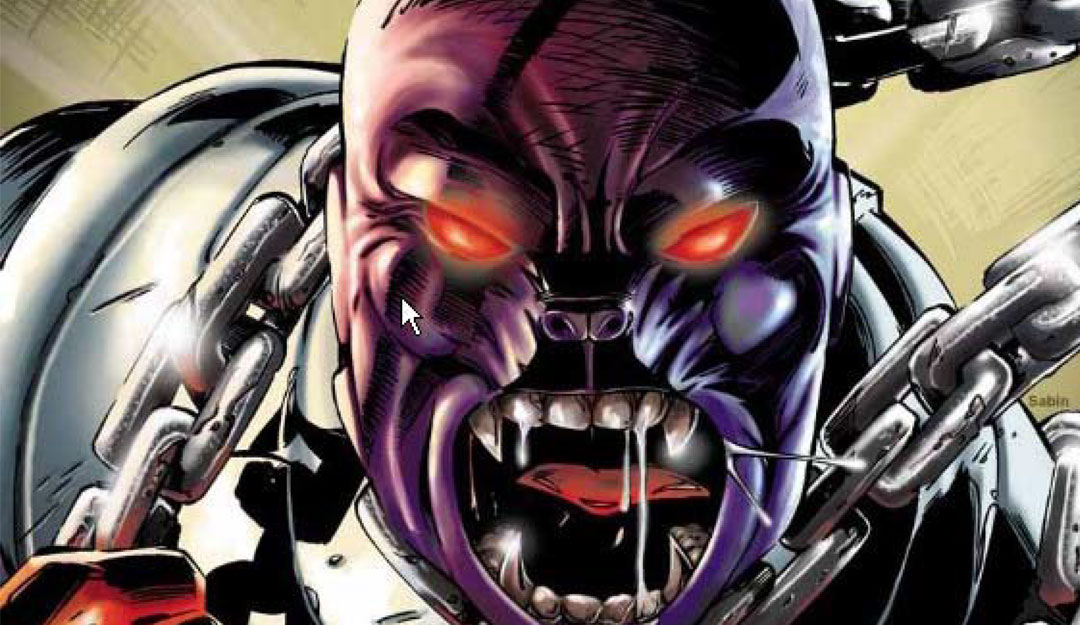
Raj Comics’ ‘Born in Blood’ series holds a special place in the history of Indian comics. This was the period when the character of Doga was being created in a new way—he was being made more dangerous, closer to reality, and deeper mentally than before. In the same series, the comics “Bhukha Doga” (Part-2) written by Sanjay Gupta and Tarun Kumar Wahi and created by Studio Image is a brilliant link. This story takes the events of “Nikal Pada Doga“ forward and takes the readers straight towards “So Ja Doga”.
The name of the comics “Bhukha Doga” sounds like stomach hunger at first sight, but as you turn the pages, you understand that hunger here means many types of hunger. This hunger is not just about food, but about hunger for justice, hunger to eliminate criminals, and hunger to eradicate the filth spread in society. The Doga, who is considered Yamdoot in the Mumbai crime world, really looks like a wounded and hungry lion here.
This comics is not limited to just action and thrill, but also touches old, deep wounds from Doga’s past—wounds that never healed. This story has kept big social issues like the condition of orphanages, the cruelty of begging gangs, and child kidnapping at its core.
Plot (Storyline): Confluence of Past and Present
The story begins with a very emotional and disquieting flashback. We see the little Suraj (i.e., Doga’s childhood)—orphan, lonely, and suffering from hunger. In Halkan Singh’s garbage dump, he was reared as an “insect”. Flashbacks show how a kind old man (whom Suraj considers an angel for himself) gives Suraj and street dogs a place near him and feeds them to their fill. But the happy moments spent with them do not last long. ‘Baisakhi Dada’, a ruthless beggar mafia, kills that old man and beats Suraj and throws him into the business of begging.

This is the turning point where the real foundation of Doga is laid. When Baisakhi Dada tries to kill Suraj’s dog friends, the ‘animal inside Suraj’ wakes up for the first time. Suraj pounces on Dada. This moment clearly shows that Doga was not a murderer by birth—situations made him like this.
Current developments:
Now the story returns to the present, where Doga has gone on a ‘hunt’ in the nights of Mumbai. His target is—beggar gang. He directly wreaks havoc on ‘Langra Ustad’ and his henchmen. Doga’s way is very clear—he does not just catch criminals, he breaks them. Scenes of bones breaking with his ‘bone breaker’ (Bone Breaker) technique give goosebumps.
Doga suspects that the same beggar gang is behind the 30 children who disappeared from Mumbai (which was mentioned in the previous comic “Nikal Pada Doga”). He also rescues four children, but later realizes that he made a mistake. These were not the children he was looking for. This thing shows both Doga’s humanity and his limitations—he is not a superhero who knows everything; he can also be wrong.

Investigations and secrets:
The second part of the story becomes a kind of ‘whodunit’ mystery. Doga works on clues with Cheetah (his partner) in his high-tech lab ‘Dogalicious Wing’. Both their eyes go to the man named ‘Raghavan’, who was R.K. Thakkar’s servant in his house and who was said to have committed suicide. But Doga suspects that Raghavan was not actually a criminal, but an important witness.
When Doga searches Kothi No. 13 (Thakkar’s house) he sees many strange things there—freshly made coffee in the kitchen, many closed doors and finally a hidden basement. In the basement, he finds two children (Harsh and Vidya). The children reveal that Raghavan hid them there and sacrificed himself to save them from the kidnappers.

The biggest twist of the story comes when Doga clearly proves from forensic evidence that Raghavan did not commit suicide—he was murdered. It is clear that this was the work of a professional killer. Doga’s suspicion goes to Kothi owner R.K. Thakkar.
Climax:
The end of the story moves very fast. Doga arrives to catch Thakkar, but finds Thakkar’s body there. There’s someone else running the whole game from behind. The real culprit is still behind the scenes. Doga encounters a new enemy, who also knocks him unconscious. The story ends on suspense, where Doga meets the Fox (another character)—this scene increases the curiosity for the next part ‘So Ja Doga’.
Character analysis
DOGA (Suraj):
Doga’s double face comes across very beautifully in this comics. On one hand he is ‘Suraj’—who understands the pain of children, takes out his anger in the gym and keeps rejecting Monica’s love because he feels that his life is just for the mission. On the other hand he is ‘Doga’—who has forgotten the meaning of mercy.
On pages 9 and 10, when he punishes the perpetrators, there is a clear madness in his eyes. He says, “Bread is the greatest treasure, Langra Ustad!” This line combines both his childhood hunger and today’s anger.

Cheetah:
Cheetah is Doga’s tech expert. He checks the data on the computer and gives the right direction to Doga. The bonding of the two sounds like Batman and Alfred/Oracle, but with desi tempera. Cheetah always balances Doga’s anger with logic.
Monica:
Monica brings a little softness to this bloody story. She is really worried about Suraj’s mental state. She knows that Suraj has not slept for many nights. Her communication—“Every night spent awake creates a sensation in the mind, Suraj”—indicates that Doga is mentally breaking down.
Psycho:
Psycho adds a little ‘supernatural’ touch to the story. He can tell whether a child is alive or not by looking at their ‘aura’ (Aura). This ability of Psycho takes the story beyond the limits of science, which is typical of the fantasy world of Raj Comics.
Villain (Langra Ustad and Real Villain):
Langra Ustad is a typical punk, whom Doga easily defeats. But the real villain, who does not appear until the end, is much more cunning and dangerous than him. He goes one step ahead of Doga at every turn—and that’s what keeps the tension of the story.
Drawing and Art (Artwork & Visuals)

The USP of the ‘Born in Blood’ series is its fantastic artwork created by Studio Image. The art uses darker colors (Dark Shades)—black, blue, purple and red—which instantly set the story’s ‘noir’ and slightly sad (Gloomy) atmosphere. The red color of blood especially stands out on the pages.
The action scenes are very powerful and full of movement. Doga’s fight sequences have a clean ‘impact’ feel, especially in scenes with ‘Bone Breaker’, where the breaking of bones and the expression of pain on the faces of criminals is made with such detail that it causes shock while reading.
The facial expressions are fantastic—Suraj’s stress, anger and fatigue are shown extremely clearly. At the same time, the transition from the innocence of little Suraj to the harshness on his face is also shown very beautifully.
Locations are also closely made—gutter, dark closets, high-tech lab—all combine to make the atmosphere stronger. The lighting effects are very strong, especially in the rain and night scenes.
Dialogues and Writing
The pair of Sanjay Gupta and Tarun Kumar Wahi has written a powerful and tight script. The story does not come loose anywhere—there is something on every page that forces the reader to read further.
There is weight and temper in the dialogues. Some memorable lines like—
• “When someone goes from door to door, he realizes he is an orphan.”
• “In which merciful people were begging every now and then.”
• “I brought you bread… But Doga, you also eat bread with us, right?” (This shows both the innocence of the children and the melting of Doga.)
• “This is not a suicide, Doga—this is a simple murder case!”

The authors have also made amazing use of medical and forensic information—such as ‘wrist vein cutting’, which explains the difference between ‘Hesitation Marks’ and ‘Deep Cut’. This does not limit the story to just action, but turns it into a sensible and thinking detective story.
Social concerns and messages
“Bhukha Doga” is not just entertainment—it is also a social mirror.
Child delinquency and begging:
The comics show how small children are kidnapped, maimed, and forced to beg. This is the bitter reality of big cities.
Corruption and police failure:
The very existence of Doga shows where the police are falling short. Where the police keep looking for evidence, Doga does justice directly. However, it also raises questions on the ethical aspects of ‘vigilante justice’.
Richness and poverty:
The difference between rich kids in the story (like R.K. Thakkar’s people) and poor children (beggars) is clearly shown. Doga comes out as a protector for those poor children.
Critical approach

‘Born in Blood’ is a very good comics, but there is room for further improvement in some places. First of all, there is a little more violence—broken bones, cut veins, and bloodshed can bother some readers, although its target audience is mature readers anyway.
Second, in some places the suspense seems repeated, such as Doga entering the house or finding a basement, which makes it seem quite easy for him to face many difficulties.
In the end, the very interesting twist at which the story ends creates excitement for the next part, but readers who are reading only this one part may be a little disappointed because the real secret of children’s disappearance still remains unsolved.
Conclusion
“Bhukha Doga” is such a shining star of the golden age of Raj Comics, which emerges not just as a story but as an experience. This comics gives a new height to the character of Doga—where emotions, mystery and tremendous action reside in its DNA.
This story clearly tells that Doga is not just a mask, but the anger that boils inside every common man who sees injustice every day. Suraj leaves his sleep, rest and even his fear, and sets out to find those children, proving that becoming a hero requires not just strength but a very big heart.
If you like detective-style stories, dark-tone artwork, and explosive superhero action, “Bhukha Doga” is a complete Must Read for you. This comics once again shows that the Indian comic industry has the power to compete with any international comics, both in story and presentation.
Rating: ⭐⭐⭐⭐½ (4.5/5)
Final thoughts
After reading this comics, only one question keeps revolving in the mind—
“Who is the real culprit?”
And this question draws you to the next part “So Ja Doga”.
Sanjay Gupta and his team have really created a suspense that keeps readers glued to their seats.
