


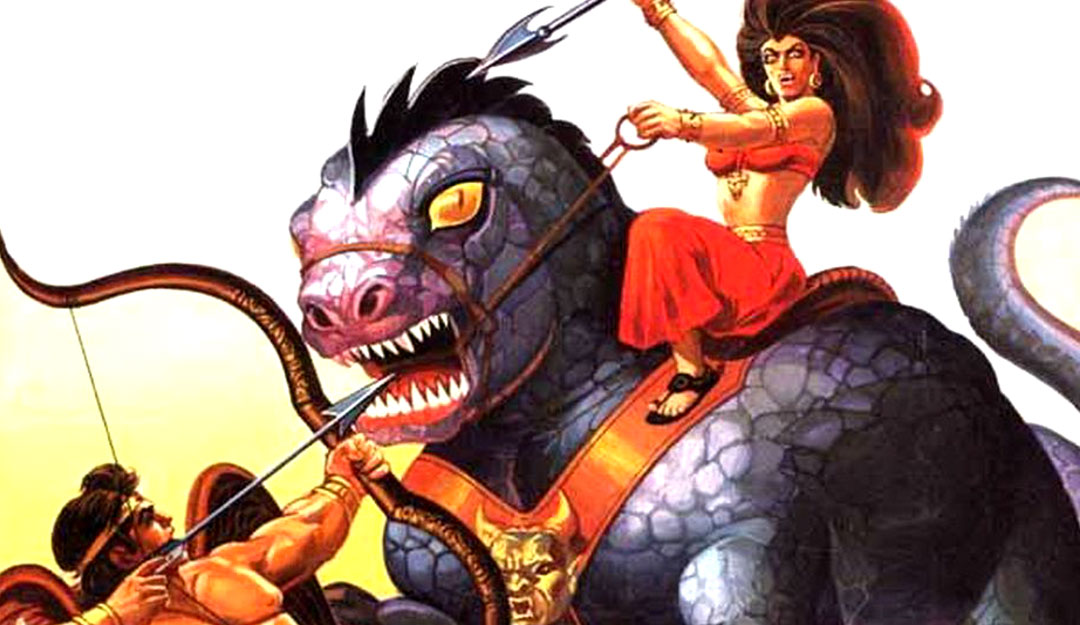
The ‘Kalanka’ special issue (No. 107) is such a defining chapter in the history of Raj Comics that it brings the last struggle of previous Mahagathas like ‘Bhokal’, ‘Kapalika’, and ‘Mrityujit’ to its peak. Writer Sanjay Gupta and painting master Kadam Studio have together created this issue, which is more than just a comic. It is a winding and exciting story of religion, deceit, bravery, and keeping one’s word. In this issue, the last great battle between the demonic Queen Kalankini and Mahabali Bhokal and their tremendous companions Atikrur, Dhanusha, and Hanuman—who appears in his most mysterious, old form— unfolds.
In this review we will analyze in detail the many aspects of the comics—illustration, depth of story, feelings of characters, and the moral message hidden in the final victory.
The war of light over darkness
As soon as you see the cover of ‘Kalanka’, the storm of confrontation is clearly visible on your mind. Bhokal is shown directly confronting Kalankini, sitting on a large, fear-inducing, monster-like creature. The comics title ‘Kalanka’—which symbolizes sin, impurity, and darkness—points to the last and most terrible challenge standing before Bhokal. This issue brings out the entire fierce form of Kalankini and her unlimited powers for the first time after the celebration of Kalratri and the destruction of the Rudhir Yagya.
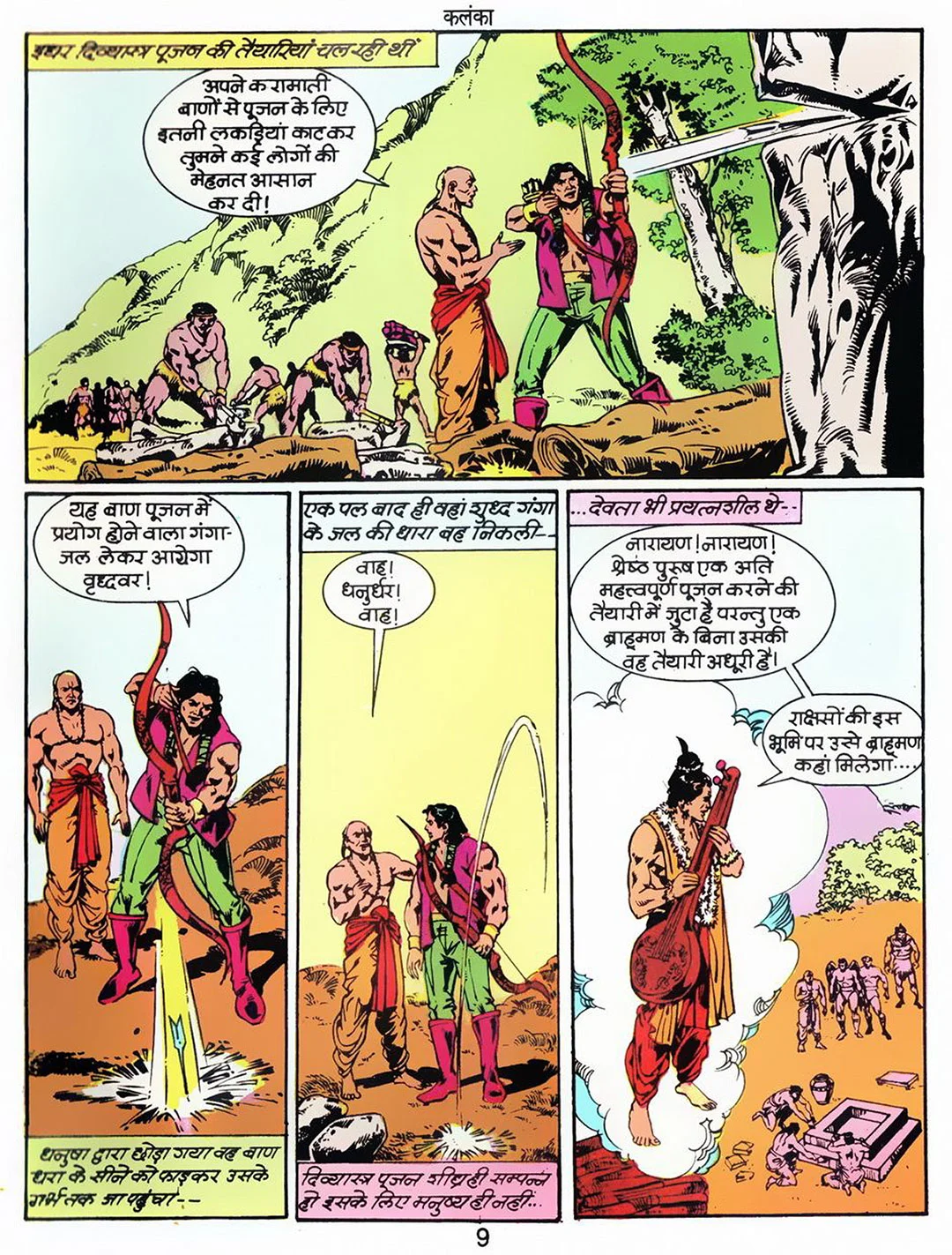
While Sanjay Gupta has strongly mixed mythology and drama in the story, Kadam Studio has made it unforgettable with its powerful, vibrant illustrations. This special issue starts from the exact turn where the previous story ended—Bhokal destroyed the Rudhir Yagya, but now he has to face the fierce form of Kalankini himself, who has become almost invincible due to the blessings of the gods.
Portraiture and art style: movement and grandeur
Kadam Studio’s drawing is the most tremendous strength of ‘Kalanka’. Every panel in the comics has so much energy and momentum that the reader feels as if he is standing in the middle of the action.
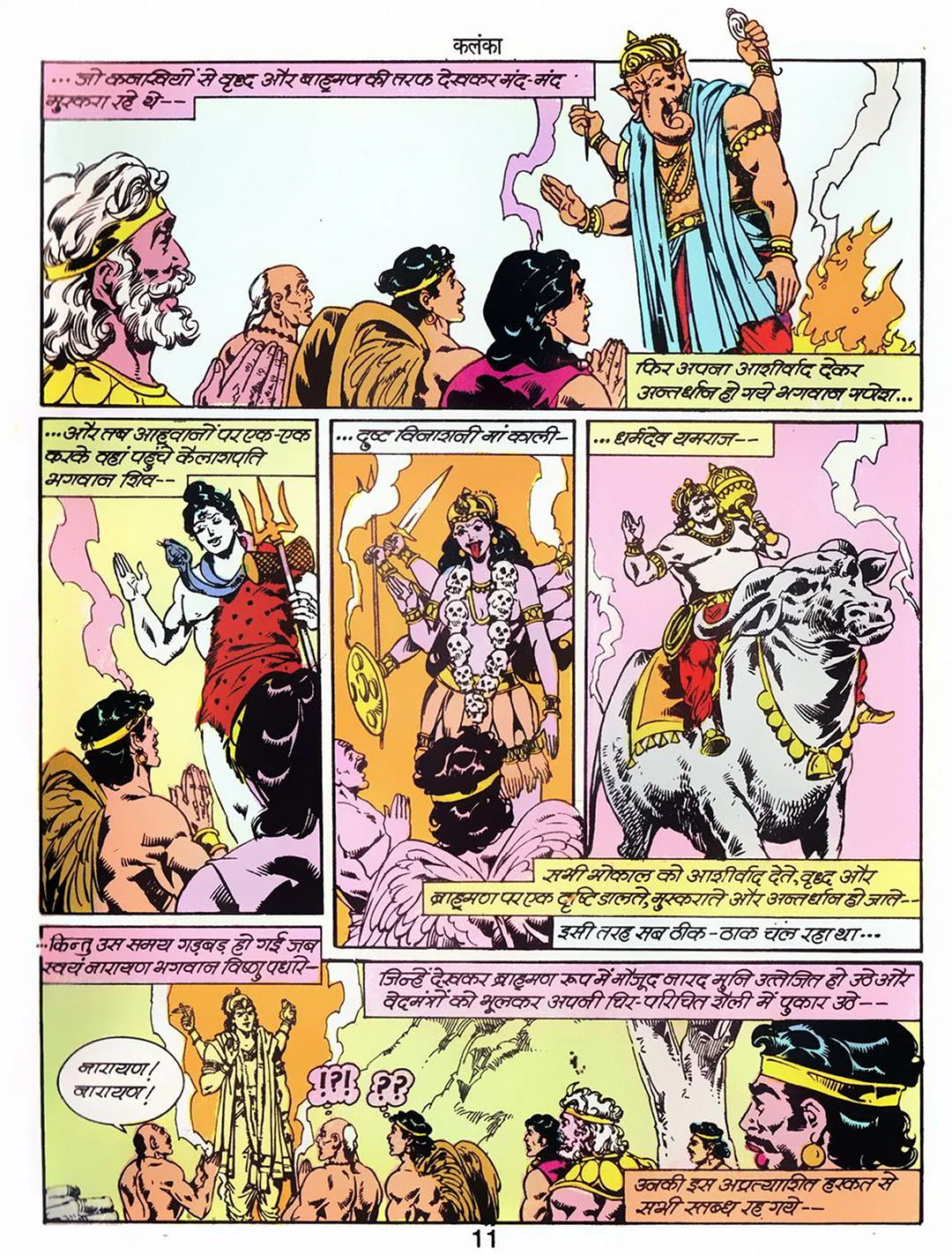
Creation of atmosphere: The use of dark and dramatic colors in the scenes of the Kalratri festival makes the scary and merciless atmosphere of Kalanka city very effective. The moment of Kalankini’s appearance, the breaking of her huge statue, and her destructive incarnation—the depiction of all this is so powerful that both grandeur and terror are felt.
Portrayal of characters: The strong and well-built forms of Bhokal, Dhanusha, and Atikrur show their explosive power. Kalankini’s fierce, multi-armed form and deadly weapons like her Nagachakra make her such an invincible villain that it seems almost impossible to defeat.
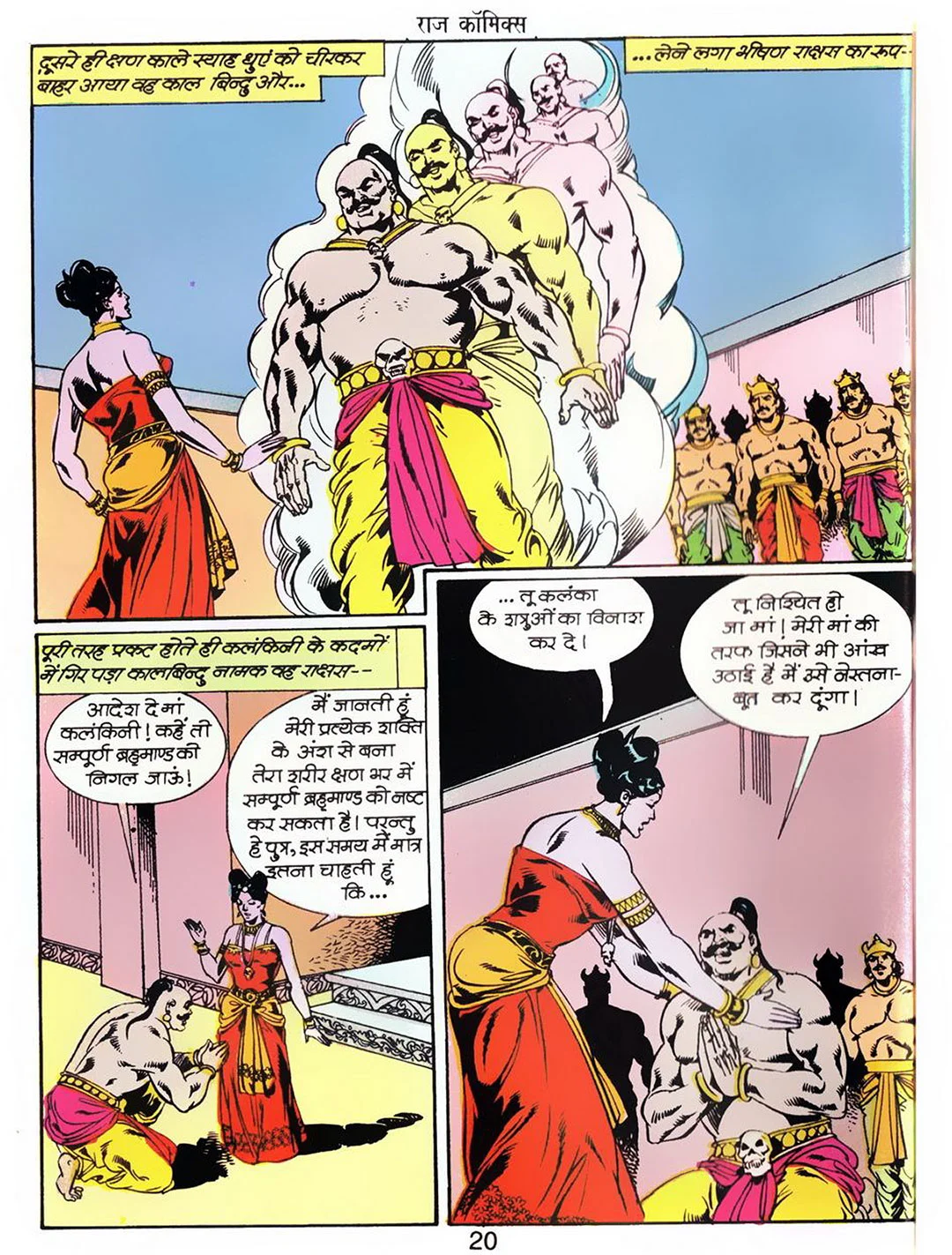
Illustration of the action: The deadly clash for the nail between Atikrur and ‘Pathrila’; the dangerous conflict between Bhokal and Kalbindu; and finally the tremendous clash of weapons between Bhokal, Dhanusha, and Kalankini— all of these show the pinnacle of visual art. ‘Dantak’ strike, ‘Kalbindu’ shrink, and finally the arrow released by Bhokal with the help of ‘Vidyutastra’, which directly sinks into Kalankini’s chest— all these moments with ‘Bhadak’, ‘Mule’, ‘Sanay’ sound effects have made it more lively.
In-depth analysis of the story: deception, sacrifice and strategy
The story of ‘Kalanka’ is made up of several layers, where the real test is not just of strength, but of mind, strategy, and sacrifice.

Challenge of commitment and divine worship:
Kalankini directly avoids the war due to the ‘word’ given by her and warns Bhokal to leave Kalanka by giving him two hours’ time. This time frame creates a sense of instant tension and quickness in the story. Meanwhile, Hanuman in his old form (who here symbolizes knowledge, experience, and strategy) asks Bhokal to accept this challenge and follow a complex plan for the destruction of Kalanka— worshiping Divyastra and removing the four nails buried in the foundation of Kalanka, in which the life force of Kalankini resides.
The scene of Divyastra puja is a magnificent, mythological, and grand moment of this entire issue. Here Ganesha, Shiva, Kali, Yamraj, and even Vishnu come to bless Bhokal. Narada Muni’s arrival as a Brahmin and an attempt to hide Hanuman’s divinity from Bhokal— but still not being able to hide it—adds a little funny drama to the story.
Self-sacrifice of Atikrur and the distress of ‘Kalbindu’:
At the behest of Bhokal, Atikrur sets out on a mission to rescue the four prana-kilas that were planted in the foundation of Kalanka. This part takes his character to its pinnacle. After defeating a heavy-handed guard like Pathrila, Kalankini’s terrible power falls on him as Atikrur pulls out the last nail. His last moments—when he tosses all four nails into the air despite being on the verge of death—make him not just a powerful warrior, but a real hero who makes selfless sacrifices. His death leaves a deep emotional impact on both Bhokal and Dhanusha.

Outside, the appearance of ‘Kalbindu’ (a black dot that swallows everything around it) adds a different kind of distress to the story. Weapons like Bhokal’s ordinary arrow and ‘Prahar’ have no effect on it. That’s where Bhokal’s confidence— that his chest itself is as hard as a thunderbolt— breaks, and he almost reaches the brink of defeat.
Hanuman’s secret strategy in the form of old age:
The strongest, heart-touching, and strategic center of the story is the old Hanuman. He helps Bhokal in a subtle form at every opportunity, keeping him unaware of his true power— so that all credit for the victory goes to Bhokal and not to him.
Protection from Kalbindu: When Bhokal starts losing to Kalbindu, Hanuman invisibly infuses the power of ‘Vidyutastra’ into the ordinary arrow, destroying Kalbindu.
Fighting the thunderbolt: Later, when Kalankini invokes Indra’s thunderbolt, Hanuman secretly replaces the arrow of Bhokal with the thunderbolt. This also saves Bhokal’s reputation and he also survives the war.
Final blow: Most importantly— Hanuman fills the four nails thrown by Atikrur in a subtle form into the hollow arrows to which Kalankini’s life is attached. This move ensures Bhokal’s victory in the end.

Hanuman does all this so that the victory of the battle remains in the name of Bhokal, and the glory of a mighty hero remains— this is his selfless and extremely emotional sacrifice.
Final judgment and moral victory:
The final war between Bhokal and Kalankini is not just a real clash of arms but of intentions and courage. As soon as Bhokal shoots the arrow filled with ‘life-kilas’ into Kalankini’s chest, the queen of Kalanka collapses. Just before she dies, she makes her last wish to Bhokal like a hero, that he should give life again to Dhanusha (who was trapped in Nagachakra) and Atikrur (who was dead) while following the limits of religion. Bhokal fulfills her wish.
This climax is very heart-touching. Kalankini’s last wish re-exposes her motherly side and the emotional depth she has inside. She may lose the war but in the end wins morally, showing a big heart, as she gets Bhokal to bring back the lives of her ‘nati’ and her partner. On the other hand, Hanuman, who was the real creator of the entire strategy, becomes invisible, smiling at this slight ‘snob’ victory of Bhokal. He knows that his devotee has finally fulfilled the greatest religion— the religion of selflessness, compassion, and keeping the word.
Development and emotional conflict of central characters
Vridha/Hanuman (The Strategy God): Hanuman’s role is very special in this entire saga. Despite having such great power he remains bound by the boundaries of ‘promise’ and ‘maya’. His entire focus remains on taking Bhokal towards victory in every situation without revealing his true divinity. His coming in subtle form and helping shows his selfless devotion and Guru-Shishya tradition very beautifully.
Bhokal (The Humbled Hero): Bhokal’s journey here is between ego and truth. His thunderbolt-like chest’s pride is shattered in front of Kalbindu. Only then does he understand that being Mahabali is not only about the strength of the body, but also about taking the right decisions and following religion. The victories achieved with the secret help of Hanuman make him realize that the real hero is the one who does the right thing at the right time.
Atikrur (The Ultimate Success): Atikrur’s self-abandonment is the emotional heart of this story. Despite being born in a demonic family, his karma, his loyalty, and his selfless spirit prove to be completely divine. His ultimate sacrifice makes him the greatest hero of this saga.
Kalankini (The Complex Antagonist): Kalankini is the most interesting and multi-layered villainess in this story. On one side is her cruelty, immense power, and arrogance, while on the other side is her love for her ‘nati’ and her honesty towards her ‘word’. These contradictions make her character memorable and deeply impactful.
Conclusion: A classic work of Raj Comics
The ‘Kalanka’ special issue is a brilliant and memorable work of the golden era of Raj Comics. While author Sanjay Gupta has made powerful use of mythological elements like ‘Kalratri’, ‘Divyastra Pujan’, ‘Vajr’ and ‘Vardan’, emotional turns like ‘Atikrur ka Tyag’ and ‘Kalankini’s Last Wish’ have made the story human and heart-touching.
This comics doesn’t just show a decisive battle, but also shows that real power lies not just in weapons or force, but in the right strategy, sacrifice, and big heart. The end of Kalanka symbolizes not just the victory of Bhokal, but the establishment of compassion and religion. The stunning illustrations and tightly woven story make it one of the special issues that Indian comics history will never forget.
