


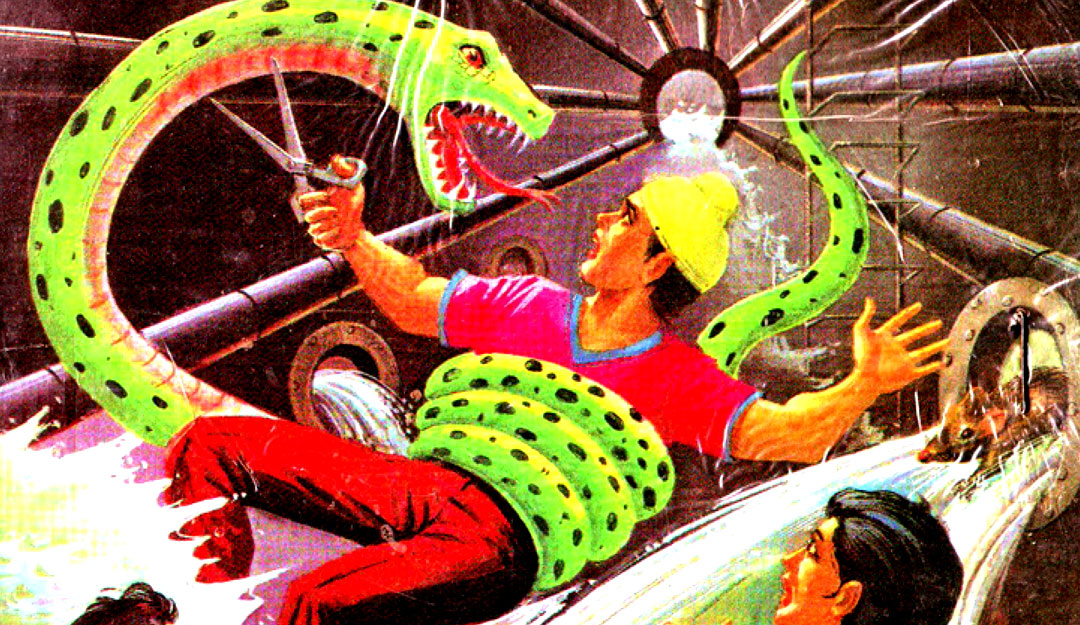
“Killer Gutter” is a direct sequel to King Comics’ previous superhit comic, “Gutter.” While the previous story featured five brave friends—Prateek, Afsana, Johnny, Rustam, and Harjeet—battling dangerous rats and an octopus hidden in a sewer, this story takes that fight to an even more dangerous and terrifying level.
This comic is not just a thriller; it also showcases the deep friendship, mutual trust, and courage of the children in the face of adversity. The cover page depicts the children struggling with a giant snake in the murky water, clearly indicating that the dangers inside are far greater and more terrifying than before.
A Struggle at the Brink of Death
The story begins exactly where the previous comic ended. After narrowly escaping the octopus, the five friends—Prateek, Afsana, Johnny, Rustam, and Harjeet—flee in different directions through the dark and winding tunnels of the sewer to save their lives.

During the chase, Afsana gets separated from her friends. The pitch darkness and silence all around intensify her fear. She frantically calls out to her friends. After a while, all the friends manage to reunite. Prateek, who always thinks wisely, tells everyone to remain calm. But then, suddenly, Johnny’s loud scream is heard. Johnny finds himself in a terrible predicament. He is being pulled towards a giant exhaust fan by the strong current of the sewer. If he were to hit the rotating fan, his survival would be impossible. This scene is extremely tense.
The other four friends rush to save him without wasting any time. They take off their shirts and clothes, tie them together, and make a long rope. This moment showcases the children’s quick thinking and excellent teamwork. They throw the rope towards Johnny and pull him with all their might, rescuing him from the brink of death.
Meanwhile, the story also unfolds in the outside world. The children’s parents report their disappearance at the police station. Inspector Vivek Sinha immediately understands the gravity of the situation. He learns that the city is at risk of flooding and that the river water is soon to be released into the sewers, which will cause the water level in the sewers to rise even further. This news multiplies the danger to the children’s lives.
Considering the circumstances, Inspector Vivek decides to descend into the sewers with a rescue team without delay.
The Army of Rats and the Grate:
Inside the sewer, the children once again face the ferocious, flesh-eating rats. The rats slowly surround them. Suddenly, Afsana spots an iron grate. All the children work together to push the grate down with all their might, creating a strong barrier between themselves and the rats. In this way, they narrowly escape the rat attack once again.

The Snake Attack:
But the dangers don’t end there. Suddenly, a giant cobra attacks Harjeet in the dirty water. The snake coils around Harjeet. It is about to bite him when Harjeet finds a sharp tool or scissor-like weapon floating in the water, which was perhaps already there. Harjeet strikes the snake with the weapon and frees himself from its grip.
The Octopus Returns:
The biggest shock comes when the same giant octopus—which the children had thought was dead—suddenly attacks again. It tightly grips Rustam in its long tentacles. The other children try their best to free Rustam.
At the same time, Inspector Vivek and his rescue team arrive. The police officers fire continuously at the octopus, but the bullets have little effect on its thick, tough skin.
Climax:

Now the situation becomes completely uncontrollable. The water level in the sewer starts rising very rapidly. Inspector Vivek suddenly thinks of a grenade or some explosive device. He throws a grenade (or some heavy explosive object, as it’s not entirely clear in the illustrations, but there is a powerful explosion) towards the octopus. After this explosion, the octopus is either killed or flees from the scene. Finally, the police team safely rescues all the children using the manhole ladder. As soon as they are out, the parents hug their children. The story ends on a relieved and happy note.
Character Analysis
The Five Friends:
In this comic, each child gets a full opportunity to showcase their bravery and intelligence.
- Johnny: He gets into the most trouble, but he doesn’t give up.
- Prateek: By suggesting the idea of making a rope out of clothes, he proves that he is a natural leader.
- Afsana: She is credited with dropping the iron grate to stop the rats. She is fearless and intelligent.
- Harjeet: He shows his bravery by confronting the snake.
- Rustam: Even after being caught by the octopus, he doesn’t give up.
Inspector Vivek Sinha:
He is a responsible and sensitive police officer. He doesn’t just sit in the police station writing reports; instead, he himself goes down into the sewer to save the children’s lives. His character brings to light the humane and dutiful side of the police.

Villains (Creatures):
The creatures living inside the sewer—the rats, the snake, and the octopus—are the real villains of this story. They seem no less dangerous than any supervillain. The octopus’s repeated return makes it almost seem like an ‘immortal’ monster.
Artwork and Visualization:
Pradeep Soni’s illustrations greatly enhance the thrill of the story. The scene with the exhaust fan, where Johnny is pulled towards the fan, and the surging waves of water, creates a very frightening and realistic feeling. Creatures like snakes and octopuses are depicted in a very terrifying manner. The detailed rendering of the octopus’s eyes and suction cups, in particular, showcases the artist’s hard work and skill.
The use of yellow, green, and blue colors in the scenes inside the gutter brings to life a toxic and dark atmosphere, sending shivers down the reader’s spine. The expressions of fear, panic, and eventual relief on the children’s faces, along with the parents’ anxiety, are depicted so clearly that the reader connects emotionally with the story.
Social and Psychological Aspects:
“The Killer Gutter” is not just a fictional story, but also contains important life lessons and social awareness. This story highlights the importance of disaster management, where improvisations like making a rope out of clothes show how lives can be saved through resourcefulness and innovative thinking in difficult times.

Furthermore, this story also demonstrates the power of friendship, where the children do not abandon each other even at the risk of their own lives. In terms of the role of the administration, it presents an example of a vigilant and responsible police system that takes timely action to avert a major tragedy. Finally, this comic serves as a warning for both children and parents about how dangerous carelessness towards unknown and unsafe places can be.
Critical Review:
Positives:
The pace of the story never slows down. As soon as one danger ends, another immediately appears. The previous comic, “Gutter,” had an incomplete ending, but “The Killer Gutter” brings the story to a logical and satisfying conclusion. The children don’t have any superpowers; they fight using their intelligence and courage, which makes the story more believable.
Negatives:
The scenes involving the snake biting and the octopus being blown up might seem somewhat violent. The presence of such massive creatures—a cobra and an octopus—in the same gutter seems a bit far-fetched, but this can be overlooked in the adventure genre.
Conclusion:
“Killer Gutter” is a fantastic survival thriller comic. It’s one of those rare comics from the 90s that kept readers hooked until the very end, even without any superheroes. Hanif Azhar’s story and Pradeep Soni’s artwork have made it a memorable experience.
This comic teaches children about teamwork, patience, and problem-solving skills. Back then, for just 7 rupees, it was a complete entertainment package.
If you enjoy thrilling stories and want to see how five ordinary children overcome extremely dangerous situations, then “Killer Gutter” is truly a must-read for you.
Rating: 4.5/5
(For an excellent sequel, continuous thrills, and a positive message)
