


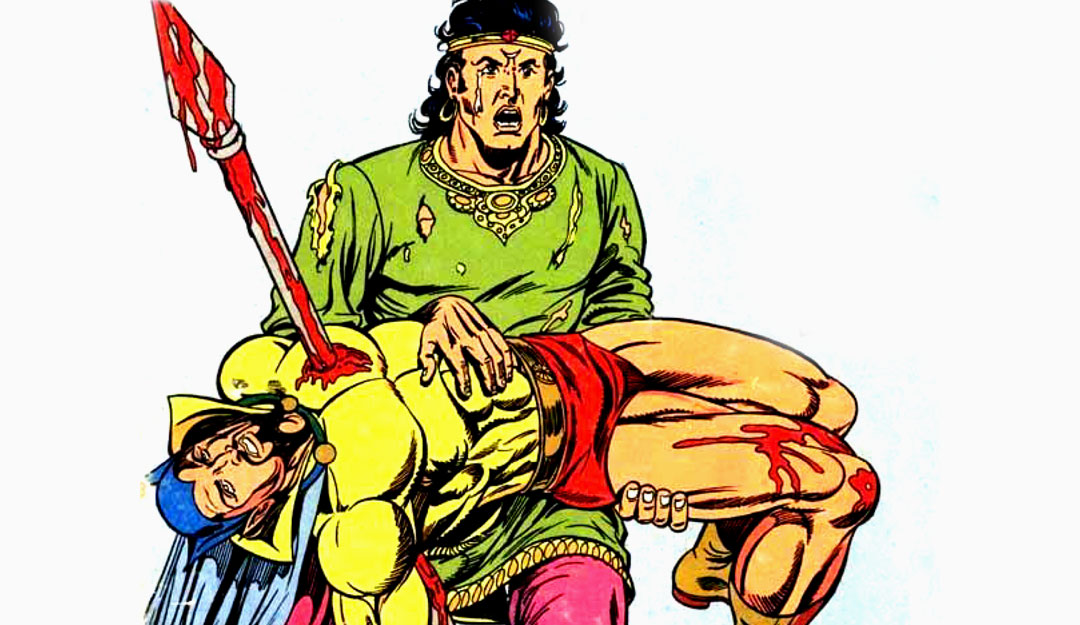
In the time of the 90s, ‘Bhokal’ emerged as a character that distinguished itself through a combination of fencing, heroism, and supernatural powers. ‘Mar Gaya Shutan’ (issue number 755) is a highly important and emotional story of the Bhokal series. This comic does not just show the bravery of a warrior, but also brings out layers of friendship, revenge, and deep sorrow. This story, written by Sanjay Gupta and illustrated by Kadam Studio, was published in 1997 during the ‘double action era’, and is still considered a ‘cult classic’ among fans today.
Plot elaboration and analysis:
The story begins with a very heartbreaking scene. Bhokal’s closest friend ‘Shutan’ (who is the emperor of hypnosis) falls into the trap of cheetah-humans. The cheetah-men knew that Shutan’s eyes had tremendous hypnotic power, so they used a thick skin bag to neutralize his hypnosis. After this, they kill him very brutally.
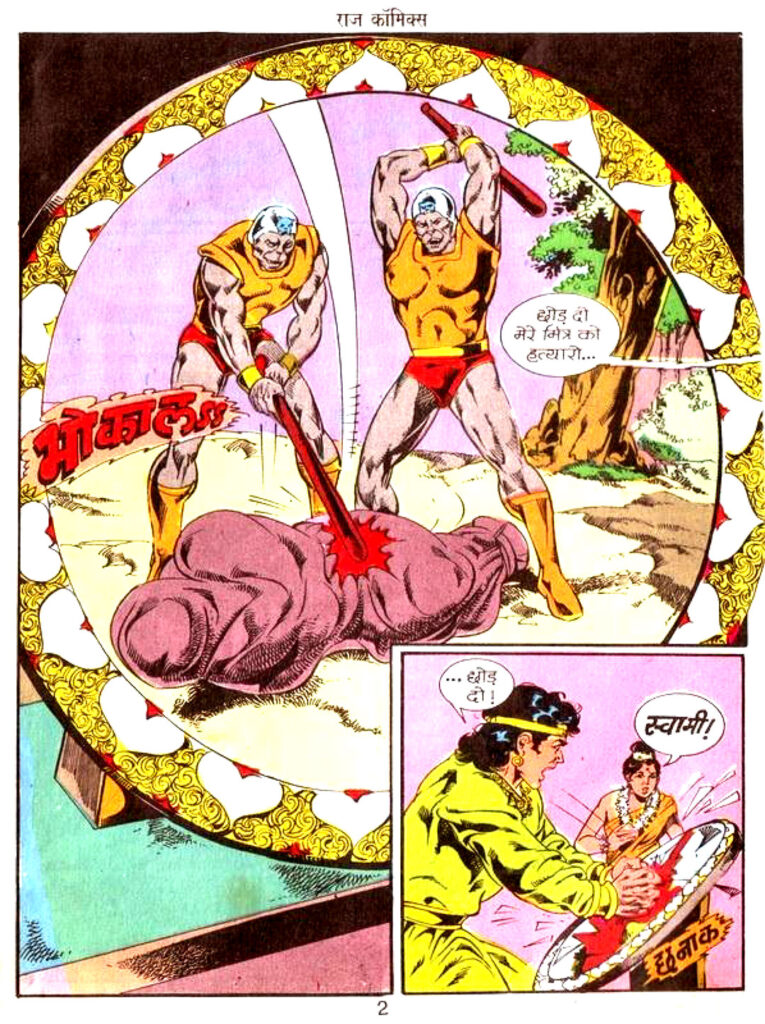
When the news of this incident reaches Mahabali Bhokal in Vikas Nagar, he is completely devastated. Here, writer Sanjay Gupta has shown the human aspect of Bhokal very well. Bhokal, who easily defeats big monsters and warriors, is mentally shattered by the news of his friend’s death. During practice, he loses control in front of his guru and his companions and starts attacking them. The fire of revenge is burning so brightly in his heart and mind that he sees only the end of Shutan’s murderers.
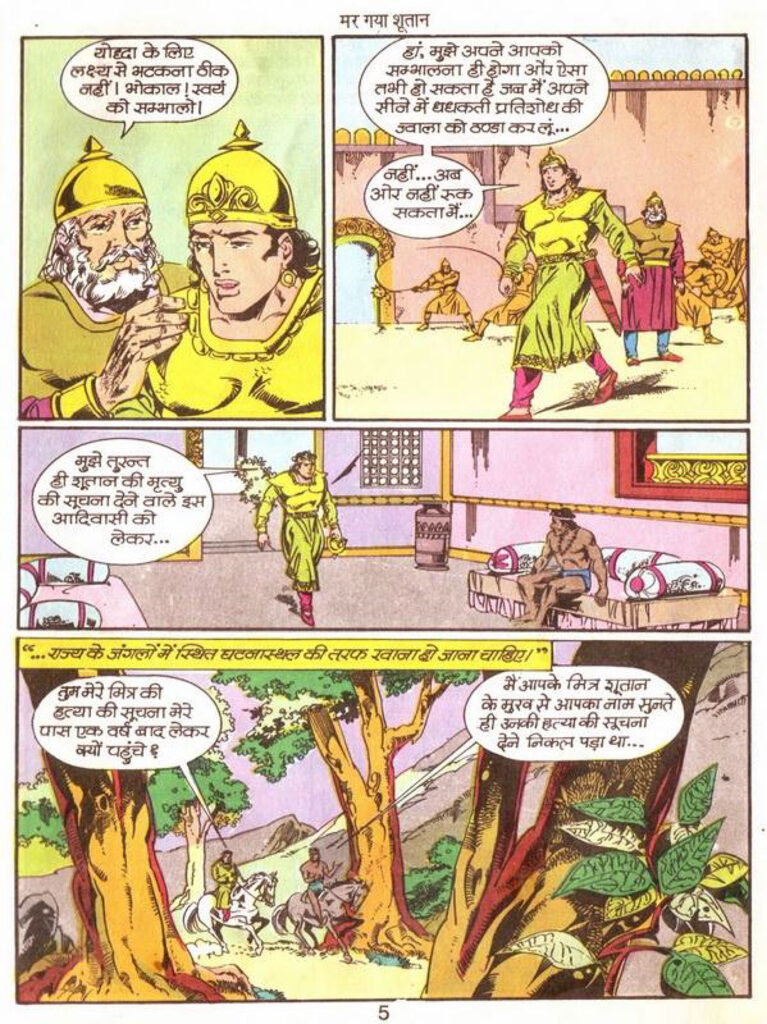
The story takes a major turn when a tribal messenger tells Bhokal that the incident is a year old. He himself was injured, so he could not reach Bhokal on time. On hearing this, Bhokal, without any delay, sets out towards the place where Shutan was murdered. During this time, Bhokal’s investigative thinking and his concern for his family (Toorin, Venu, Ladaki, and Nandha Bhokal) are also clearly visible. He reaches the cottage where he once stayed, but there he finds only silence and nostalgia.
Cheetah-city and the thrill of war:
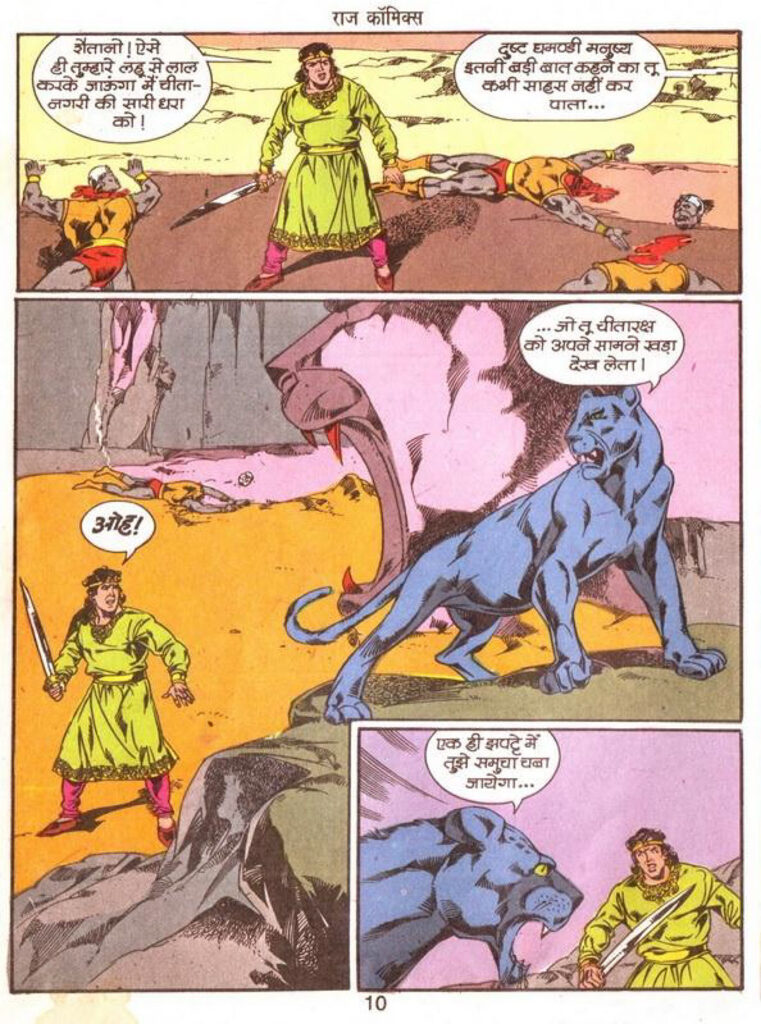
The second part of the comic is full of spectacular but scary scenes of ‘cheetah-nagari’ and tremendous combat. This city, situated on high mountains, is the stronghold of man-eating leopards and humans. Bhokal’s arrival there and defeating the guards one by one fills the readers with excitement. Here is one of the most powerful action scenes in the story—Bhokal’s encounter with a giant blue leopard named ‘Cheetaraksha’. When Bhokal’s sword fails to cut his neck, he uses his strength and wisdom to defeat the demon.
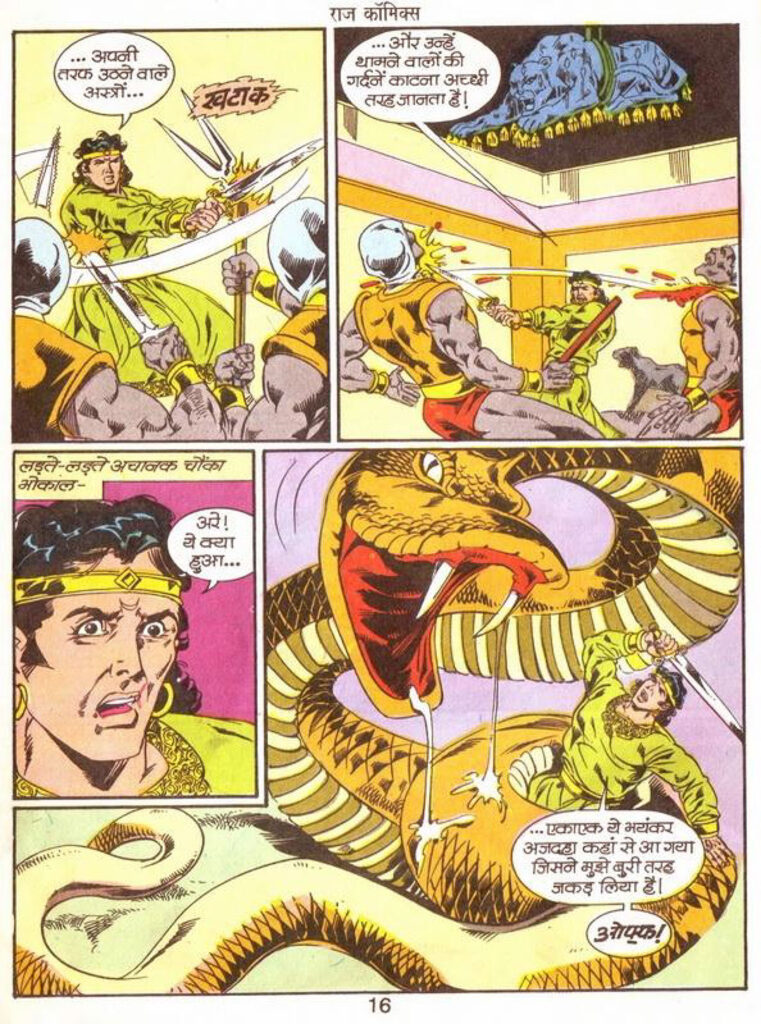
Bhokal has to face many illusory dangers inside the city. Cheetah-humans were not only powerful, but also adept at hypnosis and creating confusion. Bhokal’s illusion of being held by a giant dragon and then breaking out of it with his strong will proves that Bhokal fights not just with weapons, but also with the mind.
Climax and emotional ending:
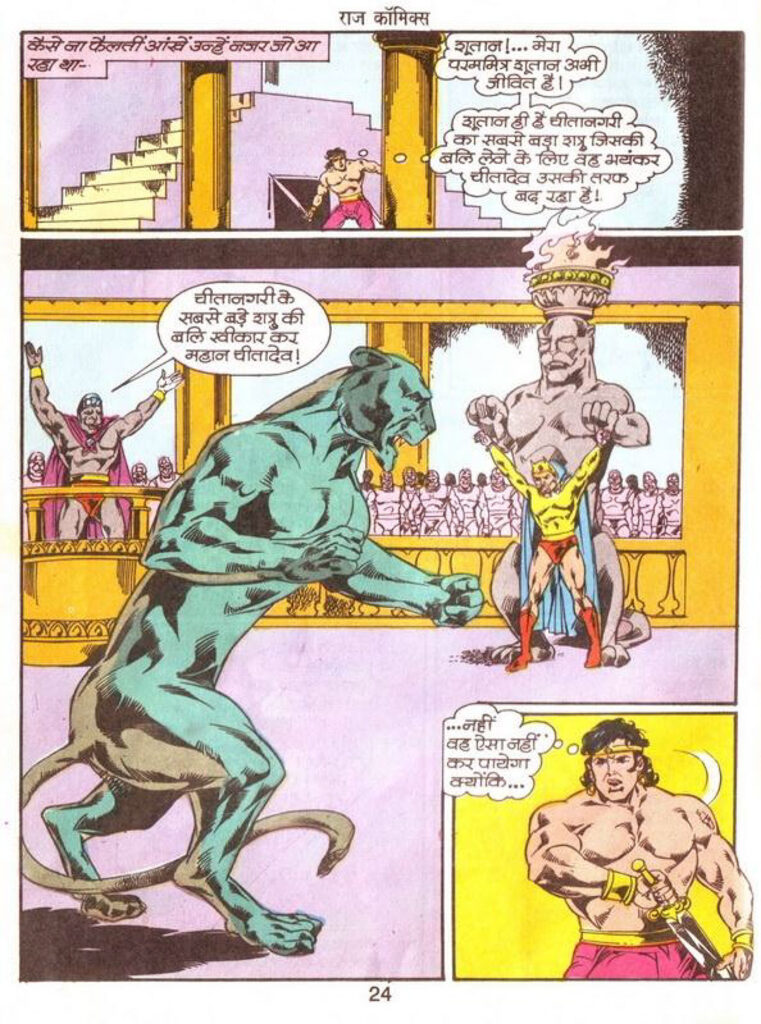
The climax of the story comes in the temple of Cheetah-deva. Here, Bhokal is surprised to see that Shutan is still alive, but he has been tied up for sacrifice. The Cheetah-deva, a giant stone statue-like figure, wakes up and grows to attack Shutan. The war between Bhokal and this demon is very grand and memorable. When common attacks prove useless, Bhokal drops the burning fire-pit on the demon, causing the entire temple to catch fire.
What happens in the last pages makes any reader’s eyes moist. Shutan, who is counting his last breaths due to terrible torture, uses his remaining hypnotic power not to save himself, but to save Bhokal from the cheetah-humans who surround him. He dies in Bhokal’s lap. In the final scene, Bhokal sees a divine vision, where his sister Toorin (who was already dead) is seen taking Shutan with her. Bhokal’s screaming and calling out to his sister and friend gives a very emotional ending to the story.
Portrayal and art side:
Kadam Studio’s work appears to be at its peak in this comic. The special identity that Raj Comics of the 90s had is fully visible here. The design of cheetahs and humans, their body structure, and the cruelty reflected on their faces are very effective. Bhokal’s bulging muscles and facial expressions during the fight—anger, pain, and determination—everything seems very lively.
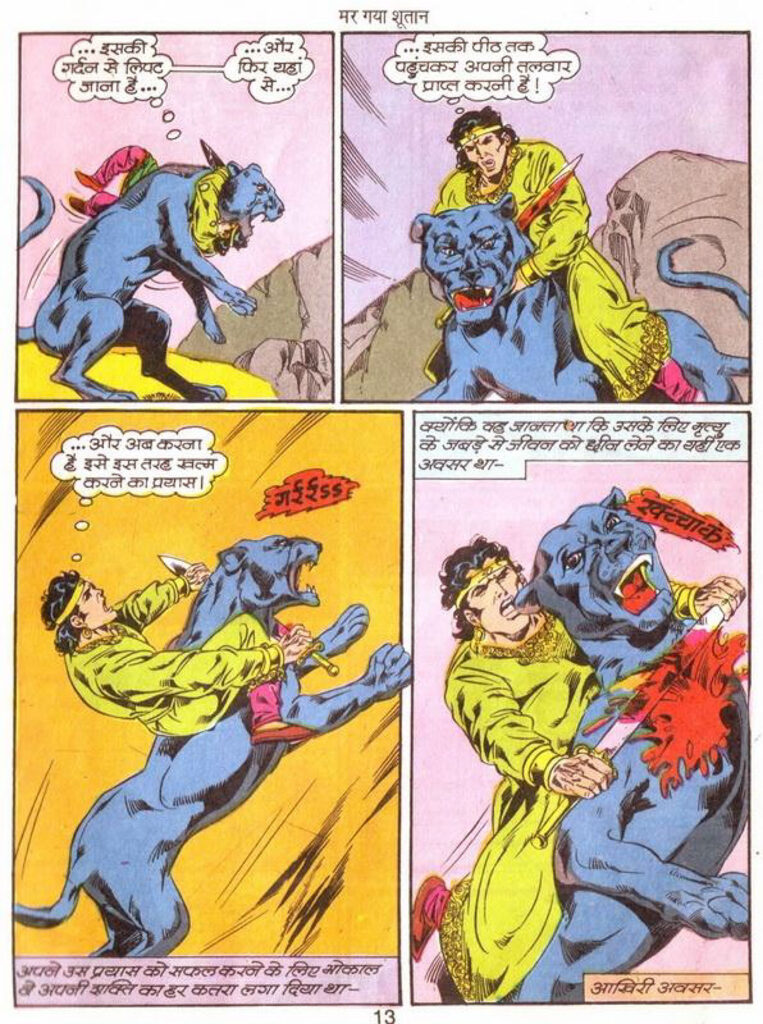
The choice of colors is also fantastic. In cheetah-city scenes, yellow and orange colors make one feel the hot and dry atmosphere, while in war scenes, excessive use of red color deepens the feeling of violence and revenge. The page layout is such that every panel carries new momentum and energy.
Character illustration
Bhokal: In this issue, Bhokal comes across more as a sad friend than a superhero. His weakness is his emotions, but these same emotions also give him the strength to do impossible things.
Shutan: Shutan may have a tragic end, but his friendship becomes an example. Even while dying, instead of saving himself, he uses his power to protect Bhokal.
Villains (cheetah-humans): They are shown not just as ordinary enemies, but as an organized and ruthless civilization, which makes them even scarier.
Critical Comment:
‘Dead Shutan’ is not just a fight story. It is based on the psychology of loss, i.e., the pain of losing loved ones. It shows that no matter how great a warrior one is, he cannot escape the pain of losing those close to him. The pace of the story is fast, and one does not feel bored anywhere. The dialogues are short, but they directly touch the heart.
Yes, some readers may feel that a powerful character like Shutan should not have ended so soon, but the specialty of Raj Comics has been that they used to take bold and courageous decisions in their stories. Shutan’s death left a void in Bhokal’s life that made further stories more serious and profound.
Conclusion:
Overall, ‘Dead Shutan’ is a shining gem in the crown of Raj Comics. It is reminiscent of a time when comics were not just timepass, but a whole sea of emotions. If you are a fan of Bhokal, then this issue must be in your collection. This is a story of bravery and sacrifice that keeps resonating in the mind for a long time even after it is over.
Rating: 4.5/5 (for story, art, and emotional impact)
This review proves why Bhokal is still a ‘legend’ in the hearts of Indian readers. ‘Died Shutan’ is an extremely dark, but equally important chapter in that legend’s journey.
