


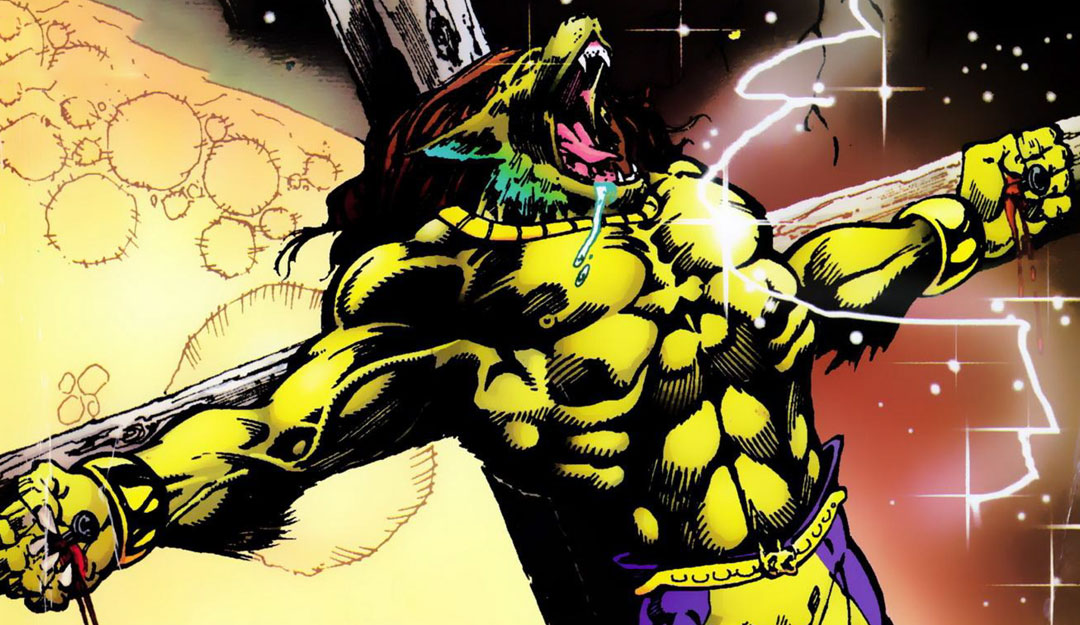
Whenever it comes to touching on serious, emotional and deep philosophical topics in the world of Indian comics, the name of writer Tarunkumar Wahi comes to mind first. And when it comes to bringing that deep story to canvas with his unique and dynamic paintings, Dheeraj Verma has no equal. “Saleeb” is such a gem of these two giants, which leaves an indelible mark on the hearts and minds of the fans of “Kobi Aur Bhediya”.
This is not a common comic, where a superhero is fighting an outside villain. This is the story of fighting destiny, of fighting one’s own existence, and of stopping the cataclysm, the source of which lies within the hero’s own self. This is the story of the cross, which not only the wolf and Kobi but also the reader has to bear emotionally.
The comic starts with a terrible prophecy. Every five thousand years, a comet passes through the universe, whose energy is destructive for “wolf-humans”. This energy will make the wolf and Kobi cataclysmically violent and destructive, causing them to wreak havoc throughout the forest. There is only one cruel way to avoid this great destruction — to crucify both of them with “rare wood”.
Analysis of plot and story
The plot of “Saleeb” does not follow a straight line, but it goes through many twists and turns of emotions, duality and strategies.
Jane’s decisive intervention
On the very first page of the story, we see that Fujo Baba is preparing to crucify the wolf with trembling hands. The wolf is mentally prepared for his sacrifice. Then Jane gets there and stops them. Here Tarun Wahi has presented Jane’s character as a ‘strategist’ instead of a ‘damsel in distress’.

Jane makes an argument that blows the wolf and Fujo Baba’s senses. She says — “If you crucify the wolf, then what other force is there in the forest that will control a mighty and ferocious creature like Kobi and bring him to this cross?”
This was a turning point that changed the entire direction of the story. Everyone realizes their mistake. It is decided that Kobi will have to be caught first. He must first be crucified, and only the wolf can do this.
Plan to tire Mahabali Kobi
The problem now was that it was almost impossible to beat Kobi in a straight fight, especially when time was short. Jane then cites the example of a hunter — “The hunter does not fight the lion to catch it alive, but makes it exhausted by keeping it hungry and thirsty for several days.”
This is where the most exciting and detailed part of the comic begins. Wolf, Jane and Fujo Baba together involve the entire forest in this plan. Their aim is to make Kobi tired and breathless.
- The “Baju” elephant provokes Kobi by throwing mud. An angry Kobi runs after him.
- A herd of deer blocks his path ahead.
- A giant dragon then attacks him.
- Rhinos, an army of ants, porcupine quills — every creature in the forest gets into disturbing Kobi, distracting him and tiring him.
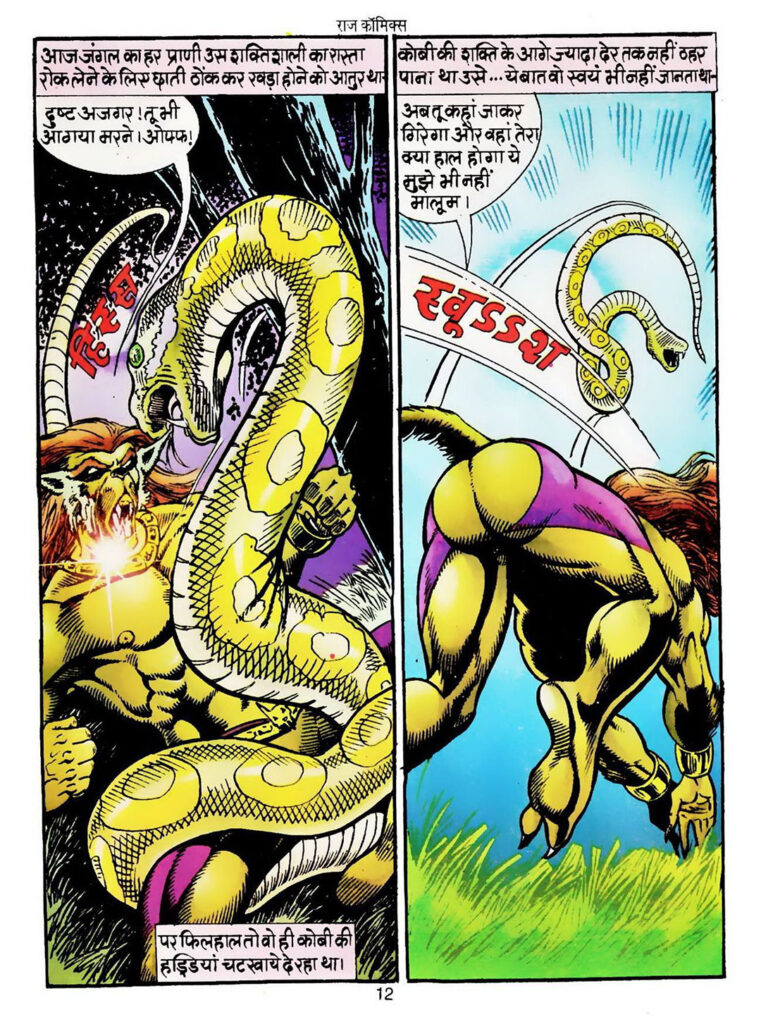
This entire sequence is the culmination of Dheeraj Verma’s portrayal. Action, speed and Kobi’s growing anger are clearly visible on every page. Tarun Wahi plays with the psychology of Kobi here. Kobi cannot understand why his own forest, of which he considers himself king, has turned against him. His ego makes him even more tired.
Confrontation and cruel destiny
When Kobi is almost exhausted, the wolf appears in front of him. Despite being tired, competing with Kobi is not easy. There is a fierce fight between the two. The wolf’s wolf-army also attacks Kobi, which seems like a deception to Kobi. Eventually, the wolf manages to overpower Kobi.
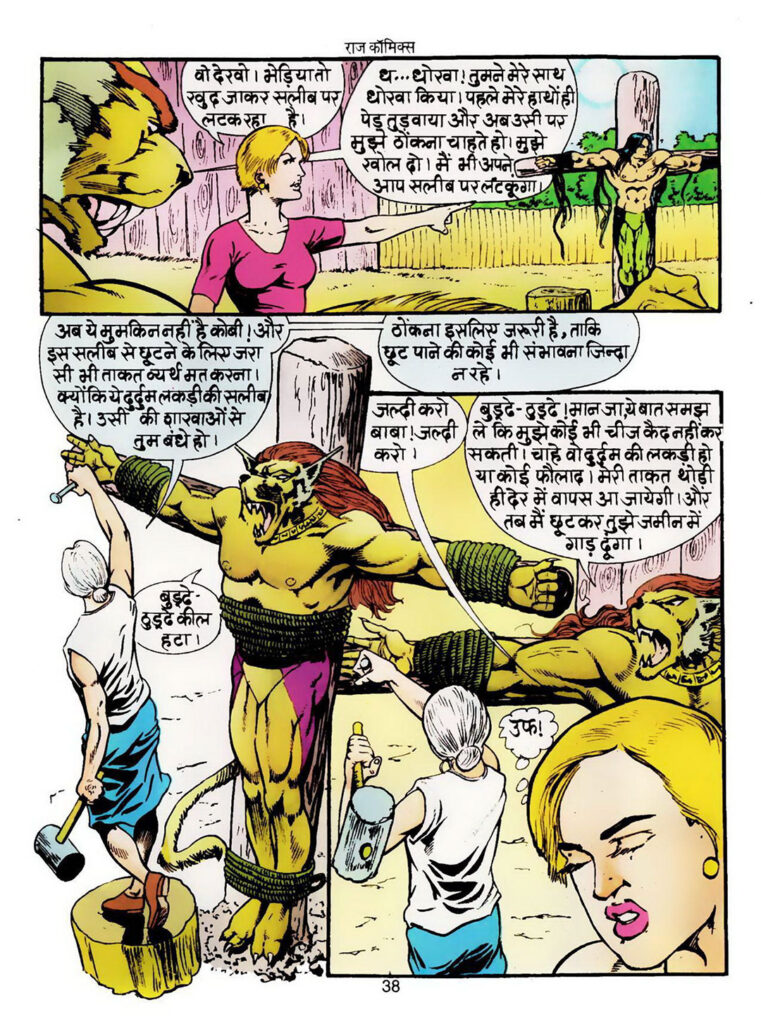
This is followed by the most moving and frightening part of the comic. Kobi is crucified. He screams in anger, betrayal, and anguish. He threatens Jane and Fujo Baba.
That’s when Jane tells him the whole truth — about the tail star, about the cataclysm, and that they are not killing him, but saving both him and the wolf. The wolf himself announces his hanging on the other cross.
Fujo Baba starts hitting nails into Kobi’s hands with trembling hands. Kobi’s painful screams, Jane’s tears, and the wolf’s helplessness — the scene shocks the reader.
Arrival of the cataclysm and attack by animals
As soon as both of them climb the cross, the tail star comes. “Fire starts raining from the sky.” The forest tribes get scared after seeing this scene. They believe that Fujo Baba has killed their ‘gods’ (wolf and Kobi). They angrily attack Fujo and Jane.
Another twist comes in the story. The earth bursts open and giant demons named “Yumantu” emerge from it. These demons were the real danger. They start killing the tribesmen.
Final battle and liberation
The wolf and Kobi have also become violent due to the influence of the tail star, but seeing their people in danger, their anger turns towards those demons. They break their crosses and become free.
The climax of the comic starts from here. The crucified, nailed, bleeding wolf and Kobi, with their destructive power, attack those demons. This was not war, it was genocide. The ferocious way in which Dheeraj Verma has portrayed this fight is amazing. The fierce form of the wolf and Kobi is worth seeing.
Finally, with the first ray of the Sun, the tail star ceases to have an effect. Yumantu is killed. The wolf and Kobi return to their calm selves. The forest is saved.
Characterization
Wolf: This story takes the ‘protector’ form of the wolf to its peak. Not only is he willing to be crucified to save the forest, but he also goes through the emotional pain of crucifying his own part (Kobi). He presents the ideal of a hero.
Kobi: The real hero of “Saleeb” is Kobi. He is a ‘Tragic Hero’. He is powerful, arrogant, but here he is a victim of destiny. He doesn’t understand why his own people are against him. His anger, his sense of betrayal, his suffering on the cross, and finally his transformation into a protector — this entire journey makes him one of the most complex characters in Raj Comics.
Jane: As stated earlier, Jane is the ‘wisdom’ of this story. Without her strategy everything would have been destroyed. Tarun Wahi has shown her not just as a girlfriend, but an equal companion who balances her intelligence with the wolf’s strength.
Fujo Baba: This character is a symbol of a ‘religious crisis’. A father figure who has to inflict unbearable pain on his own children in order to save them. His trembling hands while hammering the nails are one of the most poignant scenes of the story.
Art and Portraiture
Dheeraj Verma’s powerful and lively portrayal is the real soul of the comics “Murda Baap”. Verma ji has filled the action scenes with energy; whether it’s the battle of Kobi vs. the giant animals of the jungle (elephant, python, rhinoceros), or the duel of Kobi-wolf vs. Yumantu, every panel is full of rapid movement and impact, which shows his unmatched potential.
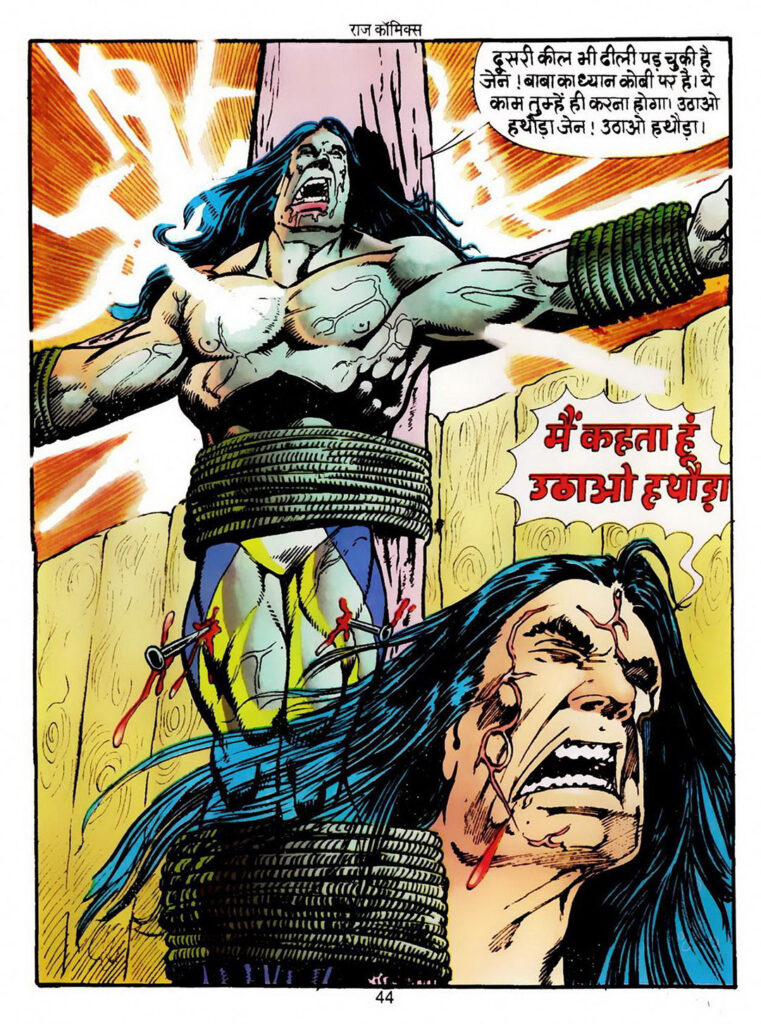
The true life of his art lies in the characters’ expressions. He has brought the emotional scenes of the story incredibly alive. Dheeraj Verma has depicted the unbearable pain of Kobi hanging on the cross, the deep agony overflowing in his eyes, the helplessness of the wolf, Jane’s evident fear, and the mental anguish of Fujo Baba with his brush.
There is a serious ‘grit and darkness’ vibe throughout the story, which perfectly captures the mature plot of the comic. His realistic and profound use of blood, sweat, mud, and night darkness makes the seriousness of the narrative even stronger. At the same time, his deliberate paneling controls the pace of the story; where the action is intense, the panels grow larger, and when Kobi is mentally exhausted, the panels become smaller and disheveled, depicting his mental state impressively.
Writing and Dialogue
Tarun Kumar Wahi’s masterful writing gives the comic “Murda Baap” the proud status of a ‘classic’ in Indian comics history. Wahi ji has woven deep philosophical themes like ‘Sacrifice’, ‘Destiny’, and ‘Resurrection’ into the fabric of a superhero comic with utmost ease and skill.
The second greatest strength of his writing is the excellent ‘pacing’. The plot of the comic doesn’t relax anywhere; from planning to the tactics of tiring the main villain Kobi, and then to the final decisive battle, this pace keeps the reader’s curiosity and interest tied till the end.
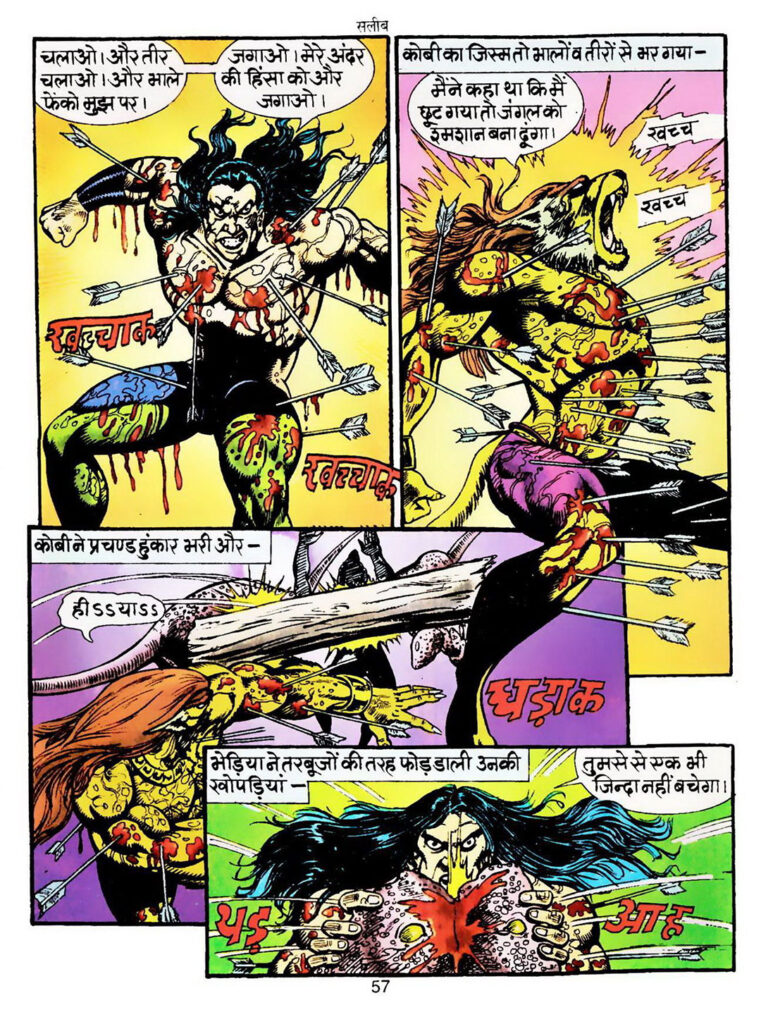
The most important thing is his sharp dialogue. The dialogues are sharp, soulful, and precise to suit the situation, highlighting the inner conflict of every character. Whether it’s Jane’s sensible intervention — like: “If I hadn’t come in time you would have made a huge mistake out of emotion.” — or Kobi’s painful screams, every word of Wahi has its own weight, which multiplies the emotional impact of the story.
Conclusion and Final Decision
“Saleeb” is not just a comic, but an experience. It represents the era of Raj Comics when stories were written not just for entertainment but also to emotionally shock the readers. It is one of the darkest, most violent, and most emotional stories of Kobi and the wolf.
Tarunkumar Wahi’s Ustad lekhni and Dheeraj Verma’s unmatched portrayal make it a “must-read” comic. This story tells that to become a hero one needs not only strength but also the courage to endure unbearable pain and make supreme sacrifice.
My rating: 5/5 (a timeless shahkar)
