



The “Sarpasatra” series had captivated readers from the moment two different universe megastars like Nagraj and Tausi came face to face for the same big crisis. The first three parts of this series, “Sarpasatra,” “Sarpadvandva,” and “Sarpayagya,” build a tall building of mysteries and conspiracies on the strong foundation that “Sarpayuga” had created. This comic is not limited to just tremendous action, but it also has emotions, past wounds, and a global conspiracy that slowly unravels.
Deep analysis of the plot
The story of “Serpent Age” progresses in two parallel streams, which finally meet at a shocking juncture that the reader might not have even expected.
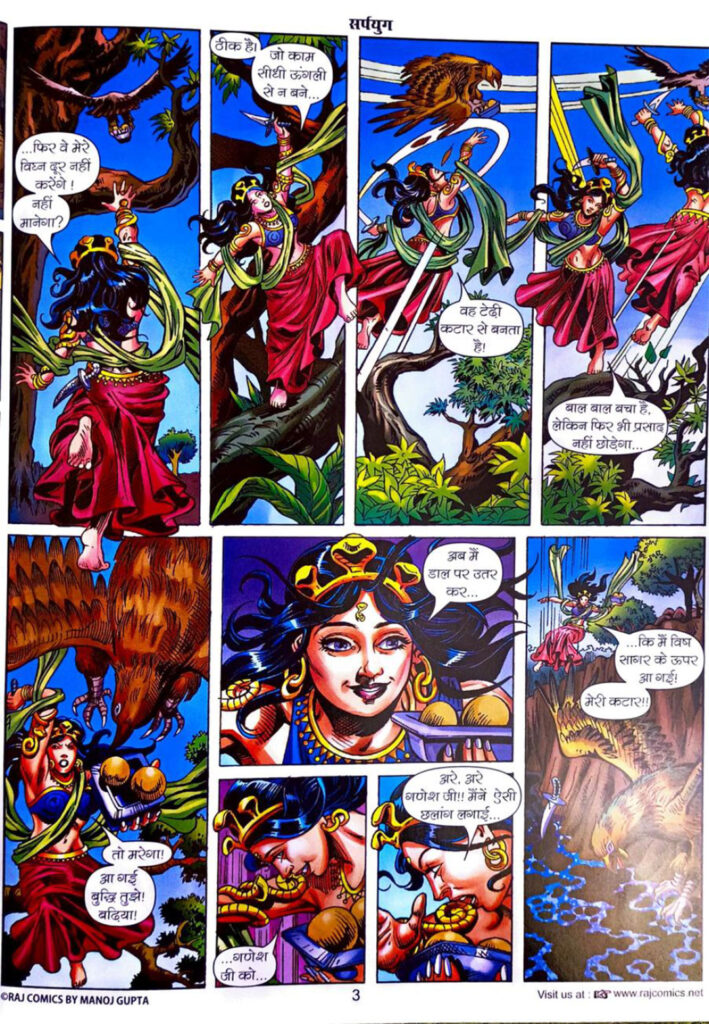
The Secret of the Past
A large part of this comic focuses on the past of Apsara (Shri). Here we see how an innocent girl worships Vighneshwar, i.e., Lord Ganesha, in Nagbaba’s ashram, and there she meets the young Tausi. Anupam Sinha has beautifully shown the delicate and sacred love growing between Tausi and Apsara, which later turns into a terrible tragedy. The evil eye of Prince Jabbar (the main villain), the murder of the nymph’s father Trinadhar, and the false accusation of that murder on Tausi—all these incidents make it clear why hatred for Tausi arose in the mind of the nymph and why she had to come and hide on Earth. This flashback gives the entire story a strong emotional foundation, allowing the reader to connect deeply with the characters.
War of the Present
In the present, the entire metropolis has become a battlefield. Tausi is at the peak of his powers, but standing before him is the mysterious and dangerous “Kaaldoot.” This battle between the “Ashtadhwaj” power of Kaaldoot and the fierce blows of Tausi becomes one of the most exciting pages of the comic. On the other hand, the ideological conflict and clash of powers between two great sages, Vedacharya and Nagbaba, forces readers to think about whether these two are really enemies of each other or whether all this is part of some big plan.
Nagraj’s plight:
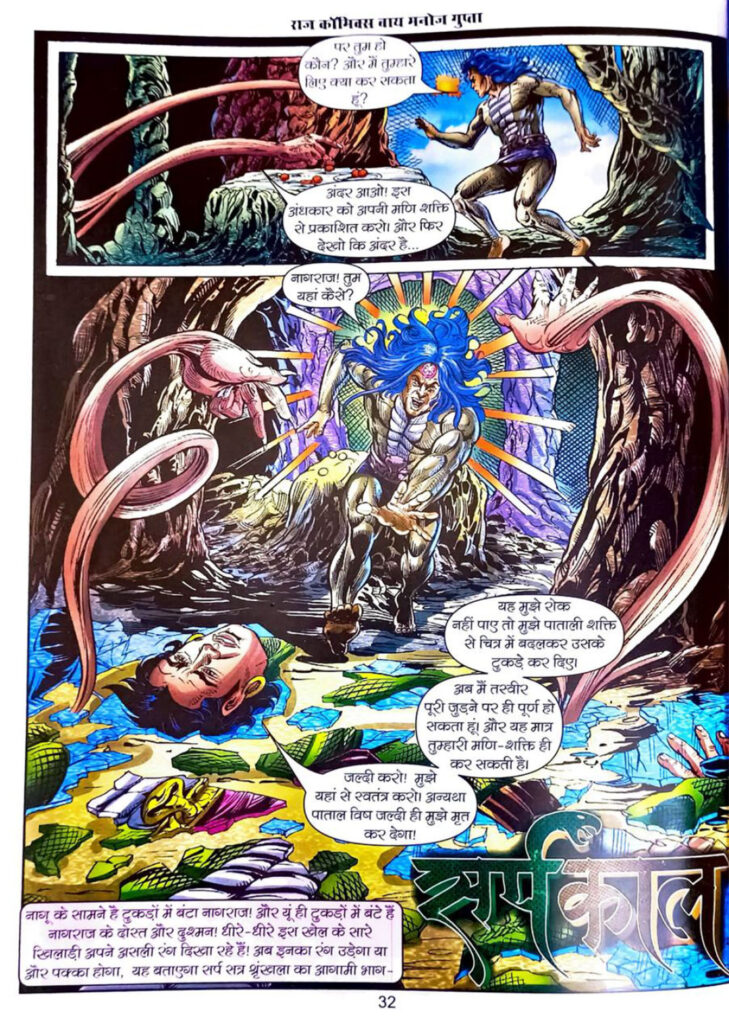
Nagraj, who is fighting for his life due to the effects of underworld poison, finds himself trapped in the dangerous illusion of “Maya Darpan.” He is forced to fight forms (such as a replica of G-18) created from his own powers. This part clearly shows that Nagraj’s biggest enemy is not someone from outside, but his own body, his suffering, and his inner doubt.
Characterization
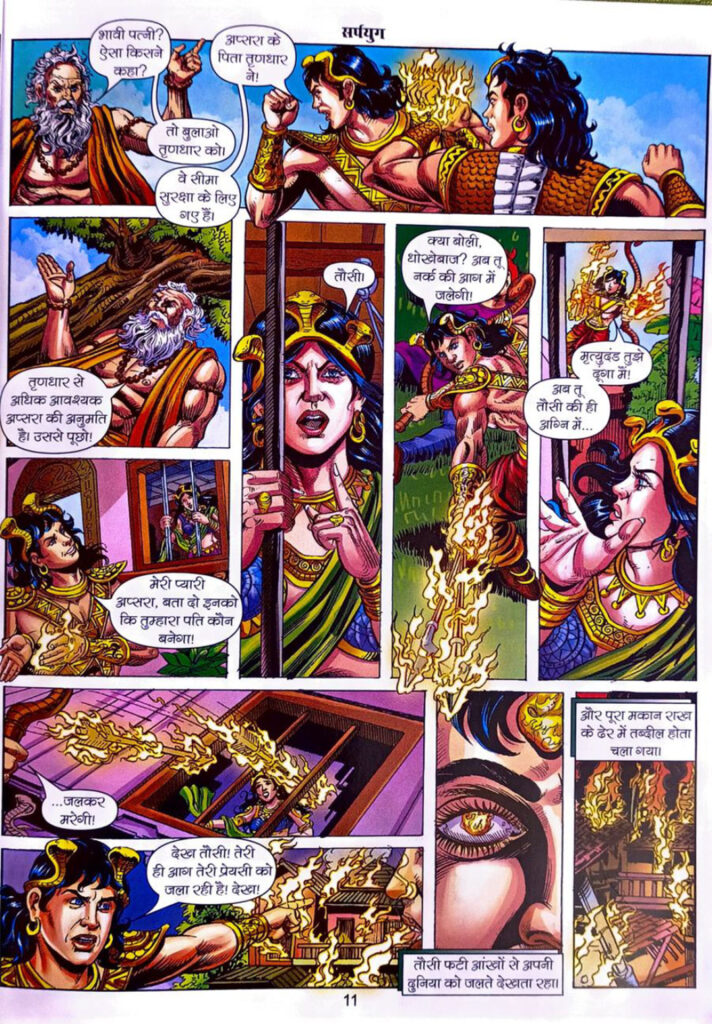
Tausi: A suffering lover and warrior
Tausi’s character here feels like the hero of a Greek tragedy. He believes that he has lost his wife forever, whereas the truth is that he himself has become a victim of a major conspiracy. The display of his powers, such as the use of a magnetic flag, amazes readers and gives further depth to his suffering.
Apsara/Shri: The axis of mystery
The lost memories of Apsara and her true identity are the most important links of the entire series. Her helplessness, her pain, and the truth of her past make her an extremely sensitive and empathetic character, to whom the reader becomes emotionally attached.
Nagraj: Struggling superhero
Although Nagraj appears to be somewhat distant from the direct war in this part, his internal fight and dialogue with Dr. Karunakaran act as a strong bridge between science and fantasy. Here, Nagraj is seen struggling not only with external enemies but also with the questions and limitations within himself, which gives more depth to his character.
Nagu (The Mysterious Element):
At the end of the story, the sudden entry of “Nagu” and Nagraj breaking into pieces becomes the biggest suspense of the entire series. This twist directly raises questions about the existence of Nagraj and forces the reader to wonder whether Nagraj will now remain what he has been till now.
Artistic Excellence
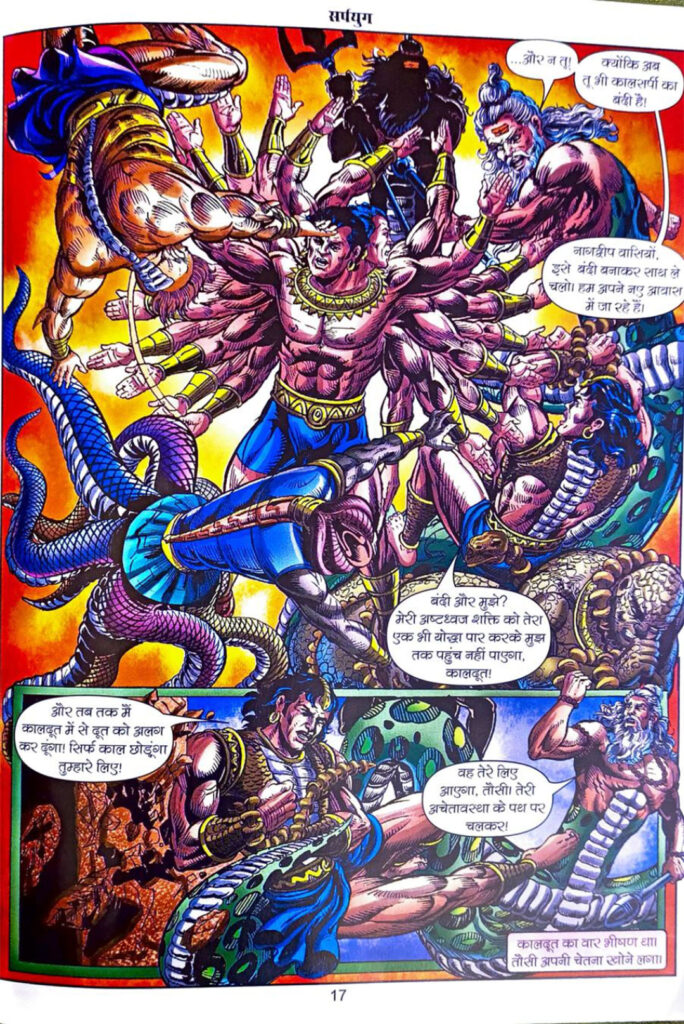
Anupam Sinha is not called the “Picasso” of Indian comics for nothing, and his artwork in “Serpentyug” is truly visible at its peak. With Sanjay Sulania’s brilliant color combinations, the tenderness shown in the flashback scenes creates an atmosphere completely different from the raging and intense scenes of the present day and brings memories to life. The conflict between the polycephalous form of Kaaldoot and the serpents of Tausi is shown in such detail that the reader is forced to observe each panel for a long time. The subtle detailing—from Nagbaba’s locks to the cars that scatter and collapse in the metropolis—and the illusion (surrealism) created in the scenes of “Maya Mirror” give the whole story a unique sense of reality and a magical experience.
Dialogue and Editing
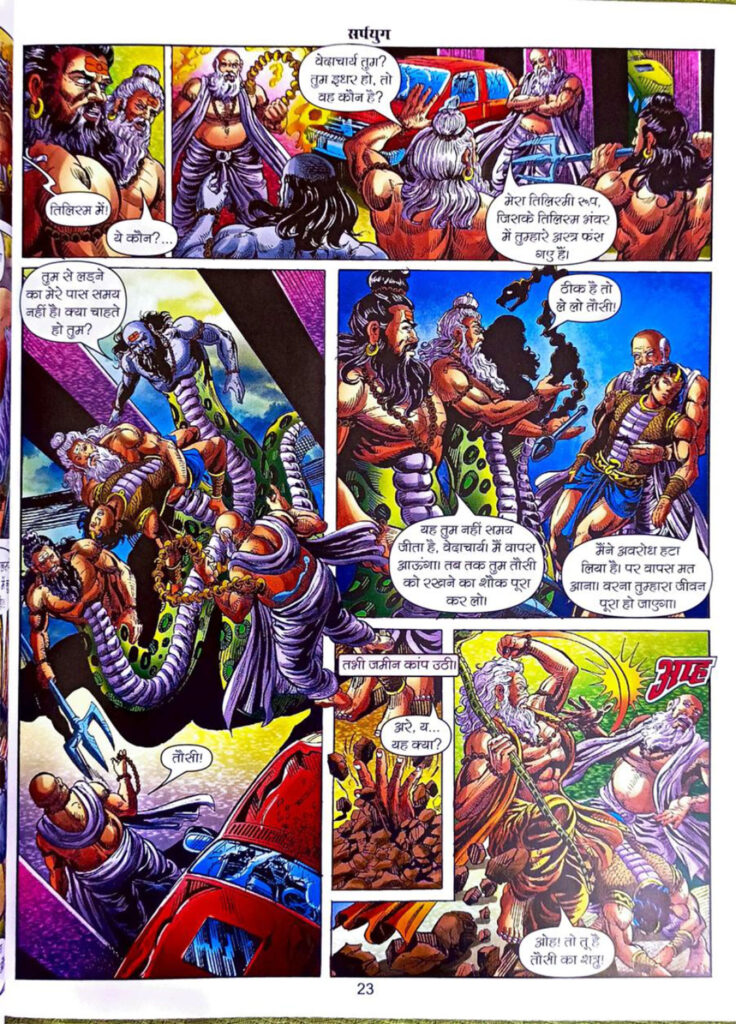
Manoj Gupta’s editing is very agile and well balanced. The same seriousness is reflected in Anupam Sinha’s dialogues, which has always been the identity of Nagraj Comics. Phrases like “magnet power grounded in between cars” or “invisible flag-like power” offer an interesting and effective mix of technical and magical forces. The pace of the story is fast, but it still gives the reader enough time to feel and understand the emotions associated with the flashback.
Main Points of the Review: Why Read?
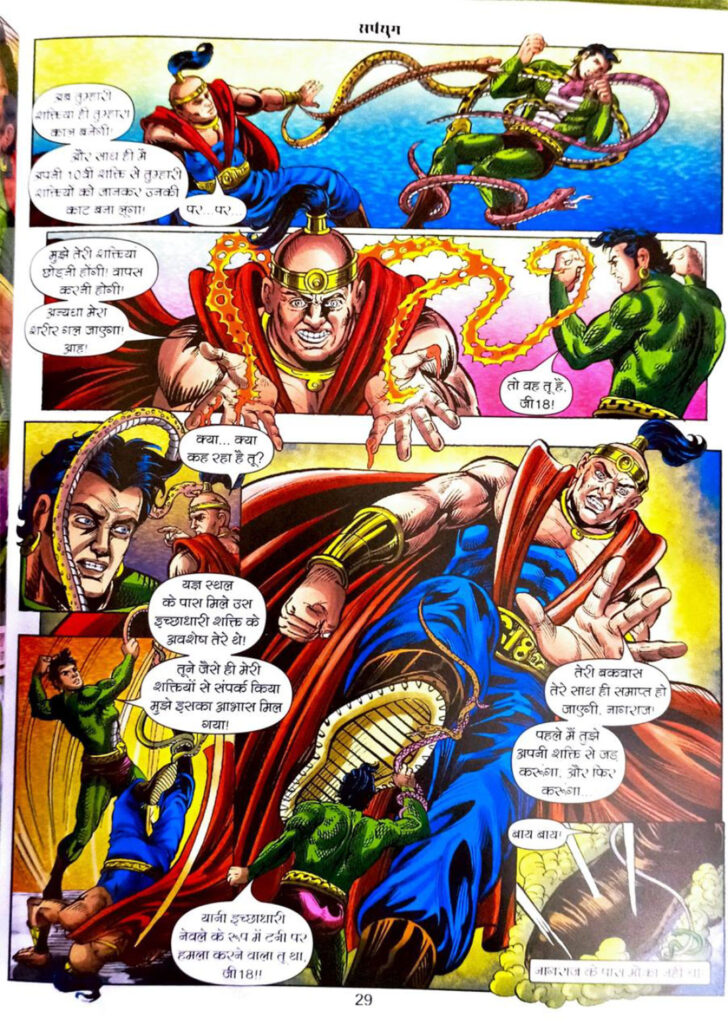
“Serpentyug” finally unveils many major mysteries related to the past of the nymph and Tausi, which emerge as the most important links of the entire series. For admirers of newly discovered powers and their different forms, this part is nothing less than a feast—be it the advanced abilities of G-18, the terrifying form of Kaaldoot, or the slowly emerging evolution of Nagraj’s inner strength. Despite this, this comic is not limited to just superhero fights, but is also a very touching love story devastated by misunderstandings, creating a deep emotional connection with the readers. Finally, the fragmentation of Nagraj and the arrival of “Serpkal” leave the story at such an exciting juncture that the readers’ heartbeats accelerate and the curiosity for the next part reaches its peak.
Some Minor Shortcomings
This series has now become quite long, due to which it seems almost impossible for new readers to connect directly with this part. So many characters are present in the story—Vedacharya, Nagbaba, Aastik, Visarpi, Kaaldoot, and G-18—that at times the main protagonist, Nagraj, himself feels seated on the backseat of the story. However, this can also be considered a natural limitation of a large multi-hero crossover.
Final Conclusion
“Serpentyug” is such a great achievement of Raj Comics that it proves Indian comics have the potential to give tough competition to any Hollywood cinematic universe. Anupam Sinha’s imagination and Manoj Gupta’s dedication are clearly visible on every page. This comic takes the reader to an era where magic, science, love, and vengeance collide together.
If you are fond of deep storytelling and excellent artwork, “Serpentyug” proves to be a memorable milestone for you. It brings the series to a point where there is only the possibility of destruction or complete rebirth.
Rating: 4.8/5
