


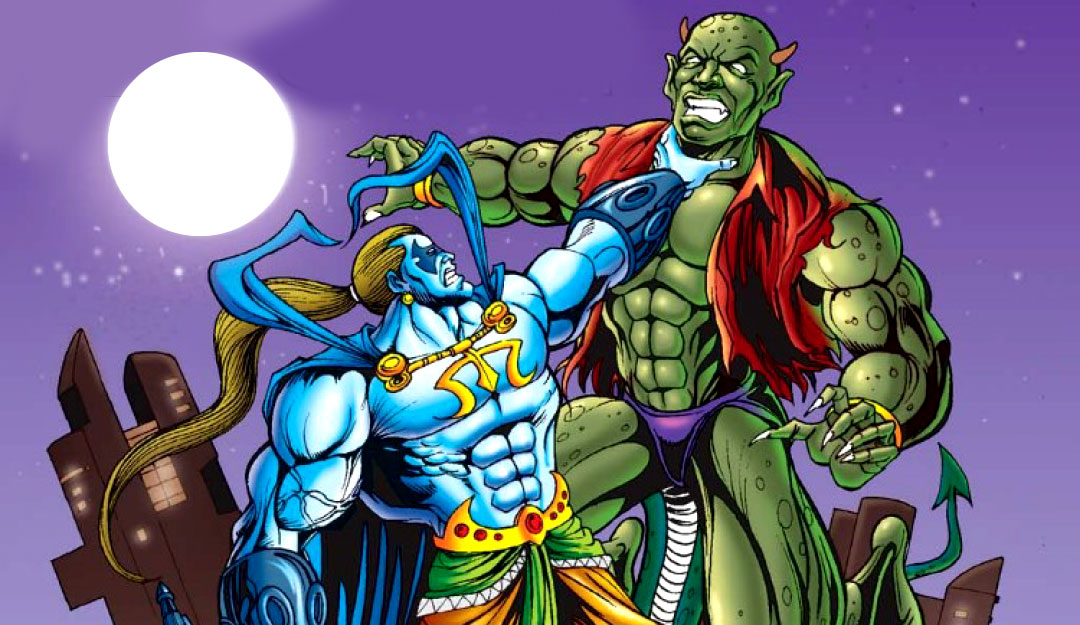
In this world of superheroes, ‘Super Indian’ is a character who is recognized not only because of his strength but also because of his thoughts and Indian values. The name of the comic we are talking about today is “Super Indian: Who”. It is a Maha Special Issue of Super Indian, which was priced at Rs 40 and published as number 626. In this comic, the writers and artists have presented the existence of Super Indian, his past, and two different aspects of his life as an exciting story.
Introduction and Creative Team
This special issue has been presented by Sanjay Gupta. The role of the team working behind any comic is very important to its success. The author of this story is Tarun Kumar Wahi, who has made the character of Super Indian stronger and deeper with his writing. The art direction is done by Dilip Choubey, while the artwork is handled by Lalit Sharma. Jagdish has done the inking work. Sunil Pandey has taken responsibility for colors and calligraphy. The editor of this great special issue is Manish Gupta, who has dedicated this comic to the country’s son, ‘Super Indian’.
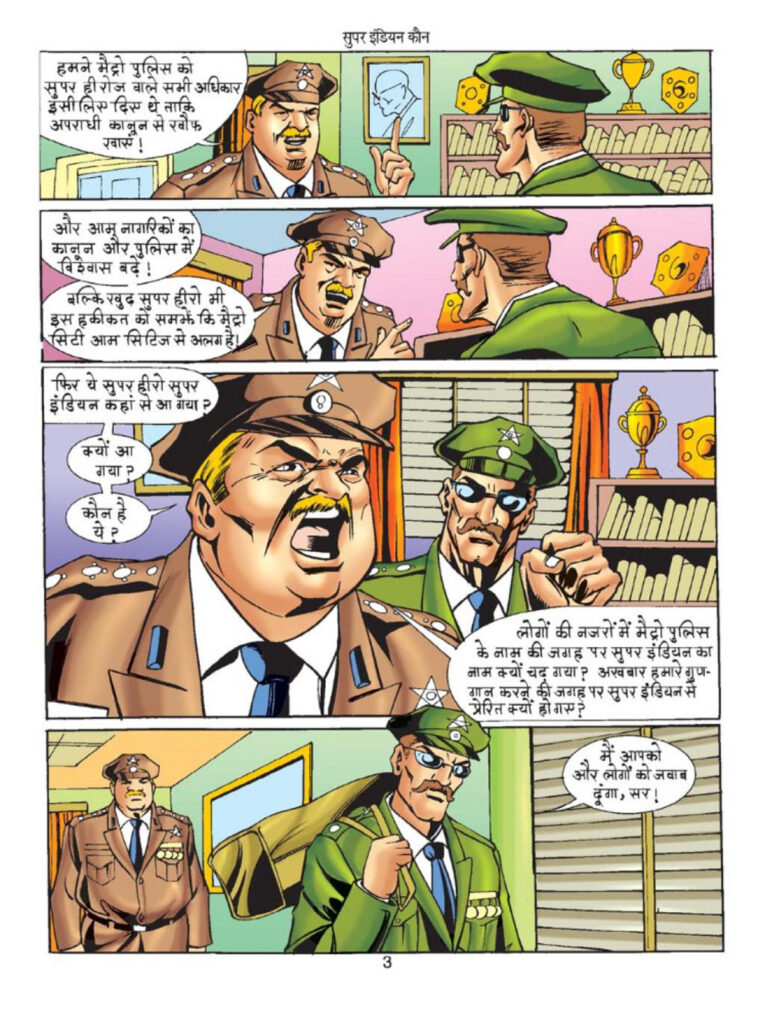
This story is not limited to just fights and action, but starts with a question that has shaken the entire metro city—who is Super Indian after all?
The Basis and Mystery of the Story
The story begins with a mysterious and intriguing atmosphere. Metro City newspaper headlines are everywhere with just one question—“Who is Super Indian?” This question has become a big problem not only for common people but also for the police.
In the opening pages of the story, we are shown a view of the police headquarters. Here, Inspector Kankhjure, who appears to be a senior police officer, places a pile of letters and emails in front of his superior officer. All these messages are from people who want to know who Super Indian is, where he has come from, and why he has come. The curiosity of the public has increased to such an extent that the number of emails has grown almost twenty times more than the letters.
Here, the author very clearly shows the tension that has arisen between the police and superheroes. A police officer says that the Metro Police were given superhero-like powers so that criminals would become afraid and common people’s trust in the police would increase. But it has been exactly the opposite. Instead of praising the police, people are becoming crazy about Super Indian. Now, the name of Super Indian is on people’s lips, not the police. This situation becomes a big challenge for the police administration, and Inspector Kankhjure is determined to answer this, both to the public and his seniors.
Characterization and Conflict
Super Indian (Aman):
Super Indian is the hero of this story, but his identity is divided into two parts. On one hand, he becomes a time of destruction for evil, and on the other hand, he is a symbol of peace, living life like a common man. An emotional twist in the story comes when we see Aman in “Aman Anand Ashram”. This is an old-age home, where Aman lives with the elderly. Here, the author brings out a very important aspect of Indian culture—respect for elders. Aman says, “The society we live in has become so rotten that even social relationships are being eaten away by the worms of selfishness.” He believes that just as children need care, the elderly also need support and belonging, but today the tradition of the joint family is almost over.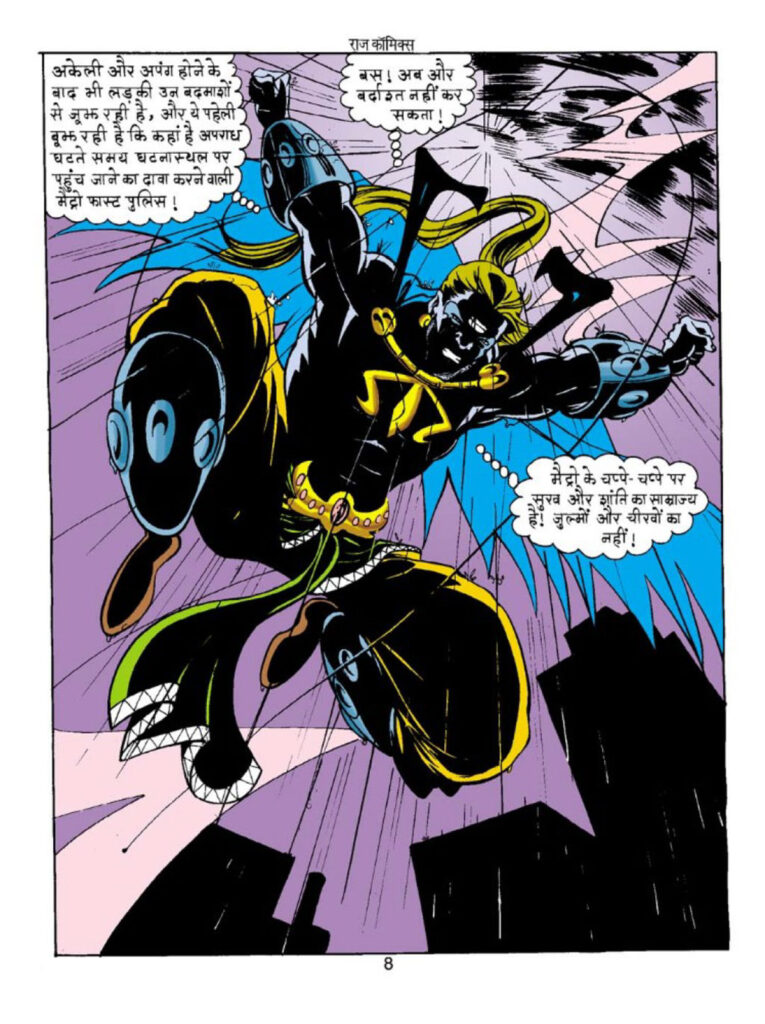
The real depth of Aman’s character is linked to his past. Actually, he is a clone of Afghanistan’s dreaded terrorist kingpin, ‘Supremo Egoist’. The Egoist had cloned himself to further his empire and preserve his legacy, as he did not trust any of his associates—like Mr. Lion, Doctor Woman, or Mechanic. But fate had something else in store. That child, Aman, reached India, and the values here turned him into a protector. As Aman himself thinks, “I am definitely the son of that egoist, but the blood that flows in my veins carries Indian values.”
Inspector Kankhjure:
Inspector Kankhjure appears in this story in an antagonistic role, even though he is a defender of the law. He wants to reveal the identity of Super Indian at any cost. His stubbornness increases to such an extent that he even starts harassing a victim girl and her family, just to get any clue about Super Indian. His aim is to bring Super Indian under the ambit of the law, but his approach seems very harsh and, at times, completely insensitive.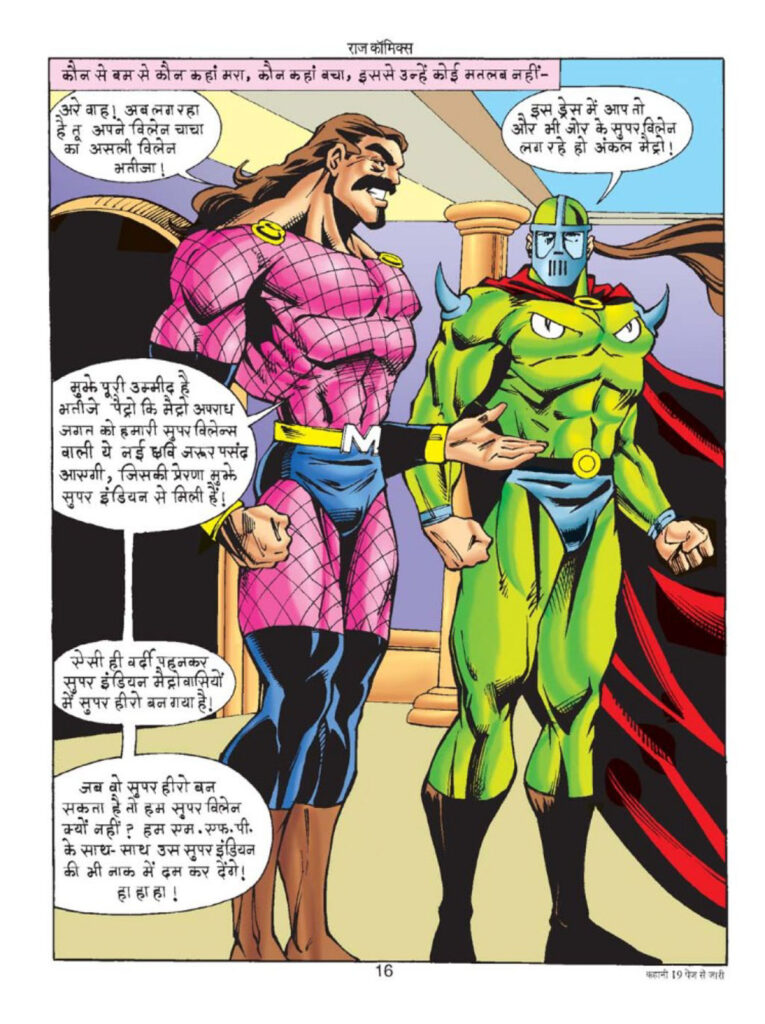
Villains (Egoist and Uncle Metro):
The biggest villain of the story is the Egoist, who was once the supremo of Afghanistan. He is extremely cruel and wants to bend the entire world at his feet. His clone, created as Super Indian, was his biggest dream, developed in the womb of the American scientist Salina. Currently, another villain named ‘Uncle Metro’ is active in Metro City. Along with his partner Petro, he wants to wreak havoc and turn the city into complete ruins. His dream is to make Metro City a hub of crime.Expansion of the Plot
Flashbacks and Origins (Origin Story):
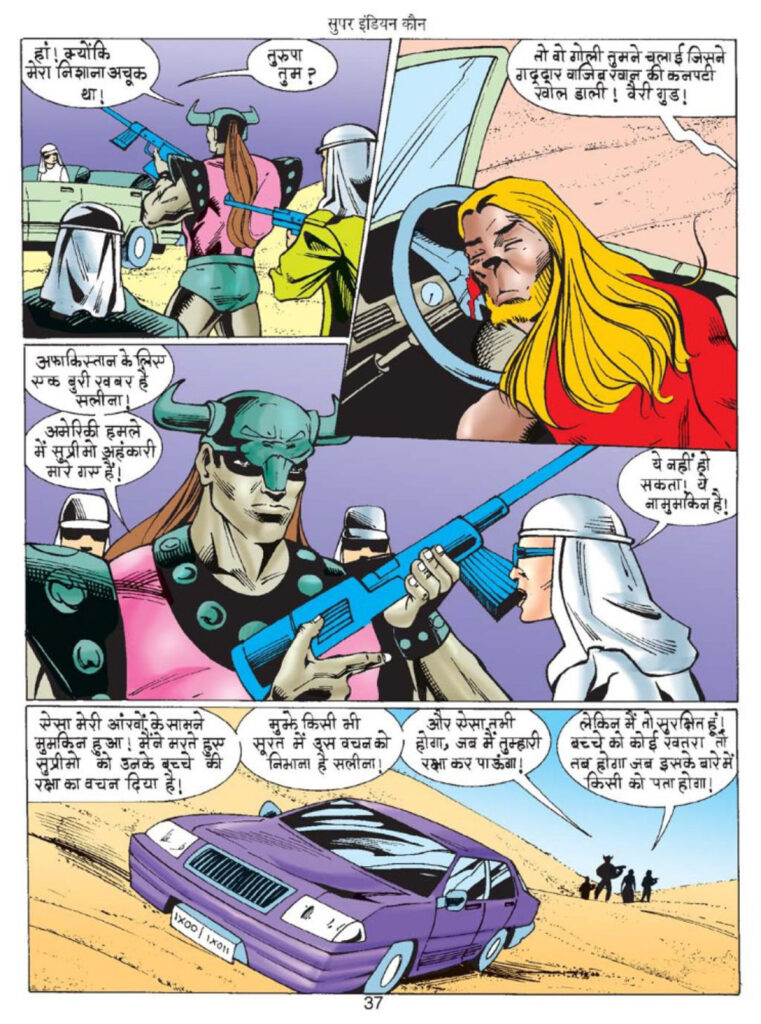
A large part of the story unfolds through flashbacks, explaining the origin of Super Indian. When the US attacks Afghanistan, the Egoist’s empire is in danger. Wajid Khan, the Egoist’s trusted man, tries to escape with the pregnant Salina, who is carrying the Egoist’s clone. A fast-paced and thrilling chase unfolds amid American missiles and heavy bombardment. Wajid Khan risks his life to save Salina and somehow manages to take her to the Indian border. This section is very engaging and keeps the reader hooked.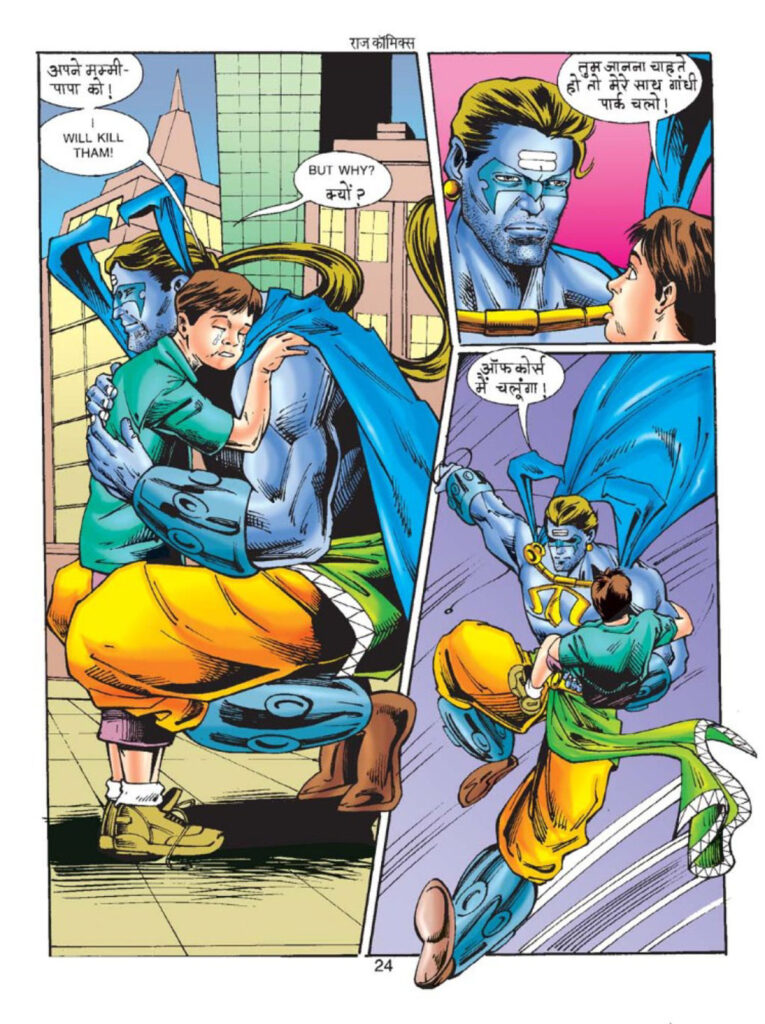
Eventually, Salina reaches India and gives birth to a child. This child is not ordinary at all. Soon after birth, he starts searching for something like a toy in the nursery, which actually reflects his violent nature. Doctors are shocked to see that, according to medical science, the child’s growth is nothing short of a miracle. Within a few days, the child develops as much as a five-year-old.
Current Conflict:
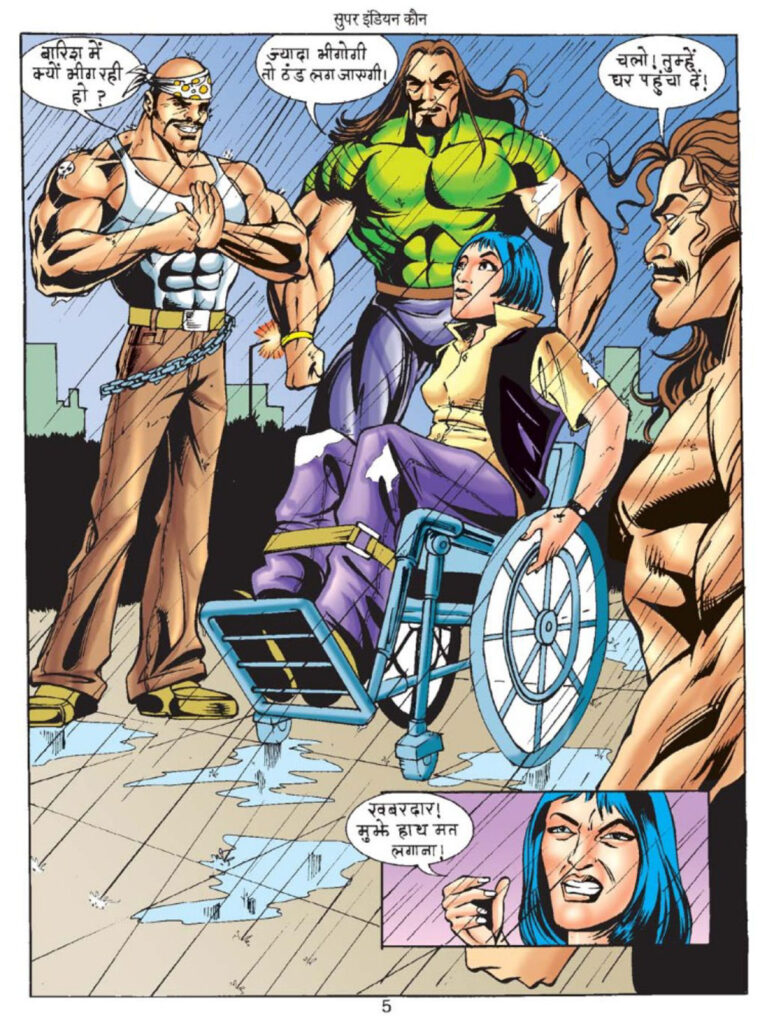
In the present timeline, the story revolves around a disabled girl. She is moving in her wheelchair in the rain when some goons surround her. They mock her and harass her. The girl dares them, saying, “Don’t touch me.” When the goons hurt her and push her out of the wheelchair, Super Indian arrives.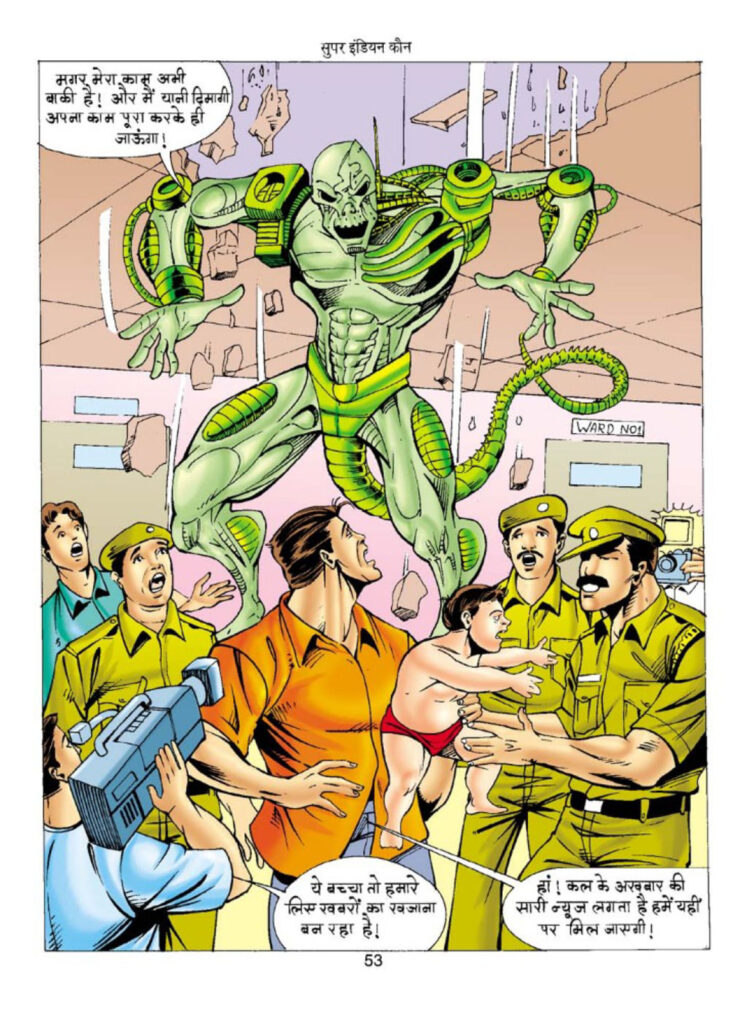
The entry of Super Indian is dramatic and full of energy. He declares, “Happiness and peace should reign in every corner of the metro, not oppression and screams!” He then teaches the goons a harsh lesson and saves the girl. However, as soon as the police reach the spot, he disappears, further angering Inspector Kankhjure.
Inspector Kankhjure later interrogates the girl and her parents, assuming they know Super Indian. This raises serious questions about the working style of the police.
Climax and New Twist
When Super Indian is completely trapped and unable to move, a shocking twist occurs. A new superheroine, possibly named ‘Acid’ or ‘Acid Girl’, appears. She melts the steel binding Super Indian using the acid released from her body. This scene is highly impressive, and even Super Indian is surprised by the identity of his savior.
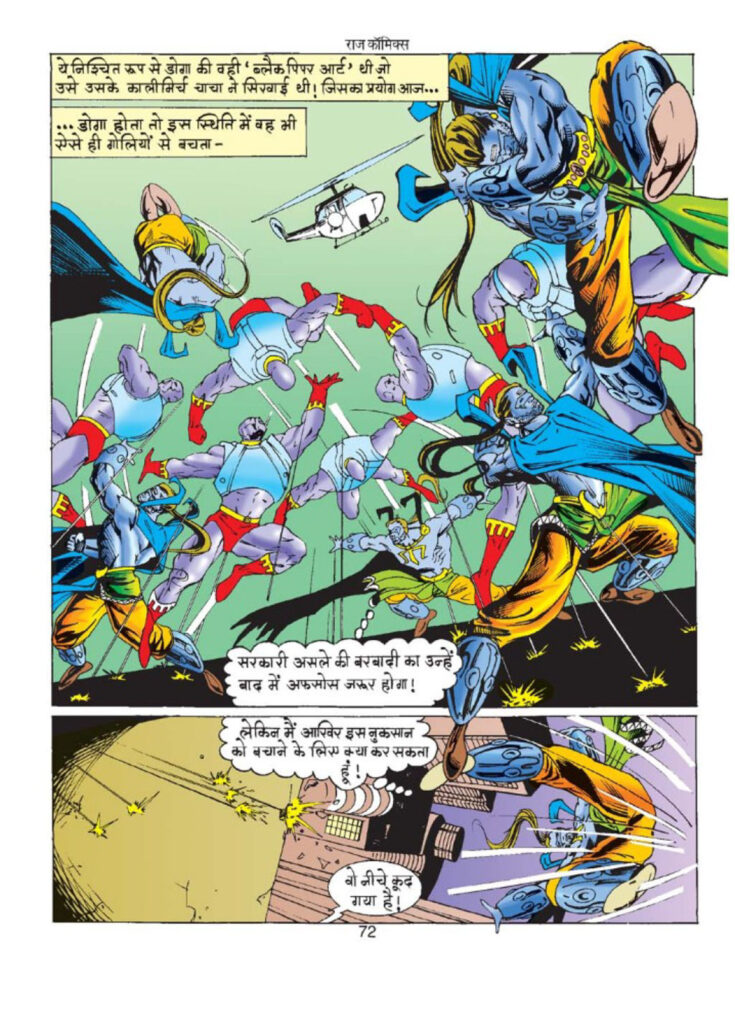
Super Indian and the new superheroine then team up to face Uncle Metro and Petro. Super Indian stops a helicopter mid-air with his bare hands, saving it from crashing. The helicopter carries the Police Commissioner and others. Eventually, the duo defeats the villains.
At the end of the story, Aman returns to “Aman Anand Ashram.” A touching scene shows him with his ‘family’, the elderly residents. Suddenly, another attack occurs when a bomb is thrown toward the ashram. Aman catches it and throws it out of the window, causing a loud explosion. This scene shows that danger surrounds his life at every moment, yet he still tries to live like a normal human being.
Art and Presentation
Lalit Sharma’s pencil work and Dilip Choubey’s art direction are major strengths of this comic. The fight scenes are extremely dynamic and fast-paced. When Super Indian beats the goons, the speed and power in the panels feel impactful, with ‘khadak’ and ‘tadak’-like sound effects. The helicopter scene is especially grand and detailed.
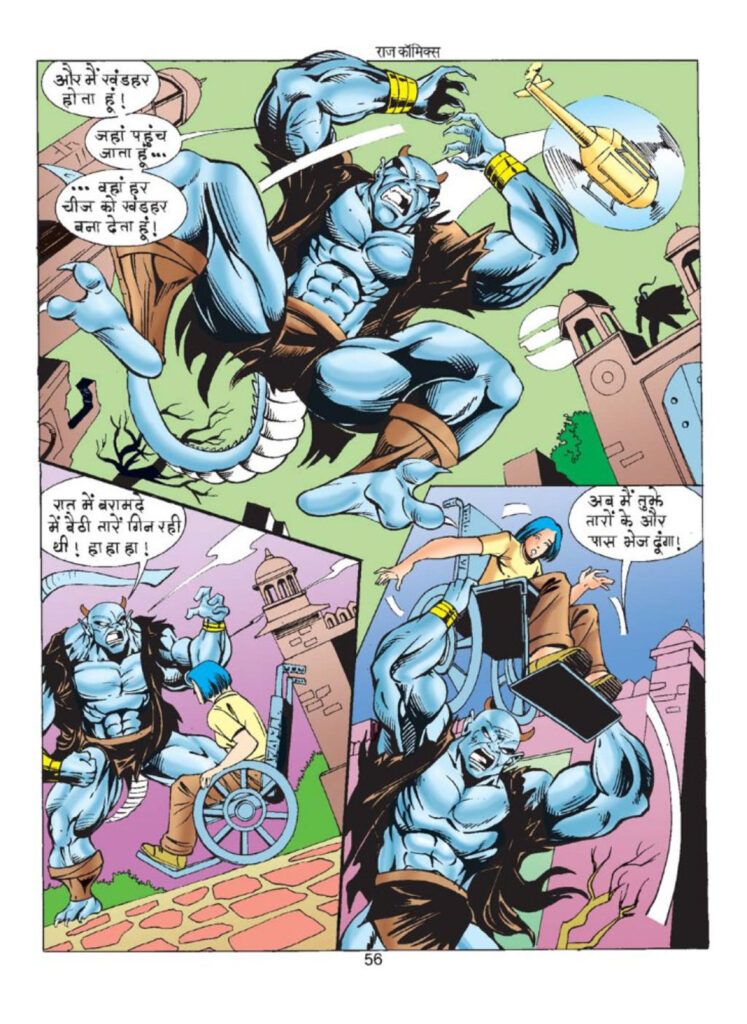
Facial expressions are very well executed. The constant tension and anger on Inspector Kankhjure’s face, the fear and later determination on the disabled girl’s face, and the cruelty visible on the Egoist’s face are all depicted effectively. Sunil Pandey’s color palette further enhances the mood. The contrast between flashbacks and present-day scenes clearly reflects the change in time. Dark blue and black tones create a serious atmosphere during night and rain sequences.
Dialogues
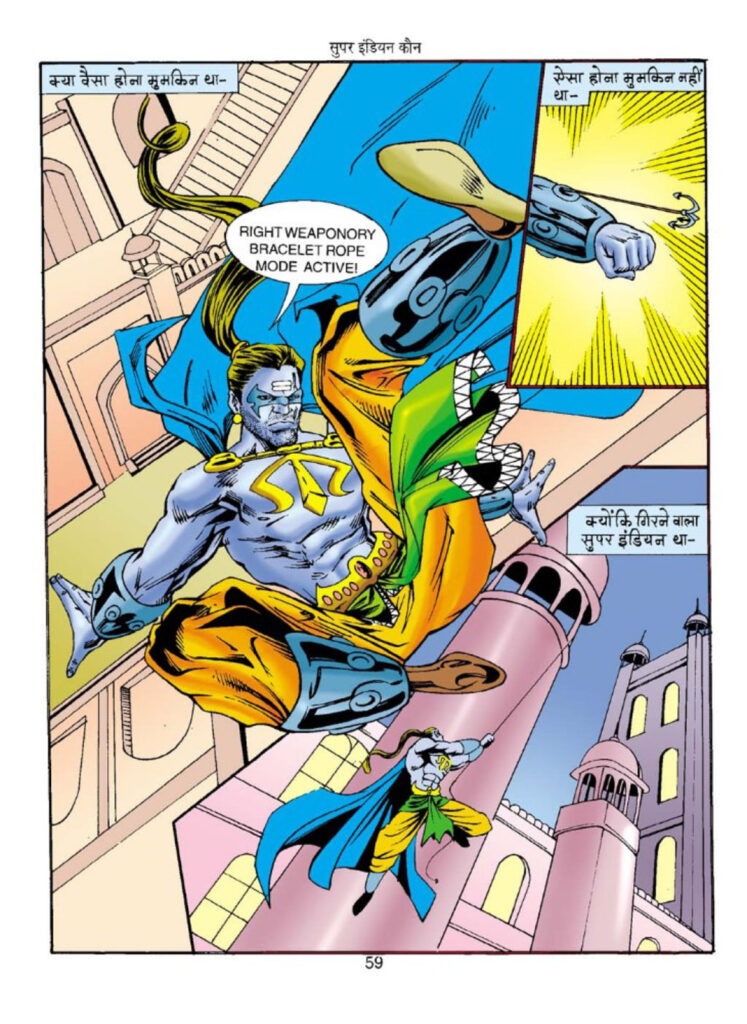
Tarun Kumar Wahi’s dialogues are written in accordance with each character’s personality.
The seriousness and sense of responsibility are clearly reflected in Super Indian’s dialogues, such as “If I see you here again, I will do worse!”
The Egoist’s dialogues reflect his arrogance and intoxication with power, like “I have to eliminate this child at any cost, Salina!”
Media and public headlines such as “Super Indian kaun?” add realism and authenticity to the story.
Thematic Analysis
Several important themes emerge in this comic. Nature versus nurture is the central theme. Aman’s DNA belongs to a terrorist egoist, a symbol of cruelty. Scientifically, he should have followed that path, but his upbringing in India, surrounded by values, traditions, and ashram life, turns him into a protector. The story emphasizes that actions and values matter more than birth.
Respect for the elderly is another strong theme. The depiction of “Aman Anand Ashram” criticizes modern society for abandoning its elders. Super Indian uses his powers not only to fight crime but also to protect and serve his elderly ‘family’. When the ashram is attacked, his rage is clearly justified.
The identity crisis is also crucial. “Super Indian—Who?” is not just a public question but also an internal conflict within Aman. He knows who his father was and fears that his dark lineage may overpower him. He constantly strives to prove that he is Super Indian, not Supremo Egoist.
Conclusion
“Super Indian: Kaun” (Issue No. 626) is a remarkable special issue from Raj Comics. It is not merely a superhero story, but a narrative about identity, morality, and values. Tarun Kumar Wahi delivers a well-balanced script that blends mystery, emotion, and action seamlessly.
Overall, this comic is a must-read for fans of Indian superheroes. It contains all the essential elements of a great comic— a strong hero, dangerous villains, emotional depth, and outstanding artwork. Super Indian’s journey proves that true strength lies not in physical power, but in character and values.
If you are a Raj Comics fan or interested in Indian superheroes, “Super Indian: Who” deserves a place in your collection. This comic not only entertains but also makes the reader reflect on who a real ‘Super Indian’ truly is—just a powerful being, or a person rich in culture and values.
