



In the Indian comics world, Nagraj is not just a superhero, but a kind of living myth. The poison flowing in his veins and the millions of wishful snakes living in his body make him almost invincible. But imagine, what if this biggest power of Nagraj is taken away from him? What if ‘Nagraj’ just remains ‘Raj’?
Raj Comics’ special issue “Vishheen Nagraj” answers this exciting and emotional question. Anupam Sinha’s amazing art and Jolly Sinha’s very tight story together give an experience that holds from beginning to end. It is not just an action comics, but a big narrative of the struggle inside Nagraj, his principles and the tricks of his enemies.
The name of the comics we are talking about today itself produces sense of curiosity — “toxicity of Nagraj”.
Plot
The story creates a dramatic and mysterious atmosphere from the beginning. The ‘Snake Park’ of Metropolis, where director Doctor Karunakaran works, is visited by an unknown woman. She makes a huge donation of Rs 10 lakh directly for the well-being of Snake Park and to build anti-venom. From here the question starts arising in the mind: who is this woman who gives such a huge amount?
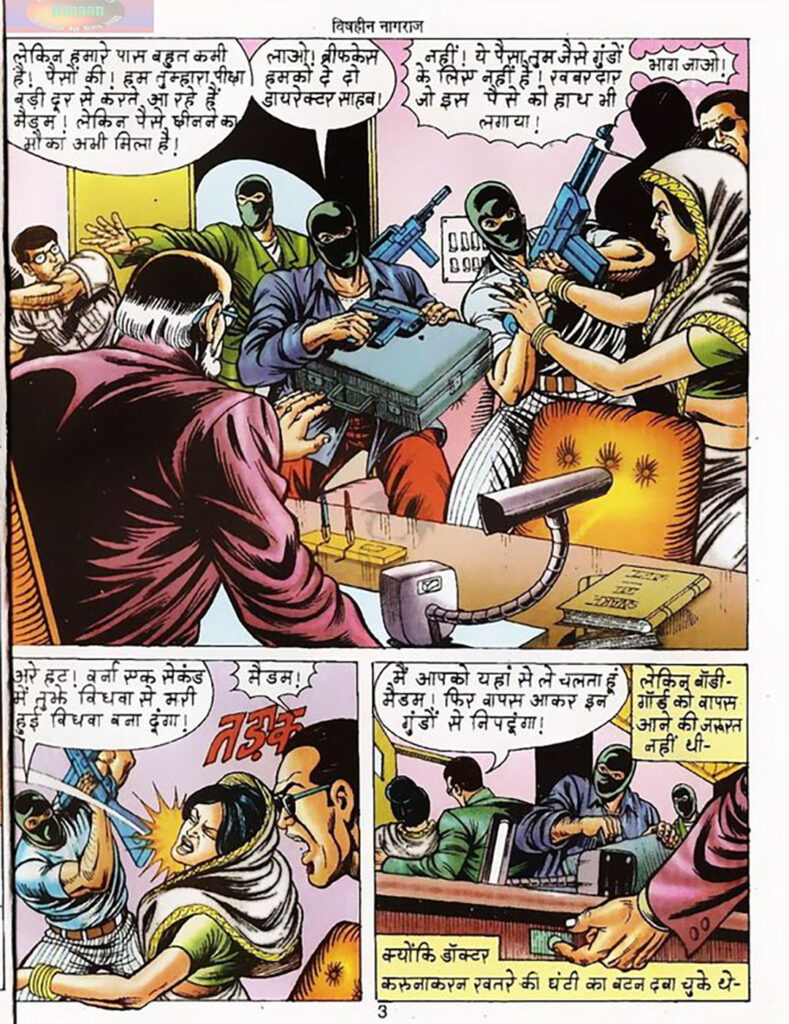
But the twist does not end here. As soon as the woman leaves, some robbers enter the place and try to rob the same briefcase. But as soon as they think of running away with the notes, all the money kept in the briefcase suddenly turns into ashes. This makes it clear that it was not common money — some ‘supernatural’ game was running.
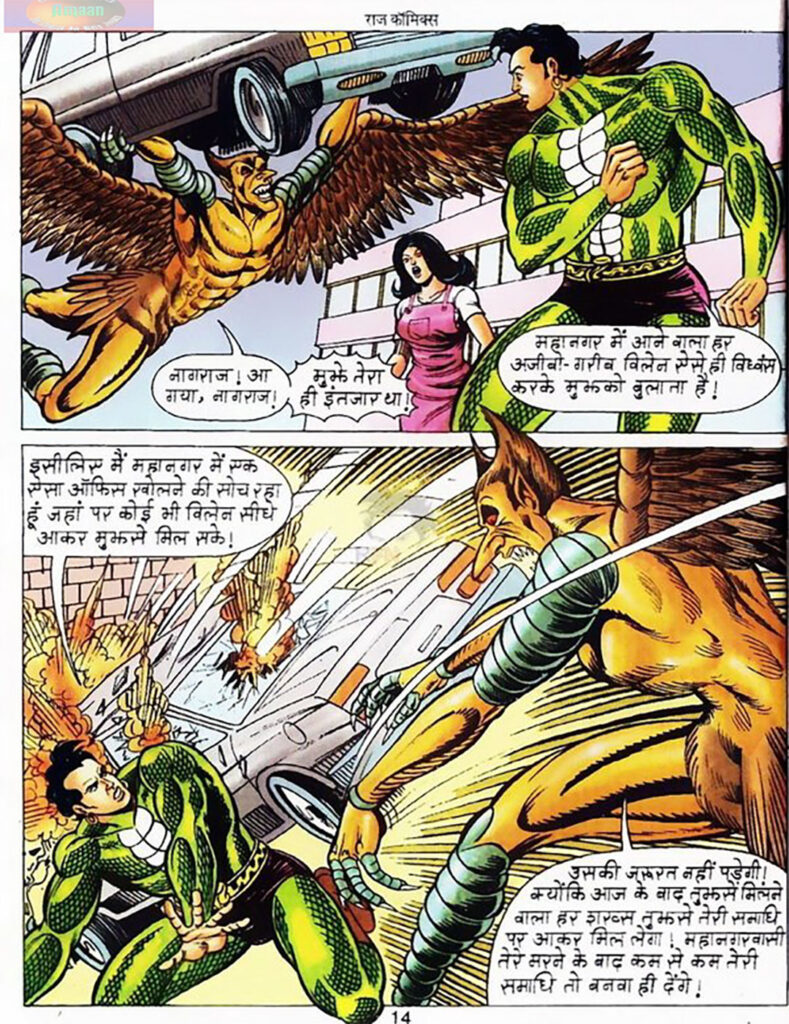
After this, Nagraj makes an explosive entry. He tries to catch the robbers, but understands that this is not just a small incident, but part of a bigger conspiracy. Behind this conspiracy is his old and extremely dangerous enemy, Nageena. Along with Nagina, her companion Vishandhar and a new villain ‘Baaz’ (half human, half bird) are also present.
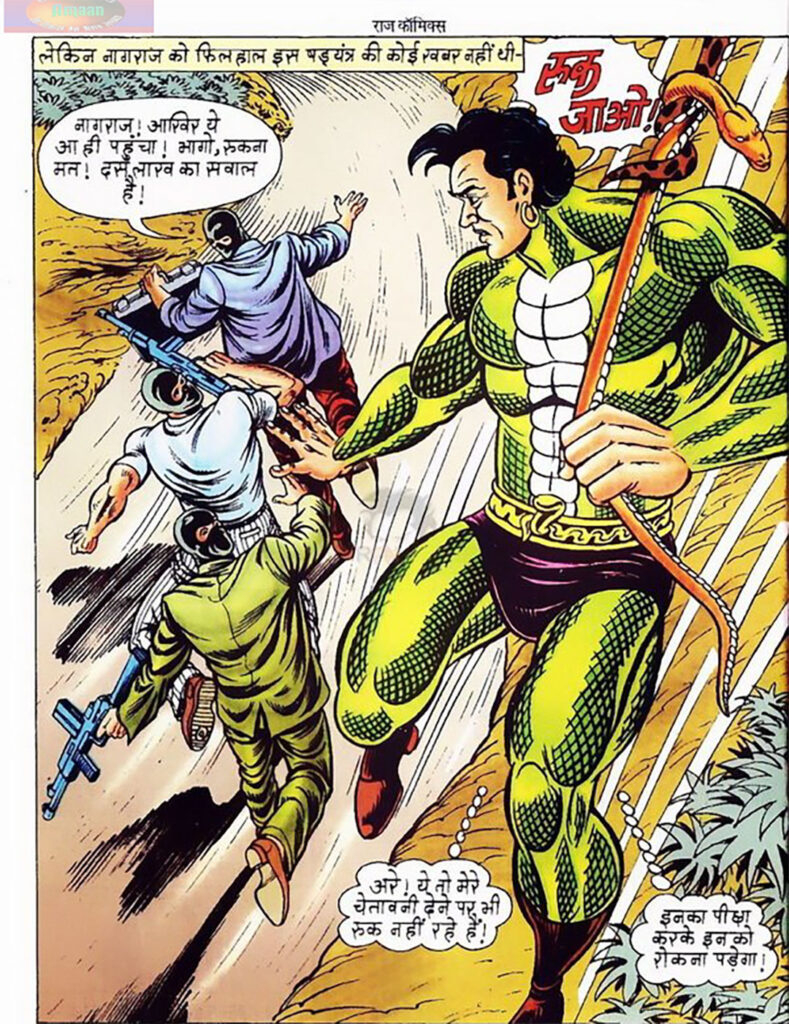
Nagina’s trick is not just to defeat Nagraj in battle, but to break him mentally and spiritually. Her most dangerous plan begins with leaving a sinister villain named ‘Roti’ in the city. Such a terrible smell and disease spreads from the body of a rotten person that people start dying in agony.
Nagraj makes a mistake in this mess. He uses his poison on her, thinking she is rotten, but as soon as she faints, her appearance changes. Now there is an innocent girl lying there. That is, during the fight, an innocent girl was killed at the hands of Nagraj, which was actually a trick made by Nagina.
According to the mythological beliefs of India, killing an innocent person is considered a great sin. For this reason the gods appear as Kaljayi (gods of snakes and Kaal). They are extremely angry at Nagraj. Nagraj tries to come clean, but the circumstances and evidence go against him. Angry Dev curses timeless Nagraj — and this curse strikes at his entire identity.
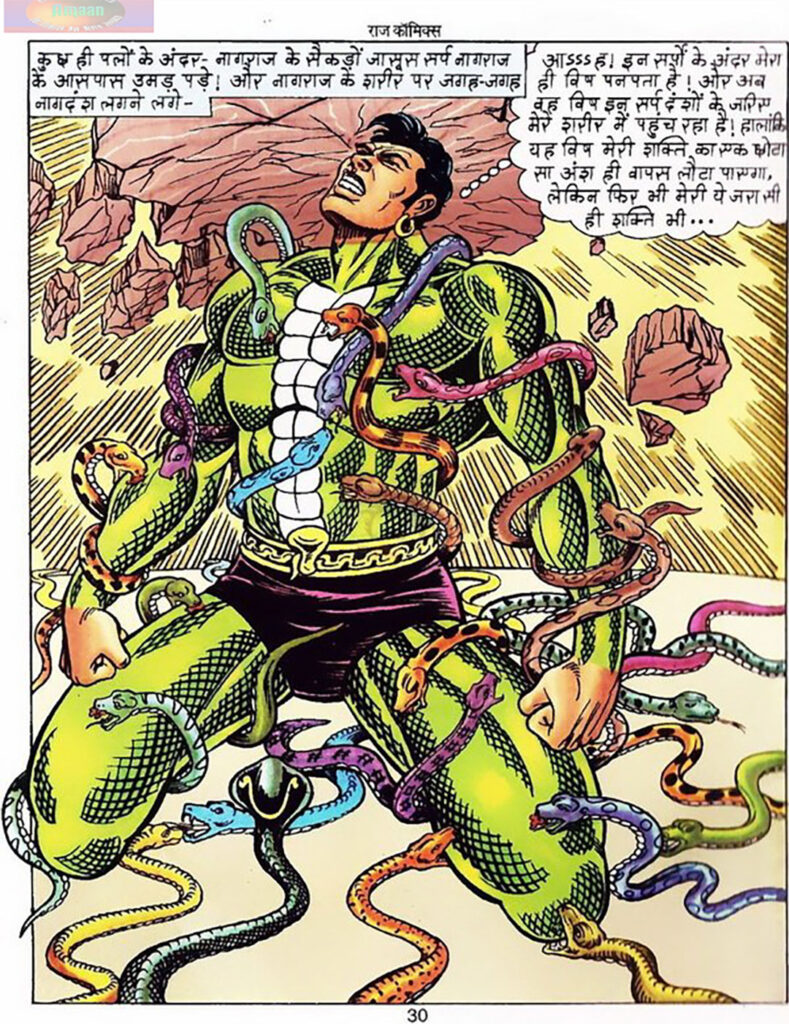
Dev takes away all the poison from the body of the timeless Nagraj. As the toxin is released, the hundreds of millions of wishful serpents that live in his body leave him, as they cannot survive in a body without the toxin. Nagraj “becomes poisonless” — now he is powerless like a common man. But the enemy? He is still standing in front.
Nagina then makes another devious move. She sends a demon named ‘Janchat’. The city is, on one hand, heading for ruin and on the other, its protector is completely deprived of his powers.
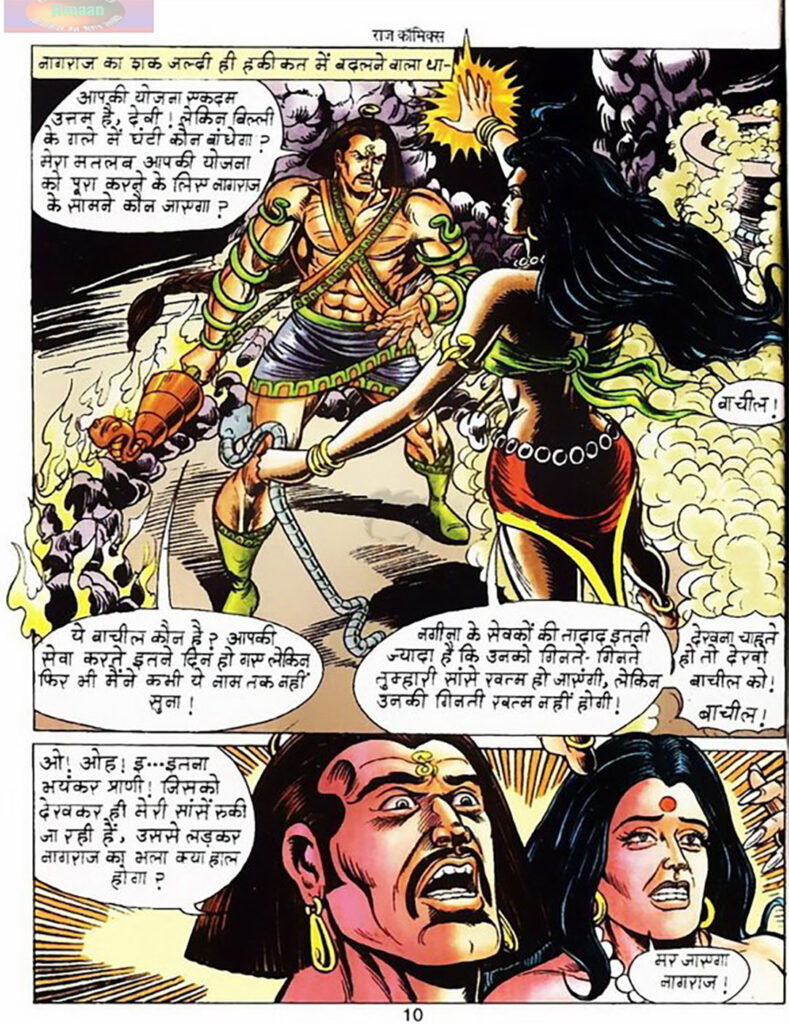
The rest of the story focuses on Nagraj’s struggle — how does he face Nagina and Janchat without any superpower, just on the basis of his passion, martial arts and cleverness? How does he prove his innocence to Dev Kaljayi? The climax shows this entire journey in a very exciting way.
Character analysis
Nagraj (hero):
In this comics we get to see a different form of Nagraj. Usually we see Nagraj using his snake-ropes, venom and hypnotic power. But here writer Jolly Sinha has presented him in a completely grounded and humane form. When his snakes start leaving him, Nagraj’s pain and helplessness really touch the heart. The character of Nagraj shines here with more depth. He doesn’t give up. Even after losing the poison, he still confronts dangerous enemies like the rotten and the hawk. This clearly proves that superheroes are not just made by powers, but by their willpower.
Nagina (villain):
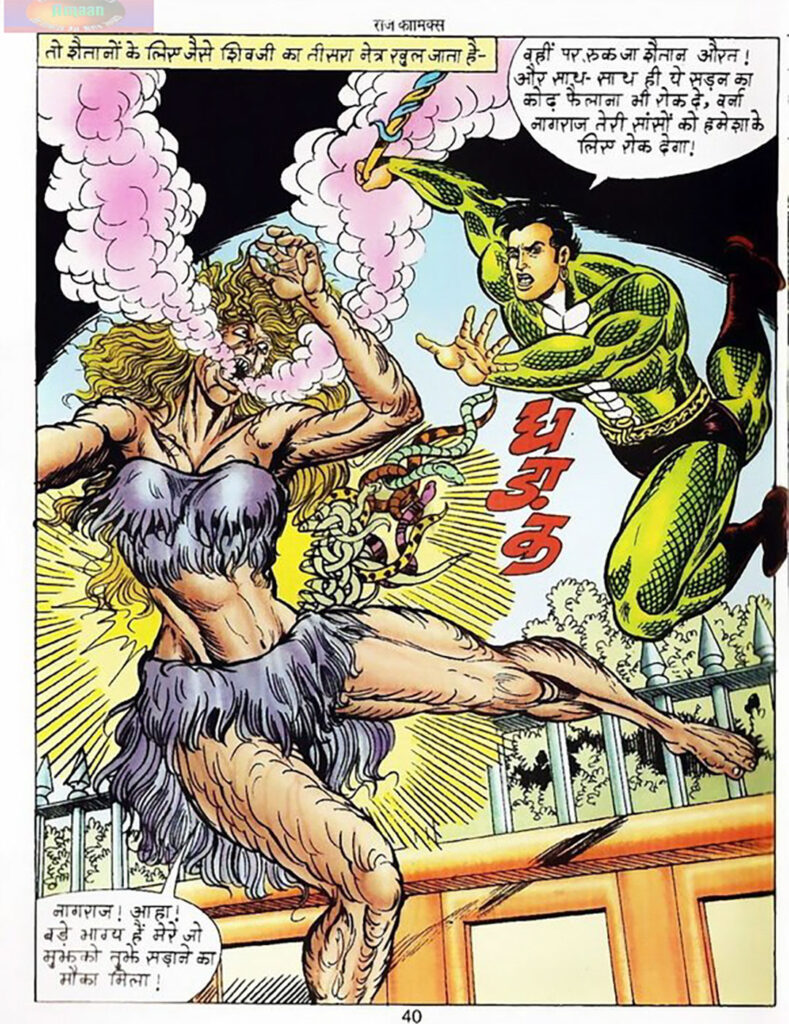
Nagina is one of the most powerful villains of Raj Comics. Her cleverness and mind are worth seeing in this comics. She knows that it is impossible to defeat Nagraj in a one-on-one fight, so she uses Dev Kaljayi as a weapon. Her plan is so thought-out that it almost seems foolproof. She not only weakens Nagraj physically, but also tries to break him from within by filling his mind with guilt. Her character is a dangerous blend of beauty and cruelty.
Dev Kaljayi:
Dev Kaljayi symbolizes ‘Nyay’ and ‘Shakti’ in this story. But at the same time, it also shows that even gods can sometimes fall prey to illusions. Their anger is terrible. When they take the poison back from Nagraj’s body, the scene becomes the most powerful and effective moment in the entire comics. Anupam Sinha has portrayed his looks and personality in a very brilliant manner.
Falconry and Rottenness:
Both these supporting villains bring a special freshness and newness to the story.
Baaz:
He is an ‘air hazard’ (Aerial Threat). Because Nagraj cannot fly himself (unless supported by his snakes or pole), the falcon constantly challenges him from the sky, causing the battle to take a completely different flavour.
Rotten:
Rotten is a very disgusting and scary character. His job is to create hatred and fear within the readers — and in this he is completely successful. His powers — disease spreading and terrible foul smells — create a different kind of trouble for Nagraj, because here strength is not enough; mind and stamina are also required.
Drawing and Visual Arts
It is absolutely right to call Anupam Sinha ‘Nagraj’s grandmaster’, because his art is the real life of this comics. The accuracy in anatomy, action, and body language of each character in his artwork is amazing. Nagraj’s strong body, the beauty of Nagina, and the ferocity of the hawk — everything seems so alive that the movement in the scenes is truly felt.
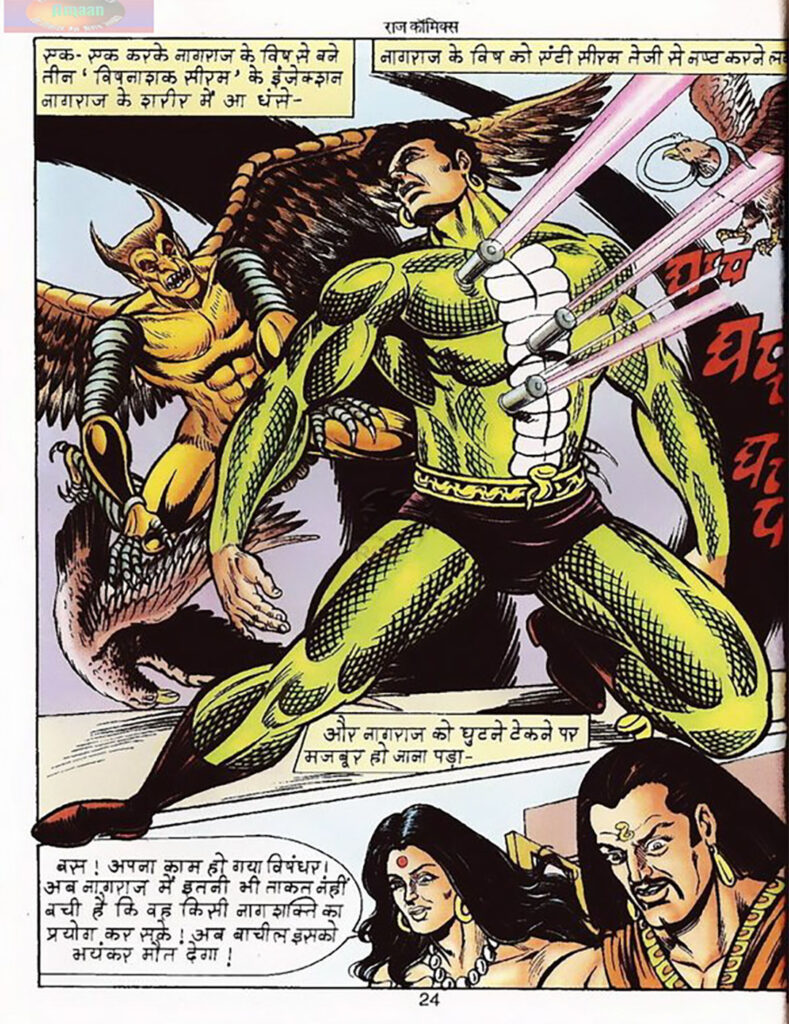
Talking about expressions, the pain of snakes coming out of the body on Nagraj’s face, Nagina’s clever smile, and Dev Kaljayi’s fierce looks — all this keeps the readers glued to the page.
The background detailing is also fantastic — whether it’s Snake Park or city streets, every scene makes the story more real.
Finally, Sunil Pandey’s color combination further strengthens the mood of this comics. The light ‘magical’ atmosphere in Nagina scenes, blurry colors in rotten scenes, and bright lights when the god Kaljayi arrives — all make the story more impressive.
Narrative-writing and Dialogue
Jolly Sinha’s script is quite tight. The story doesn’t seem to drag on or become boring anywhere. The mystery remains from beginning to end. The dialogues clearly reflect the old style of Raj Comics — slightly dramatic, slightly big, but effective.
For example, when the gods give timeless curses, the dignity, power and anger in their dialogues thrill the reader. Like —
“Nagraj! You’ve killed an innocent… I take back all the poison I gave you!”
Such dialogues add weight to the story and make the scene more powerful.
The authors also raise an important question — can haste prove harmful when judging? Dev Kaljayi punished Nagraj without any complete investigation, which later turned out to be wrong. It is also in itself a mild satire on the system, showing how sometimes even big powers can make mistakes.
Theme and Analysis
The biggest theme of this comics is — power, attachment and its sacrifice.
Nagraj’s power is his poison, and when it is taken away from him, he is caught in a serious identity crisis (Identity Crisis). This is what teaches the reader that external powers, strengths or achievements are not always everything — character is the real strength of a person.
Deceit, deception and fraud (Deception) is a big issue in the story, the foundation of which is Nagina’s plan based on ‘maya’. Her making truth a lie and falsehood a truth feels like today’s ‘fake news’ or ‘propaganda’ — where the real guilty is left out and the innocent is convicted.
The character of Nagraj also carries forward the theme of sin, guilt and atonement here. He accepts the curse without arguing, assuming that he may have made a mistake. This is the identity of a true hero — he does not run away from his responsibility, but accepts it, even if it is a misunderstanding.
What could have been better?
The comics are fantastic overall, but the arguments seem a little weak in some places.
Like — how did an omniscient god like Dev Kaljayi get so easily trapped in the illusion of Nagina? Gods should have knowledge of truth and falsehood. It seems a setup (Plot Convenience) created to advance the plot a little.
In addition, villains such as Rotten and Baaz could be given a little more depth. They remained just pawns of Nagina.
Conclusion
“Vishinheen Nagraj” is a real gem of the treasure of Raj Comics. This was the period when Raj Comics was in its ‘golden era’. This comics not only entertains, but also connects the reader emotionally with Nagraj.
When you see Nagraj weak and helpless, you also feel uneasy. When he regains his powers, you feel absolutely thrilled — as if your own hero has returned to the screen.
Anupam Sinha’s brilliant art and Jolly Sinha’s neat story make this comics a true Must Read.
Rating: 4.5 / 5
Final thoughts:
If you’re a 90’s kid, this comics will take you back to nostalgia.
And if you are a new reader, this is a great start to understanding the Indian superhero world. There is drama, action, confusion, and above all — there is victory of truth and destruction of evil.
Nagraj being ‘poisonless’ is not just an event, but an attempt to make him more human by breaking his ‘invincible’ form — and the author was completely successful in this.
