


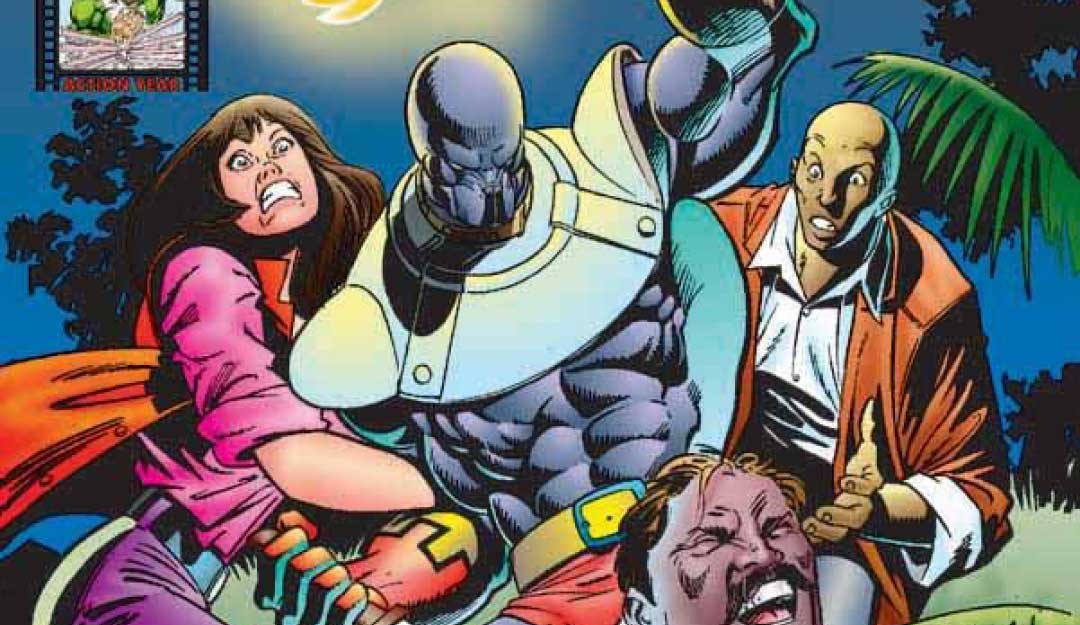
In the nineties, a hero came into Indian comics who changed the definition of justice and law. That hero was ‘Doga’. While Nagraj and Super Commando Dhruv used to catch criminals and hand them over to the police, Doga adopted a dangerous method of rooting out crime, which was exciting as well as scary. Raj Comics’ “Gainda” story takes us to a period in Mumbai where the screams of innocent people were drowned in the noise of tall buildings. This is not just a fight between superheroes and villains, but an attack on the cruel system where humans were burnt for some money and land.
Smoldering streets of Mumbai and fear of ‘Gainda’
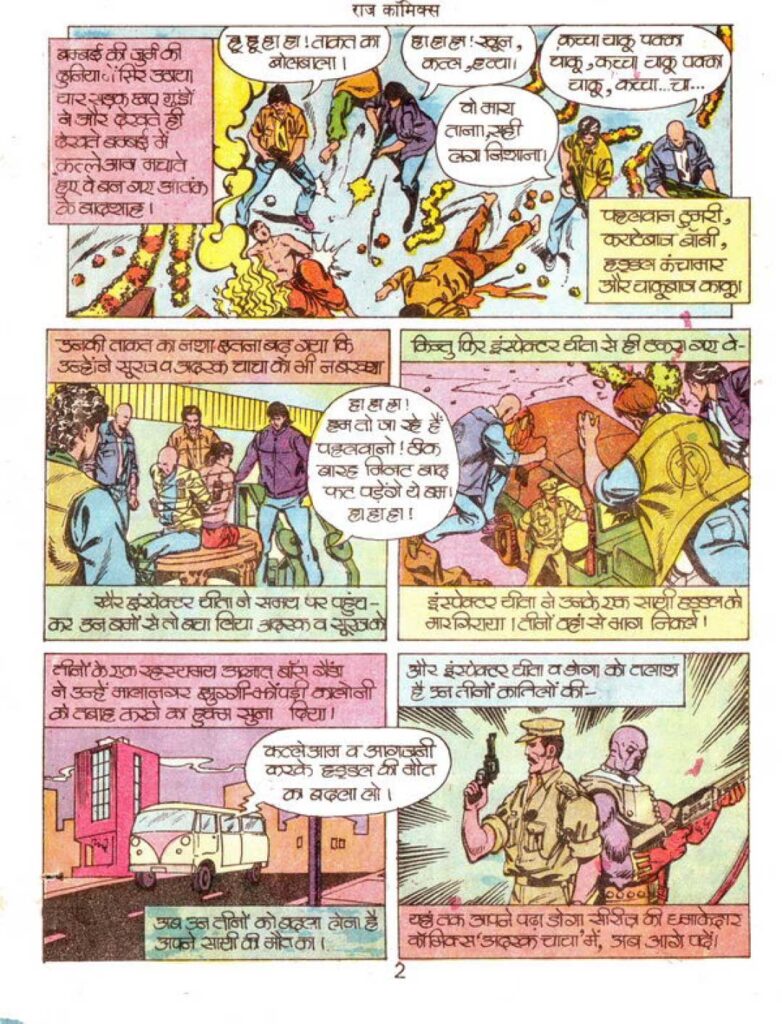
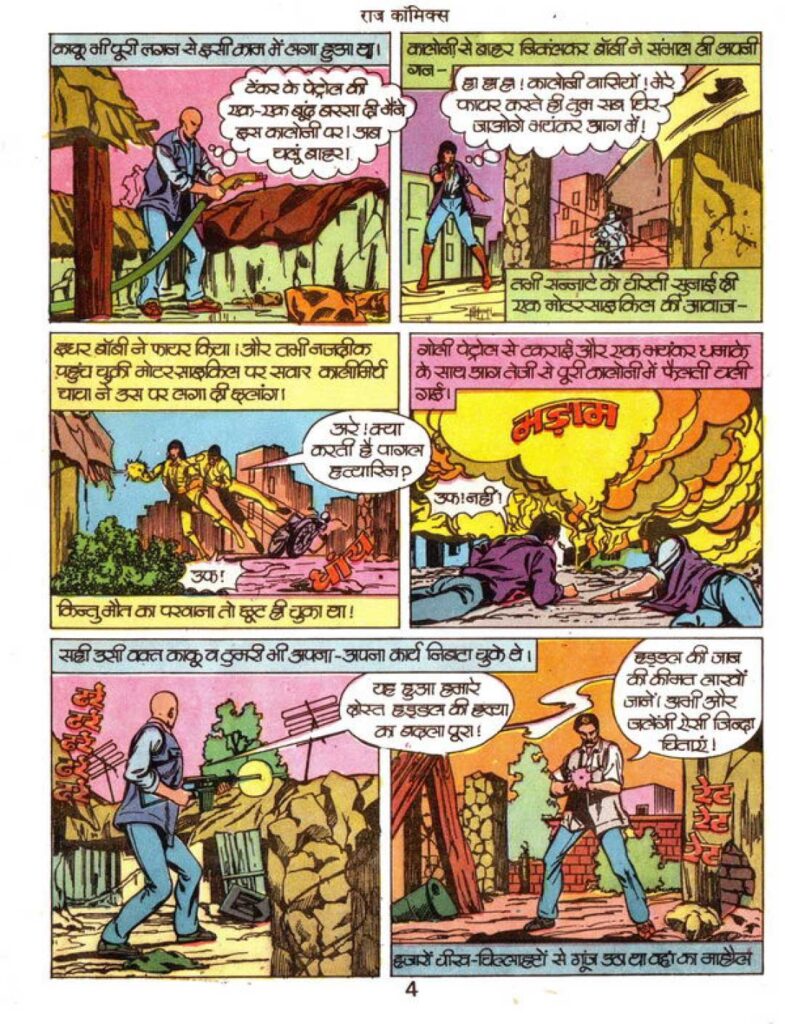
The story begins in those areas of Mumbai where poverty and deprivation reign. In slums like Mala Nagar and Shakti Nagar, people are busy in their own small world, but the fear of the name ‘Gainda’ looms over them. The story begins in such a way that at night, entire settlements are set on fire with petrol tankers. Writer Sanjay Gupta has shown in a very poignant manner the helplessness of innocent people, who see their hard-built houses turning to ashes. This fire did not just start in the huts, but was the pyre of thousands of dreams which ‘Gainda’ was burning for his own selfishness.
Seth Dinanath: Dangerous villain hiding behind white-collar social worker
The biggest strength of this story is its villain ‘Gainda’, i.e., Seth Dinanath Deenbandhu. Dinanath looks like a ‘demon’ and ‘messiah’ from outside, but from within, he is no less than a man-eater. He burns the settlements so that he can build ‘Five Star Hotels’ and ‘Multi-Story Buildings’ there, and then lavishes applause by paying the same victims some money. This double character of Dinanath creates deep hatred among the readers. His four loyal and ruthless henchmen—wrestler Dumri, karatebaaz Bobby, Hasrat Kanchamar, and Chakubaz—present a great challenge to Kak-doga.
When Pepper uncle was attacked, Doga’s anger awakened
Doga’s four uncles—Gingered, Turmeric, Coriander, and Pepper—are the pillars of his life. The character of Pepper Chacha is very important in the story. When the villains are slaughtering innocent people, Chilli uncle confronts them without caring for his life. Despite their bravery, they get injured. The attack on his guru and father-like uncle served to awaken the ‘Doga’ hidden within him. For Doga, this fight had now become personal revenge, not just social service. His anger is felt on every page, which makes him a dangerous and unpredictable hero.
The Bloody Way to Justice: Dog-Justice
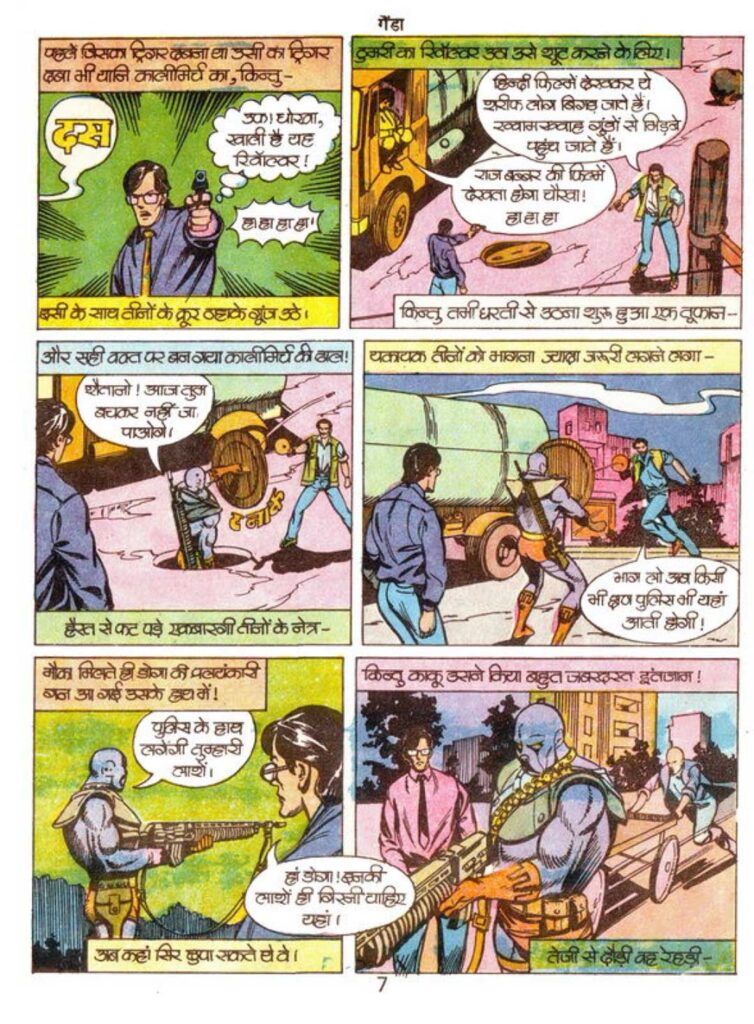
Doga has always been controversial because he does not believe in law but in justice. Doga in “Gainda” is a nightmare for the defenders of the law. He does not believe in capturing the villain, but in eliminating him. His fight with wrestlers Dumri and Chakubaz Kaku is the culmination of the action. The way Doga kills Kaku with electric wires gives the scene goosebumps. No mercy in Doga’s blows; those who can burn others do not deserve any sympathy. His ‘dog-justice’ gives a strange comfort to the readers because the law is not able to give these criminals the punishment that Doga gives.
Screams of builder mafia and innocent people: The naked truth of society
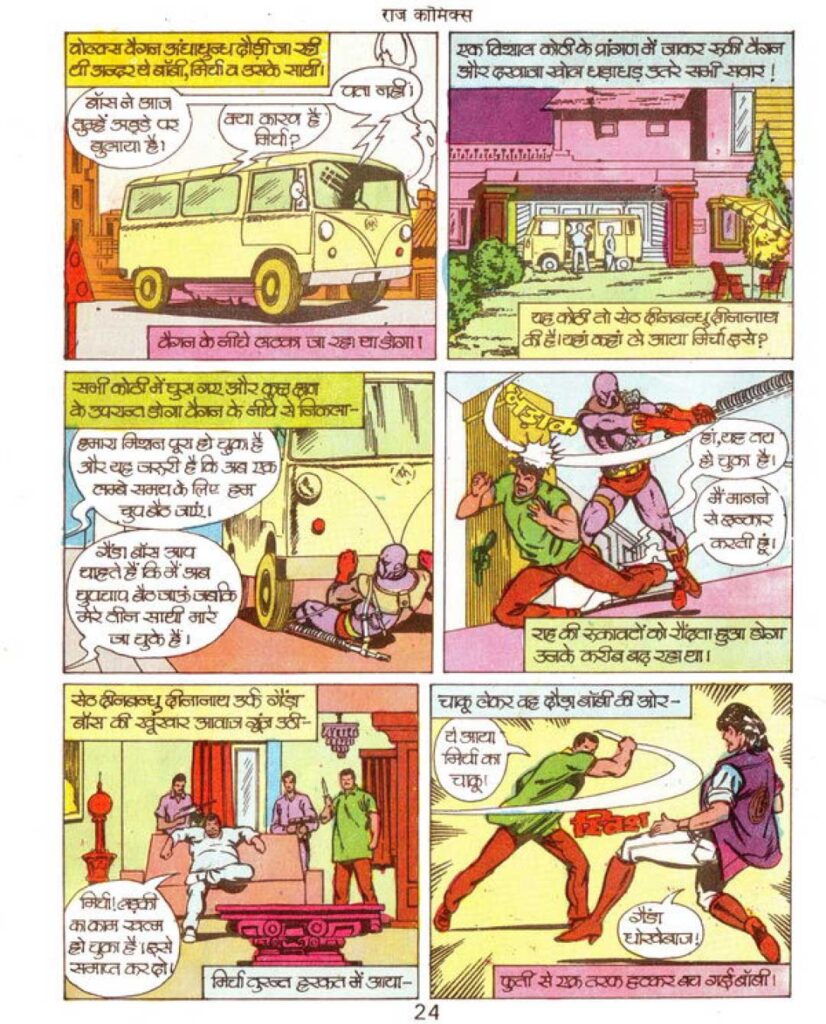
Sanjay Gupta has made a big attack on the builder mafia and political nexus through these comics. This story shows that the blood of the poor is suppressed in the name of ‘development’. Land grabbing by burning slums is a cycle that continues in many places even today. “Gainda” becomes not just a fictional story, but a social document. It forces one to think whether that development is really ‘development’ that stands on someone’s dead bodies. Raising such serious issues through comics shows the foresight of Raj Comics.
Inspector Cheetah and the Conflict of the Law: Symbol of the Helplessness of the System
Inspector Cheetah is a very interesting character in this story. He is a defender of the law and also a friend of Doga, but often finds himself in a difficult situation. Cheetah knows what Doga is doing is technically wrong, but he also knows that the system is so rotten that people like Dinanath will never be punished. There is a scene in the story where Cheetah is shopping and suddenly encounters Bobby. The chaos that ensues there and the way Cheetah handles the situation shows his sense of duty. The clash between Cheetah and Doga is actually a clash between ‘System’ and ‘Revolution’, which adds a deep philosophical dimension to the story.
Painter Manu’s magical brush and Nineties dark artwork
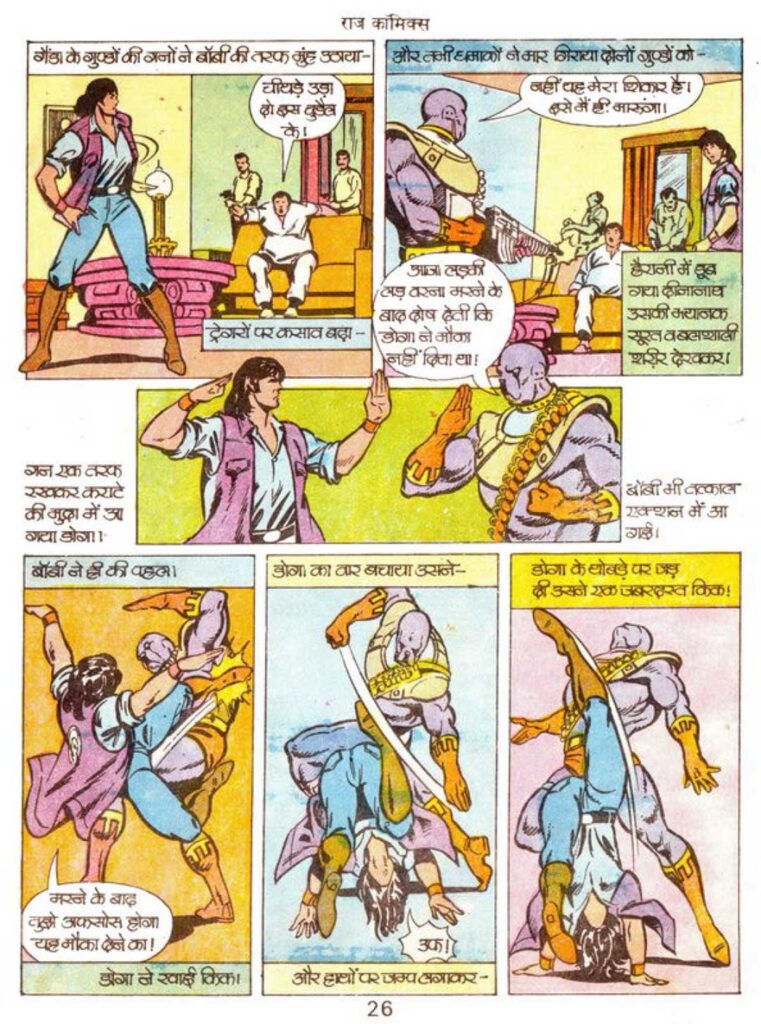
Artwork plays a huge role in the success of any comic, and in “Gainda” the painter Manu has given his best performance. Manu’s art gave Doga’s world the dark and gritty look it needed. The scenes of the settlements burning in the flames are so vivid that the reader begins to feel the smell of smoke and the heat of the fire. Doga’s muscular body, the strictness of his eyes reflected by the mask, and the dynamics of the action scenes are unmatched. Manu has paid special attention to detailing in every panel, be it the vicious look on Dinanath’s face or the bones broken by Doga’s punch.
Conclusion: Why is ‘Gainda’ still the first choice of every comic lover?
Overall, “Gainda” is a legacy of the golden age of Raj Comics that is becoming more relevant with time. This story teaches that when injustice crosses all its limits, one has to become a ‘Doga’. It has great action, a strong emotional base, and a villain that we can never forget. If you have started reading the Doga series, “Gainda” should be mandatory in your collection. This comic recalls that justice can sometimes be silent, but it never dies. Doga’s bold feats still fill the hearts of readers with excitement and show that no matter how powerful evil is, its end is certain.
