


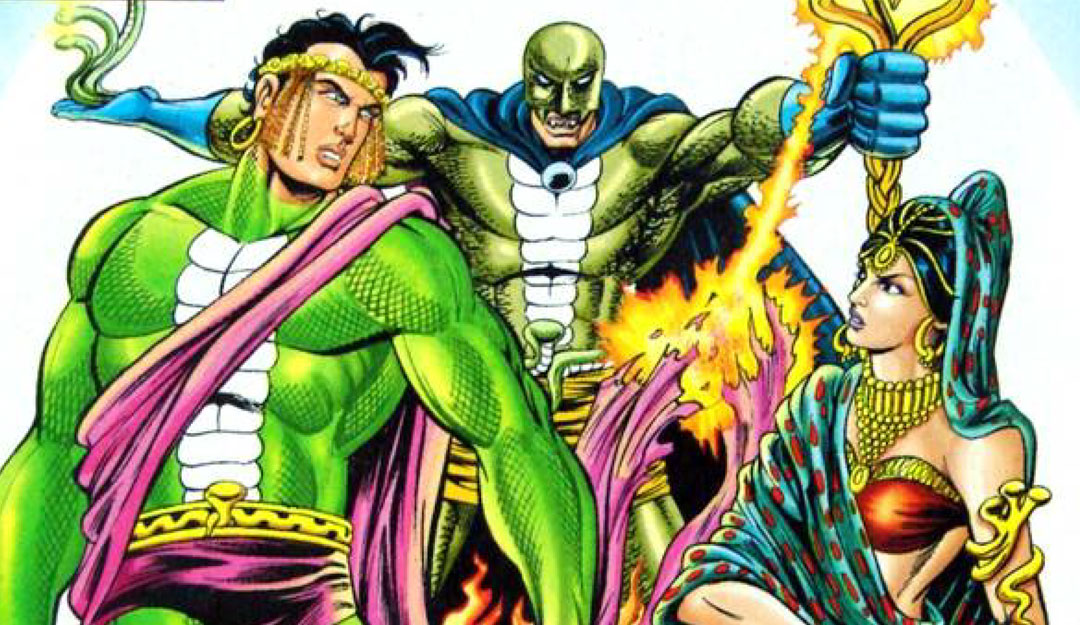
‘Trifana’ (special issue number 211) is a very important part of the same huge and complex story of Nagraj, which takes the ‘Treasure’ series and the ongoing conflict with Nagpasha to a new and dangerous height. This comic is not just a story, but it shows a great mix of emotions, action, mystery and mythology. ‘Death Penalty’ and ‘Nagdweep’ come after this sequel, which promises to answer all the questions that were left unresolved before, and at the same time lay the foundation for the coming Great War. In this review we will carefully analyze every aspect of this special issue — story, characters, portraiture, dialogue and its impact —.
Plot and background
‘Trifana’‘s story begins where the previous special episodes ended. The entire background of the story is based on the fact that the three ‘Kal-Manis’ of the treasure of Nagraj’s ancestors are extremely powerful, and Nagpasha and his guru (Nagguru/Gurudev) want to acquire them at any cost. To get these gems, Nagina took the help of Tantrik Ankush and ran away to Nagdweep with the treasure. On the other hand, Gurudev kidnapped Dada Vedacharya and Bharati so that the address of ‘Kaaldoot’ could be traced from them. Kaaldoot is important because it has ‘Trifana Serp’, without which those Kal-Manis are useless.
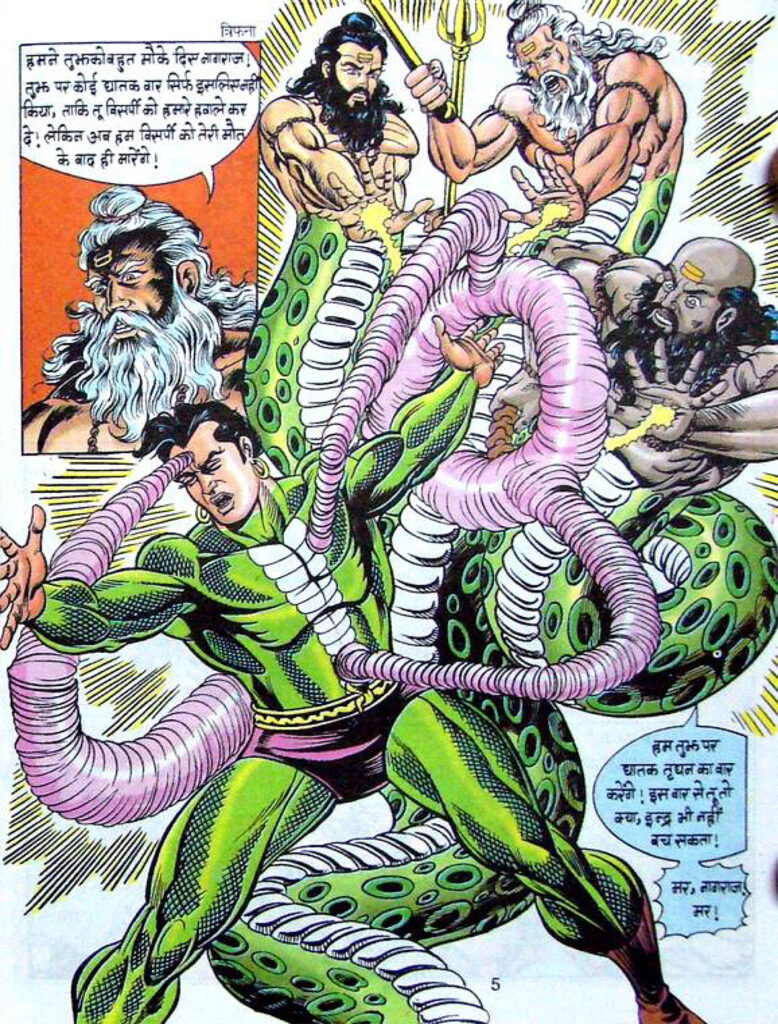
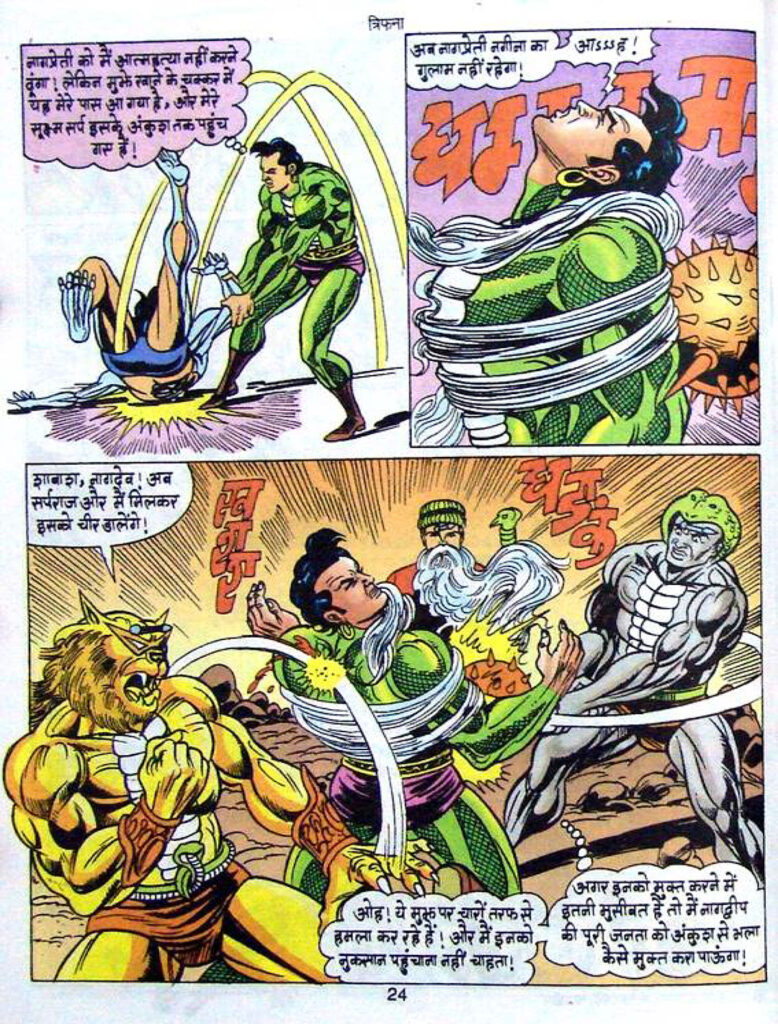
The story begins with a very tense scene. Nagraj, present in the metropolis, is trapped in the deadly grip (Hathkonda) of Mahatma Kaaldoot. Here an irony appears — Kaaldoot, himself a Mahatma and well-wisher of Nagraj, comes under the Tantric control of Ankush and goes after Nagraj’s life. This scene shows not just the physical fight, but also the mental struggle of Nagraj, as he has to fight with his own guru-like person.
The story takes a big turn when Nagraj uses his agility and intelligence. He understands that Kaaldoot’s mind is under the influence of Ankush and this control rests on the signals being sent through the bloodstream. With his life at stake, Nagraj stops blood circulation in Kaaldoot’s tail with the help of Hawthorn snakes, causing Ankush to lose contact. This scene is a great example of Nagraj’s ability to take quick decisions and his strategic thinking.
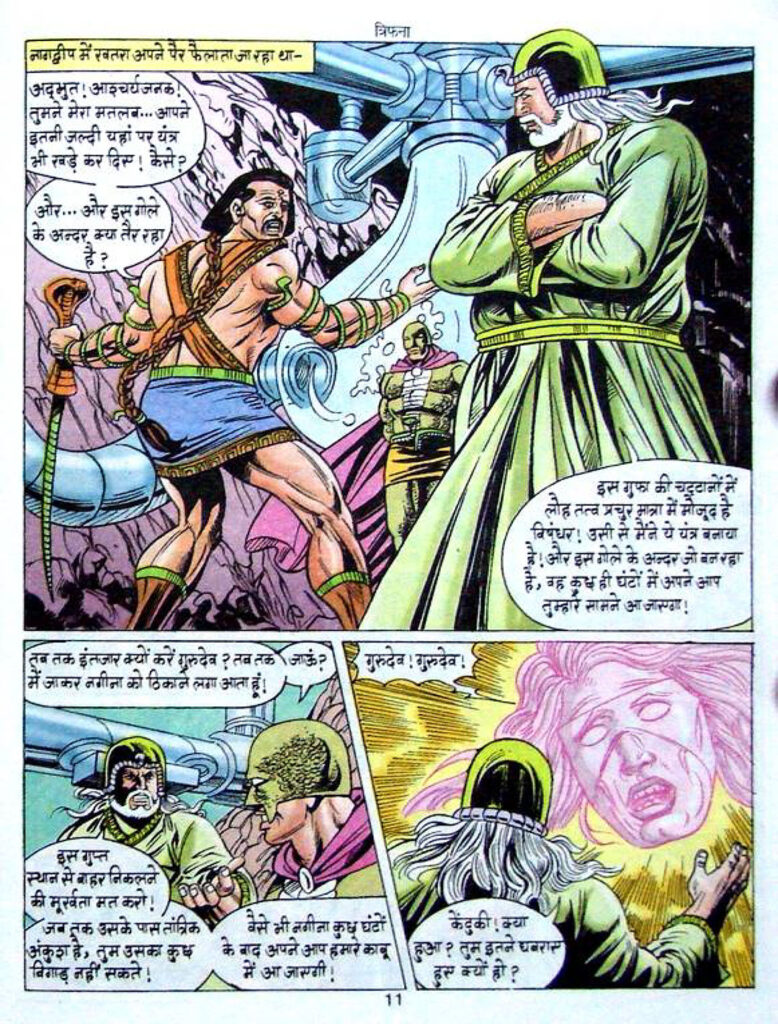
As Kaaldoot is freed, many hidden things come to light in the story. He tells that King Sumernath had given gems to King Aksharaj, the ancestor of Nagraj. After this the story spreads on many fronts — the struggle of Visarpi and Nagina in Nagdweep, the struggle of Vedacharya and Bharati in Gurudev’s laboratory, and the mission of Nagraj and Kaaldoot to find ‘Trifana Serp’. The pace of the story is very fast and a new twist, revelation or thrill emerges on almost every page. Finally the whole atmosphere moves towards the coming ‘Great War’ (next episode), where all the powers will be facing each other.
Character analysis
Nagraj: In this comic, Nagraj is seen not just as a warrior, but as a protector and a wise strategist. Initially he appears helpless, trapped in the grip of Kaaldoot, but does not give up. His quality that he fights with mind and strategy (like the way to free Kaaldoot) rather than just strength makes him different from the rest of the superheroes. His concern for Visarpi and Bharati brings out his emotional and human side, making his character even more connected.
Mahatma Kaaldoot: The character of Kaaldoot is very powerful and impressive. He is a symbol of ancient knowledge and power. Him attacking his own disciple i.e. Nagraj adds both sadness and drama to the story. As soon as he comes back to his senses, regrets are visible and he immediately agrees to help Nagraj — this shows the greatness of his character. In the story, Kaaldoot is a character who keeps the readers connected to Nagavansh and history, i.e. truly a ‘lore-keeper’.
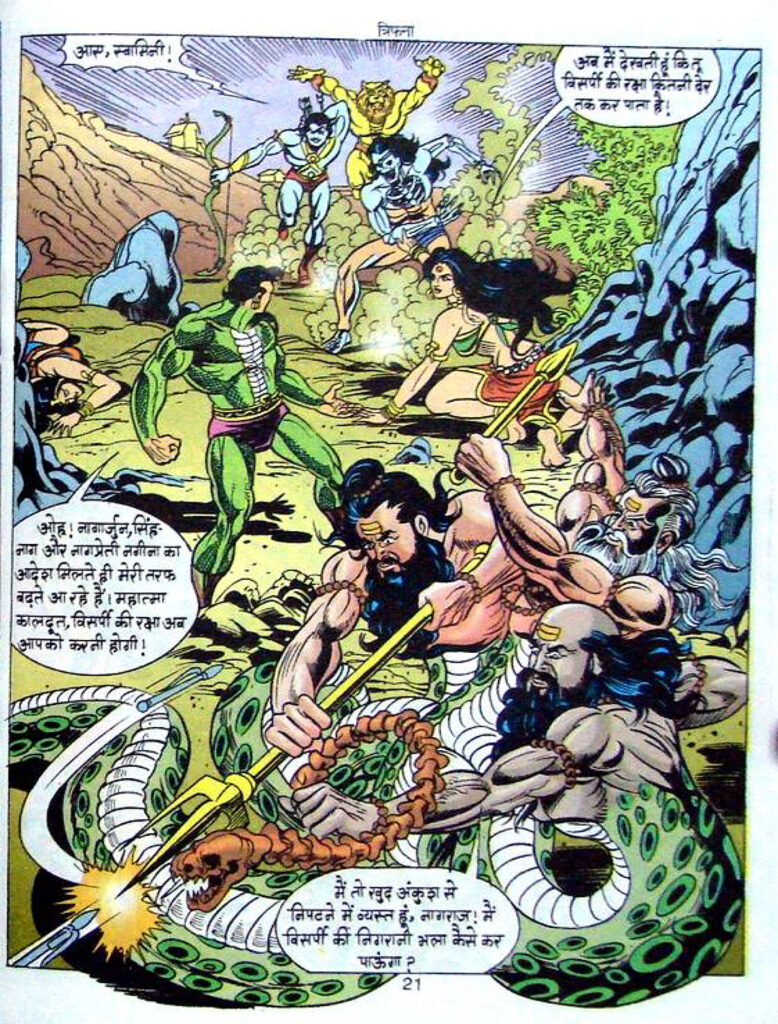
Nagpasha and Gurudev: This time Nagpasha is working together with his guru, due to which his dangerousness increases manifold. Gurudev’s character is a blend of science and black tantric knowledge. The way he cloned Vedacharya and entangled everyone with his web of illusion shows his cunning and scientific edge. They are not ordinary villains — they have a very well-thought-out plan even though they are power hungry.
Nagina and Ankush: There has always been mystery and selfishness in the character of Nagina. She is well versed in her beauty, cunning and using bluffs. Whereas Tantric Ankush is a master of mental control, and his attack is not on the physical but on the mind. This is why he emerges as a different and interesting type of villain in this story.
Visarpi, Bharati and Vedacharya: The action form of Visarpi is one of the most special features of this comic. She shines as a strong and fearless warrior, not just Nagraj’s girlfriend, and confronts Nagina head on. Vedacharya and Bharati may be in captivity, but their presence plays an important role in taking the story forward and their decisions influence major events.
Illustration and art side
Anupam Sinha ji’s art is the hallmark of Raj Comics and ‘Trifana’ is a great example of this. Every panel is full of so many spectacular details that the eyes are fixed — whether it is the high-rise buildings of the metropolis or the dense forests of Nagdweep. The feeling of speed and energy is clearly visible in the action scenes, especially in the fight scene between Nagraj and Kaaldoot, which is shown in a very lively manner. The expressions of the characters — anger, sadness, pain or persistence — are extremely brilliantly evoked in the face and body language.
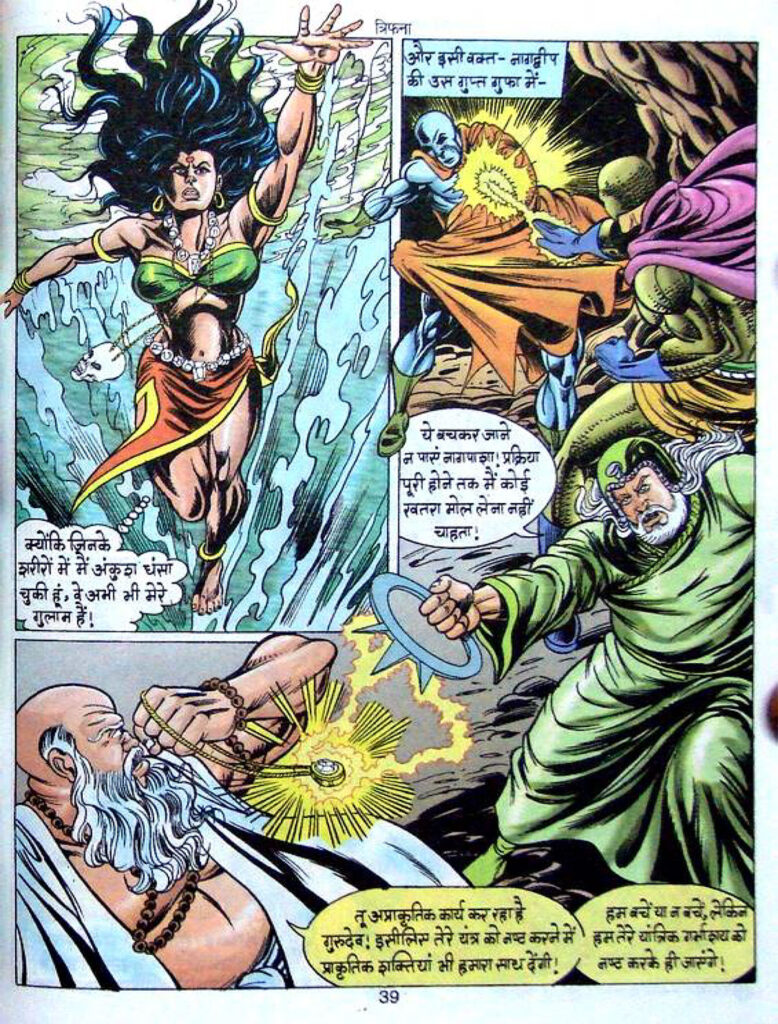
With this, Sunil Pandey ji’s color combination further elevates the mood of the story. Bright colors for magical forces, and dark shades for serious moments — everything is so balanced that the scenes speak for themselves. Especially the beauty with which the glow of ‘Trifana’ snakes and gems has been highlighted through colors is absolutely eye-catching. The dynamic styling of the panels, and the whole-page art (splash pages) used on urgent moments, leave a profound and memorable impression on the reader.
Dialogue and Writing
The story is written by Jolly Sinha and Anupam Sinha, and the dialogues provide a very good balance of drama and seriousness. The specialty of Raj Comics is also visible here — such a mixture of pure Hindi and Urdu words which makes the dialogues heavy, effective and memorable. Vedacharya’s mantras like — “Hoom… Prachanda Chand Chandika…” — or Kaaldoot’s powerful dialogues really give goosebumps. There is also emotional depth in these dialogues. The respect and love of the Guru–disciple relationship between Nagraj and Kaaldoot is clearly visible, while pride and cruelty are clearly visible in the dialogues of the villains. Example — “You will not survive Nagraj! My Hathkonda will turn your bones into powder!” — such dialogues enter the reader’s mind directly. The entire story has been taken forward very carefully, and the use of flashbacks does not slow down the pace of the story, but increases curiosity.
Subject and Symbolism
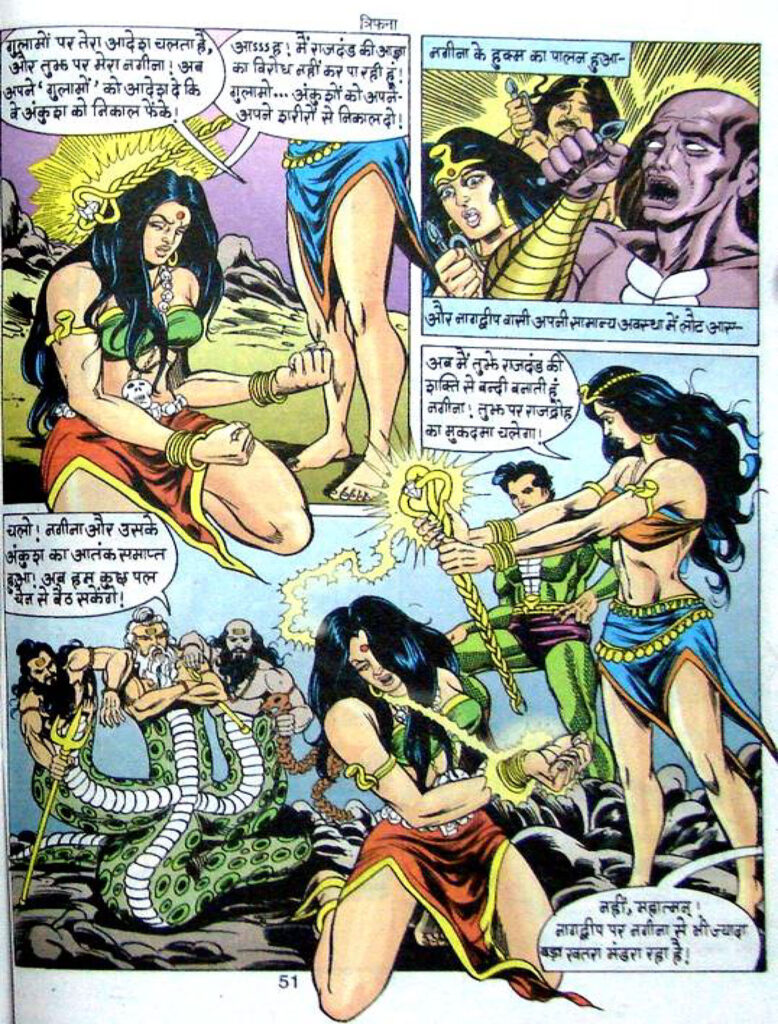
‘Trifana’ is not just an action story, but it brings up a deeper topic like “control vs free will.” Mental control over Kaaldoot through Ankush shows that if a person loses his free will, his power can cause destruction. Nagraj’s liberation of Kaaldoot is a symbol of self-realization and freedom. The confluence of science and magic is also at its peak in the story — Gurudev’s cloning and laboratory technology are countered by Ankush’s Rudraksha Tilism and Vedacharya’s Tantra–Mantra, which makes it seem that both the worlds exist with each other and challenge each other simultaneously. This comic also emphasizes the result of greed — Nagpasha, Gurudev and Nagina getting drowned in the greed of gems not only go against their people and create war, but also open the way to destruction. Nagraj’s struggle reflects his responsibility to save the legacy of his ancestors (King Aksharaj), and this responsibility makes him a true hero.
Critical Analysis
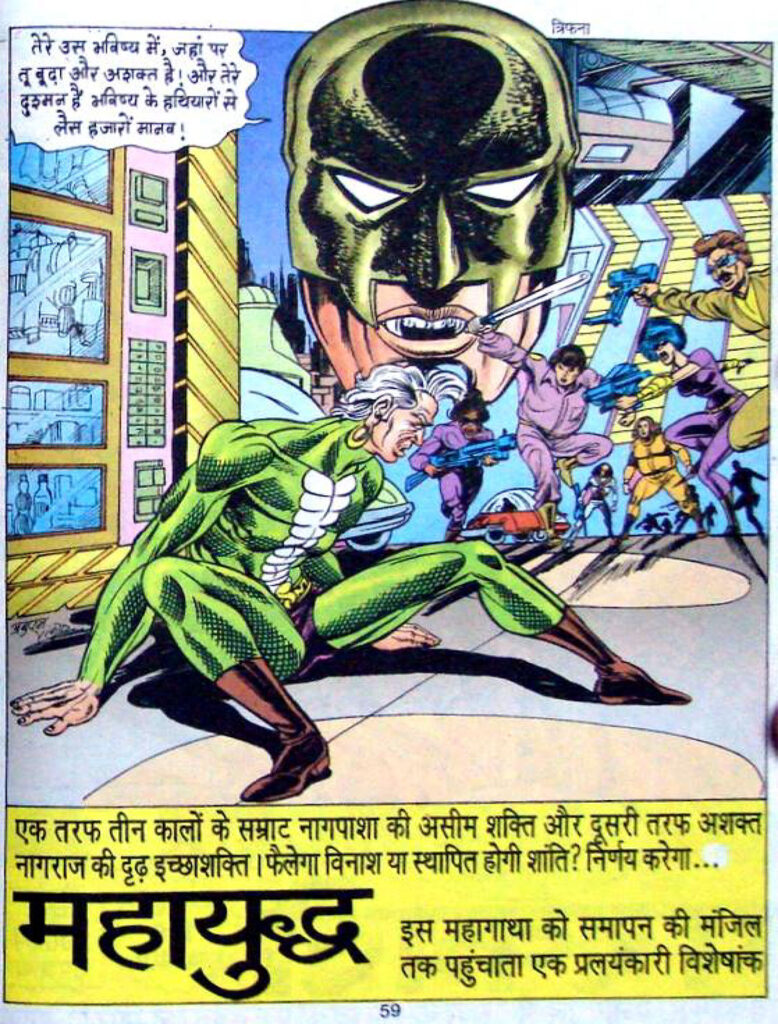
‘Trifana’ is a fantastic comic, but a few things attract attention when viewed from a reviewer’s point of view. Readers who have not read previous special issues may find the story a little difficult to understand, as it has a large number of characters and there is a huge history behind each character. So this issue is especially high for “hardcore” fans who already know the entire Nagraj series. The story ends on a very big cliffhanger — it increases curiosity for the next special issue, but those who like to read the whole story at once may feel a little incomplete. This has been an old strategy of Raj Comics so that readers can definitely buy the next part. Furthermore, Gurudev’s scientific experiments and Vedacharya’s technical terminology of Tantra–Mantra sometimes deviate a little from the main flow of the story.
Effect of specific scenes
There are some scenes in this comic that are difficult to forget. The underwater fight when Nagraj confronts sharks and other aquatic creatures while searching for Trifana snake — that scene is amazing. The movement of water, bubbles and light falling in the depth bring the whole feeling alive. Then the moment when Nagraj presses the tail of Kaaldoot and gradually the redness of his eyes starts decreasing — is not just a moment of physical strength, but also of emotional liberation. And the biggest shock comes when it turns out that what we thought was Vedacharya was actually a clone or illusion — this twist shocks the reader and the mind is forced to think about what else is true in the story and what deceit.
Conclusion
Overall, ‘Trifana’ is a gem from the world of Raj Comics and Nagraj that one feels like reading again and again. This was the time when Raj Comics was at the highest peak of its creativity. Anupam Sinha’s storytelling and his brilliant portrayal take readers to a different universe, where every page shows something new and there is a story hidden in every frame. This comic reminds why Nagraj is India’s favorite superhero. He has strength, but not pride. There is anger in him, but there is equal understanding in him. ‘Trifana’ is not just a treasure hunt story — it is a strong chapter of the ongoing infinite war between good and evil.
Recommendation: If you are a fan of Indian comics, ‘Trifana’ must be in your collection. Before reading this it is important to read ‘Death Penalty’ and ‘Nagdweep’ so that you can feel the whole story correctly. And believe me, as soon as you finish ‘Trifana’ you will be restless for the next part — ‘Great War’ —.
Rating:
Story: 4.5/5
Drawing: 5/5
Entertainment: 5/5
Total: 4.8/5
This special issue proves that the Indian comics industry has full potential to create world-class stories and artworks. ‘Trifana’ is not just a comic, but an experience that remains in the mind and heart even after reading. This journey of Nagraj teaches that no matter how difficult the circumstances are, the one who fights for truth and religion wins in the end.
Finally, ‘Trifana’ is literally a ‘must read’. This is a huge turning point in Nagraj’s development (Character Arc). The way mythological elements have been combined with modern science in it is praiseworthy. Like its name, this special issue is truly ‘special’ — completely proving its value.
