


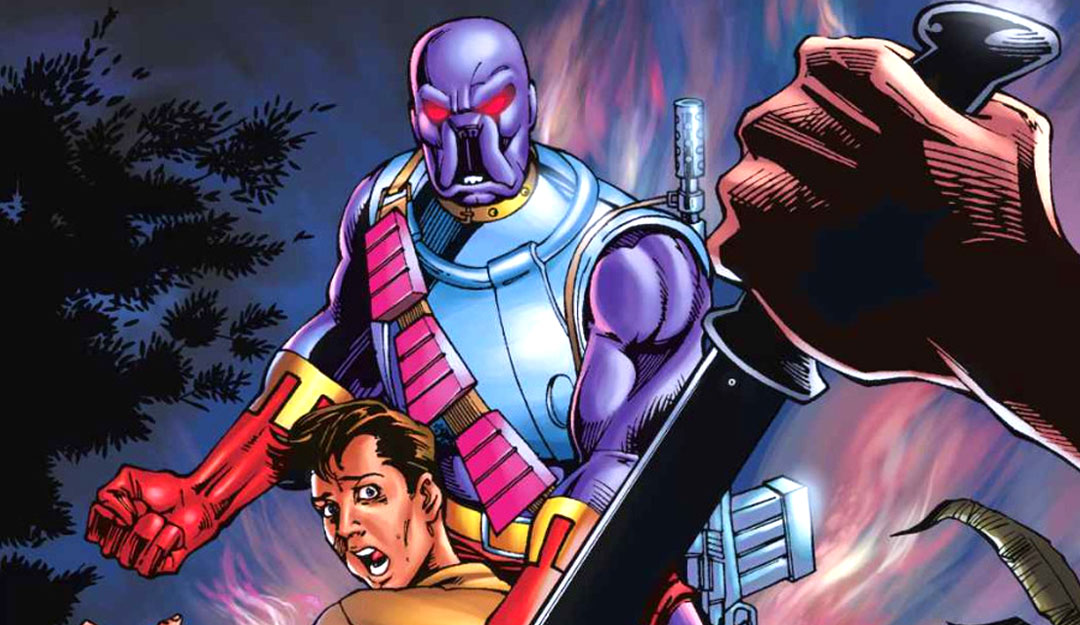
“Nickel Pada Doga” is not just a common crime story, but it brings out the true form of Doga that combines his painful past and today’s form with an ‘anti-hero’. These comics clearly show that Doga is not just a man wearing a mask while wielding a gun, but a thinking that stands like a wall against injustice, especially crimes against children.
The name of the story “Nikal Pada Doga” itself tells that when the system is sleeping, the police are helpless, and the criminals are roaming around without fear, then Doga comes out of his hideout and takes care of the work. This story is like a ‘social thriller’, which strongly attacks the difference between rich–poor and the double thinking of the administration.
Mystery, adventure and social anger
The story begins with a flashback, which shows how much pain Doga (Suraj) suffered as a child. A small child Suraj is running away saving his life, fear is built inside him. He hides in the gutter, where he is bitten by rats. This scene shakes the reader, and also tells how much trouble Doga started with. The dogs rescuing him marks the beginning of the deep relationship between him and the dogs that has become Doga’s identity.

The current story starts from Gutter, Mumbai. Doga finds a child’s corpse in the gutter. This scene is disturbing. He investigates in his forensic lab (Dogalicious Wing) and discovers that the child was not drowned, but was killed and thrown into the gutter. Meanwhile, he finds another child, Roshan Desai, in an unconscious state.
From here the story divides into two paths:
Rich child worries: Roshan Desai, son of a famous ‘entertainment king’ Ketan Desai. As soon as he disappears, the police, media and ministers all become active.
Ignoring poor children: on the other hand, about 30 poor children have been missing from ‘Gorai village’ for several days, but there is no one to care about them. This double-minded attitude fills Doga with anger.
Doga begins his investigation. He gets some clues—a jacket, a slip of dry-cleaning and a map. These lead him to a criminal named ‘Abrar Bhai’. Doga’s method is straightforward— to show the criminal pain clearly. He shoots Abrar in the legs and gives him a last warning.

The story takes a turn when Doga suspects that organ trafficking may be behind the children’s disappearance. That kidney specialist Dr. Idris becomes a suspect. Here the authors make good use of dodging readers (Red Herring).
Doga goes to kill Dr. Idris, but later discovers that Dr. Idris is innocent and had forbidden wrongdoing. This shows that Doga is also human and can even lead to miscalculations.
Heading towards the climax, a child comes running towards Doga, followed by a murderer. Doga saves the child and follows him to reach ‘Kothi No. 13’. This is R.K. Thakkar’s house. There Doga finds the corpse of a servant. Thakkar immediately blames Doga and calls the police. Doga escapes from there, but nothing special comes to his hands.
At the end of the story, both the villagers and Doga are upset and disappointed. Then the entry is made of a mysterious character named ‘Psycho’, who tries to find out the condition of the missing children with his brain power (telepathy). What Psycho sees is extremely scary— a lame man and imprisoned innocent children. The story stops here with a big suspense, and the next part of it proceeds in ‘Hungry Dog’.
Character analysis
DOGA (Suraj):
Doga’s personality in this comics looks full of many layers.
Doga is a character with a tough look that gives merciless justice on one side, and a very emotional and caring side on the other. He does not show any leniency towards criminals (like Abrar). His dialogue— “dog was killed he”— clearly shows the old anger and sadness inside him. But right there, his heart is very soft for the children; his breaking down after seeing the dead child in the gutter and running to save Roshan Desai brings out his human form.

Above all, Doga is shown here as a rebel. When he sees the news of the rich kid on TV, he bursts into anger and calls rich people “frustrations”, not “people”. It’s not just anger, it shows that Doga is a vigilante who stands up against society’s mistakes and injustices.
Ginger Uncle and Cheetah:
Both of them are like the backbone of Doga. Ginger Uncle is like a father to Suraj, who keeps taking care of him mentally. Cheetah is his technical brain and spy. The high-tech lab built under the gym shows that Doga does not just rely on his own strength, but also on understanding, mind and technology.
Villains (system and individuals):
The biggest villain of this story is actually the ‘system’. The attitude of the police is the real villain— no attention is paid to the disappearance of poor children, but the whole city shakes for the rich child. Along with this, Abrar and R.K. Thakkar— suspicious characters— keep the story full of mystery and tension.
Psycho:
This character that came at the end of the story is interesting and mysterious. The power of reading his ‘aura’ suddenly turns the story in a different direction— a little supernatural and exciting.
Main topics and social messages
Class distinction (Class Divide):
The most vigorous aspect of the comics is showing the distance between rich and poor. Doga’s dialogue— “No one finds the children of us poor people! I was just looking for Mohit! Roshan then suddenly gets into my hands!”— rips the heart. This line directly puts forward the truth of our society.

Child crime and trafficking:
The story sheds light on serious issues such as child abduction and perhaps organ trafficking. It shocks readers to what extent scary crimes are taking place in our society.
Fear versus courage:
The story repeatedly talks about ‘fear’. In childhood, Suraj was a very scared child, but by becoming Doga, he turns fear into a weapon. He explains to Ram Prakash (who is looking for his child) that shedding tears is not weakness, just crying is not enough, it is necessary to raise one’s voice for the right. This is Doga’s thinking (Philosophy).
Duty of humanity:
When Doga saves Roshan, the child wants to say “thank you”. But Doga stops him and says— “It is the duty of every person living in this society built with the help of each other to give happiness to others! And when someone fulfills his duty, there is no need to thank him!” This is a very positive and heart-touching message.
Drawing and Art

Studio Image’s work here is really worth a compliment. Sunil Pandey’s colors and Manish Gupta’s editing make the visuals of the comics even more powerful.
Artwork has been used extensively in comics to create atmosphere. The use of dark colors like black, blue and purple in gutter scenes shows a very good feeling of suffocation, fear and danger. Doga’s action is quite dynamic; the scene on page 17 with Abrar’s henchmen being beaten up severely feels completely cinematic.
There has also been a lot of attention paid to facial expressions — anger, helplessness and frustration are clearly visible on Suraj’s face. The detailing of his body (Anatomy) in the gym scenes looks very spectacular. The use of ‘sepia’ or different tones in flashback scenes makes the difference between past and present clear, and the rat attack scenes really create fear.
Dialogues
The pairing of Sanjay Gupta and Tarun Kumar Wahi has breathed life into the dialogues. These dialogues not only take the story forward, but also clarify the thinking and feelings of the characters.
“Why have I worn a dog mask? Because the dog is a symbol of loyalty! Is a friend of humans!” – This dialogue explains the full meaning of Doga’s mask.

“If you’ve opened my eyes, Doga! I won’t shed tears now! My child is lost! It is the responsibility of the police and the law to find him…” – This line shows the awakening and courage of a common man.
“Doga being weighed in the scales of riches and poverty!” – This dialogue exposes Doga’s inner anguish and his anger.
Critical Analysis (Critical Analysis)
Positive side:
This comics is based on a powerful and tightly written script, in which the pace of the story does not slow down anywhere. Every page finds a new clue, a new twist or a new action, which keeps the reader engaged from beginning to end. It is not just a superhero fantasy, but it also has a strong social aspect, the failure of the police, the indifference of the society and the injustice done to poor children are shown in very real terms.
The action of the story also includes the detective angle; Doga here not only beats but also looks for clues like a detective— like a jacket, slip, map. This shows that Doga is not just a player of force, but also of mind and strategy.
Downside (suggestion):
A small slippery part in the story’s structure Dr. Idris’ track is. Doga’s suspicion of them and their subsequent innocence leads the story to go astray for a while. Although this shows that Doga is also not right every time and he can also make mistakes like a human being, but if this part had been a little smaller, the pace of the story would have been better.
In addition, the story ends on a cliffhanger—where suddenly the story stops on the vision of ‘Psycho’. This makes the reader feel a little incomplete. This next part is a selling strategy, but as a reader this sudden break definitely creates some uneasiness.
Conclusion (Conclusion)
“Nikal Pada Doga” is one of the best specials of Raj Comics. This story brings Doga to full view as the real ‘protector’ of Mumbai. For those who love a passionate, mysterious and society-related story with action, this comics is a great experience.
The biggest strength of this story is that it makes you think. When you see Suraj in the gym picking up dumbbells and venting anger on the system, you start to feel his anger like yours. Here Doga feels more than a superhero an ‘revolutionary’—a human being who stands against mistakes, whether the world is with him or not.
Rating: 4.5/5
